
Auto Glass Repair
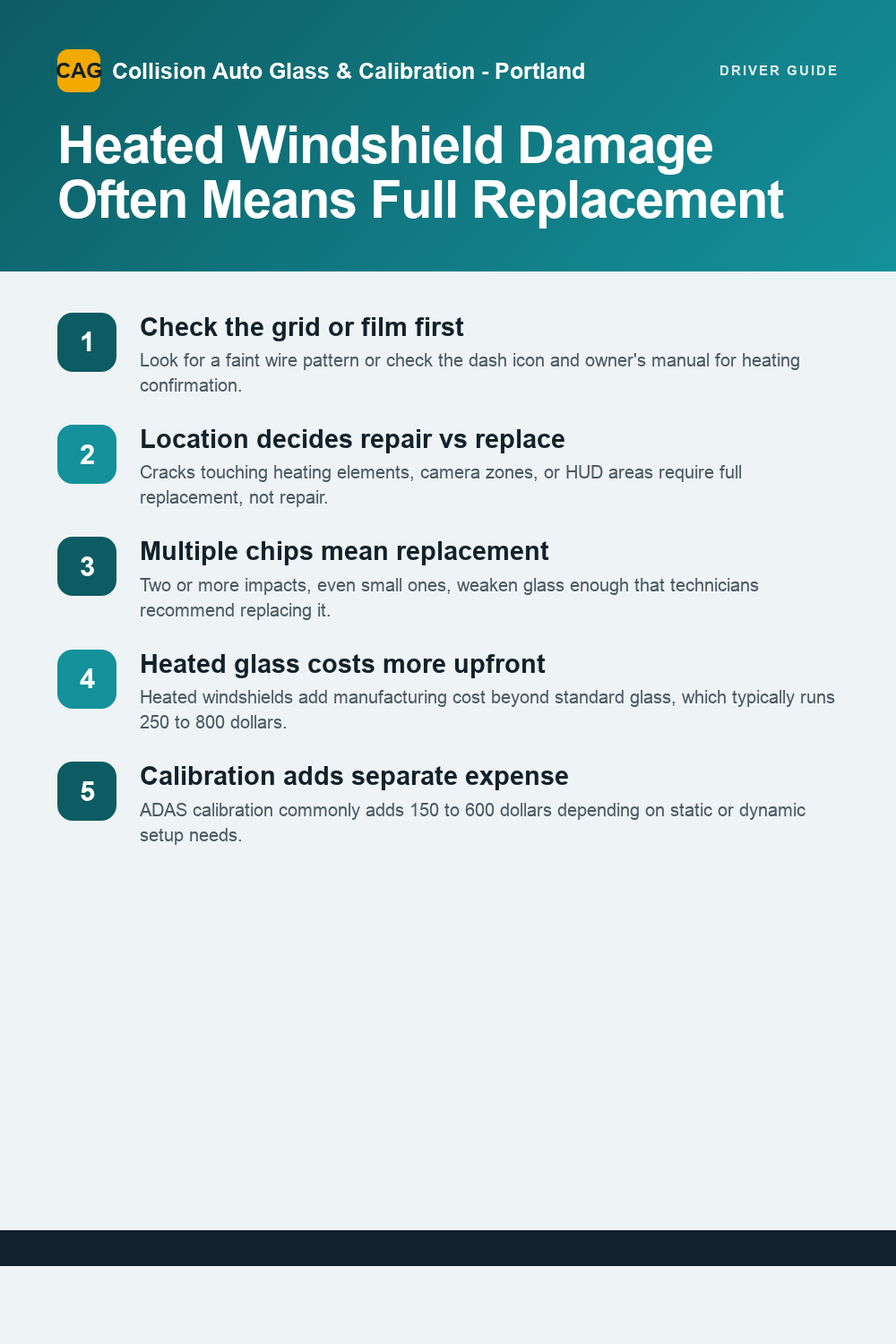
If damage sits over the heating grid, near the camera bracket, or spans more than 6 inches, replace the windshield. Small chips outside those zones can often be repaired for a fraction of the cost. Heated windshield replacement typically runs higher than standard glass and often triggers an ADAS calibration. The next section shows how to confirm what you’re working with.
TL;DR:
- Replacing a heated windshield can cost significantly more than standard glass, especially if ADAS calibration and OEM parts are needed.
- Damage near the heating grid, camera, or HUD zone usually requires full replacement, not repair, due to potential circuit damage and safety concerns.
- Conductive-film systems heat more evenly and reduce cabin heat gain, but both designs can interfere with toll transponders and radar detectors.
- Before calling a shop, owners should test the defrost function and inspect for electrical faults, such as blown fuses or connector damage.
- Accurate in-house calibration of ADAS systems post-replacement is essential to prevent safety system failures, costing between $150 and $600.
Table of Contents
- How to Identify a Heated Windshield and What Powers It
- Can That Chip Be Repaired, or Does It Need Full Replacement?
- What Replacement Actually Involves and What It Costs
- Why ADAS Calibration Isn’t Optional on These Jobs
- Testing a Heated Windshield Before You Call a Shop
- What We See on the Shop Floor
- Get a Straight Answer on Your Windshield, Not a Surprise Invoice
- Sources
- FAQ
How to Identify a Heated Windshield and What Powers It
Most heated windshields hide their technology in plain sight. Look at the base of the glass near the wiper park area: a faint horizontal grid pattern usually signals embedded wires. Some vehicles instead use an invisible conductive film sandwiched between glass layers, which shows no visible lines at all. Check your dashboard for a windshield icon with wavy lines, or scan the owner’s manual for “heated windshield” or “windshield defrost” language, since these are the fastest confirmations you’ll find without pulling a panel.
The two designs behave differently under stress:
- Wire-grid systems heat through thin embedded filaments, similar to a rear defroster, and can develop cold spots if a wire breaks.
- Conductive-film systems heat more evenly across the surface and, according to Cars, can significantly reduce cabin heat gain compared to standard tinted glass in warm weather.
- Both designs can interfere with certain toll transponders or radar detectors mounted near the affected zone.
- Heating elements often overlap with camera and HUD mounting areas, which raises the stakes for any repair attempt there.
Heated glass isn’t just a cold-morning convenience. It’s also why a small chip in the wrong spot costs so much more to fix.
Can That Chip Be Repaired, or Does It Need Full Replacement?
Not every crack means a new windshield, but heated glass narrows your margin for error. Use these thresholds before you decide:
- Size and location — Chips smaller than a quarter and outside the driver’s direct sightline are usually repairable.
- Proximity to heating elements — Damage crossing or touching the wire grid or film layer usually means replacement, since resin injected during repair can insulate the elements or leave a visible distortion.
- Camera and HUD zones — Any crack in the area behind the rearview camera or head-up display bracket should go straight to replacement, regardless of size.
- Multiple impacts — Two or more chips, even small ones, weaken the glass enough that most technicians recommend replacement over stacking repairs.
The technical reason matters here. A crack that crosses a heating wire creates a thermal differential every time you run the defrost, and that uneven heating accelerates crack growth rather than stabilizing it. Repairs near heating elements can also break the circuit outright, leaving you with a windshield that no longer defrosts at all, on top of the original damage.
Pro Tip: Snap a photo of the chip next to a coin for scale before calling a shop. Technicians can often give you a repair-versus-replace read over the phone or text, which saves you a wasted trip if replacement is the only option.
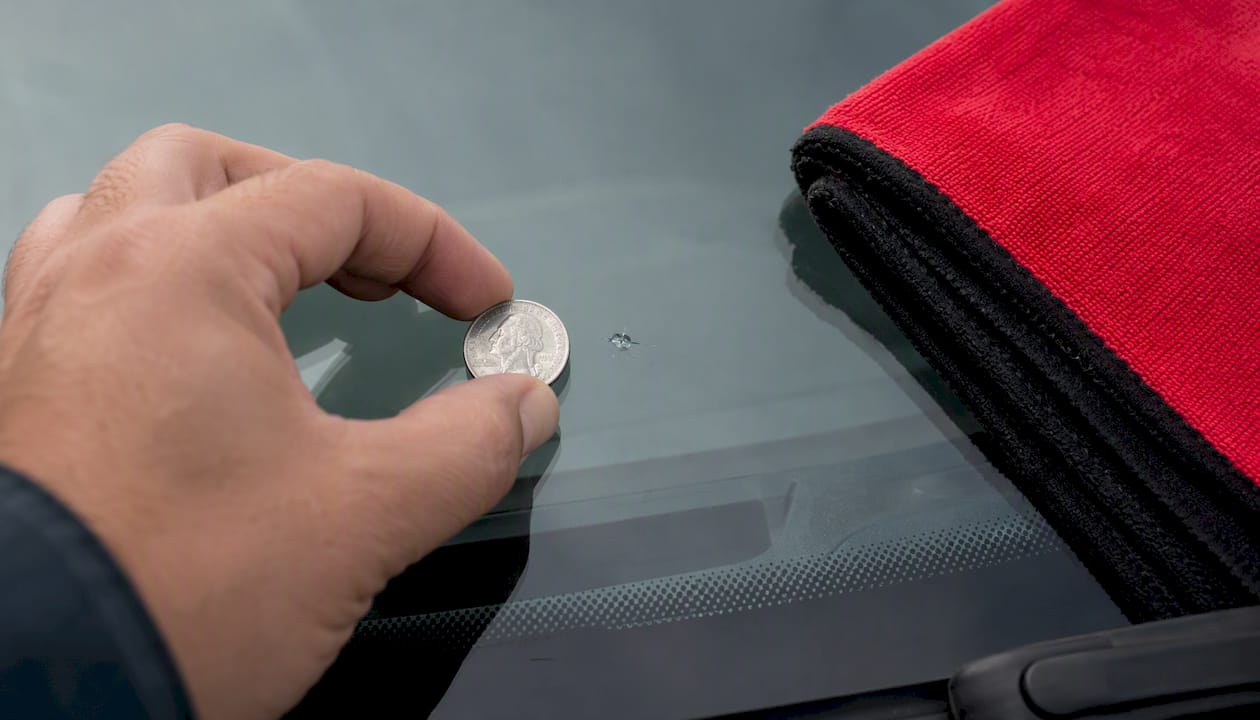
A proper inspection includes checking the damage against the heating grid alignment, testing whether the defrost function still activates, and confirming the camera’s field of view isn’t distorted.
What Replacement Actually Involves and What It Costs
A heated windshield replacement follows the same core steps as any windshield job, with a few extra checkpoints. The technician removes the old glass and trim, cleans the pinch weld, sets the new heated glass in fresh urethane adhesive, reconnects the heating element wiring or film contacts, and lets the adhesive cure before the vehicle is safe to drive. If your car has a forward-facing camera or HUD, calibration comes next, before the job is considered complete.
Several factors move the price:
- Heated glass premium over standard windshields, since the wire grid or film layer adds manufacturing cost.
- OEM versus aftermarket glass — OEM heated panels tend to fit and heat more consistently but cost more upfront.
- Labor and adhesive cure time, which can extend a same-day job if temperatures are low.
- Mobile service convenience fees, though many static calibrations still require in-shop equipment for accuracy.
- ADAS calibration, billed separately from the glass and labor.
Standard windshield replacement typically runs $250 to $800 for a sedan without special features. Heated glass with a camera system pushes well past that range, and one owner’s account describes how a single small chip near the heating elements turned into a replacement quote far above what standard glass would have cost.
ADAS calibration alone commonly adds $150 to $600 depending on whether your vehicle needs a static setup, a dynamic road test, or both. That range surprises a lot of owners who budgeted only for the glass.
Why ADAS Calibration Isn’t Optional on These Jobs
If your vehicle has lane departure warning, automatic emergency braking, or adaptive cruise control, the camera or sensor mounted to the windshield needs recalibration after replacement. Skip it, and those systems can misread lane lines or following distance, sometimes without throwing a visible warning.
Two calibration methods cover most vehicles:
- Static calibration uses printed targets and precise measurements in a controlled shop environment, and it’s the only reliable option for many newer camera systems.
- Dynamic calibration requires driving the vehicle at specific speeds so the system can self-learn against real road markings.
- Some vehicles need both, one after the other, before the system is considered fully recalibrated.
Costs for calibration typically fall between $150 and $600, with static procedures on the higher end because of the equipment and floor space required. Before you approve any windshield replacement with calibration, ask the shop three things: whether they calibrate in-house or sublet the work, whether they’ll provide a printed calibration report, and how they verify the systems function correctly post-installation.
Pro Tip: Ask for the calibration report by name before you leave the shop. A legitimate calibration always produces a printout confirming the sensor passed, not just a verbal “it’s done.”
Testing a Heated Windshield Before You Call a Shop
A few owner-level checks can tell you whether you’re dealing with an electrical fault or glass damage before you spend a dime.
- Activate the defrost or heated windshield button and wait two to three minutes, then feel the glass near the base for warmth.
- Check the dashboard indicator to confirm the system is receiving power and cycling on.
- Inspect the fuse box for a blown fuse tied to the heated glass circuit, which is a common and inexpensive fix.
- Look for visible connector damage at the base of the windshield where the wiring harness plugs in.
If the fuse is fine and the icon lights up but you feel no warmth, the fault likely lives in the glass itself rather than the wiring. For deeper electrical diagnostics beyond what you can check at home, resources on how electrical faults get diagnosed explain what a technician looks for. Don’t attempt to splice or repair the heating circuit yourself. That’s a job for a professional, since a botched wiring fix can mask a bigger problem until the glass fails entirely.
What We See on the Shop Floor
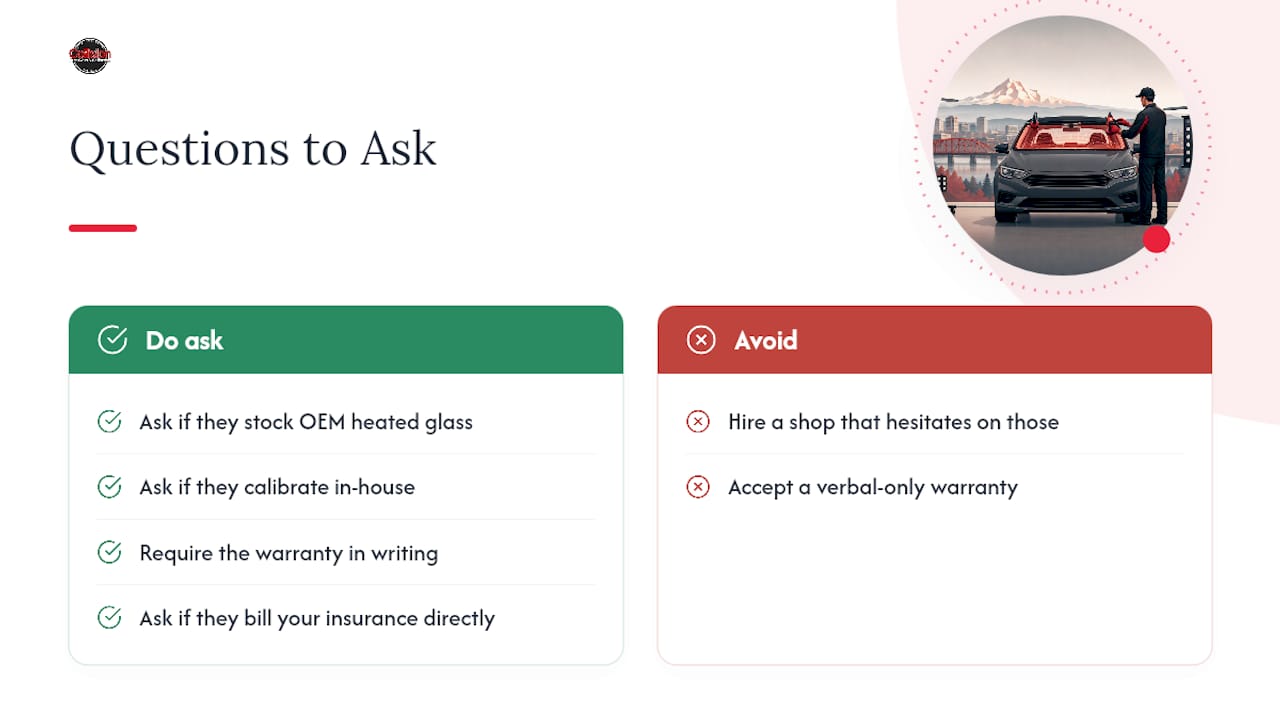
Owners are almost always surprised twice: once by how much more heated glass costs than they expected, and again when a chip they thought was minor turns out to sit directly over the camera bracket, forcing replacement instead of a quick repair. Collision Auto Glass & Calibration handles both problems the same day in most cases, with mobile installation, in-house ADAS calibration, and a lifetime no-leak guarantee on every job.
Before you hire any shop for this kind of work, ask four questions: Do they stock or source OEM heated glass? Do they calibrate in-house or send your car elsewhere? Will they put the warranty in writing? Do they bill your insurance directly? A shop that hesitates on any of those is telling you something.
— Collision Auto Glass & Calibration
Get a Straight Answer on Your Windshield, Not a Surprise Invoice
Collision Auto Glass & Calibration gives you what most quotes skip: a clear breakdown of the heated glass cost and the calibration cost before any work starts, so there’s no invoice shock halfway through the job. Our auto glass repair team inspects the damage, confirms whether it’s a repair or a full replacement, and calibrates your ADAS system in-house on the same visit for most Portland-area vehicles.
Every installation carries a lifetime no-leak guarantee, and mobile service is free within Portland, so you don’t have to sit in a waiting room while your windshield cures. We also bill most insurance providers directly, which means less paperwork on your end if your policy covers glass damage. Ready to find out what your specific vehicle needs? Request a windshield replacement quote today and get a written estimate before we touch the glass.
Sources
- Cars
- Windshield Replacement Cost in 2026 | Average Prices & Factors
- I bought a car with a heated windshield, but replacing it costs far more than normal glass
FAQ
Is a heated windshield worth it?
Yes, for cold climates it cuts down on scraping and defrost wait time, and some conductive-film versions also reduce cabin heat gain in summer. The tradeoff is a higher replacement cost if the glass ever gets damaged.
Which cars have a heated front windshield?
Heated windshields appear most often on luxury and premium trims, though they’re showing up increasingly on higher-trim EVs and SUVs as the feature becomes more common. Check your owner’s manual or look for a windshield icon on the dashboard to confirm.
How much does heated windshield replacement cost compared to standard glass?
Standard windshield replacement generally runs $250 to $800, while heated glass with a camera system often costs significantly more due to the wire grid or film layer plus ADAS calibration fees.
Does insurance cover heated windshield replacement?
Some comprehensive policies and glass add-ons cover it, but deductibles and specific policy terms determine your out-of-pocket cost. Collision Auto Glass & Calibration handles direct insurance billing to simplify the claims process.
Can I replace a heated windshield myself?
It’s not recommended. Reconnecting heating element wiring incorrectly, misaligning ADAS-related cameras, or improperly curing the urethane adhesive can compromise both the defrost function and crash safety systems.
Recommended
- Need a New Windshield? Don’t Forget Calibration
- Calibration After Windshield Replacement: What You Must Know
- Do I Need To Recalibrate My ADAS If I Replace My Windshield?
- What Happens If ADAS Is Not Calibrated?
🎧 Listen to This Article
Share
Recent Posts
September 5, 2026
$20–$1,000+: DIY or Pro for Windshield Molding Replacement
Decide whether to DIY windshield molding replacement or call a pro. See parts costs ($20–$150), shop quotes to $1,000+, plus rust, encapsulation, and...
September 4, 2026
Static First, Dynamic Confirm: ADAS Calibration for Technicians
ADAS guide for technicians: when to run static before dynamic calibration. Includes a shop checklist and one visit workflow....
September 3, 2026
Portland Mobile Windshield Costs: $60 to $800 and When Insurance Pays
Portland mobile windshield costs, from $60 chip repairs to $300–$800 replacements. See when Oregon insurance covers glass and get a free mobile quote....