Auto Glass Repair
For any vehicle with forward-facing cameras or ADAS sensors, OEM glass is the safer default choice. For older vehicles without ADAS, a high-quality aftermarket windshield from a reputable supplier is a reasonable, cost-effective alternative, provided a certified installer does the work.
Here is why that distinction matters:
- Regulatory floor vs. engineering ceiling: Every replacement windshield sold in the U.S. must meet FMVSS 205, the federal glazing safety standard. But ADAS cameras are sensitive to optical distortion and bracket positioning at a level far beyond what FMVSS 205 requires. OEM glass is engineered to the vehicle’s exact optical and mechanical specifications; aftermarket glass meets the legal minimum, but quality varies widely.
- ADAS optical sensitivity: Even sub-millimeter differences in how a windshield sits in the frame can shift camera angles enough to cause false alerts or system failures. A 2023 industry summary found OEM windshields showed ~12% better optical clarity in ADAS-critical camera zones and roughly 23% fewer calibration problems compared to average aftermarket panels.
- Typical price gap: Aftermarket glass generally costs 30–50% less than OEM, which sounds compelling until you factor in repeated calibration attempts or a return visit to swap the glass.
Pro Tip: Regardless of which glass type you choose, always confirm that your installer will perform ADAS calibration after the replacement and ask to see documentation of the calibration steps and equipment used. A shop that cannot produce that documentation is a shop to avoid.
Table of Contents
- How OEM and aftermarket windshields compare at a glance
- What OEM windshield glass actually is
- What aftermarket windshield glass is and where quality varies
- How the differences show up in real-world performance
- Why ADAS calibration is the most safety-critical step after replacement
- What to expect on price and how insurance typically handles the choice
- What happens during a quality windshield replacement
- Questions to ask your installer and red flags to watch for
- Bottom-line recommendations by scenario
- Key Takeaways
- Why the installer matters more than the glass label
- What Collision Auto Glass & Calibration offers Portland drivers
- Useful sources and standards referenced
- FAQ
How OEM and aftermarket windshields compare at a glance
The table below covers the decision dimensions that matter most to safety-conscious vehicle owners.
| Dimension | OEM Windshield | Aftermarket Windshield |
|---|---|---|
| Safety / optical quality | Higher-grade float glass, tighter tolerances, fewer calibration issues | Meets FMVSS 205 minimum; quality varies by tier |
| ADAS compatibility | Engineered to vehicle-specific camera bracket positions | Variable; premium tiers perform well, budget tiers risk misalignment |
| Price / typical cost range | Higher; OEM premium varies by vehicle make and model | 30–50% less than OEM before calibration costs |
| Warranty / leak guarantee | Manufacturer warranty; installer warranty varies | Varies by supplier and installer; confirm in writing |
| Availability / lead time | May require ordering; less common for older models | Widely stocked; faster availability for most vehicles |
| Automaker logo / appearance | Carries OEM logo and markings | No automaker logo; may have minor cosmetic differences |
| Insurance / insurer preference | Some insurers cover OEM on request or with endorsement | Most insurers default to aftermarket to control claim costs |
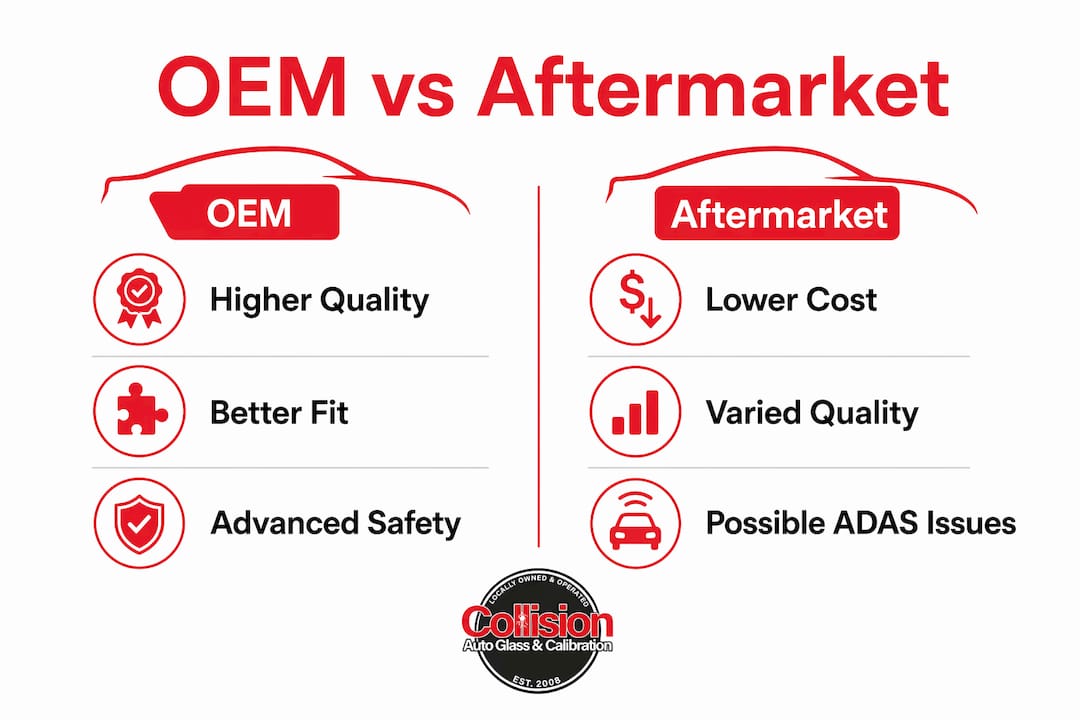
One important caveat: FMVSS 205 sets the regulatory baseline for all glazing, but it was established in the late 1960s and does not address ADAS optical requirements. OEM glass is engineered to a higher ceiling specific to each vehicle’s camera geometry. That gap is where the real safety difference lives.
What OEM windshield glass actually is
OEM stands for Original Equipment Manufacturer. In the context of auto glass, it means the windshield was produced using the same tooling, molds, and specifications as the glass installed on your vehicle at the factory, either by the same manufacturer or under a licensed agreement with the automaker.
Key attributes that distinguish OEM glass:
- Dimensional tolerances: OEM panels are cut and formed to the vehicle’s exact curvature and thickness specifications, which directly affects how the glass seals against the frame and how camera brackets align.
- Glass and interlayer grade: OEM windshields use higher-grade float glass and polyvinyl butyral (PVB) interlayers. PVB quality affects both impact resistance and optical clarity, particularly in the camera zone at the top of the glass.
- Bracket and sensor positioning: Mounting points for rearview mirrors, rain sensors, and forward-facing cameras are placed to the automaker’s exact coordinates.
- Automaker approval: OEM glass carries the automaker’s logo and certification markings, and replacement with OEM glass typically preserves the manufacturer’s warranty on related systems.
FMVSS 205 sets the legal floor for all glazing, but OEM glass is engineered to exceed it. Modern vehicles with ADAS demand a higher engineering ceiling than the standard requires, and OEM tooling is built to meet that ceiling.
What aftermarket windshield glass is and where quality varies
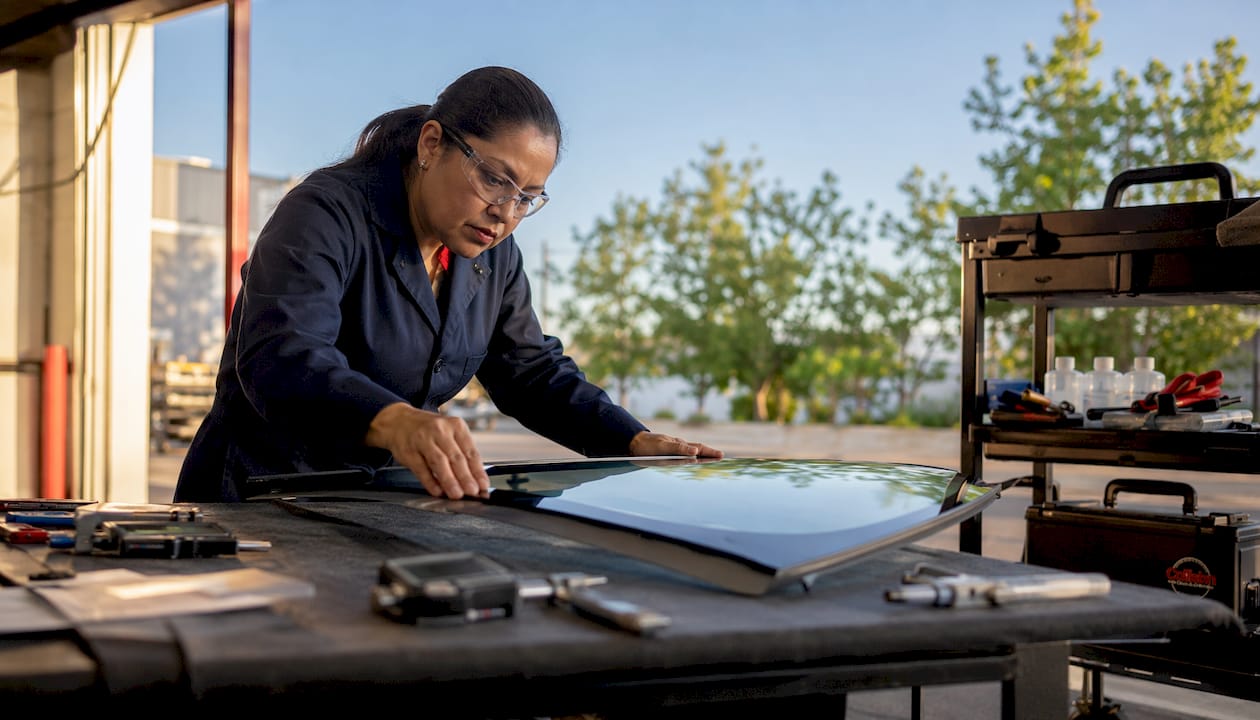
Aftermarket glass, sometimes called OEE (Original Equipment Equivalent) or ARG (Aftermarket Replacement Glass), is produced by third-party manufacturers who reverse-engineer the original panel. The category is not monolithic. There are meaningful quality tiers, and the tier you get matters enormously for ADAS-equipped vehicles.
The three broad tiers:
- Premium equivalent: Manufactured to tolerances close to OEM, using comparable float glass and PVB interlayers. These panels often perform well in calibration and carry solid warranties. Brands like Pilkington and AGC produce glass in this tier.
- Mid-market: Acceptable optical quality for non-ADAS vehicles. Tolerances are looser, and bracket placement may vary slightly. Fine for older cars; riskier for vehicles with forward-facing cameras.
- Budget: Lowest cost, widest tolerance variation. Optical distortion is more common, and calibration failures are more likely. The price savings can evaporate quickly if calibration requires multiple attempts or the glass needs to be replaced again.
Common tradeoffs across all aftermarket tiers include the absence of an automaker logo, possible minor cosmetic differences at the edges, and warranty terms that depend entirely on the installer rather than the vehicle manufacturer. Availability is generally faster than OEM for common vehicles, which matters when you need same-day service.
How the differences show up in real-world performance
The gap between OEM and aftermarket glass is not just a spec-sheet abstraction. It shows up in three concrete ways: optical distortion, fit and sealing, and ADAS calibration outcomes.
Materials and optical distortion
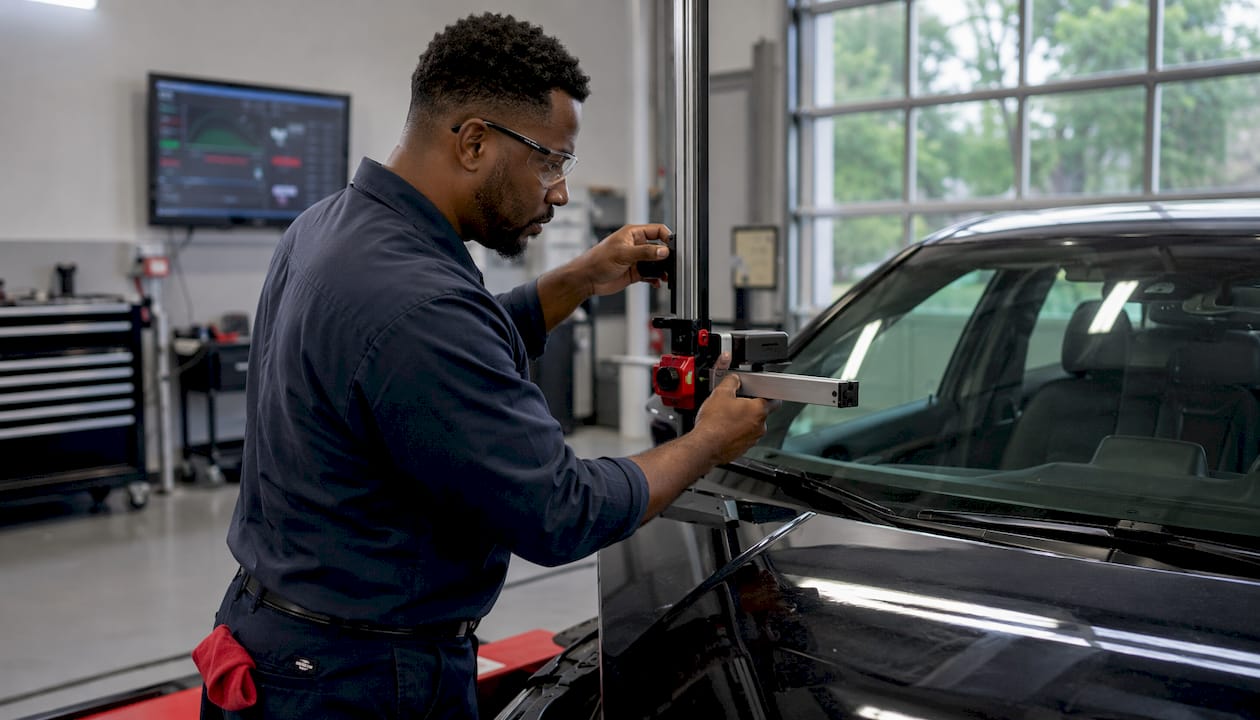
Glass grade and PVB interlayer consistency determine how light passes through the windshield. Variations in refractive index or thickness, even fractions of a millimeter, create optical distortion that the human eye may not notice but that a forward-facing camera absolutely will. The camera’s image-processing algorithms assume a specific optical path. Introduce distortion, and lane markings, pedestrians, and vehicles can appear shifted from their actual positions.
Fit, tolerances, and sealing
OEM panels are manufactured to original tooling with tight tolerances. Aftermarket quality varies dramatically and can produce bracket misplacement and curvature mismatches. A windshield that does not sit perfectly in the frame creates wind noise, increases leak risk, and shifts the camera’s viewing angle. Technicians who install a lot of aftermarket glass will tell you that the fit check before bonding is where problems first appear.
Safety impact and ADAS failure modes
The hazards of compromised glass extend beyond visibility. For ADAS-equipped vehicles, a misaligned windshield can cause the forward collision warning to trigger late, the automatic emergency braking to respond incorrectly, or the lane-keeping system to pull the wheel at the wrong moment. These are not hypothetical edge cases. Shop technicians regularly diagnose persistent ADAS errors that resolve only after swapping an aftermarket panel for OEM glass.
Why ADAS calibration is the most safety-critical step after replacement
ADAS calibration after windshield replacement is not optional for any vehicle with forward-facing cameras. Skipping it does not leave the system in a neutral state. It leaves it operating on assumptions about camera position that are no longer accurate, which means emergency braking or lane-keeping can act incorrectly.
How calibration works
There are two types, and many vehicles require both:
- Static calibration: The vehicle is parked on a level surface, and a technician places manufacturer-specific target boards at precise distances and angles in front of the camera. A diagnostic tool connects to the vehicle’s OBD port and walks through the alignment sequence. The entire setup must be exact. As one industry source notes, incorrect target placement can falsely “pass” diagnostics while leaving systems misaligned.
- Dynamic calibration: The vehicle is driven at a specific speed on roads with clear lane markings while the diagnostic tool monitors camera output and adjusts alignment parameters in real time. Some manufacturers require this step in addition to static calibration.
What to confirm with your installer
- Does the shop own dedicated calibration equipment (not a generic scan tool)?
- Is the technician trained and certified on the specific vehicle make?
- Will both static and dynamic calibration be performed if the manufacturer requires it?
- Will you receive a written calibration report with before-and-after readings?
Pro Tip: If calibration fails repeatedly after an aftermarket install, the glass fit or bracket placement is usually the cause. Ask the shop about switching to OEM glass before paying for additional calibration attempts.
Typical ADAS calibration adds $150–$350 to a windshield replacement, depending on whether static, dynamic, or both procedures are required. Most comprehensive insurance policies cover calibration as part of a glass claim, but confirm this with your insurer before the work begins.
What to expect on price and how insurance typically handles the choice
Understanding the cost picture up front prevents surprises. Here is a realistic breakdown.
| Cost Component | Aftermarket | OEM |
|---|---|---|
| Windshield glass | Lower; typically 30–50% less than OEM | Higher; varies by vehicle make and model |
| ADAS calibration (if required) | $150–$350 | $150–$350 |
| Installer warranty | Varies; confirm in writing | Varies; confirm in writing |
| Total out-of-pocket (no insurance) | Lower upfront; potential repeat costs if calibration fails | Higher upfront; fewer repeat visits |
For local Portland pricing by vehicle type, the range varies considerably. A standard sedan aftermarket replacement runs less than an OEM replacement for the same vehicle, but the gap narrows once calibration is included.
How insurers typically approach the choice:
- Most insurers default to aftermarket glass to control claim costs. This is standard industry practice, not a policy violation.
- You can request OEM glass, but many policies require you to pay the price difference out of pocket unless your policy includes an OEM endorsement.
- Some policies, particularly those with comprehensive glass coverage, may cover OEM without a surcharge. Check your policy language specifically for “OEM glass” or “original equipment” provisions.
- Direct billing to your insurer, which Collision Auto Glass & Calibration offers, removes the paperwork burden and speeds up the process.
Insurance tips worth acting on:
- Ask your insurer whether calibration is covered under your glass claim before scheduling service.
- Request a written cost comparison showing aftermarket vs. OEM total cost including calibration.
- If your vehicle is under manufacturer warranty, check whether using non-OEM glass affects any related system warranties.
What happens during a quality windshield replacement
A professional installation follows a defined sequence. Knowing the steps helps you evaluate whether a shop is cutting corners.
- Vehicle preparation: The technician covers the interior and exterior to protect paint and upholstery, then removes trim pieces, wipers, and any sensors or camera brackets attached to the glass.
- Old glass removal: A cold knife or wire tool cuts the urethane adhesive bond. The old glass is removed carefully to avoid damaging the pinch weld or frame.
- Frame prep and priming: The technician cleans the frame, removes old adhesive, and applies a fresh primer to promote adhesion. This step directly affects leak resistance.
- New glass bonding: Fresh urethane adhesive is applied to the frame, the new windshield is set in position, and pressure is applied to seat it evenly.
- Initial checks: The technician verifies the seal, checks for gaps, and reattaches trim, sensors, and camera brackets.
- ADAS calibration: For equipped vehicles, static and/or dynamic calibration is performed using manufacturer-specific equipment and procedures.
- Final inspection: The technician checks for optical distortion, confirms the seal, and reviews the calibration report with you.
Time estimates: A standard replacement without calibration takes roughly 60–90 minutes. Add static calibration and you are looking at 2–3 hours total. Dynamic calibration adds a road test on top of that.
Post-install care checklist:
- Wait the full drive-away time your installer specifies, typically 1 hour minimum, before moving the vehicle.
- Leave the retention tape on for 24 hours if applied.
- Avoid pressure washing the windshield for at least 24 hours.
- Do not slam doors repeatedly in the first 24 hours; pressure changes stress the fresh adhesive bond.
- Check for wind noise or water intrusion after the first rain.
- Keep your written calibration report and warranty documentation in the vehicle.
Questions to ask your installer and red flags to watch for
Choosing between OEM and aftermarket glass is only half the decision. Choosing the right installer is the other half, and it matters just as much.
Decision checklist before you call:
- Does your vehicle have forward-facing cameras, radar, or other ADAS sensors? If yes, OEM glass is the lower-risk choice.
- Is the vehicle under manufacturer warranty? OEM glass protects related system warranties.
- Are you planning to sell the vehicle within two years? OEM glass and documented calibration support resale value.
- Is budget the primary constraint? A premium-tier aftermarket panel from a certified installer is a reasonable compromise for non-ADAS vehicles.
Exact questions to ask any installer:
- Is the glass OEM or aftermarket, and which tier/brand?
- Do you perform ADAS calibration in-house, and what equipment do you use?
- Is calibration included in the quoted price, or is it billed separately?
- What is the warranty on the installation, and does it cover leaks?
- Will I receive a written calibration report?
- How long before I can drive the vehicle?
Red flags that should give you pause:
- The shop cannot name the calibration equipment brand or describe the calibration process.
- No written warranty is offered, or the warranty excludes leaks.
- The price is significantly below market with no clear explanation of what is included.
- The technician is vague about whether calibration is required for your vehicle.
- The shop cannot show you the glass packaging or confirm the supplier.
Trust signals to prioritize: Look for AGSC certification, documented calibration reports, a lifetime no-leak guarantee, and a written cost breakdown before work begins. When evaluating a shop’s technician credentials, understanding how to assess automotive certifications gives you a practical framework for asking the right questions.
Bottom-line recommendations by scenario
Not every vehicle or situation calls for the same answer. Here is how to apply the analysis to the most common cases.
- ADAS-equipped daily driver: Choose OEM glass. The optical precision and bracket positioning reduce calibration risk and protect the systems you rely on every day. The price premium is a reasonable safety investment.
- Older vehicle without ADAS (pre-2015 roughly): A premium-tier aftermarket windshield from a reputable supplier is a sound choice. Confirm the installer offers a no-leak warranty and uses quality urethane adhesive.
- Classic or show car: OEM or OEM-equivalent glass preserves appearance and value. Cosmetic differences at the edges matter more here than on a daily driver.
- Urgent budget repair while traveling: Accept a mid-market aftermarket panel if that is what is available, but insist on a written warranty and confirm the installer will check the seal before you leave.
- Resale-sensitive vehicle: OEM glass and a documented calibration report are worth the extra cost. Buyers and dealers notice, and some certified pre-owned programs require OEM glass documentation.
Key Takeaways
OEM glass is the right choice for ADAS-equipped vehicles because optical precision and bracket alignment directly determine whether your safety systems work correctly after replacement.
| Point | Details |
|---|---|
| OEM is the ADAS default | OEM windshields showed ~12% better optical clarity in camera zones and ~23% fewer calibration problems than average aftermarket panels. |
| Calibration is not optional | ADAS calibration costs $150–$350 and must be performed after any windshield replacement on a camera-equipped vehicle. |
| Aftermarket has a quality range | Premium-tier aftermarket glass is acceptable for non-ADAS vehicles; budget tiers risk optical distortion and calibration failures. |
| Insurance defaults to aftermarket | Most insurers cover aftermarket glass by default; request OEM in writing and confirm whether your policy covers the price difference. |
| Collision Auto Glass & Calibration | Offers OEM and premium aftermarket options, in-house ADAS calibration, direct insurance billing, and a lifetime no-leak guarantee in Portland, OR. |
Why the installer matters more than the glass label
The debate over OEM vs. aftermarket glass is real, but it can distract from the factor that most directly determines whether your replacement goes well: the installer’s skill and equipment.
A perfectly spec’d OEM windshield installed by a technician who skips the urethane primer step, misaligns the camera bracket by a few millimeters, or runs calibration with an incorrect target distance will leave you with a vehicle that is less safe than it was before the replacement. Conversely, a premium-tier aftermarket panel installed by a certified technician with proper calibration equipment and a documented process will perform reliably for the life of the vehicle on a non-ADAS car.
The industry’s own guidance is clear on this point: certified technicians and manufacturer-specific calibration procedures matter more than chasing the lowest price. Shops that can show you their calibration equipment, name the procedure they follow, and hand you a written report at the end are the ones worth trusting. The glass choice is secondary to that.
For ADAS-equipped vehicles, the combination of OEM glass and a certified installer is the safest path. But if budget requires aftermarket glass, a certified installer with proper calibration equipment closes most of the gap. What no amount of good glass can fix is a shop that does not know how to calibrate the system correctly afterward. Collision Auto Glass & Calibration has been doing this work in Portland since 2008, with 17 years of documented service and a process built around calibration as a standard step, not an add-on.
What Collision Auto Glass & Calibration offers Portland drivers
Portland drivers dealing with a cracked or damaged windshield get a straightforward path to a safe, warranted replacement with Collision Auto Glass & Calibration. The service includes same-day mobile installation anywhere in the Portland area, in-house ADAS calibration using dedicated equipment, direct insurance billing so you are not stuck managing paperwork, and a lifetime no-leak guarantee on every installation.
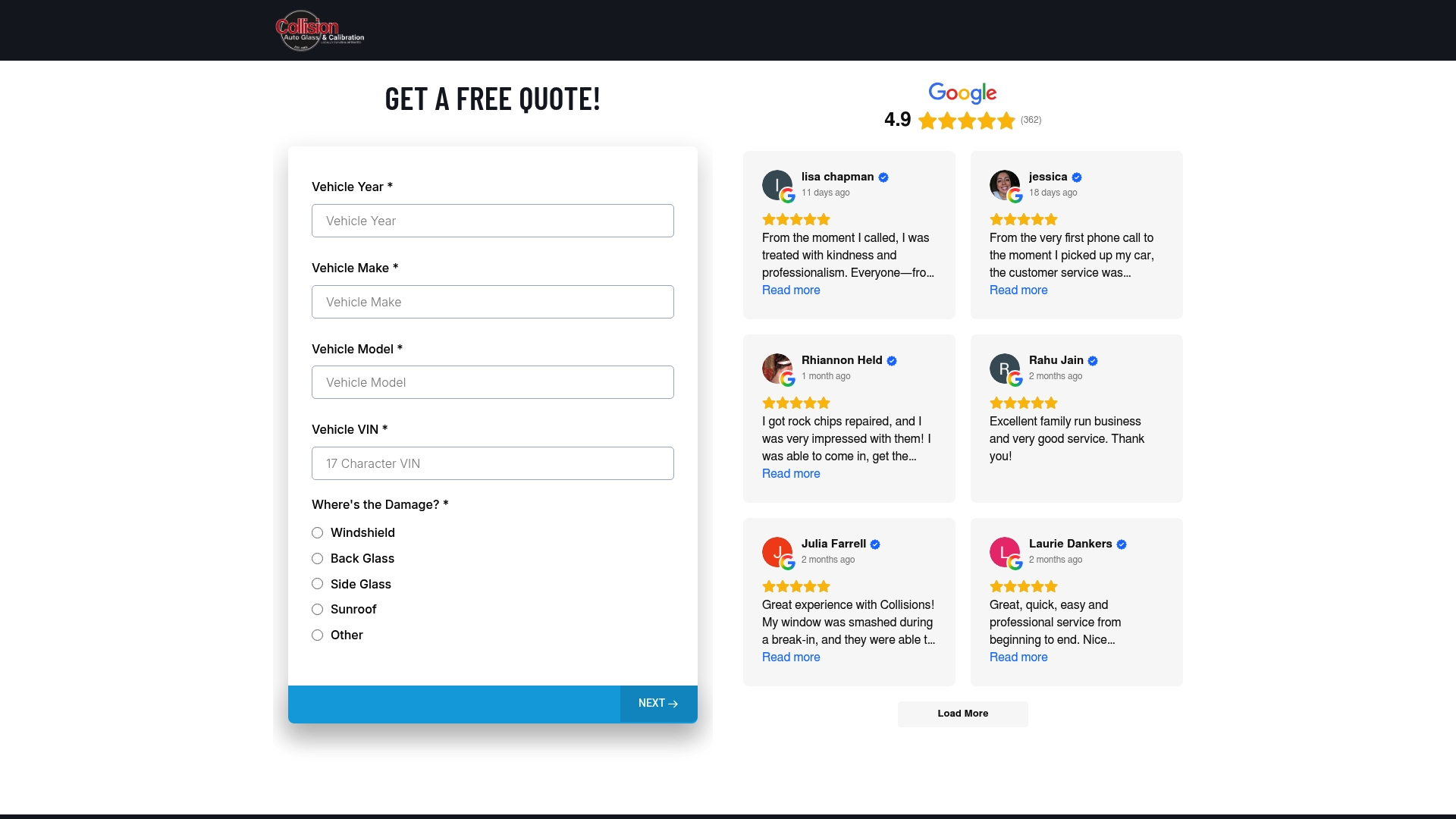
OEM glass is available on request for any vehicle, and the team will walk you through the cost difference versus a premium aftermarket option so you can make an informed decision before work begins. Calibration is treated as a standard part of the replacement process for any ADAS-equipped vehicle, not a line item you have to negotiate for. When you call, ask specifically: Is OEM glass available for my vehicle? Is calibration included in the quoted price? What is the warranty, and does it cover leaks? You can also review windshield replacement costs and common questions on the website before you book. To schedule service or get a written quote, visit collisionautoglass.com or call to speak with a technician directly.
Useful sources and standards referenced
The technical claims in this article draw on the following primary standards and industry resources:
- FMVSS 205, Glazing Materials (49 CFR 571.205): The federal regulatory baseline for all glazing in U.S. motor vehicles, including aftermarket replacement glass. Covers performance requirements, optical distortion limits, and certification obligations.
- NHTSA interpretation on FMVSS and replacement glazing: NHTSA guidance clarifying manufacturer certification obligations and the agency’s enforcement boundaries for post-sale repairs and replacement glazing.
- Auto Glass Safety Council (AGSC) — calibration guidance: Industry body guidance on ADAS calibration procedures, equipment requirements, and why calibration is a safety-critical restoration step, not a routine reset.
- ADAS calibration after windshield replacement — why it’s not optional: Industry overview of calibration requirements, failure risks from skipping calibration, and best practices for shop procedures.
- What is ADAS calibration and why it’s essential after windshield replacement: Technical explanation of static vs. dynamic calibration workflows, equipment requirements, and typical cost ranges ($150–$350).
- OEM vs Aftermarket Windshields: Complete Comparison Guide: Industry summary covering material differences, tolerance comparisons, ADAS calibration outcomes, and the 30–50% aftermarket price differential.
FAQ
Are aftermarket windshields as good as OEM windshields?
For non-ADAS vehicles, premium-tier aftermarket glass performs comparably to OEM in most real-world conditions. For ADAS-equipped vehicles, OEM glass is the safer choice because it is engineered to the vehicle’s exact optical and bracket specifications, producing fewer calibration problems.
How much does OEM glass cost compared to aftermarket?
Aftermarket windshields typically cost 30–50% less than OEM before calibration is factored in. ADAS calibration adds $150–$350 regardless of glass type, so the total cost difference narrows when calibration is included.
Does insurance cover OEM windshield replacement?
Most insurers default to aftermarket glass to control claim costs. You can request OEM, but many policies require you to pay the price difference unless your policy includes a specific OEM endorsement. Confirm your policy language before scheduling service.
Does Oregon require free windshield replacement?
Oregon does not mandate zero-deductible windshield replacement the way a few other states do. Coverage depends on your specific comprehensive insurance policy. For details on local coverage options, Collision Auto Glass & Calibration offers direct insurance billing and can help clarify what your policy covers before work begins.
Is ADAS calibration always required after a windshield replacement?
Yes, for any vehicle with forward-facing cameras or radar sensors. Skipping calibration leaves the system operating on pre-replacement camera position assumptions, which can cause emergency braking or lane-keeping to respond incorrectly.
Recommended
- How much does it cost to replace a windshield? – Collision Auto Glass & Calibration
- How Much Will My Windshield Replacement Cost in Aloha, OR? – Collision Auto Glass & Calibration
- How Much Should I Expect to Pay for a New Windshield in Wilsonville, Oregon? – Collision Auto Glass & Calibration
- How Much Will My Windshield Replacement Cost in Lake Oswego, Oregon? – Collision Auto Glass & Calibration
Share
Recent Posts
September 6, 2026
U.S. Drivers: Wait 24–72 Hours Before Washing a New Windshield
Installer approved stages for washing a new windshield: hand wash after 24 hours, touchless at 48, high pressure at 72. Inspect seals if...
September 5, 2026
$20–$1,000+: DIY or Pro for Windshield Molding Replacement
Decide whether to DIY windshield molding replacement or call a pro. See parts costs ($20–$150), shop quotes to $1,000+, plus rust, encapsulation, and...
September 4, 2026
Static First, Dynamic Confirm: ADAS Calibration for Technicians
ADAS guide for technicians: when to run static before dynamic calibration. Includes a shop checklist and one visit workflow....