
Auto Glass Repair
TL;DR:
- Tempered glass is designed for strength and thermal resistance, while laminated glass is built for safety and security.
- Choosing the correct type depends on application requirements, with laminated offering UV protection and impact retention.
Tempered and laminated glass are both federally recognized safety glazing materials under standards such as CPSC 16 CFR 1201 and ANSI Z97.1, yet they serve fundamentally different purposes. Tempered glass is engineered for raw strength and thermal resistance, while laminated glass is built for fragment retention, UV protection, and security. Choosing between them is not a matter of preference. It is a matter of matching the right glass to the right application, whether you are replacing a windshield in Portland, selecting glass for a staircase railing, or specifying glazing for a commercial build.
1. What are the main differences between tempered vs laminated glass?
The manufacturing process is where the two types diverge completely. Tempered glass is made by heating standard annealed glass to roughly 1,200°F and then rapidly cooling it. This creates internal compression that makes it 4–5 times stronger than untreated glass. Laminated glass, by contrast, bonds two or more glass plies together with a polyvinyl butyral (PVB) interlayer under heat and pressure.
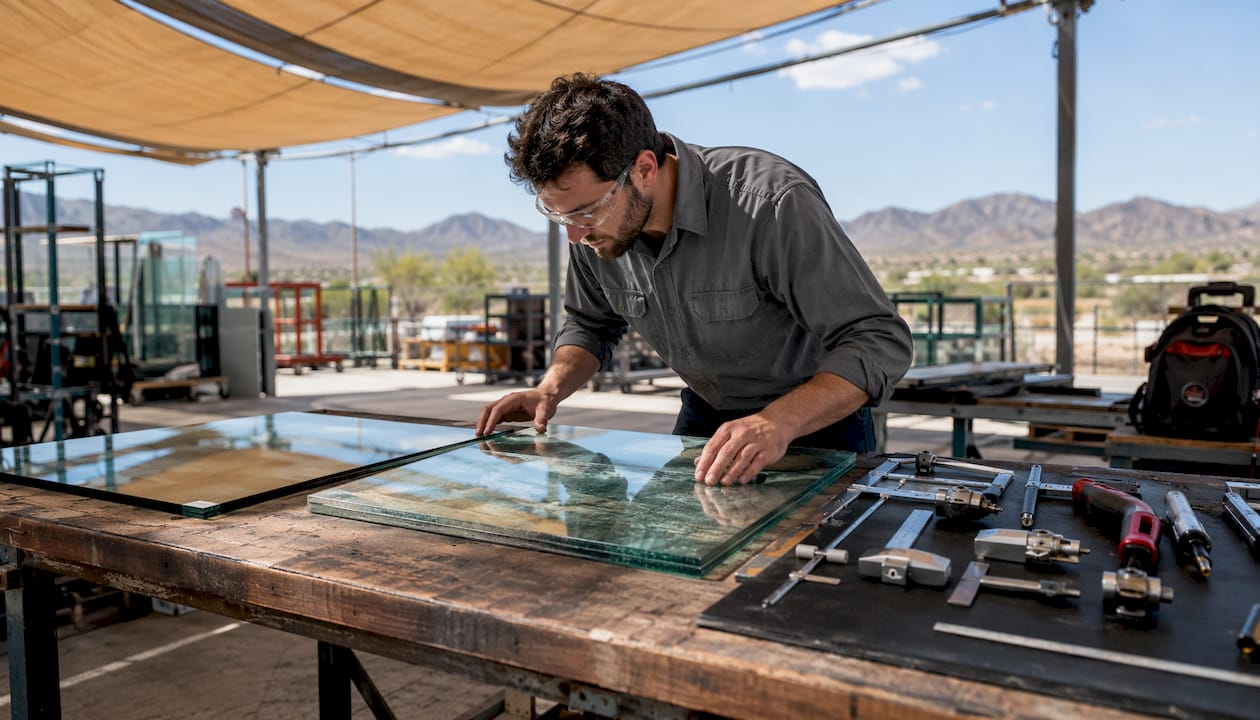
Breakage behavior is the most visible difference between the two. Tempered glass shatters into small, blunt fragments on impact. This reduces laceration risk but leaves no barrier in place. Laminated glass cracks but holds together because the PVB interlayer grips the fragments. That retained structure is the core reason laminated glass is mandated for vehicle windshields and building skylights.
Cost reflects the added manufacturing complexity. Tempered glass costs $12–$35 per square foot, while laminated glass runs $20–$50 per square foot. The price gap is real, but so is the performance difference. Laminated glass also blocks over 99% of UV rays and reduces external noise by 3–6 dB through the PVB interlayer. Tempered glass offers neither of those benefits.
| Property | Tempered glass | Laminated glass |
|---|---|---|
| Strength vs. annealed | 4–5× stronger | Moderate (depends on ply count) |
| Breakage pattern | Small blunt fragments | Cracks but holds together |
| UV protection | Minimal | Blocks over 99% of UV rays |
| Noise reduction | None | 3–6 dB reduction |
| Cost per sq ft | $12–$35 | $20–$50 |
| Repairability | Full replacement required | Minor chips often repairable |
Pro Tip: If you are comparing glass for a skylight or overhead application, laminated is the code-required choice in most jurisdictions. Tempered glass is not permitted overhead because falling fragments still cause injury.
2. How do safety and security aspects differ?
Tempered glass meets safety glazing codes by breaking into blunt pieces, which is the right outcome for shower enclosures and door sidelites. The problem is that tempered glass offers almost zero forced entry resistance. One sharp impact disintegrates the entire pane, leaving no barrier at all. That is code-compliant but not secure.
Laminated glass behaves differently under attack. The PVB interlayer holds the cracked plies together, and the panel continues to absorb energy even after the first ply fails. Laminated glass acts as a penetration-resistant barrier, which is why it is specified for storefronts, hurricane zones, and high-security facilities. Thicker PVB interlayers increase the time required to breach the panel significantly.
Tempered glass breaks safe. Laminated glass stays in place. Those are two very different outcomes when security is the goal. Meeting a safety code and resisting forced entry are not the same standard.
Security film applied to tempered glass can improve impact performance, but only when the film and glass are tested as a complete assembly. A film applied after the fact, without system-level testing, does not reliably replicate laminated glass performance. This distinction matters if you are specifying glass for a retail space or a vehicle with high theft exposure.
In automotive applications, the split is clear. Windshields require laminated glass by federal law because the panel must stay intact during a collision to support airbag deployment and prevent occupant ejection. Side and rear windows have traditionally used tempered glass, though about 1 in 3 US cars sold since 2018 now use laminated side and rear glass for added ejection mitigation. Portland drivers replacing car door glass should confirm which type their vehicle uses before ordering a replacement.
3. Common applications and when to use each type
The right glass type depends on the specific location and what you need it to do. Tempered glass is the standard choice for:
- Shower enclosures and bath surrounds
- Oven and fireplace doors (thermal resistance is the priority)
- Door sidelites and entry glass panels
- Frameless glass furniture tops
- Side and rear windows in most vehicles
Laminated glass is required or strongly preferred for:
- Vehicle windshields (federal mandate since 1927)
- Building skylights and sloped glazing under 75°
- Glass railings and guards where fragment retention is required
- Overhead glazing in commercial and residential buildings
- Storefronts in hurricane or high-wind zones
- Any location where UV protection or noise reduction is a design requirement
Noise reduction is a frequently overlooked laminated glass benefit. The 3–6 dB reduction from the PVB interlayer is meaningful in urban environments. For Portland residents near the I-5 corridor or the Lloyd District, laminated windows deliver a noticeably quieter interior without adding bulk to the frame.
UV protection is equally underappreciated. Laminated glass blocking over 99% of UV rays protects flooring, furniture, and artwork from fading. Tempered glass provides no comparable UV filtering. If you are specifying glass for a south-facing room or a sunroom, laminated is the clear choice on this criterion alone.
Code changes in 2024 emphasize laminated tempered assemblies for structural adequacy in guards and handrails, moving away from single-ply tempered glass in those applications. Specifying the wrong type after fabrication begins is an expensive correction. Confirm the code requirement for your specific application before ordering.
4. How to identify tempered and laminated glass
The easiest way to identify tempered glass is to look for an etched or printed bug at a corner of the pane. This mark includes the manufacturer name, the safety standard (ANSI Z97.1 or CPSC 16 CFR 1201), and the glass type. Laminated glass often carries a similar mark but may also show the PVB interlayer thickness.
Polarized sunglasses reveal tempered glass quickly. When you tilt your head and look through polarized lenses at a tempered pane, you will see a faint grid or stress pattern caused by the rapid cooling process. Laminated glass does not produce this pattern. This trick works on car windows and building glass alike.
Breakage pattern is the definitive identifier if the glass is already damaged. Tempered glass shatters into a field of small cubes. Laminated glass cracks in a web pattern but stays in one piece. If your car glass is broken and the fragments are still held together, you are looking at laminated glass.
Repairability follows directly from glass type. Minor chips in a laminated windshield can often be repaired with resin injection, which restores optical clarity and structural integrity without full replacement. Tempered glass cannot be repaired. Any damage that compromises the pane requires a full replacement because tempered glass must be manufactured to final dimensions before the tempering process and cannot be cut or drilled afterward.
Pro Tip: Before scheduling a repair, check whether your chip is in the driver’s line of sight. Chips in that zone typically require replacement regardless of glass type, because resin repair can leave minor optical distortion.
5. Laminated tempered assemblies: the best of both
A lesser-known option is laminated tempered glass, which bonds two tempered plies with a PVB interlayer. This assembly combines the raw strength of tempered glass with the fragment retention of laminated construction. Laminated glazing with multiple tempered layers is specified for high-security zones, structural glass floors, and applications where both impact resistance and post-breakage integrity are required.
The cost is higher than either single type, but the performance justifies it in the right context. Structural glass staircases, glass floors in commercial buildings, and ballistic-rated glazing all use this approach. For most residential and standard automotive applications, a single-type specification is sufficient and more cost-effective.
Understanding this option matters because it changes the framing of the tempered vs laminated debate. The choice is not always binary. When the application demands both strength and security, a laminated tempered assembly delivers both without compromise.
Key takeaways
Laminated glass is the correct choice when fragment retention, UV protection, noise reduction, or forced entry resistance is the priority. Tempered glass is the right choice when raw impact strength, thermal resistance, and cost efficiency are the primary concerns.
| Point | Details |
|---|---|
| Breakage behavior defines the choice | Tempered shatters safely; laminated holds together and maintains a barrier after impact. |
| Cost difference is real but justified | Laminated glass costs $20–$50 per sq ft vs. $12–$35 for tempered, reflecting added performance. |
| Security is not the same as code compliance | Tempered glass meets safety codes but disintegrates on forced entry; laminated resists breach. |
| Automotive glass follows federal rules | Windshields require laminated glass by law; laminated side windows are growing in new vehicles. |
| Specify before fabrication | Tempered glass cannot be cut after treatment; errors after production are costly to correct. |
What 17 years of auto glass work has taught us about this choice
Most people ask “tempered or laminated?” as if it is a preference question. It is not. The application dictates the answer, and the code often makes the decision for you. What we see repeatedly at Collision Auto Glass & Calibration is customers surprised to learn their side windows are tempered while their windshield is laminated. Those are not interchangeable.
The insight that gets overlooked most often is the security gap. Tempered glass is genuinely safe in the traditional sense. It will not cut you badly when it breaks. But it offers no resistance to a smash-and-grab. Laminated side windows on newer vehicles close that gap, and Portland drivers who park in high-traffic areas should know whether their vehicle has them.
The other thing worth saying plainly: “tempered where required” is not a complete specification for a building project. We have seen contractors order tempered glass for railing applications only to discover mid-project that the 2024 code update requires a laminated tempered assembly. That is an expensive lesson. Specifying the right glass type at the design stage costs nothing. Correcting it after fabrication costs significantly more.
— Collision Auto Glass & Calibration
Auto glass service in Portland from a team that knows the difference
Choosing the right glass type is only half the equation. Proper installation and post-replacement calibration determine whether that glass actually performs as designed.
Collision Auto Glass & Calibration has served Portland drivers since 2008 with windshield replacement, rock chip repair, and in-house ADAS calibration. Every installation carries a lifetime no-leak guarantee, and the team handles direct insurance billing so the process stays simple. If your vehicle has ADAS sensors tied to the windshield, calibration after replacement is not optional. It is a safety requirement. For guidance on choosing the right auto glass shop or to get a same-day quote, contact Collision Auto Glass & Calibration directly.
FAQ
What is the main difference between tempered and laminated glass?
Tempered glass shatters into small blunt fragments on impact, while laminated glass cracks but stays in one piece due to its PVB interlayer. The key distinction is that laminated glass maintains a barrier after breakage; tempered glass does not.
Which glass type is required for car windshields?
Laminated glass is required for all automotive windshields by federal law. It prevents occupant ejection, supports airbag deployment, and contributes to the structural rigidity of the vehicle during a collision.
Can tempered glass be repaired after damage?
Tempered glass cannot be repaired. Any damage requires full replacement because the glass is manufactured to final dimensions before tempering and cannot be cut or modified afterward. Laminated glass chips can often be repaired with resin injection.
Is laminated glass worth the higher cost?
Laminated glass is worth the cost when UV protection, noise reduction, security, or fragment retention is a priority. For applications where only strength and thermal resistance matter, tempered glass is the more cost-effective choice at $12–$35 per square foot.
Do Portland building codes require laminated glass anywhere?
Building codes require laminated glass for overhead glazing, skylights sloped under 75°, and glass railings in most jurisdictions, including Oregon. The 2024 code updates also push laminated tempered assemblies for guards and handrails where single-ply tempered was previously accepted.
Recommended
- Common Causes of Car Door Glass Damage and How to Prevent Them – Collision Auto Glass & Calibration
- Collision Auto Glass: Our Response to COVID-19 – Collision Auto Glass & Calibration
- The Hazards of Driving With a Cracked Windshield – Collision Auto Glass & Calibration
- Is It Safe to Drive a Car With a Broken Window?
Share
Recent Posts

October 19, 2026
How to Choose a Fleet Auto Glass Vendor in 2026
Choosing a fleet auto glass vendor? Compare ADAS calibration, mobile service, billing, records and warranty, with a scorecard and questions to ask....
October 18, 2026
Side Window Replacement Process: What Happens, Step by Step
How a professional side window replacement works, from glass type and cleanup to install and cure time, plus Oregon insurance and tint rules....

October 17, 2026
RV Windshield Lead Time: 2–7 Days or Weeks, Plus ADAS
RV windshield lead time depends on glass availability, freight, and ADAS calibration. Learn what to ask shops to clarify delivery and shorten the...