Auto Glass Repair
Replacing a truck windshield in the U.S. typically runs several hundred dollars for older, non-ADAS vehicles and significantly more for modern ADAS-equipped trucks once calibration is factored in. That upper number surprises a lot of truck owners, and it shouldn’t. ADAS calibration alone commonly adds $150–$450 to the total, and on many pickup trucks with dual or multi-sensor systems, the combined calibration bill can push past $600.
Here’s where most truck owners land:
- Older truck, no ADAS (pre-2017): $300–$600 cash, often $0–$100 out of pocket with comprehensive insurance.
- Modern ADAS-equipped pickup (F-150, Silverado, Ram 1500): $800–$1,500+ total, depending on glass type and calibration method.
- Large commercial, box truck, or RV: $900–$2,500+, driven by specialty glass size, flat windshield geometry, and fleet policy terms.
With comprehensive insurance and a deductible under $500, most private truck owners pay little to nothing out of pocket. Cash-pay customers should budget for the full replacement plus calibration as a single line item, not two separate decisions.
Key Takeaways
Modern truck windshield replacement costs significantly more than most owners expect once ADAS calibration is included, making it critical to get a fully itemized quote before authorizing any work.
| Point | Details |
|---|---|
| Typical cost range | Non-ADAS trucks run $300–$600; ADAS-equipped pickups commonly reach $800–$1,500+ with calibration. |
| Calibration is the hidden cost | ADAS calibration adds $150–$600 depending on method; always request it as a separate line item. |
| Insurance usually covers it | Comprehensive policies cover glass replacement; ask your adjuster whether calibration is included before work begins. |
| OEM glass matters on ADAS trucks | Aftermarket glass can interfere with sensor performance; OEM or manufacturer-spec glass is the safer choice. |
| Collision Auto Glass & Calibration | Portland-area truck owners get same-day service, in-house calibration, lifetime no-leak guarantee, and direct insurance billing. |
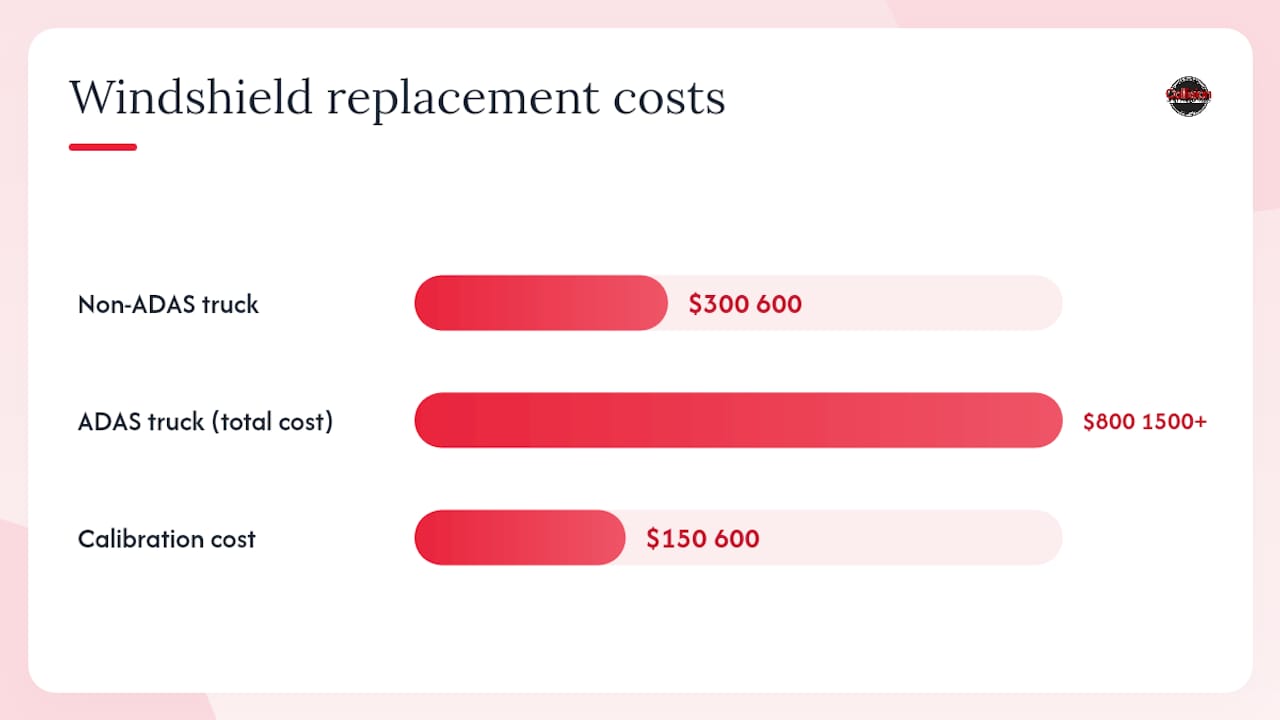
Table of Contents
- What does a truck windshield replacement quote actually include?
- How does ADAS calibration change your total replacement cost?
- Why do truck windshields cost more than car windshields?
- How does insurance affect what you actually pay?
- When can a chip or crack be repaired instead of replaced?
- How to get an accurate, comparable quote from any shop
- How long does truck windshield replacement and calibration take?
- Cost examples by truck type and calibration scenario
- What should you expect from a qualified windshield installer?
- The calibration step most shops skip, and why it matters
- Portland truck owners: same-day service with in-house calibration
- Sources
- FAQ
What does a truck windshield replacement quote actually include?
A quote that looks low often is. Understanding the standard line items helps you spot what’s missing before you commit.
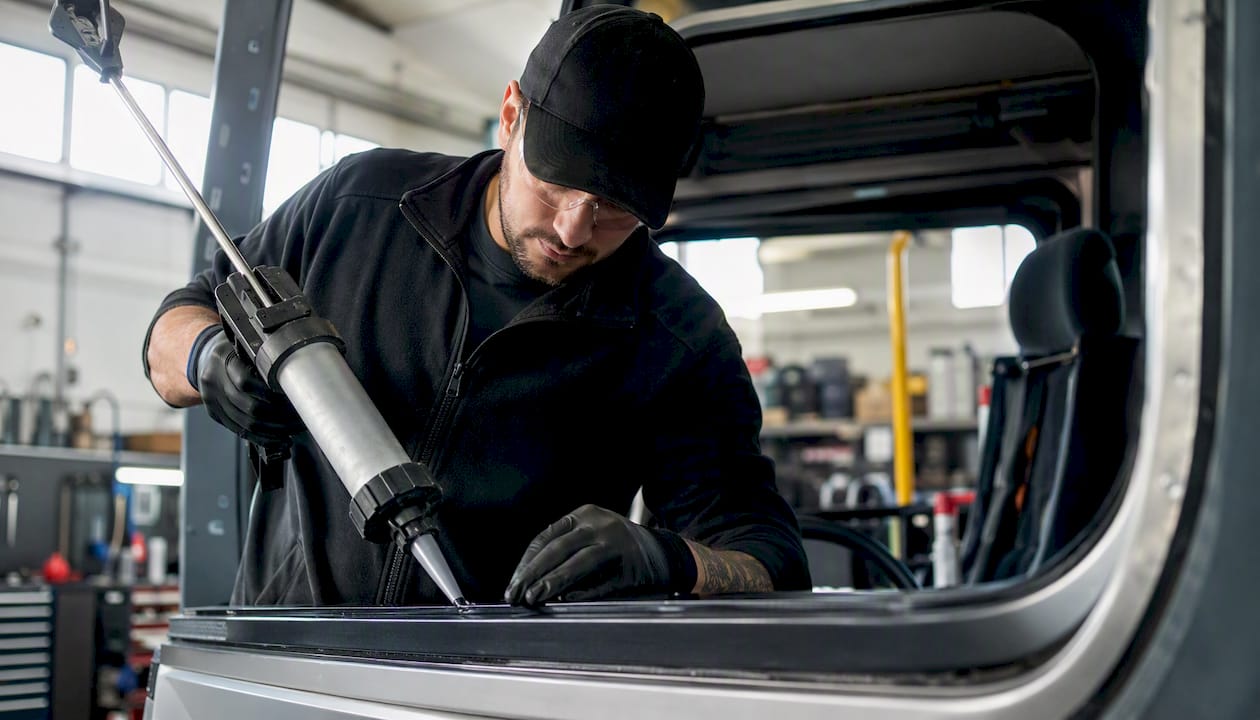
A complete quote for truck windshield replacement cost should include the glass itself, labor (typically 1–2 hours), urethane adhesive, disposal of the old windshield, trim and molding removal, and a warranty. Each of those items has a real cost, and shops that bundle them into a single number make it harder to verify what you’re actually getting.
Geographic variance is real. Urban markets in the Pacific Northwest, California, and the Northeast tend to run 10–20% above national averages due to labor rates and shop overhead. Rural areas may be cheaper on labor but can face longer part-sourcing lead times for specialty truck glass.
According to Kelley Blue Book, what used to be a straightforward glass swap can now frequently exceed $1,000 for ADAS-equipped vehicles. That shift happened fast, and many truck owners are still quoting prices from five years ago.
How does ADAS calibration change your total replacement cost?
ADAS calibration is now the single largest variable in truck windshield replacement pricing, and it’s the item most likely to be missing from a low quote.
Roughly 85% of vehicles built after 2017 require ADAS calibration after windshield replacement. The windshield is the mounting surface for forward-facing cameras, rain sensors, and lane-departure systems. Removing and reinstalling the glass shifts those sensors, even slightly, and that shift is enough to throw off the system’s calibration. On a truck traveling at highway speed, an uncalibrated forward-collision camera is a safety liability.
These ranges align with published calibration cost data, which also notes that mobile static calibration typically carries a $50–$100 surcharge because the technician must transport and set up target boards at your location. Not every shop offers mobile calibration, and those that do need adequate flat space to position the targets correctly.
Static calibration uses a fixed target board placed at a precise distance in front of the vehicle. Dynamic calibration requires driving the vehicle at specific speeds under defined road conditions so the system can self-correct. Many modern trucks, particularly those with both forward cameras and radar-based adaptive cruise control, require both methods.
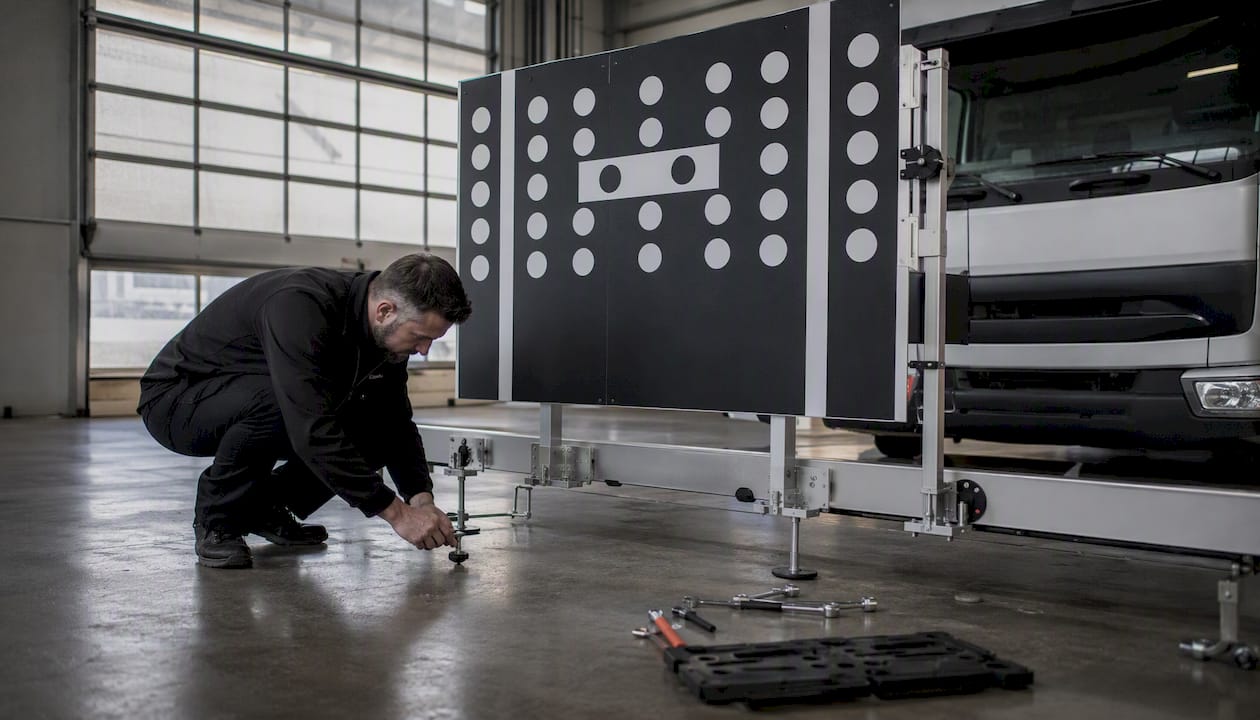
Truck-specific calibration scenarios often cost more than the average passenger-vehicle job. Combined static and dynamic jobs with OEM-specific steps regularly push totals above typical passenger-vehicle ranges, particularly on full-size pickups with radar alignment requirements.
Pro Tip: Ask every shop this exact question before booking: “Is ADAS calibration included in this quote, and if so, which type?” A shop that hesitates, says “it depends,” or adds calibration only after you ask is telling you something. Insist on calibration listed as a separate line item with the method specified.
Why do truck windshields cost more than car windshields?
Size is the obvious answer, but it’s not the whole story. Truck windshields are physically larger, which raises both material cost and labor time. A full-size pickup windshield can be 30–40% larger by surface area than a compact sedan’s, and that difference shows up in glass price, adhesive volume, and the number of technicians needed for a safe installation.
Shape matters too. Many commercial trucks and box trucks use relatively flat, upright windshields. That geometry requires different adhesive application techniques and can complicate the seal against water intrusion. Steeply raked pickup windshields, by contrast, often have complex curves that make aftermarket glass fitment less precise, which is one reason OEM glass is recommended for ADAS-equipped trucks. Small differences in optical clarity, laminate thickness, or camera mounting points can require repeat calibration or trigger system faults.
Additional truck-specific cost drivers include:
- Heads-up display (HUD) glass: Requires a specific laminate layer; aftermarket substitutes often cause image distortion.
- Heated windshields: Embedded heating elements must be intact; replacement glass must match the electrical connector.
- Camera mounting brackets: Some trucks have factory-bonded brackets that must transfer to the new glass without misalignment.
- Rain-sensing wipers: The sensor’s optical coupling to the glass affects wiper behavior; wrong glass can cause erratic operation.
- RV and motorhome glass: Often custom or semi-custom, with lead times of several days and prices starting around $800 for the glass alone.
- Box trucks and fleet vehicles: Flat glass, higher mounting positions, and fleet billing requirements add complexity and often require a fleet-specific quote.
For an accurate quote on any truck, give the shop your year, make, model, and trim level. A base-trim F-150 and a Platinum-trim F-150 can require entirely different windshields. Also disclose rain-sensing wipers, HUD, heated glass, and any factory camera systems. Failing to mention these features can force a mid-job reorder, adding both time and cost.
How does insurance affect what you actually pay?
Most comprehensive auto insurance policies cover windshield repair or replacement, subject to your deductible. You pay the lower of your deductible or the total replacement cost. On a $1,200 truck replacement, a $500 deductible means you pay $500; a $1,500 deductible means you pay the full bill.
The deductible calculation changes when calibration is involved. Some insurers treat calibration as part of the covered glass claim; others classify it separately or require pre-authorization. Always confirm with your adjuster that calibration is included before the shop starts work.
A few important insurance considerations for truck owners:
- Comprehensive coverage is required. Collision coverage does not cover rock chips or road debris. If you carry only liability and collision, windshield damage is out of pocket.
- $0 deductible glass programs exist. Some insurers and state programs waive the glass deductible for repairs or replacements under certain glass-only plans. Ask your insurer directly.
- Commercial and fleet policies vary significantly. Fleet policies often have separate glass endorsements with different deductibles and approved vendor lists. Fleet managers should review their endorsement before authorizing repairs.
- Direct billing simplifies the process. Shops that handle direct insurance billing submit the claim on your behalf, so you don’t pay upfront and wait for reimbursement.
Pro Tip: Before filing a claim, ask your adjuster two questions: “Does my policy cover ADAS calibration as part of a glass claim?” and “Do I have a glass-only deductible waiver?” The answers can save you hundreds of dollars and prevent a surprise bill after the job is done. You can also review how direct billing works at Collision Auto Glass & Calibration’s insurance page.
When can a chip or crack be repaired instead of replaced?
Repair is faster, cheaper, and often the right call, but only within specific limits. Industry guidelines generally recommend repair for small chips or cracks that are not in the driver’s primary sightline and do not interfere with camera or sensor fields. A single rock chip away from the center of the windshield, caught early, is a strong repair candidate.
Replacement becomes necessary when:
- The crack is longer than 6 inches or has spread to the edge of the glass.
- The damage is directly in the driver’s line of sight, where even a repaired chip leaves optical distortion.
- The chip or crack crosses the forward-facing camera’s field of view. Resin fill does not restore the optical clarity the camera needs.
- The damage is at or near the windshield edge, where structural integrity is compromised.
- Multiple chips exist in close proximity, weakening the glass beyond repair thresholds.
For truck operators, the safety stakes are higher than for passenger-car drivers. A commercial truck driver or fleet operator whose windshield damage falls in a gray area should default to replacement. The structural role of the windshield in a cab’s rollover protection means a compromised seal or weakened glass is a genuine occupational safety concern, not just a cosmetic issue. Rock chip repair options are worth exploring early, before a small chip spreads into a crack that forces a full replacement.
How to get an accurate, comparable quote from any shop
The difference between a $700 quote and a $1,400 quote for the same truck is almost always calibration, glass grade, and warranty. Here’s how to surface those differences before you commit.
Questions to ask every shop:
- Is this quote for OEM or aftermarket glass, and what is the part number?
- Does my truck require ADAS calibration after replacement, and is that included?
- If calibration is required, which type (static, dynamic, or both) and what is the separate cost?
- What warranty do you offer on the installation, and does it cover leaks?
- Do you offer mobile service, and is there an additional fee?
- What is the estimated total time, including calibration?
- Do you handle direct insurance billing?
Red flags in a quote:
- Calibration is not mentioned at all on a post-2017 truck.
- The quote is a single bundled number with no line items.
- The shop cannot confirm whether the glass is OEM or aftermarket.
- Warranty coverage is verbal only, with no written documentation offered.
- The price is significantly below the ranges in this guide without explanation.
To compare two quotes fairly, ask both shops to provide the same line items: glass cost, labor, calibration type and cost, warranty terms, and any mobile or rush fees. A quote that omits calibration is not cheaper; it’s incomplete.
How long does truck windshield replacement and calibration take?
A standard replacement without calibration typically takes about an hour for glass removal, installation, and trim reassembly. The urethane adhesive then requires some cure time before the vehicle is safe to drive, which varies with adhesive type and temperature. Most shops use fast-cure urethane that allows drive-away strength roughly within an hour under normal conditions.
Add calibration and the timeline extends:
- Static calibration usually requires additional in-shop time after adhesive cure.
- Dynamic calibration needs driving time at specified speeds, typically performed by a technician.
- Dual calibration can extend total time to several hours.
Mobile service changes the equation. A technician comes to your location, which saves you a trip, but mobile calibration carries a surcharge and requires adequate flat, covered space for target board setup. Mobile service is generally not recommended when static calibration is required and the location lacks a level, enclosed area. For a quick look at typical replacement timelines, this guide on how long windshield replacement takes covers the key variables.
Service flow on a typical replacement day:
- Vehicle inspection and damage documentation
- Part verification (glass part number, trim compatibility, feature confirmation)
- Old windshield removal and frame cleaning
- Urethane adhesive application and new glass installation
- Cure period (1 hour minimum)
- ADAS calibration (static, dynamic, or both)
- Post-calibration system verification and fault-code check
- Warranty paperwork and calibration certificate issued
Cost examples by truck type and calibration scenario
These examples reflect realistic U.S. totals for common truck categories. Actual quotes will vary by region, glass grade, and shop type.
A quote that comes in at the low end of these ranges for a modern ADAS-equipped pickup is worth scrutinizing. Either the shop is using aftermarket glass, omitting calibration, or both. The F-150 windshield cost, for example, is rarely below $550 when calibration is properly included, and OEM glass with correct installation is the recommended choice for any truck with active safety systems. Fleet managers handling multiple box trucks should ask about volume pricing and dedicated fleet billing, covered in detail in this box truck windshield replacement guide.
What should you expect from a qualified windshield installer?
Not every shop that replaces glass is equipped to handle the full job on a modern truck. The difference between a shop that does glass and a shop that does glass correctly on an ADAS-equipped vehicle comes down to equipment, training, and documentation.
A qualified installer should offer:
- In-house ADAS calibration with OEM-compatible target systems, not outsourced to a third party.
- OEM glass sourcing or documented aftermarket equivalents that meet manufacturer optical specifications.
- Written warranty covering both the installation seal and the calibration result.
- Direct insurance billing so you’re not fronting the cost and waiting for reimbursement.
- Calibration certificate issued after the job, documenting the method used and the system’s verified status.
- Part number documentation so you can verify the glass installed matches what was quoted.
After the job, request the calibration certificate and the windshield part number in writing. If a shop cannot or will not provide those documents, that’s a meaningful signal about the quality of the work.
Collision Auto Glass & Calibration has served Portland-area truck owners since 2008 with in-house ADAS calibration, OEM-quality glass sourcing, a lifetime no-leak guarantee on every installation, and direct insurance billing. For truck owners who want to vet any shop before booking, this guide to choosing the best auto glass shop covers the key questions to ask.
The calibration step most shops skip, and why it matters
The most common mistake in truck windshield replacement isn’t using aftermarket glass. It’s completing the glass installation and handing the keys back without verifying calibration. A technician who installs the glass correctly but skips the post-install system check has done 90% of the job and left the most safety-critical 10% undone.
Forward-collision warning, automatic emergency braking, and lane-keep assist all depend on a camera that is precisely aimed through a specific optical zone in the windshield. Shift that camera by a fraction of a degree and the system either throws a fault code or, worse, operates silently with degraded accuracy. The driver has no way to know.
Shops that skip calibration often do so because they lack the equipment, not because the truck doesn’t need it. The tell is a quote that bundles everything into one number with no mention of calibration. Insist on a line item. If the shop says “your truck doesn’t need it,” ask them to confirm that in writing with the vehicle’s VIN. A shop confident in that answer will have no problem documenting it.
Scheduling matters too. Book your replacement for a time when you can leave the vehicle for a half day. Rushing a technician through a calibration to meet a tight pickup window is how errors happen. And after the job, drive the truck for 10–15 minutes on a road with clear lane markings and verify that all ADAS warning lights are off and the systems respond normally.
Portland truck owners: same-day service with in-house calibration
Truck owners in the Portland area don’t have to choose between a fast turnaround and a complete, properly calibrated replacement.
Collision Auto Glass & Calibration offers same-day windshield replacement for cars, trucks, RVs, and commercial vehicles, with free mobile installation anywhere in the Portland area. Every installation carries a lifetime no-leak guarantee, and ADAS calibration is performed in-house with OEM-compatible equipment, so you leave with a calibration certificate, not a promise. Direct insurance billing means the paperwork is handled for you. To get a quote or book service, visit the truck and auto glass repair page or call the Portland shop directly. Same-day appointments are available for most truck models.
Sources
- Does Car Insurance Cover Windshield Damage? | Progressive
- ADAS Calibration Cost in 2026 | Static, Dynamic & Dual Calibration Prices
- It May Cost More Than You Think to Replace a Windshield | Kelley Blue Book
- Windshield repair or replacement process and insurance guidance | Nationwide
- The Cost of ADAS Calibration in Trucks, and Why It’s Worth It – Truck Windshield Experts
FAQ
How much does it cost to replace a pickup truck windshield?
Most pickup truck windshield replacements run $300–$600 for older non-ADAS trucks and $800–$1,500 or more for modern ADAS-equipped models once calibration is included. The F-150 windshield cost, for example, typically falls in a moderate cost range with static calibration.
How much is a new windshield for an F-150?
An F-150 windshield replacement generally costs $550–$1,400 depending on trim level, glass type (OEM vs. aftermarket), and whether dual calibration is required. Higher trims with HUD glass and multi-sensor systems land at the upper end of that range.
Is $500 a lot for a new windshield?
For an older, non-ADAS truck, $500 is within the normal range. For any post-2017 pickup with active safety systems, $500 is likely too low and probably means calibration is not included, which is a safety concern worth addressing before accepting the quote.
How much does windshield replacement cost without insurance?
Without insurance, cash-pay truck owners should budget $300–$600 for a basic non-ADAS replacement and $800–$1,500+ for a modern ADAS-equipped pickup. Comprehensive insurance typically covers the full cost minus your deductible, and some plans offer a $0 deductible for glass-only claims.
Recommended
- Windshield Replacement Costs Drivers Should Expect in 2026 – Collision Auto Glass & Calibration
- Box Truck Windshield Replacement: Fleet Manager’s 2026 Guide
- Side Window Replacement Cost: 2026 U.S. Price Guide
- How much does it cost to replace a windshield? – Collision Auto Glass & Calibration
🎧 Listen to This Article
Share
Recent Posts
October 15, 2026
Auto Glass Claims: Choose a U.S. Shop Before ADAS Billing Surprises
See how U.S. drivers can choose an auto glass shop for an insurance claim, confirm ADAS calibration, protect their rights, and prevent billing...
October 14, 2026
Fleet Windshield Maintenance: A 20 Minute Repair Can Prevent Days Down
Catch chips early, log the VIN and photos, and require part number and ADAS calibration records to keep fleet vehicles moving and avoid...
October 13, 2026
Calibration After Collision Repair: Ask for Scans Before You Drive
Learn when collision repairs require ADAS calibration, how shops verify the work, and which scan records and paperwork to request before driving....