
Auto Glass Repair
A professional side window replacement usually follows the same sequence. The technician identifies the glass type, protects the interior, removes the door panel and the broken pieces, cleans out the door, installs a new pane on the regulator, tests it and vacuums up the glass. Most jobs are finished in a single visit. Below we explain each stage, what changes by vehicle, what the DIY route involves and what to ask before you book.
TL;DR
- Side glass is replaced in one visit: identify the glass, remove the door panel, clear every fragment, fit the new pane to the regulator, test and clean up.
- Check the label in the corner of the glass. Tempered and laminated side windows break differently and are handled differently.
- DIY is possible on some vehicles, but the door-panel work, hidden glass fragments and regulator fit are where most home attempts go wrong.
- In Oregon you choose the shop, and glass is often handled through the comprehensive part of your policy. Check your deductible before you decide.
- If you are in Portland, we can come to you. Side window replacement is a service we offer with free mobile installation in the Portland area.
Table of Contents
- First, Know What Kind of Glass You Have
- The Professional Side Window Replacement Process
- How Long Does It Take?
- What Side Window Replacement Costs
- Can You Replace a Side Window Yourself?
- A Temporary Fix While You Wait
- Oregon Rules and Insurance: What to Know
- Our Perspective: Side Glass Is a Safety Part
- Get Your Side Window Replaced in Portland
- Questions to Ask Before You Book
- FAQ
- Sources
First, Know What Kind of Glass You Have
Before anyone touches a tool, the glass type needs to be identified. It decides how the old window broke, how it comes out and which replacement you need.
Most side windows are tempered glass. When it fails, it crumbles into small pebble-like pieces. Newer vehicles increasingly use laminated side glass, which holds together like a windshield. According to AAA’s testing of escape tools, laminated glass is harder to break with standard spring-loaded tools, and the label in the bottom corner of each side window tells you which type you have.
Two practical points follow from that:
- Tempered glass that has shattered leaves fragments inside the door cavity, the seat seams and the carpet. Cleanup is a large part of the job.
- Laminated glass may be cracked but still in place. It comes out as one piece, but it can be bonded or fitted more tightly, so removal takes care.
All glass sold for road vehicles in the U.S. is expected to meet a federal glazing standard. NHTSA explains that FMVSS No. 205 is the primary standard for automotive glazing materials. Quality replacement glass should carry markings showing it meets it, and OEM-quality glass is the benchmark we install to.
The Professional Side Window Replacement Process
The exact order varies by make and model, but a trained technician follows these stages.

1. Inspection and glass match
The technician confirms which window is damaged and checks the vehicle details: year, make, model, door configuration, and any options such as acoustic glass, privacy tint, antenna or heating elements, or an embedded rain sensor on nearby glass. Matching these details avoids a pane that fits but behaves differently.
This is also when we check the door itself. A break-in or an impact can bend the window frame, damage the regulator or crack the door’s weatherstrip.
2. Protecting the interior
The technician covers the seats and door sill, then vacuums loose fragments from the seat, floor and door pocket before opening the door panel. This reduces the chance of glass migrating further into the interior.
3. Removing the door panel
Trim panels are held by hidden screws, clips and electrical connectors for the window switch, speakers and door locks. Plastic trim tools release the clips without cracking them. The weather barrier behind the panel is peeled back carefully so it can be resealed afterward, because a torn barrier can let water into the cabin.
This is the step AutoZone’s DIY guide puts first as well: remove the door panel, disconnect the regulator, take out the old glass, then fit the new one.
4. Clearing the old glass and the track
The technician removes remaining pieces from the window channel and from inside the door. On a shattered tempered window this takes patience. Small shards can sit in the bottom of the door, jam the regulator or rattle for months if left behind. A shop vacuum and a close look with a light are standard.
5. Inspecting the regulator and run channel
A regulator that was already weak, a frayed cable or a worn felt channel will shorten the life of the new glass. If a part is worn, the technician flags it before installing, not after.
6. Fitting the new glass
The new pane is attached to the regulator clamps or bonded carrier, depending on the vehicle. It is aligned so it moves smoothly and seals at the top of the frame. The window is then cycled up and down several times to check the travel, the seal and any wind noise.
Some windows, especially fixed quarter glass and some rear-door glass, are bonded in place with adhesive rather than riding in a regulator. These need proper surface cleaning and the correct adhesive. Cure time depends on the product, so ask the shop for its safe drive-away guidance for your vehicle.
7. Reassembly, testing and cleanup
The weather barrier goes back on, then the door panel, switches and trim. The technician tests the window switch, locks and speaker, vacuums again and cleans the glass inside and out.
A good shop will also remind you how long to wait before slamming doors or using automatic window features if adhesive is involved. For a regulator-mounted window, you can usually use the window straight away.
How Long Does It Take?
A standard door window on a common vehicle is typically a same-day job, and the hands-on time is often within a couple of hours. Heavily shattered windows, luxury vehicles with acoustic glass and special doors take longer. Treat any quoted time as an estimate until the technician has seen the door.
The bigger variable is glass availability. Common models are often in stock. Rare or older models may require ordering. When you call, give your VIN so the right pane is matched the first time.
What Side Window Replacement Costs
There is no single price, because it depends on the vehicle, glass type and whether the regulator or other parts need work. The factors that move it most are:
- Glass type: laminated, acoustic or privacy-tinted panes cost more than basic tempered glass.
- Window position: front door glass often involves a regulator and wiring; fixed quarter glass involves adhesive and trim.
- Vehicle class: trucks, SUVs, RVs and luxury cars have different parts and labor.
- Related damage: bent frames, damaged regulators and torn door barriers add to the job.
- Insurance: with comprehensive coverage, your out-of-pocket cost can be limited to your deductible.
For a deeper breakdown, see our side window replacement cost guide. We give written estimates once we know your vehicle and window, because a number quoted without that information is a guess.
Can You Replace a Side Window Yourself?
Sometimes, yes. A confident DIYer with the right tools, a service manual and a free afternoon can replace a regulator-mounted door window on many vehicles. AutoZone lists trim removal tools, a socket set, Torx bits, needle-nose pliers, gloves, eye protection and a shop vacuum among the basics.
Here is where we see people get stuck:
- Hidden fasteners and brittle clips. Break one and the door panel rattles forever.
- Missed fragments. Glass left inside the door can scratch the new pane every time it moves.
- Wrong glass. A pane that fits but lacks the right thickness, tint or coating causes noise and leaks.
- Regulator alignment. A pane that sits a few millimeters off can bind, drop or leak.
- Door airbags and wiring. Modern doors contain connectors and, in some vehicles, components that you should not disturb without the service procedure.
AAA advises that professional installation is critical because of the tools, materials and technical expertise involved. That advice is aimed mostly at windshield repair, but the logic carries over to any glass that is bonded or safety-critical. If you are weighing a DIY fix for a crack, our article on whether a DIY repair can prevent further cracking covers what home kits can and cannot do, and why you should not DIY a windshield repair explains the risks on the bigger pane.
If the glass is only marked or scuffed, not cracked, you may not need replacement at all. A guide to polishing car glass safely written for UK owners explains surface-level care and its limits. It does not apply to cracks or shattered panes, which need new glass.
A Temporary Fix While You Wait
If your window is broken and you cannot get it replaced immediately:
- Remove loose glass from the seat and door area with a vacuum, wearing gloves.
- Cover the opening from the inside with clear plastic sheeting and painter’s tape or packing tape. Avoid taping directly onto paint for days, since adhesive can mark the finish.
- Park in a garage or covered area, and take valuables out of the vehicle.
- Do not run the window switch if glass remains in the track. It can jam the regulator or wear the motor.
In Portland’s wet season, a taped opening will not stay watertight for long, so do not treat it as more than a bridge to your appointment.
Oregon Rules and Insurance: What to Know
You choose the shop
The Oregon Division of Financial Regulation is the state body that answers auto insurance questions for consumers. Its guidance supports the principle that you decide where your vehicle is repaired, rather than being forced into a particular network. If your insurer suggests a shop, you can still ask for the one you prefer.
How coverage usually works
According to the NAIC consumer guide hosted by Oregon DFR, collision coverage pays for damage from a collision, and comprehensive reimburses damage not caused by a collision. A side window smashed in a break-in or hit by road debris is typically a comprehensive question, while one damaged in a crash may fall under collision. Your policy’s declarations page lists what you carry and your deductible.
Before you file, compare the repair estimate with your deductible. Our guides on checking your deductible before direct billing, estimate versus deductible, whether most insurers cover glass and whether a glass claim affects your rates in Portland walk through the decisions. We bill insurers directly, so you are not left chasing paperwork.

Tint on replacement glass
If your side windows are tinted, the replacement should match the law. The Oregon Board of Optometry’s tinting page states that vehicle windows must keep total light transmittance at 35% or more, and that medical exemptions require documentation carried in the vehicle. The same page notes a $360 fine for noncompliance. The Oregon Department of Transportation covers equipment rules in its own FAQ. If you had a medical exemption on your old glass, tell the shop so the replacement is matched and the paperwork stays in order.
Our Perspective: Side Glass Is a Safety Part
People often treat a broken side window as cosmetic, a nuisance to patch and forget. We see it differently. The glass is part of the cabin’s protection, it keeps weather and thieves out, and the door it sits in is full of mechanisms that suffer when fragments are left behind.
We have been a family-owned and operated shop in Portland since 2008, and the most common mistake we see is rushing the cleanup. A fast install on top of leftover shards is a short-lived repair. That is why our process puts vacuuming, regulator inspection and testing on the same level as the fitting itself, and why we stand behind our work with a lifetime no-leak guarantee on installations.
We also think you should know what is happening to your vehicle. Ask the technician which glass is going in, whether it meets OEM-quality expectations, and what was found inside the door. Any good shop will answer plainly.
Finally, if your vehicle has driver assistance features, tell us. Side glass itself generally is not the part that needs calibration, but if your window damage came with a windshield issue or a collision, ADAS calibration may be part of the repair, and we do it in-house.
— Collision Auto Glass & Calibration
Get Your Side Window Replaced in Portland
We replace side and door glass on cars, trucks and RVs, with same-day service, free mobile installation within the Portland area and direct insurance billing. Read about our side window replacement service or our door glass service, then contact us through collisionautoglass.com with your vehicle’s year, make and model and which window is damaged. For RVs, see RV window replacement. For back glass, see back window replacement.
Questions to Ask Before You Book
Whatever shop you choose, these questions separate careful work from a quick swap:
- Will you vacuum the door cavity and the cabin after removing the old glass?
- Is the replacement glass OEM-quality, and does it match my vehicle’s tint and features?
- Is the work guaranteed against leaks, and for how long?
- Can you bill my insurance directly, and what will I owe?
- Is there any wait time before I can use the window or close the door firmly?
Our guide on choosing the best auto glass shop goes deeper on what to look for in a technician, and our auto glass FAQ covers the rest.
FAQ
How long does a side window replacement take?
For most common vehicles it is a same-day job, with a couple of hours of hands-on work. Time goes up when the glass is shattered, the door is damaged or the glass must be ordered. Ask for your estimate after giving your VIN.
Can I drive right after the new window is installed?
Often yes, especially when the window rides on a regulator. If the glass is bonded with adhesive, follow the shop’s safe drive-away guidance and avoid slamming doors for the time they advise.
Will insurance cover a broken side window?
It depends on your policy. Damage not caused by a crash is generally a comprehensive matter, and your deductible determines whether a claim makes sense. In Oregon you can also choose your own shop, and we handle direct billing with your insurer.
Is tempered or laminated glass better for side windows?
Neither is better for every vehicle. Tempered glass is common and shatters into small pieces, while laminated glass stays together and is used on more newer vehicles. The replacement should match what your vehicle was built with, so check the corner label or ask your installer.
Can a cracked side window be repaired instead of replaced?
Generally no. Side glass is built to break completely, or in laminated form to hold together after damage, so a crack means replacement. Chip repair is mainly a windshield solution, and our windshield repair service covers that.
Sources
- AAA: Vehicle Escape Tools
- NHTSA: FMVSS No. 205 glazing materials
- AutoZone: How to Replace a Passenger Side Window
- AAA
- Oregon DFR: Car insurance FAQs
- Oregon Board of Optometry: Windshield Tinting
- Oregon Department of Transportation: Vehicle Equipment Safety
- Polish Car Glass Safely (guide for UK owners)
Recommended
- Side Window Replacement Cost: 2026 U.S. Price Guide
- Side & Door Window Replacement
- How Quickly Can You Get Your Car Window Replaced?
- Back Window Replacement
🎧 Listen to This Article
Share
Recent Posts

October 19, 2026
How to Choose a Fleet Auto Glass Vendor in 2026
Choosing a fleet auto glass vendor? Compare ADAS calibration, mobile service, billing, records and warranty, with a scorecard and questions to ask....
October 18, 2026
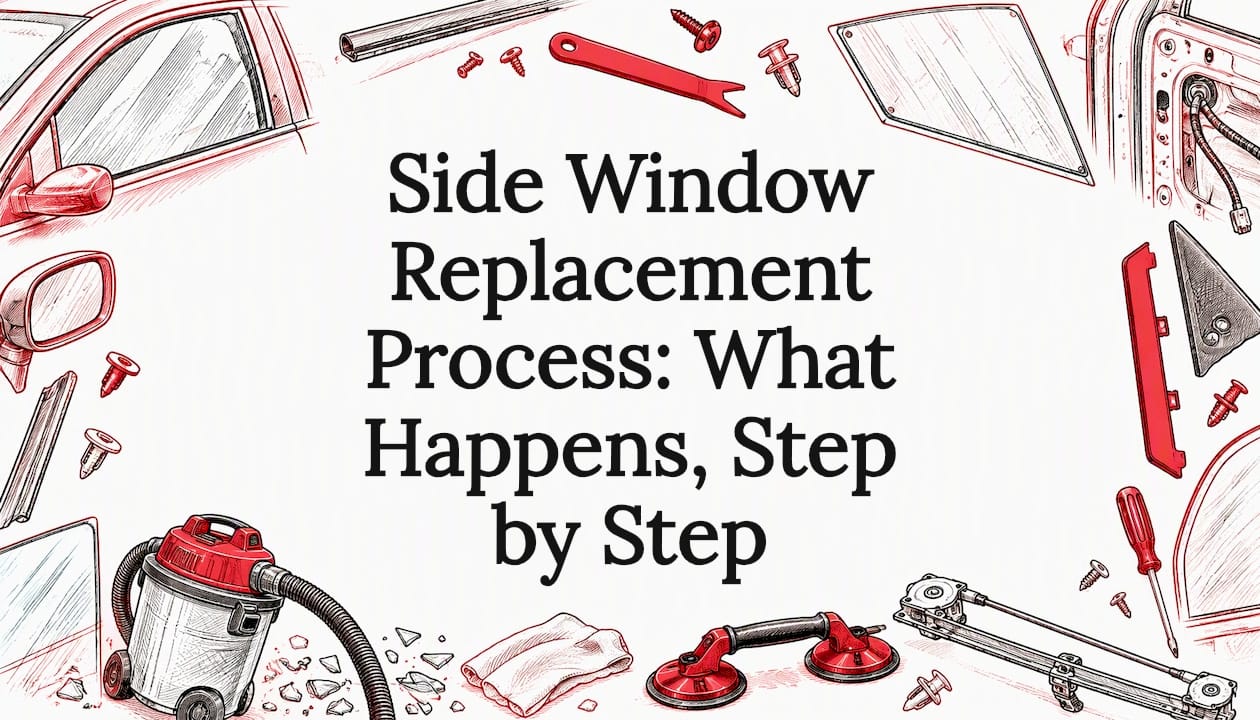
Side Window Replacement Process: What Happens, Step by Step
How a professional side window replacement works, from glass type and cleanup to install and cure time, plus Oregon insurance and tint rules....
October 17, 2026
RV Windshield Lead Time: 2–7 Days or Weeks, Plus ADAS
RV windshield lead time depends on glass availability, freight, and ADAS calibration. Learn what to ask shops to clarify delivery and shorten the...