Auto Glass Repair
Yes, most U.S. auto glass shops can bill your insurer directly using an assignment of benefits, which means you avoid paying the full cost up front. You’ll still need to confirm your coverage and deductible before any work begins, since those details determine what you owe out of pocket. A quick call to your insurer and your shop clears up both questions in minutes.
TL;DR:
- Comprehensive coverage usually handles noncollision glass damage; insurers often waive deductibles for repairs, while replacement generally triggers your deductible unless policy or state rules differ.
- Before authorizing work, confirm prior authorization, preferred shop requirements, your claim number, and who pays the deductible; an insurer may deny claims without required approval.
- Florida, Kentucky, and South Carolina have glass deductible waivers in some cases, but policy wording controls, and Oregon generally applies the standard comprehensive deductible.
- Ask whether the shop calibrates ADAS sensors in house and includes calibration in its estimate, because replacement can leave safety cameras misaligned.
- Get a written estimate before signing an assignment of benefits, and record calls, dates, and representative names if the insurer disputes payment.
Table of Contents
- What Direct Billing and Assignment of Benefits Mean for Your Claim
- Does Your Insurance Actually Cover Glass Damage?
- Step-by-Step: Getting a Shop to Bill Your Insurer Directly
- Questions to Ask Before You Authorize Any Repair
- State Rules and Exceptions That Change What You Pay
- Why ADAS Calibration and Direct Billing Belong Together
- What the Lifetime No-Leak Guarantee Covers During a Claim
- Our Perspective: How We Handle Direct Billing for You
- Get Your Direct-Billed Glass Repair Scheduled Today
- FAQ
- Sources
What Direct Billing and Assignment of Benefits Mean for Your Claim
An assignment of benefits, or AOB, is a signed authorization that lets a repair shop collect payment directly from your insurer instead of asking you to pay first and wait for reimbursement. Once you sign, the shop effectively steps into your shoes for that transaction and handles the paperwork, the estimate submission, and the follow-up calls.
Shops request AOBs because they guarantee payment for completed work and spare you the hassle of chasing a check. Most insurers accept properly documented AOB claims without objection, though practices vary by company and by state.
This arrangement has not been without friction. In Florida, AOB-driven litigation around auto glass and other property claims grew large enough to reshape insurer practices statewide, according to Insurance Information Institute analysis. That history explains why some insurers now scrutinize AOB paperwork more closely than others.
- An AOB lets the shop bill your insurer directly instead of you paying up front.
- Insurers in states with heavy AOB litigation history may review claims more carefully.
- Keeping your own documentation protects you if a dispute arises later.
Does Your Insurance Actually Cover Glass Damage?
Whether your policy pays for a cracked windshield depends on which coverage you carry. Comprehensive coverage typically pays for glass damage from non-collision events like a rock strike or vandalism, while collision coverage applies when the glass breaks as part of an accident, according to the Insurance Information Institute.
Most glass claims fall under comprehensive coverage, since rock chips and weather-related cracks rarely involve a collision. If your windshield can be repaired rather than replaced, many insurers waive the deductible entirely for repair work, based on Progressive’s guidance. Replacement, on the other hand, usually triggers your standard comprehensive deductible unless your state or policy says otherwise.

Before filing, weigh the repair estimate against your deductible. If your windshield replacement costs $300 and your deductible is $500, filing a claim gains you nothing financially, and you’re better off paying out of pocket. Our windshield insurance billing guide walks through this math in more detail, and our explainer on whether most car insurance covers glass breaks down coverage types further.
Step-by-Step: Getting a Shop to Bill Your Insurer Directly
Getting a shop to handle direct billing is straightforward once you know the order of operations.
- Call your insurer first to confirm glass coverage, your deductible amount, your claim number, and whether prior authorization or a preferred-shop network applies.
- Call the shop and share your insurer’s name, your claim number, and any policy details, then ask for an estimate and confirm whether the shop accepts assignment of benefits.
- Sign the AOB or consent forms the shop provides, schedule your repair or replacement, and confirm exactly who pays the deductible and when.
- Stay in the loop as the claim processes, and if your insurer denies or reduces payment, keep a record of every call, date, and representative’s name.
Pro Tip: Ask the shop for a written estimate before you sign anything, so you can compare it against what your insurer says it will cover.
This sequence protects you from surprises. An insurer that requires prior authorization but doesn’t get it may deny the claim outright, and a shop that doesn’t clarify deductible responsibility up front can leave you facing an unexpected bill at pickup. Our full guide to navigating windshield replacement insurance claims covers edge cases if your situation gets complicated.
Questions to Ask Before You Authorize Any Repair
A short checklist before you sign anything saves you from costly misunderstandings later.
- Ask your insurer: Is glass damage covered, is prior authorization required, and will filing this claim affect my premium?
- Ask your insurer: Does my state waive the deductible for glass-only claims, or does a separate glass endorsement apply to my policy?
- Ask the shop: Will you bill my insurer directly, do you require an AOB, and will ADAS calibration be included if my vehicle needs it?
- Ask the shop: What guarantee backs this work, and who pays if the insurer denies part of the claim?
Getting clear answers to these questions before work starts means no mid-repair surprises about who owes what. If you want a head start on the deductible question specifically, our piece on what a $500 deductible with full glass coverage means spells out common scenarios.
State Rules and Exceptions That Change What You Pay
Deductible rules for glass claims are not identical across the country. Some states, including Florida, Kentucky, and South Carolina, have insurer programs or laws that waive the deductible for glass-only replacement, according to Progressive. In Oregon, where we operate, no such statewide waiver exists, so your standard comprehensive deductible typically applies to a replacement claim.
These exceptions emerged largely from state-level consumer protection efforts aimed at keeping glass repair affordable and accessible. Since policy language ultimately controls what you owe, the safest step is always confirming directly with your insurer or checking guidance from your state insurance department if anything seems unclear.
- Some states waive deductibles for glass-only claims; most, including Oregon, do not.
- Policy wording can override general state trends, so always verify directly.
- Your state insurance department’s consumer resources are a reliable backup source.
Why ADAS Calibration and Direct Billing Belong Together
Most windshields built in the last several years house cameras and sensors that feed your vehicle’s advanced driver assistance systems, including lane departure warning and automatic braking. Replacing that glass without recalibrating those sensors can leave safety features misaligned.
A shop that performs calibration in-house, rather than outsourcing it to a separate vendor, cuts down on scheduling delays and reduces the back-and-forth that can slow an insurance claim. One appointment covers both the glass and the calibration, and one invoice goes to your insurer instead of two.
Pairing that efficiency with a workmanship guarantee and mobile service means less time without your vehicle and fewer loose ends to track during a claim. We detail how this works on our ADAS calibration page.
What the Lifetime No-Leak Guarantee Covers During a Claim
When your shop handles direct billing, the paperwork trail matters almost as much as the repair itself. Our lifetime no-leak guarantee on every installation gives you a documented standard to point back to if a seal issue ever surfaces after your insurer has already closed the claim.
Because the guarantee is tied to our installation rather than to a specific claim number, it stays valid regardless of how your insurer processed the original payment. If a leak develops months or years later, you bring the vehicle back to us rather than reopening a claim file or filing a new one. That separation keeps your claims history cleaner and avoids the premium questions that can come with repeat filings.
For insured drivers, this also simplifies the initial authorization conversation. When we quote a replacement for your insurer, the guarantee is part of the value they’re approving, not an add-on you have to negotiate separately. It’s built into how we install every windshield, whether the job is billed directly to your insurance company or paid out of pocket.

Our Perspective: How We Handle Direct Billing for You
We’ve coordinated direct billing with insurers since 2008, and the process looks the same whether you’re driving a sedan or managing a small fleet. We collect your claim number and insurer details, submit a written estimate, handle any prior authorization the insurer requires, and bill them directly once the work is approved. You’re only responsible for your deductible, collected at the time of service.
Same-day appointments and mobile installation help move most claims from phone call to finished repair quickly. All installations come with a no-leak guarantee, and when your vehicle needs ADAS calibration, the team handles it without outsourcing.
Call us first to check your coverage, and we’ll manage the rest of the paperwork and insurer follow-up from there.
— Collision Auto Glass & Calibration
Get Your Direct-Billed Glass Repair Scheduled Today
We make the insurance side of a cracked windshield as simple as a phone call. When you reach out, we confirm your coverage, submit your estimate directly to your insurer, and collect only your deductible once the work is done, whether that’s a quick rock chip repair or a full windshield replacement with ADAS calibration.
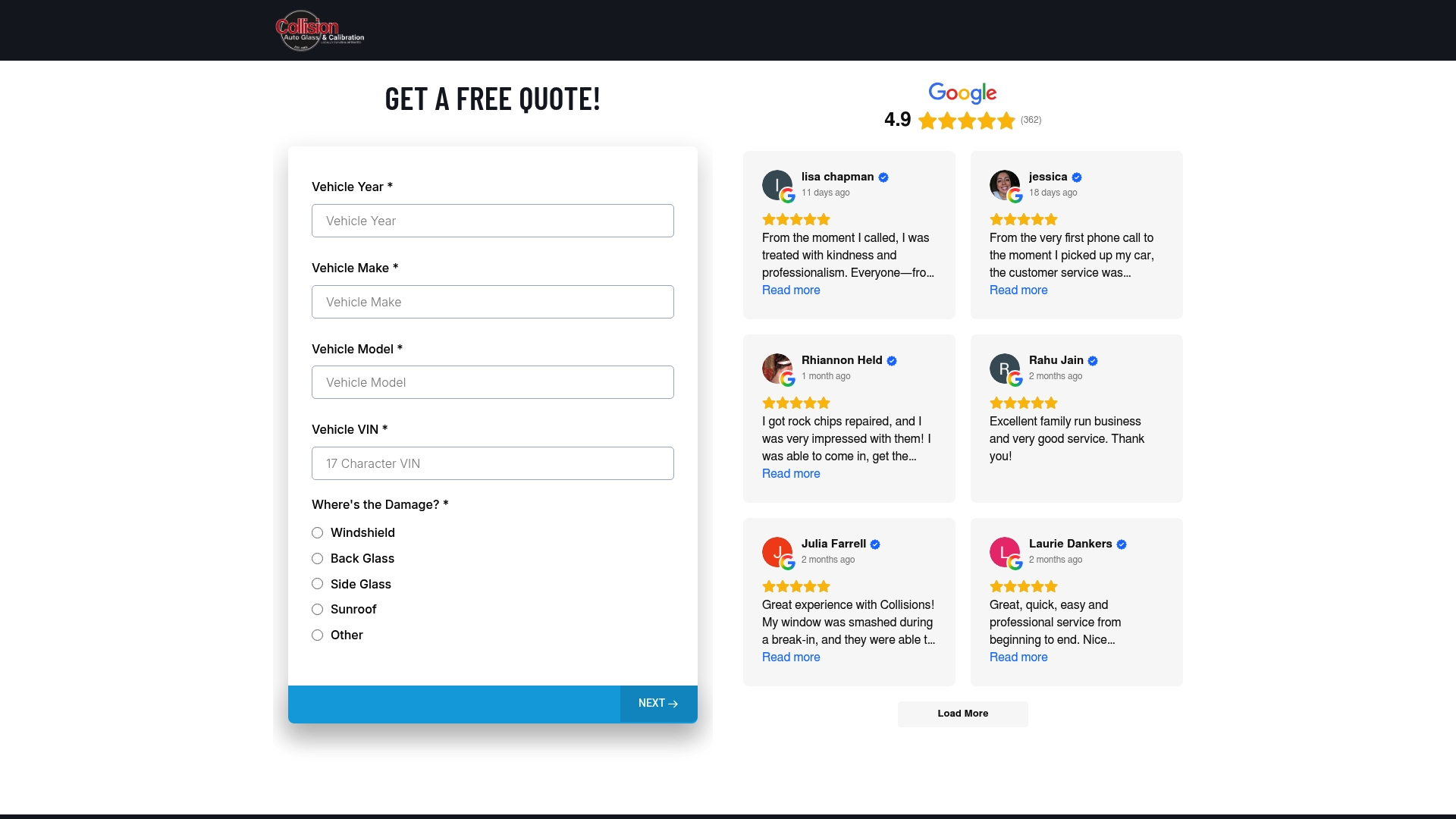
Here’s what to have ready when you call or submit our online form:
- Your insurer’s name and your claim number, if you’ve already filed.
- Your vehicle’s year, make, and model.
- A description of the damage and whether it’s a chip, crack, or full break.
Once your car is back on the road, a streak-free glass cleaning routine helps you spot any new chips early. Our partners at Diamondbrite publish a practical method worth bookmarking for ongoing care. For your own repair, you can request a quote now and we’ll take it from there.
FAQ
Which Is Better, Safelite or Auto Glass Now?
Both are national chains, and the better fit depends on your location, scheduling needs, and whether a shop offers in-house ADAS calibration rather than outsourcing it. In Oregon, state law protects your right to choose your own repair shop regardless of which shop your insurer suggests.
Does Progressive Cover Windshield Replacement?
Progressive typically covers windshield replacement under comprehensive coverage, subject to your deductible, according to Progressive’s own guidance. If the windshield can be repaired instead of replaced, Progressive often waives the deductible for that repair.
Is Safelite AutoGlass Nationwide?
Safelite operates across most of the United States, but nationwide presence doesn’t guarantee every location offers the same services, such as in-house ADAS calibration. Oregon law still allows you to choose a local shop over an insurer-suggested network, so coverage area isn’t the only factor to weigh.
What Does $500 Deductible With Full Glass Mean?
A $500 deductible with full glass coverage means your policy pays for windshield replacement after you cover the first $500 of the cost yourself. Our full breakdown of deductible terms walks through how this applies to repair versus replacement claims.
Sources
- Assignment of benefits and AOB litigation (Industry analysis) — Insurance Information Institute
- Consumer auto insurance guide | NAIC
Recommended
- Estimate vs Deductible: Windshield Insurance Billing for U.S. Drivers
- What Does $500 Deductible With Full Glass Mean?
- $600–$1,500 ADAS Costs: When to Use Windshield Insurance vs Pay Cash
- Do I Have to Pay a Deductible for Windshield Repairs?
🎧 Listen to This Article
Share
Recent Posts
October 12, 2026
Direct Billing for U.S. Auto Glass: Check Your Deductible First
Learn how U.S. auto glass shops bill insurers directly, confirm coverage and deductibles, avoid claim delays, and arrange repairs with ADAS calibration....
October 11, 2026
Chip Near an ADAS Camera? OEM Rules Can Ban Repair at Any Size
A chip near your ADAS camera may be repairable, but OEM rules, optical damage, and calibration needs determine the next step. Learn what...

October 10, 2026
Mobile Glass for Fleets: Static ADAS Can Mean a Shop Visit
Compare mobile glass providers on ADAS calibration, glass standards, cost drivers, insurance, and scheduling to reduce downtime and avoid repeat fleet trips....