Auto Glass Repair
Mobile glass service is the fastest way to return a fleet vehicle to the road, but only when the provider also performs in-house ADAS calibration, supplies OEM-equivalent glass, and handles insurance and scheduling under one roof. That combination cuts downtime, keeps repairs on-site, and centralizes billing instead of scattering it across invoices. A fleet program built around this model is recommended as the baseline for evaluating any mobile glass vendor.
TL;DR:
- Static calibration usually requires a shop with target rigs, a level surface, and controlled lighting; confirm the method before scheduling to avoid repeat visits.
- AAA lists replacement at $250 to $1,500 or more, with radar work at $500 to $1,300 and camera work at $600 to $800.
- Send each vehicle’s VIN and damage photos, note windshield cameras, and batch repairs at one site; passenger vehicles typically take one to two hours.
- Keep calibration certificates, glass part numbers, warranty terms, and itemized invoices for each repair; these records support audits and incident investigations.
- Box trucks and RVs may need special glass, longer parts lead times, and more setup space, so confirm inventory and site access before booking.
Table of Contents
- What Mobile Glass Service Covers for Fleet Vehicles
- Why ADAS Calibration Changes the Job
- What Drives the Cost of Fleet Mobile Glass Work
- How to Request and Manage Fleet Mobile Glass Service
- Insurance, Guarantees, and Records You Should Require
- How to Evaluate a Mobile Glass Provider for Your Fleet
- Why Fleet Managers Work With Collision Auto Glass & Calibration
- Balancing Cost, Safety, and Uptime in a Fleet Program
- Request a Fleet Quote From Collision Auto Glass & Calibration
- FAQ
- Sources
What Mobile Glass Service Covers for Fleet Vehicles
Mobile fleet glass work typically includes rock chip repair, full windshield replacement, side and back window replacement, and ADAS calibration performed at the same visit. For most sedans, vans, and light trucks, a technician can complete the entire job on-site, from removal to calibration, without a shop visit.
Larger vehicles and certain calibration types change that equation. Box trucks and RVs often need special glass inventory and more setup room, and some ADAS systems require static calibration conditions that a mobile van cannot reproduce.
- Chip repair and crack repair for cars, vans, and light-duty trucks
- Full windshield and side or back window replacement
- ADAS calibration for camera and sensor-equipped vehicles
- RV and box-truck glass work with extended lead times for parts
Our box truck windshield replacement guide walks through the scheduling and inventory details specific to larger fleet vehicles.
Why ADAS Calibration Changes the Job
Calibration is not an optional add-on. According to AAA, failing to calibrate ADAS sensors after windshield replacement can leave systems like lane departure warning and automatic emergency braking working improperly or not at all. Some automakers also require OEM or OEM-equivalent glass for correct optical clarity and will refuse to calibrate a windshield installed with aftermarket glass.
There are two calibration types. Dynamic calibration happens while the vehicle is driven under specific conditions, which makes it workable for many mobile visits. Static calibration requires target rigs, a level surface, and controlled lighting, conditions a mobile van rarely replicates, which usually means routing that vehicle to a shop.
AAA advises that ADAS calibration should be treated as a required step after windshield replacement, not a discretionary service.
Matching calibration method to vehicle capability up front avoids a second trip and a second round of downtime.
Pro Tip: Ask your vendor to confirm the calibration method (static or dynamic) before the appointment, not after the technician arrives on-site.
Our calibration after windshield replacement guide covers the documentation to request once calibration is complete.

What Drives the Cost of Fleet Mobile Glass Work
Chip repair generally runs $50 to $150, while full windshield replacement ranges from $250 to $1,500 or more, depending on vehicle, glass type, and whether ADAS calibration is involved, according to AAA’s cost guidance. Calibration itself adds a separate line item: AAA’s ADAS repair fact sheet lists front radar sensor work at $500 to $1,300 and front camera work at $600 to $800, with a sample windshield camera transfer and calibration priced around $360.

On a fleet with multiple ADAS-equipped vehicles, calibration costs can rival the glass itself, which is why AAA has reported windshield replacement on ADAS-equipped vehicles reaching roughly $1,500, about three times the cost of a non-ADAS replacement in some cases.
Three factors shape your total:
- OEM versus aftermarket glass, which affects optical clarity and calibration eligibility
- Whether static calibration requires a shop visit instead of a mobile appointment
- Billing structure: per-job quotes, standing service agreements, or emergency premiums for after-hours work
How to Request and Manage Fleet Mobile Glass Service
A clean request up front prevents wasted site visits and repeat scheduling. Our windshield replacement at work guide outlines the on-site workflow in more detail.
- Gather VIN, year, make, and model for every vehicle needing service
- Photograph the damage and note whether the vehicle has a windshield-mounted camera or sensor
- Confirm ADAS calibration needs and whether static or dynamic calibration applies
- Provide a preferred location, parking setup, and time window for the technician
- Batch multiple vehicles at one site to reduce per-vehicle downtime
Flat, paved surfaces with adequate clearance work best for mobile installs, and most passenger vehicles take one to two hours from arrival to calibration sign-off.
Pro Tip: Request calibration proof, a copy of the OEM part number used, and a warranty document for every completed job, then file them with your fleet maintenance records.
Insurance, Guarantees, and Records You Should Require
Direct insurance billing removes the reimbursement step for covered repairs, but it only works smoothly when your vendor documents the job clearly. Confirm the invoice lists the glass part number, calibration type performed, and labor separately before you sign off.
Keep the following on file for every repair:
- Calibration certificate showing the method used and the result
- OEM or OEM-equivalent part number for the installed glass
- Warranty terms, including any no-leak guarantee and its duration
- Final invoice itemizing parts, labor, and calibration charges
These records matter beyond bookkeeping. In a safety audit or an incident investigation, proof that a vehicle’s ADAS was calibrated and documented protects your fleet’s liability position.
How to Evaluate a Mobile Glass Provider for Your Fleet
Not every mobile glass vendor is built for fleet work. Before signing a service agreement, confirm these points in writing.
- In-house ADAS calibration capability, not outsourced to a third party
- OEM-equivalent glass as the standard offering, not an up charge
- Mobile capacity to handle multiple vehicles at one site in a single visit
- Written warranty terms, including leak coverage and duration
- Direct insurance billing and itemized invoicing
- Response time commitments for both routine and emergency requests
A vendor unwilling to document calibration results or provide part numbers in writing is a signal to look elsewhere. For general context on how mobile, on-site service models operate across other vehicle trades, see Nashville Mobile Mechanics, which documents a similar on-site logistics approach for roadside and mobile repair work.
Why Fleet Managers Work With Collision Auto Glass & Calibration
This family-owned shop has been operating since 2008, applying consistent standards to fleet work and every vehicle serviced.
- In-house ADAS calibration performed on-site
- A lifetime no-leak guarantee on installations
- Same-day mobile service with mobile installation within the service area
- Direct insurance billing to reduce paperwork
- OEM-equivalent glass as standard for camera-equipped windshields
Our ADAS calibration page explains how we handle calibration verification for fleet vehicles. If you manage more than a few vehicles, a scheduled fleet day lets us batch your visits and reduce total downtime across the group.
Balancing Cost, Safety, and Uptime in a Fleet Program
Fast turnaround matters, but we never treat calibration as something to skip under time pressure. Verify documentation on every job, even when the vendor promises same-day service.
Batching mobile visits and pairing glass work with other scheduled maintenance lowers downtime per vehicle without cutting corners on safety. A warranty-backed, documented repair costs little extra and protects your fleet far longer than a quick, undocumented fix.
— Collision Auto Glass & Calibration
Request a Fleet Quote From Collision Auto Glass & Calibration
Fleet downtime is expensive, and we built our process to get vehicles back on the road without the back-and-forth that usually comes with glass repair.
- Mobile windshield replacement and repair for cars, vans, and box trucks
- In-house ADAS calibration performed at the same visit
- Lifetime no-leak guarantee on every installation
- Direct insurance billing with itemized invoices
- Same-day mobile service where available in our service area
To get started, send us your vehicle list with VIN, damage photos, and preferred scheduling windows through our windshield replacement page. We typically respond with a fleet quote within one business day.
FAQ
Does mobile glass replacement work for vehicles with ADAS cameras?
Yes, as long as the vendor performs calibration at the same visit. AAA notes that skipping calibration after windshield replacement can leave safety systems like automatic emergency braking working incorrectly.
How much does fleet windshield replacement typically cost?
Full windshield replacement generally runs $250 to $1,500 or more depending on glass type and ADAS needs, according to AAA’s cost guidance. Vehicles requiring calibration add separate charges, which AAA’s fact sheet lists at $500 to $1,300 for front radar sensors and $600 to $800 for front cameras.
Can static ADAS calibration be done on-site?
Static calibration usually requires a shop setting with target rigs and controlled lighting, so it is not reliably mobile-capable. Dynamic calibration, performed while driving under specific conditions, works for many fleet vehicles on-site.
What should I ask a mobile glass vendor before booking fleet service?
Confirm in-house ADAS calibration capability, OEM-equivalent glass as standard, written warranty terms, and direct insurance billing. These are managed as part of the standard fleet process and documented on every invoice.
What documentation should I keep after a fleet glass repair?
Request a calibration certificate, the OEM part number used, warranty terms, and an itemized invoice. These records support safety audits and protect your fleet in the event of an incident investigation.
Sources
- ADAS sensor calibration increases repair costs | AAA Automotive
- ADVANCED DRIVER ASSISTANCE SYSTEMS (ADAS) REPAIR COSTS
Recommended
- Calibration After Windshield Replacement: What You Must Know
- Don’t Skip ADAS Calibration: Heated Windshield Replacement in Portland
- Need a New Windshield? Don’t Forget Calibration
- Static First, Dynamic Confirm: ADAS Calibration for Technicians
🎧 Listen to This Article
Share
Recent Posts
October 10, 2026
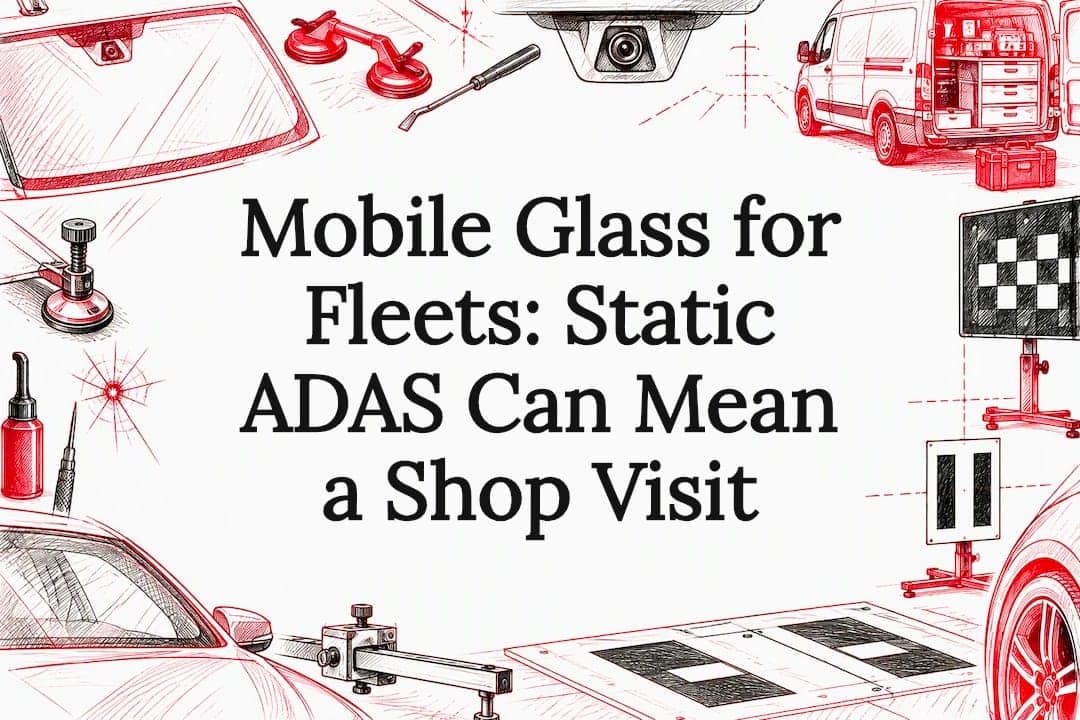
Mobile Glass for Fleets: Static ADAS Can Mean a Shop Visit
Compare mobile glass providers on ADAS calibration, glass standards, cost drivers, insurance, and scheduling to reduce downtime and avoid repeat fleet trips....
October 9, 2026
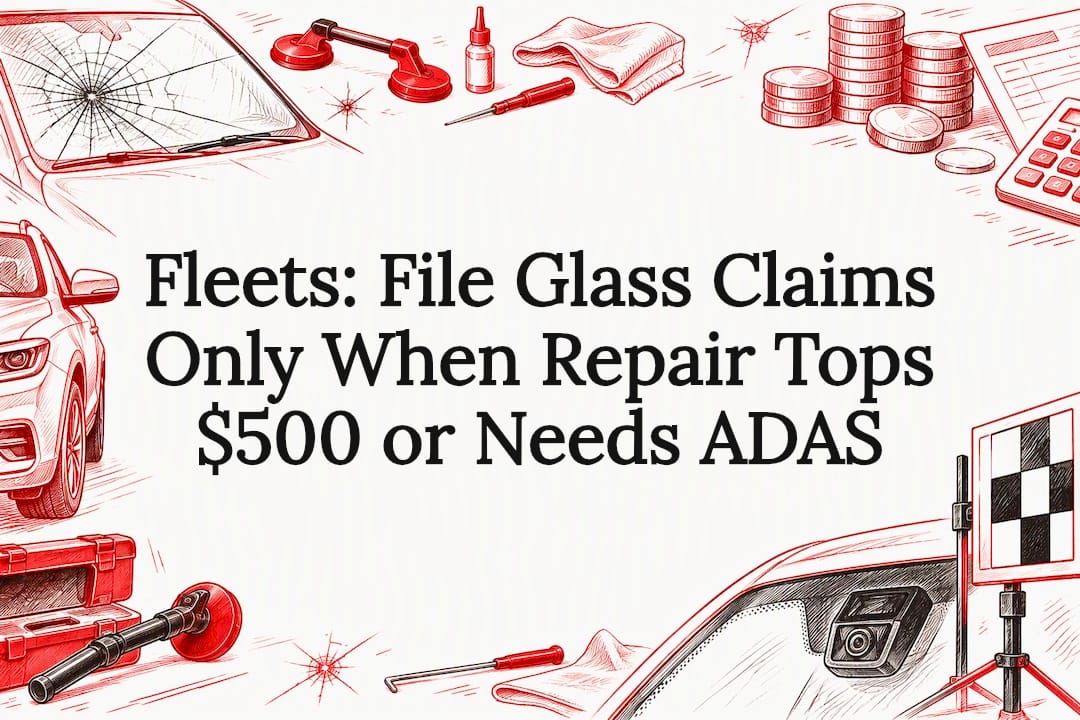
Fleets: File Glass Claims Only When Repair Tops $500 or Needs ADAS
Fleet playbook for filing glass claims: weigh repair cost vs deductible, comply with FMCSA DVIR rules, and manage ADAS calibration plus direct insurer…...
October 8, 2026
Avoid a 7 Year CLUE Record: Mobile Auto Glass and Insurance
Decide whether to file a mobile auto glass insurance claim or pay out of pocket. Learn how deductibles, AOBs, ADAS calibration, and a...