Auto Glass Repair
TL;DR:
- Most drivers can get windshield replacements without insurance by paying cash, especially if costs are below their deductible. Factors influencing the price include glass type, ADAS calibration, and regional labor rates, with OEM and calibration requirements raising costs. To save money, obtain itemized quotes, verify calibration is included, and ensure warranty coverage before proceeding.
Yes, you can get a windshield replaced without insurance, and most drivers do exactly that. For a standard, non-ADAS sedan, cash prices can vary widely. Adding ADAS cameras or sensors, heated glass, or a HUD can increase the total substantially. Two quick signals tell you whether to pay cash or file a claim:
- Pay cash if the replacement cost falls below your comprehensive deductible, or if you have no glass coverage at all.
- Use insurance if your deductible is higher than the repair cost, or if you live in a state like Florida, Arizona, Kentucky, or South Carolina where zero-deductible glass coverage is mandated or widely available.
For most uninsured drivers, the path forward is straightforward: get two written, itemized cash quotes, confirm ADAS calibration is included if your car needs it, and book a shop with a documented warranty.
Table of Contents
- What does windshield replacement without insurance actually cost?
- What actually changes the price of your replacement?
- How do you know if your chip can be repaired instead of replaced?
- Does your car’s ADAS system affect replacement scope and cost?
- How can you pay less for out-of-pocket windshield replacement?
- What should you ask the shop before committing?
- What happens during a windshield replacement appointment?
- What Collision Auto Glass & Calibration offers drivers paying out of pocket
- Key Takeaways
- The mistake most uninsured drivers make, and how to avoid it
- Portland drivers paying cash can get same-day service with no surprises
- Useful sources for verifying costs and state rules
- FAQ
What does windshield replacement without insurance actually cost?
Cash pricing varies more than most drivers expect. The table below summarizes cash price ranges for common service types, which can vary depending on location and vehicle specifics.
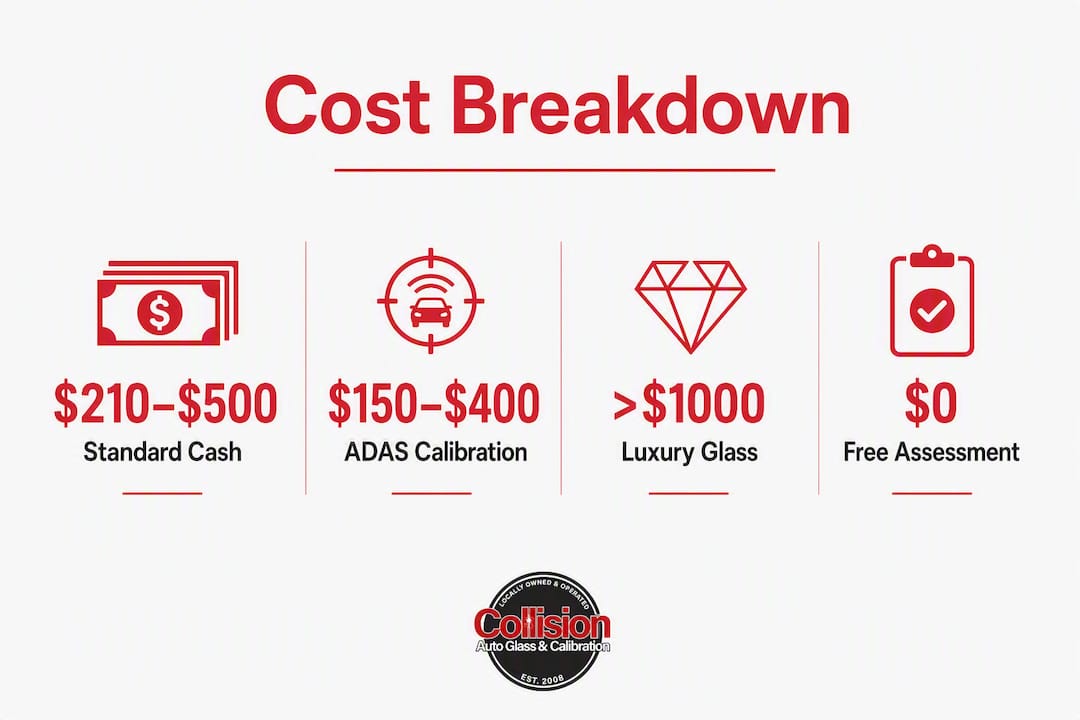
A standard cash quote covers the glass itself, urethane adhesive, and basic labor. What commonly pushes the total higher includes OEM glass (versus aftermarket), mobile service fees, same-day scheduling, and ADAS recalibration when it is not bundled.
Insurance-network rates can often be significantly lower than retail cash prices at the same shop on the same day, sometimes by substantial amounts. If your deductible is less than the repair cost, filing a claim could save you money even after accounting for potential premium effects. Always compare your cash quote to your deductible before deciding.
What actually changes the price of your replacement?
Vehicle technology drives cost more than most drivers realize. Acoustic layers, heating elements, rain sensors, and HUDs all require an exact glass match, and that specificity raises the part price before labor is even factored in.
The primary cost drivers, ranked by typical impact:
- OEM vs. aftermarket glass. OEM glass matches factory tolerances precisely; aftermarket is manufactured to similar specs at lower cost. For most vehicles, quality aftermarket glass performs well. For ADAS-equipped cars, OEM is often the safer choice because sensor alignment depends on exact optical properties.
- ADAS cameras and sensors. Any windshield-mounted forward-facing camera requires recalibration after replacement. Skipping this step is not an option on a vehicle that relies on lane-keeping assist, automatic emergency braking, or adaptive cruise.
- Adhesive grade. Premium urethanes allow a 30-minute drive-away; standard adhesives require four or more hours of cure time. The faster option costs more in materials but matters when you need same-day mobility.
- Labor rates by region. Shop rates in Portland or Seattle run higher than rural markets, reflecting overhead and technician wages.
- Mobile service fees. Some shops charge a flat fee for mobile installation; others include it. Always ask.
Secondary factors include inventory availability (rare glass for older or specialty vehicles takes longer to source), warranty terms, and rush scheduling. Of these, the OEM-versus-aftermarket decision is the one you have the most control over as a cash-paying customer.
Pro Tip: If you are paying out of pocket and your vehicle does not have ADAS features, quality aftermarket glass is a reasonable choice that can save money on the glass alone. For ADAS-equipped vehicles, discuss OEM versus aftermarket with your technician before committing, since optical clarity affects sensor accuracy. Read the OEM vs. aftermarket tradeoffs before you decide.
How do you know if your chip can be repaired instead of replaced?
Repair is almost always cheaper than replacement, so it is worth ruling out before you commit to a full job. Industry guidance from AAA puts the repair threshold at chips smaller than a dollar coin that are not in the driver’s direct line of sight and do not contact the glass edge.
Repair is typically possible when:
- The chip is smaller than roughly one inch in diameter
- The damage is a single impact point, not a branching crack
- The chip sits outside the driver’s primary sightline
- The damage does not reach the glass edge
Replacement is required when:
- A crack extends more than a few inches, or runs to the edge of the glass
- Multiple chips are present, especially if they are close together
- The damage falls directly in the driver’s line of sight
- The chip or crack sits in the area where a windshield-mounted camera or sensor is positioned
If you are unsure, here is a simple field checklist before calling a shop:
- Photograph the damage in good light, including a reference object for scale.
- Note the location: driver’s side, center, or passenger’s side, and how far from the edge.
- Run a fingernail across the chip. If it catches significantly, the depth may complicate repair.
- Avoid DIY resin kits on chips near sensors or the glass edge — improper fill can compromise structural integrity and make professional repair harder.
A professional assessment takes minutes and costs nothing at most shops. For rock chip repair specifically, acting quickly prevents a repairable chip from spreading into a crack that requires full replacement.
Does your car’s ADAS system affect replacement scope and cost?
If your vehicle has a forward-facing camera mounted to the windshield, the answer is yes, and the cost and scheduling implications are real. The camera’s calibration depends on the glass being in exactly the correct optical position. When the windshield is replaced, that reference point shifts, and the system must be recalibrated before it will function accurately.
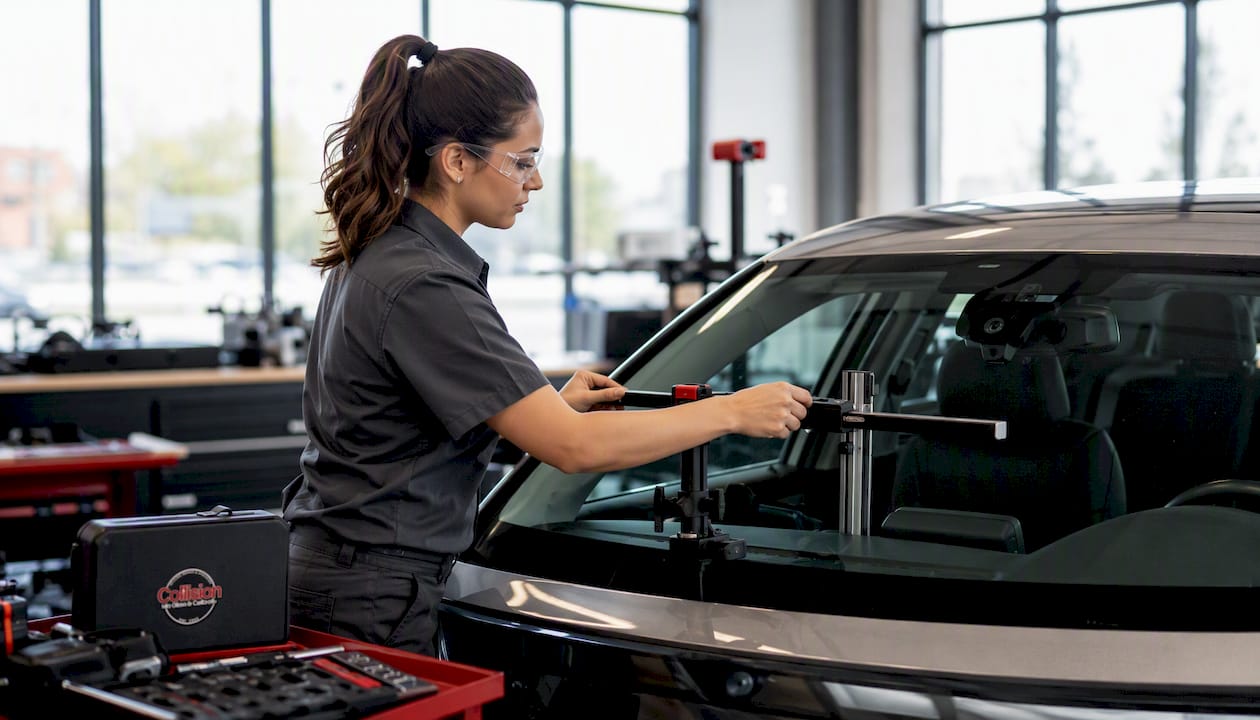
Shops that perform ADAS calibration in-house can complete the full job in a single appointment, often the same day. Shops that sublet calibration to a dealer or specialist lab add both cost and a second appointment, which means your car may be unavailable for an extra day or more.
Typical ADAS recalibration adds a significant additional cost to the total, varying by vehicle and calibration method. Static calibration uses a target board in a controlled environment; dynamic calibration requires a road drive under specific conditions. Some vehicles need both.
Key points to confirm before booking:
- Does the shop perform calibration in-house, or do they send the vehicle elsewhere?
- Is calibration included in the quoted price, or billed separately?
- Will you receive documentation confirming the calibration was completed and passed?
Pro Tip: Never skip ADAS recalibration to save money. An uncalibrated system can misread lane markings or fail to trigger emergency braking at the correct distance. The consequences of skipping calibration extend well beyond a warning light.
How can you pay less for out-of-pocket windshield replacement?
The most reliable way to reduce your cash cost is to get at least two written, itemized quotes. Prices for the same vehicle and glass type can vary by $150 or more between shops in the same city, and an itemized quote lets you compare line by line rather than total to total.
Practical savings strategies for uninsured drivers:
- Accept quality aftermarket glass on non-ADAS vehicles. The savings are real, and reputable aftermarket glass meets federal safety standards.
- Ask about cash pricing directly. Some shops offer a small discount for cash or check payment versus credit card, since they avoid processing fees.
- Check for shop promotions. Many shops run seasonal discounts or waive mobile fees during slower periods.
- Compare mobile versus in-shop service. Mobile installation is convenient, but if the shop charges a fee and you can bring the vehicle in, the in-shop option may be cheaper.
- Confirm the warranty covers leaks and fitment, not just the glass itself. A warranty that excludes labor on a leaking seal is worth less than it appears.
On the insurance side: if your replacement cost is close to your deductible, check whether your state requires insurers to offer a glass deductible waiver. In some states, adding that endorsement costs $40–$150 per year and converts future glass claims to $0 out of pocket.
Pro Tip: Ask for an itemized written estimate before authorizing any work. A shop that refuses to break out glass, adhesive, labor, and calibration separately is one worth walking away from.
What should you ask the shop before committing?
Getting a reliable, comparable quote requires asking the right questions. Here is a checklist to use when calling or visiting a shop:
- Is the glass OEM or aftermarket? Ask which brand and whether it carries a manufacturer’s warranty.
- What adhesive will you use, and what is the safe drive-away time? A premium urethane means 30 minutes; standard means four or more hours.
- Is ADAS calibration included in the price, or billed separately? Get the calibration cost in writing.
- What does the warranty cover? Confirm it includes leaks, fitment, and labor, not just the glass.
- Is there a mobile service fee? If so, how much?
- Is this price final, or are there additional charges after inspection?
Beyond the checklist, ask for a written, itemized estimate before you authorize anything. Verbal quotes are not binding, and surprises at pickup are common when pricing is not documented.
Red flags to watch for:
- Vague warranty language (“we stand behind our work” with no written terms)
- Refusal to provide an itemized breakdown
- No in-house calibration capability for an ADAS-equipped vehicle
- Pressure to decide before you have compared quotes
For a broader shop-selection framework, the five tips for choosing an auto glass shop cover what to look for beyond price.
Pro Tip: If the shop cannot show you documentation of a completed and passed ADAS calibration at pickup, do not accept the vehicle as finished. Calibration records protect you if a system fault appears later.
What happens during a windshield replacement appointment?
A standard replacement follows a predictable sequence, and knowing it helps you plan your day accurately.
Typical appointment steps:
- Inspection: The technician confirms the damage scope, verifies the correct glass is on hand, and checks for any edge damage or rust that could affect the seal.
- Glass removal: The old windshield is cut out using a cold knife or power tool. The pinch weld is cleaned and prepped.
- Adhesive application: Urethane primer and adhesive are applied to the frame. The new glass is set and pressed into position.
- Cure period: The vehicle sits undisturbed while the adhesive cures. With a premium urethane, this is as short as 30 minutes; standard adhesives require four or more hours.
- ADAS calibration (if applicable): Performed after the adhesive has cured sufficiently to hold the glass in its final position.
For a standard non-ADAS vehicle, total appointment time runs roughly one to two hours. Add ADAS calibration and plan for two to four hours, depending on the calibration method and vehicle. Same-day mobile service follows the same sequence at your location, with the technician bringing all materials and equipment.
Pro Tip: Premium urethane adhesives cost more in materials but are standard practice for same-day mobile installs. If you need your vehicle back the same day, confirm the shop uses a fast-cure urethane before booking.
What Collision Auto Glass & Calibration offers drivers paying out of pocket
Collision Auto Glass & Calibration has served Portland-area drivers since 2008, and a significant portion of its work involves customers paying cash, without any insurance involvement. The services most relevant to uninsured drivers include:
- Same-day service — for most vehicles, including standard and ADAS-equipped cars, trucks, and RVs
For uninsured customers, the practical advantage of in-house calibration is time and cost. Rather than dropping the vehicle at a dealer for a second appointment, calibration is completed on-site the same day. The calibration process and what it involves is documented and provided at pickup.
Key Takeaways
Paying out of pocket for windshield replacement is manageable when you know the real cost range, confirm ADAS calibration is included, and get written, itemized quotes from a shop with a documented warranty.
| Point | Details |
|---|---|
| Cash cost range | Non-ADAS replacement typically runs $210–$500; ADAS-equipped vehicles add $150–$400 for calibration. |
| Insurance decision rule | Pay cash if the cost is below your deductible; file a claim if your deductible is higher or you have zero-deductible glass coverage. |
| ADAS calibration | Always required after windshield replacement on camera-equipped vehicles; confirm in-house capability before booking. |
| What to ask | Request a written, itemized quote covering glass type, adhesive, calibration, warranty, and any mobile fee. |
| Collision Auto Glass & Calibration | Portland’s same-day option since 2008, with free mobile installation, a lifetime no-leak guarantee, and in-house ADAS calibration for cash-paying customers. |
The mistake most uninsured drivers make, and how to avoid it
The most common error uninsured drivers make is treating windshield replacement as a commodity purchase, where the only variable that matters is the total price. It is not. Two quotes at the same dollar amount can represent very different outcomes depending on what is and is not included.
The second most common mistake is skipping ADAS calibration because it was not mentioned in the original quote. Some shops quote glass and labor only, then present calibration as an optional add-on at pickup. By that point, the glass is already in, and declining calibration means driving a vehicle with a safety system that may not function correctly. The right time to ask about calibration is before the appointment is booked, not after the glass is set.
A third pattern worth noting: accepting a verbal warranty rather than a written one. “We guarantee our work” means nothing if the shop changes ownership, the technician leaves, or a leak appears six months later. A written warranty with specific terms, covering both the seal and the labor to fix it, is the only version worth accepting.
The corrective is simple. Demand an itemized written quote before authorizing work. Confirm calibration is included and will be documented. Verify the warranty terms in writing. These three steps take five minutes and protect your safety investment for the life of the vehicle.
*— Collision Auto Glass & Calibration
Portland drivers paying cash can get same-day service with no surprises
Collision Auto Glass & Calibration offers Portland-area drivers a straightforward path to out-of-pocket replacement, without the uncertainty that comes from vague quotes or shops that outsource calibration.
For uninsured customers, the process works like this: call or submit a quote request with your vehicle year, make, and model, a photo of the damage, and whether your car has ADAS features. You receive an itemized cash quote covering glass, adhesive, labor, calibration if applicable, and the lifetime no-leak guarantee. Same-day appointments are available for most vehicles, and free mobile installation within Portland means the technician comes to you.
When you are ready to move forward, book your same-day windshield replacement or get a detailed cost breakdown on the glass replacement cost page. Have your vehicle information and a photo of the damage ready, and the team can confirm availability and pricing in one call.
Useful sources for verifying costs and state rules
These references support the cost figures, insurance rules, and calibration guidance in this article. State glass laws change periodically, so confirm current rules with your insurer or state insurance regulator.
- LegalClarity: Windshield and Auto Glass Deductible Waivers — Explains how glass deductible waivers work, which states mandate them, and how to add an endorsement where it is optional.
- LegalClarity: What Does $500 Deductible With Full Glass Mean? — Clarifies how a full-glass endorsement eliminates out-of-pocket cost even when a standard deductible applies.
- WalletHub: How Much Does It Cost to Replace a Windshield? — Covers state-by-state zero-deductible glass rules and general cost ranges.
- Auto Glass Estimator: Windshield Replacement Cost Breakdown — Detailed explanation of why cash quotes vary, including adhesive grades, calibration subletting, and insurance-network pricing gaps.
- ShieldFinder: Windshield Replacement Cost — Cost bands for standard, ADAS-equipped, and luxury vehicles with insurance breakdown.
- AAA Automotive: Windshield Repair and Replacement — Industry-standard guidance on repair eligibility criteria and when replacement is required.
- Kelley Blue Book: It May Cost More Than You Think to Replace a Windshield — Explains how ADAS technology on newer vehicles substantially increases replacement complexity and cost.
- Massachusetts Division of Insurance: Understanding Auto Coverage for Windshield Damage — A state-level primary source on how auto coverage applies to glass damage; useful for understanding how regulators frame the issue.
For the most current policy terms, contact your insurer directly or check your state’s department of insurance website.
FAQ
Can you get a windshield replaced without insurance?
Yes. Paying out of pocket for windshield replacement is common and straightforward. Most shops accept cash, credit, or financing, and many offer itemized quotes with no obligation.
A standard, non-ADAS windshield replacement typically runs $210–$500 for cash-paying customers. ADAS-equipped vehicles add $150–$400 for calibration, and luxury or technology-equipped glass can exceed $1,000.### Is it better to use insurance or pay out of pocket for a windshield?
Pay out of pocket if the replacement cost is less than your deductible. Use insurance if your deductible exceeds the repair cost, or if you have a full-glass endorsement that reduces your out-of-pocket cost to zero.
What does a $500 deductible with full glass mean?
It means your standard comprehensive deductible is $500, but a full-glass endorsement removes that deductible for glass claims specifically. With a full-glass endorsement, the shop bills your insurer directly and you typically pay nothing at the time of service.
Recommended
- How Can I Save Money On A Windshield Replacement? – Collision Auto Glass & Calibration
- A Guide to Navigating Windshield Replacement Insurance Claims – Collision Auto Glass & Calibration
- Can You Get Your Windshield Replaced For Free? – Collision Auto Glass & Calibration
- How Can I Save Money On A Windshield Replacement? – Collision Auto Glass & Calibration
🎧 Listen to This Article
Share
Recent Posts
October 15, 2026
Auto Glass Claims: Choose a U.S. Shop Before ADAS Billing Surprises
See how U.S. drivers can choose an auto glass shop for an insurance claim, confirm ADAS calibration, protect their rights, and prevent billing...
October 14, 2026
Fleet Windshield Maintenance: A 20 Minute Repair Can Prevent Days Down
Catch chips early, log the VIN and photos, and require part number and ADAS calibration records to keep fleet vehicles moving and avoid...
October 13, 2026
Calibration After Collision Repair: Ask for Scans Before You Drive
Learn when collision repairs require ADAS calibration, how shops verify the work, and which scan records and paperwork to request before driving....