
Auto Glass Repair
In Oregon, windshield damage is usually covered under the comprehensive part of your auto policy, not liability. You pay your deductible, and the insurer pays the covered rest. You also choose the shop that does the work. This guide explains what is covered, how a claim runs, when a chip can be repaired instead of replaced, and what to check about ADAS calibration so the claim covers the whole job.
TL;DR
- Comprehensive coverage is what typically pays for a cracked or shattered windshield in Oregon. Liability-only policies do not.
- Oregon law says your insurer cannot require you to use a particular repair shop. You pick the shop.
- Deductibles vary by policy. Some insurers apply a reduced or separate glass deductible, so read your declarations page or call your agent before you book.
- Many chips and cracks up to 14 inches can be repaired under the industry standard, which often avoids a full replacement.
- If your car has cameras or sensors behind the windshield, ask that ADAS calibration be part of the estimate and that you receive the calibration record.
Table of Contents
- What Oregon windshield insurance actually covers
- How the deductible affects what you pay
- You choose the shop: Oregon law on repair shops
- Step by step: filing a windshield claim in Oregon
- Repair or replace: what the standard says
- ADAS calibration: the line item to ask about
- What about driving with a cracked windshield?
- After the install: protecting your claim and your glass
- Our perspective
- Get your windshield handled in one visit
- FAQ
- Sources
What Oregon windshield insurance actually covers
There is no separate “windshield insurance” product in Oregon. Glass damage falls under comprehensive coverage. The Oregon Division of Financial Regulation describes comprehensive coverage as protection against damage that is not a collision, such as fire, theft, explosion, glass breakage and animal strikes. It adds that most policies carry a lower deductible for comprehensive than for collision.
The same agency notes, in its winter weather guidance, that comprehensive covers physical damage other than collision, including a rock chip that shatters your windshield. After you pay the deductible, the insurer reimburses you.
In practice, that means:
- Rock chips and cracks from road debris: covered under comprehensive, subject to your deductible.
- Hail, falling branches, vandalism: also comprehensive.
- Damage in a collision: handled under collision coverage, which usually carries a higher deductible.
- Liability-only policies: these pay for damage you cause to others, not for your own glass.
If you are not sure which coverages you carry, your declarations page lists them. For a plain-language walkthrough of how glass claims are treated, see our guides on whether insurance covers a cracked windshield replacement and whether most car insurance covers glass.
How the deductible affects what you pay
The deductible is the amount you pay before the insurer pays. AAA Oregon says deductibles on collision and comprehensive usually range from $250 to $1,000, and that a higher deductible lowers your premium but means you must be ready to pay it when a loss happens.

That range matters for glass because of how our prices compare to it. We publish a windshield replacement range of $200 to $500, and windshield repair at $90. If your deductible is $500 or $1,000, a straightforward replacement may cost less than the deductible, and filing a claim would not pay anything. A chip repair at $90 almost always sits below it.
Some policies include a separate, lower glass deductible or a glass rider, and some insurers waive the deductible for chip repairs because repair costs them less than a replacement. Those terms are set by your policy, not by a single Oregon rule, so confirm them with your agent. Here is a simple way to decide:
| Your situation | What it usually means |
|---|---|
| Deductible is higher than the replacement quote | Paying directly may cost the same or less than filing a claim |
| Deductible is lower than the quote | A claim reduces your out-of-pocket cost |
| Policy has a glass deductible or waiver | You may pay little or nothing, especially for a repair |
| Liability-only policy | No coverage for your own glass |
Get the replacement quote first, then compare it to the deductible stated in your policy. Our page on what a windshield replacement costs explains what moves the price, including vehicle type and glass features.
You choose the shop: Oregon law on repair shops
Many drivers assume the insurer will send them to a network shop. In Oregon, that is a recommendation, not a requirement. The Division of Financial Regulation confirms that Oregon law prohibits an insurer from requiring you to use a certain repair shop. It also cautions that if you choose the most expensive shop in town, the insurer may not be willing to pay the whole amount.
The statute behind this, ORS 746.280, bars an insurer from requiring a particular person to make the repairs as a condition of recovery. It also requires the adjuster to tell you about this right before recommending a shop. If you pick a shop the insurer did not recommend, the insurer may not limit the cost of repairs needed to return the vehicle to its pre-loss condition for safety, function and appearance, other than as the policy or law allows.
Three practical points follow:
- You can say no to a referral. A polite “I’ll use my own shop” is enough.
- Reasonable pricing keeps things smooth. Get a written estimate so the insurer can compare it to its own.
- The shop should match the job. Ask whether the shop uses OEM-quality glass, quality urethane adhesive and in-house calibration, and what warranty backs the install.
If you are comparing shops, our tips for choosing an auto glass shop cover what to look at beyond price.
Step by step: filing a windshield claim in Oregon
- Check your coverage. Look for comprehensive on your declarations page and note the deductible. If you lease or finance, comprehensive is often required by the lender.
- Photograph the damage. Take clear photos of the chip or crack, and note the date and where you were driving.
- Decide on repair or replacement. A shop can tell you in minutes whether a chip is repairable (see the next section). Repair is faster and often costs less.
- Get an estimate from the shop you choose. It should itemize glass, labor, moldings and any ADAS calibration.
- Notify your insurer. Report the loss by phone or through your insurer’s app. Have your policy number, vehicle details and photos ready.
- Let the shop bill the insurer, if you wish. We bill insurers directly for covered work, so you typically pay only your deductible, if one applies.
- Keep your paperwork. Save the invoice, the claim number and, for ADAS-equipped vehicles, the calibration record.
Our longer guide, navigating windshield replacement insurance claims, covers the same ground with more detail on insurer conversations.
Repair or replace: what the standard says
Whether the claim is a repair or a replacement depends on the damage, and there is an industry standard for it. The U.S. standard for repair of laminated auto glass (ANSI/AGSC/NWRD/ROLAGS 002-2022) treats cracks up to 14 inches (350 mm) as within repairable dimensions. So a 12-inch crack can fall within the limit, provided other conditions are met.
The same standard recommends replacement when, for example:
- the damage penetrates both layers of glass;
- three or more long cracks run from one impact point;
- the damage is on the inside layer;
- the plastic interlayer is damaged or discolored;
- the pit is larger than 3/8 inch;
- an edge crack intersects more than one edge, or it is a stress crack;
- the damage may affect value-added features.
In the driver’s primary viewing area, it recommends replacement if the damage is larger than 1 inch, the finished pit is greater than 3/16 inch, or the repair sits within 4 inches of another repair. It also tells technicians to follow manufacturer recommendations for value-added features, which includes camera-based systems.
For you, the lesson is timing. A small chip is a $90 repair at our shop. A chip left alone can spread with temperature swings and road vibration, and then a replacement is the only option. Our pages on signs your windshield needs repair before it spreads and rock chip repair show what to look for.

ADAS calibration: the line item to ask about
Many newer vehicles use a forward-facing camera mounted at the windshield for lane-keeping, automatic emergency braking and adaptive cruise control. When the windshield is replaced, the camera is removed and reinstalled, and its aim has to be verified. That is what ADAS calibration does. Our guides explain what ADAS calibration is and what happens if ADAS is not calibrated.
Before you file, check these points with your insurer and your shop:
- Does your vehicle need it? Your owner’s manual or the manufacturer’s service information states whether calibration follows a windshield replacement. Ask the shop to confirm it for your exact make, model and year.
- Is it on the estimate? Calibration often appears as its own line item. Make sure it is listed so the insurer reviews it with the glass claim.
- Who performs it? A shop with in-house calibration can finish the glass and the calibration in one visit instead of sending you elsewhere. That is how we work.
- Will you get a record? The calibration report shows the procedure was done and the results. Our page on ADAS calibration documentation explains what that record should show.
- Is it calibration or programming? They are different procedures; see calibration versus programming.
How an insurer treats calibration depends on your policy and claim. Ask your adjuster directly whether required calibration is included with a covered glass claim, and get the answer in writing or with a claim note.
What about driving with a cracked windshield?
Oregon has no single windshield replacement law and no fixed legal size for a crack. ORS 815.220 makes it a Class D traffic violation to drive with material on the windshield that impairs vision, and its annotations say a crack is not such a material. The broader rule is ORS 815.020, which prohibits operating a vehicle in an unsafe condition that endangers anyone (a Class B violation). That is the statute that fits a badly damaged windshield.
The standard is functional: can you see clearly, and is the glass still structurally sound? A windshield is part of the vehicle’s safety structure, and a crack in your line of sight is a reason to book right away. We cover local specifics in our guides for Portland, Beaverton and Hillsboro, and on driving with a slightly cracked windshield.
After the install: protecting your claim and your glass
Once the new glass is in, follow the technician’s aftercare instructions on drive-away time, washing and leaving the tape in place. Keep the invoice with your guarantee details. Our lifetime no-leak guarantee covers all installations, so keep your paperwork if you ever need it.
For routine care, a clean windshield also helps you see chips early. If you like to restore the shine on glass at home, this guide on polishing car glass safely explains the technique and its limits.
Our perspective
Most of the calls we get about windshield insurance come down to three worries: will it cost me, will my insurer let me choose, and will the car still work properly afterward.
Our answer is the same each time. Read your comprehensive coverage and deductible, choose the shop you trust, and make sure the estimate covers everything the car needs. For a vehicle with a camera behind the glass, that includes calibration. We do it in-house, so you are not shuttled between a glass shop and a separate calibration provider.
We have been family owned and operated in Portland since 2008. We bill insurers directly for covered work, install with free mobile service in the Portland area, and stand behind every installation with a lifetime no-leak guarantee. That is our way of making the claim process one less thing to manage.
Collision Auto Glass & Calibration
Get your windshield handled in one visit
If you have chip or crack damage, we can look at it the same day, come to your home or workplace in the Portland area at no charge for the installation, and work with your insurer. A windshield repair is $90, and a windshield replacement is $200 to $500. If your vehicle has driver assistance features, we handle ADAS calibration in-house.
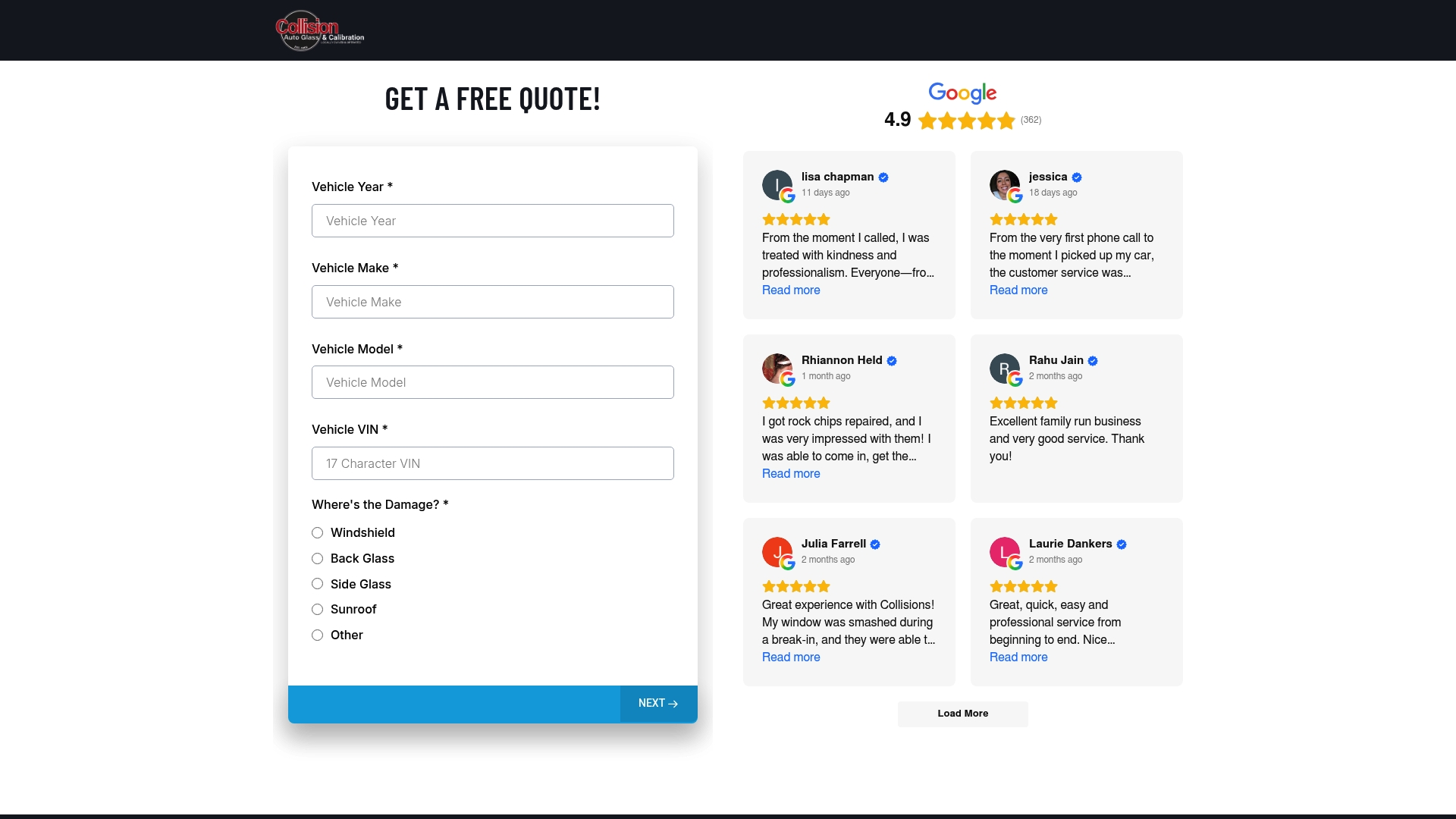
Call or book through collisionautoglass.com with your policy details, and we will explain what to expect before work starts. We also work on side windows, back windows and RV windows, and we serve fleets that need regular glass service.
FAQ
Does Oregon car insurance cover windshield replacement?
Yes, if you carry comprehensive coverage. Oregon’s insurance regulator says comprehensive covers glass breakage and chips that shatter a windshield, after you pay your deductible. Liability-only policies do not cover your own glass.
Can my insurance company make me use a specific glass shop?
No. Oregon law prohibits an insurer from requiring you to use a particular repair shop, and the adjuster must tell you about that right before recommending one. If your chosen shop’s price is unusually high, the insurer may not pay the full amount.
Will filing a windshield claim raise my rates?
That depends on your insurer and policy, so ask your agent before you file. Many drivers find that a chip repair is inexpensive enough to pay for directly or is covered with little or no deductible. Compare your deductible with the quote before deciding.
Can a 12-inch crack be repaired?
It can be within the repairable limit. The U.S. repair standard treats cracks up to 14 inches as repairable in size, but the damage must also avoid conditions like penetrating both glass layers or sitting in certain areas. A technician needs to inspect it in person.
Is ADAS calibration included in a windshield claim?
It depends on your policy and your vehicle. Ask your adjuster whether required calibration is part of a covered glass claim, and make sure the estimate lists it as its own line.
Sources
- Oregon Division of Financial Regulation: Car insurance FAQs
- Oregon Division of Financial Regulation: Winter weather and your car
- AAA Oregon: Understanding comprehensive auto insurance
- Oregon Division of Financial Regulation: Repair shops after an accident
- ORS 746.280 (FindLaw)
- ORS 746.280 (Oregon Public Law)
- ANSI/AGSC/NWRD/ROLAGS 002-2022 repair of laminated auto glass
- ORS 815.220 (Oregon Public Law)
- Oregon windshield replacement law: rules and requirements
- Polishing car glass safely
Recommended
- How Many Windshields Are Covered By Insurance In Portland, OR?
- Will My Insurance Go Up If I Claim For A Windshield?
- Does Portland, OR Have Free Windshield Replacement?
- Who Pays When A Rock Hits Your Windshield?
🎧 Listen to This Article
Share
Recent Posts
November 16, 2026
In-House ADAS Calibration: Why It Matters After Glass Work
What in-house ADAS calibration means, how it compares with dealer and mobile options, what it costs, and how to confirm it was done...
November 15, 2026
Fleet Rock Chip Policy: What to Write, Who Signs Off
Build a fleet rock chip policy that sets inspection triggers, repair-or-replace rules, approvals, ADAS recalibration and records, so small chips never sideline a...

November 14, 2026
Truck ADAS Calibration: What It Is, When You Need It, What It Costs
Truck ADAS calibration explained: which repairs trigger it, static vs. dynamic methods, typical time and cost, and what a finished job should show....