Auto Glass Repair
Yes, calibration is commonly required after windshield replacement, after a camera or radar sensor is removed or replaced, and sometimes after an OEM software or firmware update that touches ADAS modules, the immediate next step is a diagnostic pre-scan or a check against the vehicle’s OEM calibration lookup. Some shops document pre-scan and post-scan results on calibration jobs to provide a paper trail to show insurers.
TL;DR:
- Nearly all repairs involving windshield replacements, sensor removals, or firmware updates mandate a calibration check to ensure ADAS functions properly.
- Static calibration requires a controlled bay setup, while dynamic calibration involves road testing; many vehicles need both steps for full accuracy.
- Shops must perform pre-scan diagnostics, follow OEM procedures precisely, and conduct post-calibration verification drives of 15 to 20 minutes to confirm system integrity.
- Proper documentation of pre- and post-scan logs, alongside test drive results, is essential for insurance claims and liability mitigation.
- Choosing an experienced, OEM-trained provider with access to current calibration procedures and detailed records reduces the risk of misalignment and unintended system failures.
Table of Contents
- What events and symptoms mean your vehicle needs recalibration
- Static vs. dynamic calibration: how they differ and why it matters
- Step-by-step: what a qualified shop does during an ADAS calibration service
- Timeline and cost expectations: planning appointments and insurance considerations
- How to choose a provider and questions to ask
- Expert perspective: safety, liability, and industry trends in ADAS calibration
- Collision Auto Glass & Calibration: in-house calibration done right
- Sources
- FAQ
What events and symptoms mean your vehicle needs recalibration
Several repair events routinely trigger a calibration requirement. Windshield replacement is the most common, since many forward-facing cameras mount directly to the glass. Removing or reinstalling a radar unit, camera, or related bracket has the same effect, and so does replacing a control module tied to the ADAS system. Some OEM software or firmware updates also shift calibration tables enough that the system needs to be reset and verified, a point industry coverage of collision repair technology raises directly: modern vehicles carry enough software that a systems-engineering approach, not a quick glance, is needed before and after any repair that touches these components.
Dashboard warnings are the clearest symptom. Watch for:
- A lane-departure, forward-collision, or adaptive cruise warning light staying on after a drive.
- Sudden changes in how aggressively the car brakes or steers to stay centered.
- A camera or sensor error message appearing after glass work or a dealer visit.
- Blurry or misaligned camera image shown on infotainment backup displays.
Procedures vary by make and model, so always confirm requirements against the vehicle’s service manual or an OEM calibration lookup before assuming a system is fine.
Static vs. dynamic calibration: how they differ and why it matters
Static calibration happens in a controlled bay. The vehicle sits on a level floor while the technician positions printed targets at exact distances and heights in front of the car, then runs a calibration sequence through a scan tool. Dynamic calibration happens on the road: the vehicle is driven at specified speeds, often on roads with visible lane markings, while the system self-calibrates using real-world input.
Which one applies depends on the repair and the OEM:
- Windshield and front-camera work often calls for static calibration first.
- Radar and some blind-spot or rear-camera systems frequently need a dynamic drive to confirm accuracy.
- Several OEMs require both steps on the same vehicle before clearing the calibration.
Static setups need floor space, lighting control, and precise target placement, which is why OEM documentation for calibration after glass replacement stresses that some manufacturers restrict certain tools and procedures to shops with verified training and equipment.
Pro Tip: Ask whether your vehicle’s calibration needs a static bay, a road test, or both, before you book an appointment, so the shop can schedule enough time and space.
Step-by-step: what a qualified shop does during an ADAS calibration service
A calibration job that follows accepted practice runs in a predictable sequence, and asking a shop to walk through these steps is a fair way to judge its process.
- Pre-inspection and pre-scan. The technician scans the vehicle’s modules, saves the diagnostic log, and checks current firmware versions against OEM specifications.
- Confirm procedure and tooling. The shop pulls the OEM-specific calibration procedure, verifies it has the correct targets or scan tool license, and applies any required software update before touching the sensors.
- Perform the calibration. Static target setup, dynamic road procedure, or both are completed exactly as the OEM procedure specifies, since OEM guidance on glass and ADAS software points out that outdated software during this step can cause a calibration to fail or produce an inaccurate result.
- Post-calibration scan and verification. The technician captures a post-scan log, confirms no fault codes remain, and completes an OEM-recommended test drive. Several OEM position statements specify a verification drive of around 15 to 20 minutes at moderate speeds to confirm the system reads correctly with no stored ADAS fault codes, a benchmark worth asking any shop to match.
- Documentation handoff. Pre-scan and post-scan logs, along with a summary of the test drive, go to the owner, fleet manager, or insurer for the record.
Skipping any of these steps, especially the pre- and post-scan logs, leaves no way to confirm the calibration actually worked.
Timeline and cost expectations: planning appointments and insurance considerations

A straightforward calibration visit typically breaks down into a few stages: a pre-scan and setup window of 30 to 60 minutes, calibration itself running 30 to 90 minutes depending on whether it is static, dynamic, or both, and a final verification pass of 15 to 30 minutes. More involved jobs, particularly ones needing a software update first, sometimes require a second visit.
Cost depends on several factors:
- Access to OEM-specific tooling and calibration software, which varies by brand.
- Whether the job needs static targets, a dynamic road test, or both.
- Parts replaced alongside the calibration, such as a windshield or sensor bracket.
- Regional shop rates and whether the work is billed as part of a windshield job like windshield replacement, priced between $200 and $500 by Collision Auto Glass & Calibration, or billed separately.
Fleet managers often negotiate standing service agreements to keep scheduled calibrations predictable. Insurers typically want the pre-scan log, the calibration report, and the post-scan verification before approving payment, which is why direct billing arrangements that package this paperwork save everyone a round of back-and-forth.
How to choose a provider and questions to ask
A short vetting conversation up front avoids a lot of trouble later. Before booking, ask the shop:
- Do you have access to OEM-specific calibration procedures for my make and model?
- What scan tools and calibration targets do you use, and are they updated for current model years?
- Are your technicians trained or certified, for example through I-CAR or an OEM-specific program?
- Can you provide pre-scan and post-scan logs along with the final report?
- What does your test-drive verification protocol look like, and how long does it run?
- Do you bill insurance directly, and what documentation do you send them?
Pro Tip: A shop that cannot hand you a pre-scan and post-scan log is a shop you should not trust with ADAS work, regardless of how fast the appointment sounds.
Red flags include refusing to show diagnostic logs, no stated access to OEM procedures, pushback when you ask for documentation, or a calibration “service” that amounts to a quick drive around the block with no scan before or after. Some vehicles, particularly newer platforms with proprietary tooling, may still require dealership or OEM-only calibration. When that is the case, get it in writing so fleets and insurers have a record of why the work went to the dealer.
Expert perspective: safety, liability, and industry trends in ADAS calibration

A camera or radar unit that is off by even a small margin can change how a vehicle brakes, steers, or warns its driver, and that gap between a technically completed repair and a properly functioning safety system is where most of the risk sits. Industry voices have noted that a single degree of misalignment can noticeably change how these systems behave, which is why treating calibration as a formality instead of a verified outcome is the real liability exposure for owners, fleets, and insurers alike.
The broader trend is toward standardization. OEMs are publishing more detailed position statements, training programs like I-CAR are expanding, and federal rulemaking on automatic braking systems is pushing toward software-upgradeable safety systems with defined performance expectations. None of that replaces a documented calibration. It raises the bar for what “documented” should mean, and shops that follow OEM procedure and keep a paper trail are the ones positioned to meet it.
— Collision Auto Glass & Calibration
Collision Auto Glass & Calibration: in-house calibration done right
Booking a calibration should not mean juggling a dealership’s schedule on top of a glass repair. Some shops perform in-house ADAS calibration for cameras, radar, and LiDAR, with documented pre-scan and post-scan logs on calibration jobs and a test drive verification before returning the vehicle.
That same visit can include windshield work covered by a guarantee, with same-day service and mobile installation available in the service area as described by Certified Auto Body Repair | Eurobahn Auto Body & Collision. For fleet managers and insurance agents, the shop provides:
- Direct insurance billing with the diagnostic documentation insurers typically request.
- Technician checklists that track each calibration step from pre-scan to final verification.
- Scheduling flexibility for routine fleet calibration needs.
If a recent software update, a cracked windshield, or a sensor warning light has you wondering what comes next, start with ADAS calibration services or request a quote to get a documented, verified calibration on the books.
Sources
The recommendations above draw on I-CAR’s calibration guidance for windshield replacement, Rivian’s OEM position statements on calibration procedure, and industry reporting on collision repair’s shift toward systems engineering. Always check your vehicle’s service manual or OEM-specific procedure for model-specific requirements, since calibration steps and timing vary by make.
- Calibration After Windshield Replacement
- Cracking the code: how technology is reshaping collision repair
FAQ
Does a software update always require ADAS recalibration?
Not always. Some updates only affect infotainment or non-ADAS modules, while others change calibration tables for cameras or radar and do require a reset and verification. Check the OEM calibration lookup or service manual for your specific update.
How long does a post-calibration test drive need to be?
OEM position statements commonly recommend a verification drive of around 15 to 20 minutes at moderate speeds to confirm no fault codes remain. The exact duration depends on the manufacturer’s procedure.
Will insurance cover ADAS calibration after a windshield replacement?
Many insurers cover calibration when it is documented as part of a covered windshield or sensor repair. Some shops offer direct billing and provide pre-scan and post-scan documentation that insurers typically request.
What happens if I skip calibration after a repair?
Skipping calibration can leave cameras or radar misaligned, which may cause false warnings, delayed braking response, or a system that fails to activate when needed. Dashboard warning lights or a stored fault code are usually the first sign something was missed.
Can any auto shop perform ADAS calibration?
Not every shop has the OEM-specific tools, training, or target systems some calibrations require, and a few manufacturers restrict certain procedures to certified locations. Ask about OEM procedure access, technician training such as I-CAR certification, and whether the shop provides pre-scan and post-scan logs before booking.
Recommended
- Calibration After Windshield Replacement: What You Must Know
- What Is The ADAS Calibration?
- Need a New Windshield? Don’t Forget Calibration
- Radar Sensor Calibration: What Vehicle Owners Must Know
🎧 Listen to This Article
Share
Recent Posts

October 25, 2026
Blocked Sensors After a Grille Guard: Causes and Fixes
Sensor blocked warnings, constant beeping or disabled cruise after installing a grille guard? Learn why it happens, what to try, and when to...

October 24, 2026
Mobile Windshield Safety: What to Check Before a Tech Arrives
Mobile windshield replacement can be as safe as a shop job if the glass, adhesive, cure time and ADAS calibration are right. Here...
October 23, 2026
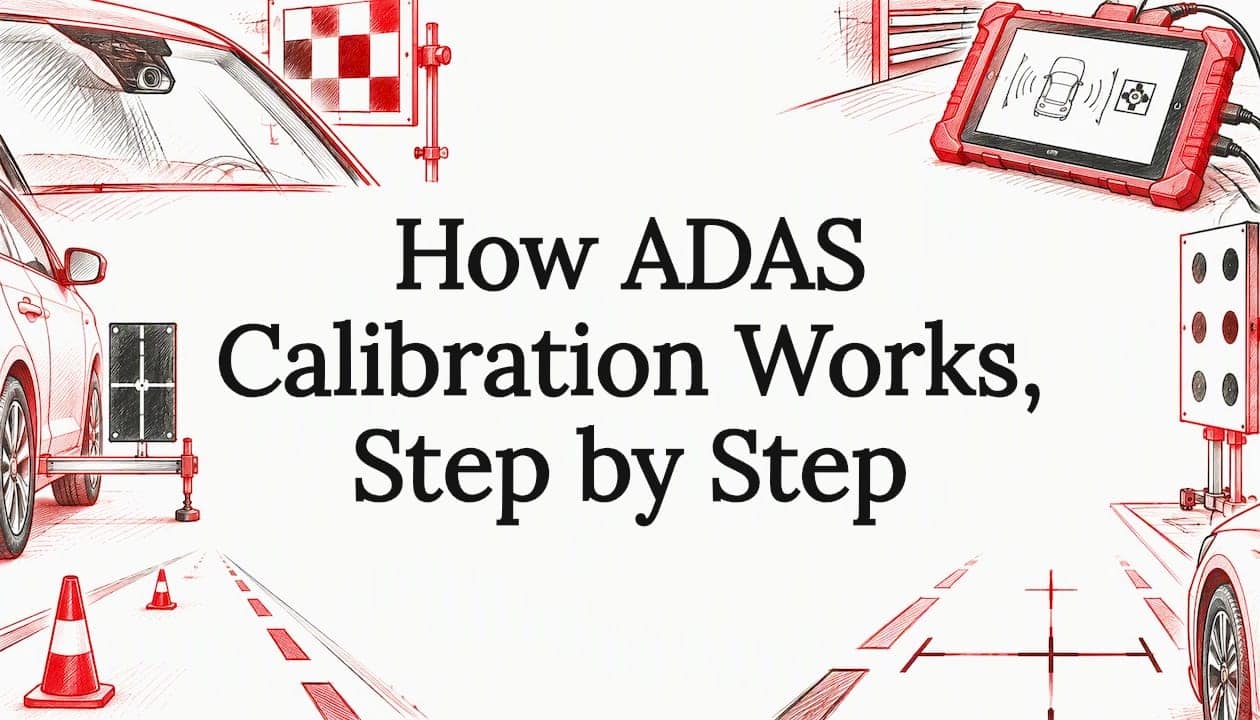
How ADAS Calibration Works, Step by Step
See how ADAS calibration works: static and dynamic methods, what happens in the shop, how long it takes, and when your car needs...