
Auto Glass Repair
An acoustic windshield is a laminated windshield built with a specialized viscoelastic interlayer, usually a modified PVB, that dampens sound waves as they pass through the glass. The result is a quieter cabin, particularly in the mid-to-high frequency range where wind hiss, tire whine, and road noise live. It’s not a cosmetic upgrade or a marketing gimmick. It’s a safety-compliant laminated windshield engineered with one extra job: cutting down the noise that reaches your ears.
TL;DR:
- Acoustic windshields significantly reduce high-frequency noise such as wind hiss and tire whine, with lab tests showing up to 6 dB reductions.
- The noise reduction effectiveness depends on matching the original OEM interlayer specification, and aftermarket replacements may lose the benefit if unverified.
- They primarily improve speech clarity and create a less fatiguing cabin environment, especially for highway drivers, but do little for low-frequency engine rumble.
- Verification of the glass code and in-house ADAS calibration are crucial steps to maintain acoustic performance and safety after replacement.
- Cost varies based on the interlayer and calibration needs, making OEM-spec layers and in-house calibration a worthwhile investment for regular highway commuters and luxury vehicle owners.
Table of Contents
- Acoustic Windshield Meaning: What’s Inside the Glass
- How Does an Acoustic Windshield Reduce Cabin Noise?
- What Acoustic Glass Fixes, and What It Doesn’t
- How Can You Tell If Your Windshield Is Acoustic Glass?
- Is an Acoustic Windshield Worth the Cost?
- What Should You Ask Your Installer About Acoustic Glass and Calibration?
- Our Take: When Acoustic Glass Is Worth Chasing
- Get an OEM-Spec Windshield Quote in Portland
- Sources
- FAQ
Acoustic Windshield Meaning: What’s Inside the Glass
Every windshield sold in the United States is laminated, meaning two layers of glass bonded around a plastic interlayer that keeps the glass intact on impact. A standard laminated windshield uses a single sheet of polyvinyl butyral, or PVB, chosen mainly for strength and adhesion. An acoustic laminated windshield swaps that single-layer PVB for a tri-layer interlayer, with a softer, more flexible viscoelastic core sandwiched between two stiffer outer layers.
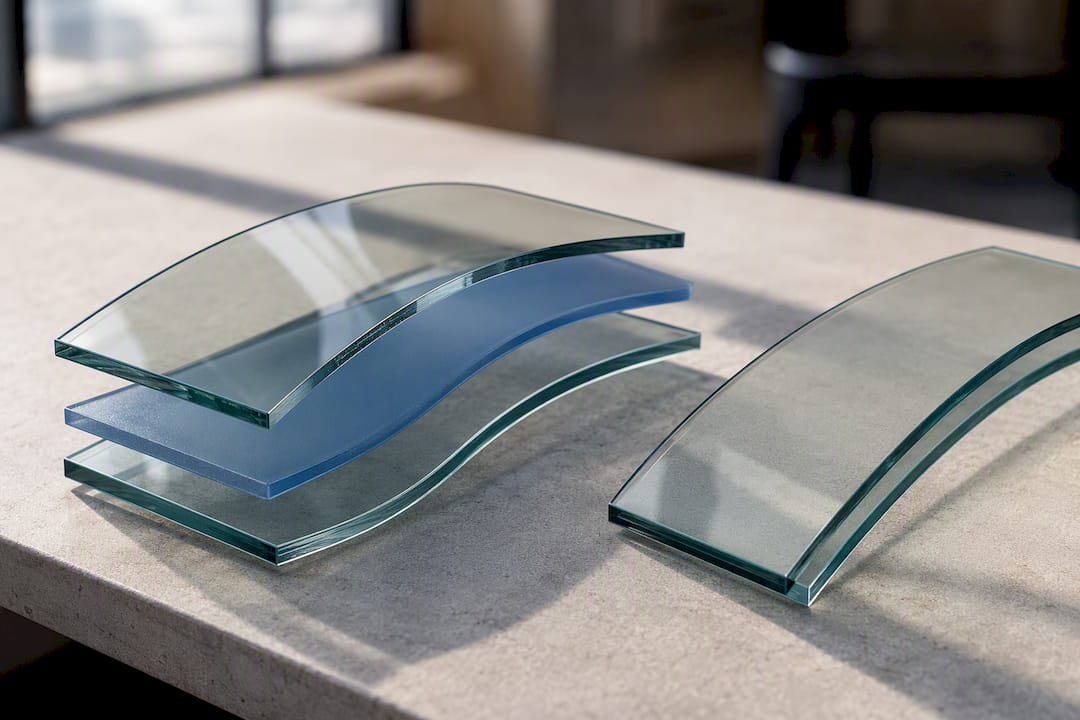
That soft middle layer is where the noise reduction happens. Manufacturers build acoustic glass by sandwiching this specialized acoustic interlayer between two glass plies, and on some vehicles, the treatment extends to the front side windows as well.
A few construction details matter when you’re comparing windshields:
- Standard PVB interlayers typically run around 0.76mm thick; acoustic tri-layer interlayers are often similar in overall thickness but layered differently to isolate vibration.
- OEM acoustic glass carries a specific interlayer designation tied to that model’s original spec.
- Aftermarket replacement glass must match that designation, or the acoustic benefit disappears even though the glass looks identical.
If you want the fuller picture on how laminated glass behaves versus tempered glass, that comparison explains why laminated construction was chosen for windshields in the first place.
How Does an Acoustic Windshield Reduce Cabin Noise?
The mechanism is called constrained-layer damping. The soft viscoelastic core sits between two rigid glass plies, and when sound-driven vibration tries to pass through, that core flexes and converts the vibrational energy into a small amount of heat instead of letting it transmit cleanly into the cabin. Windshields are large, low-damping surfaces, which makes them an efficient place to intercept airborne wind and tire noise without adding weight or hurting fuel efficiency.
This damping works best in a specific band, roughly 1,000 to 6,000 Hz, which happens to cover:
- Wind hiss and turbulence noise around the A-pillars and mirrors
- Tire whine on coarse or grooved pavement
- Higher-pitched road and mechanical noise that competes with speech
Lab-Measured Performance: SAE testing on acoustic-grade PVB windshields shows reductions of up to 6 dB in high frequencies and roughly 2 to 3 dB in low-to-mid frequencies.
A 3 to 6 dB drop sounds small on paper, but it’s a real, measurable shift, not a dramatic halving of perceived loudness. Drivers typically describe the change less as “quieter” and more as “cleaner,” since the reduction smooths out harsh, tonal noise and makes conversation and audio easier to follow at highway speed.
What Acoustic Glass Fixes, and What It Doesn’t
Acoustic glazing earns its keep on the noises it’s actually designed for. It won’t touch everything that makes a cabin feel loud.
Where it helps:
- Smoother, less fatiguing cabin sound on the highway
- Better speech clarity between driver and passengers
- No compromise to the laminated windshield’s crash safety behavior
- Slight weight savings compared to simply using thicker standard glass
Where it falls short:
- Low-frequency engine rumble and coarse-pavement thump pass mostly unaffected, since that noise travels through the chassis and body structure rather than the glass
- It’s not a substitute for broader NVH (noise, vibration, harshness) work like better door seals or underbody insulation
Pro Tip: If your complaint is a droning engine note at idle rather than wind noise at 65 mph, an acoustic windshield probably isn’t the fix. That’s a structure-borne noise problem, and it needs a different solution entirely.
A commuter fighting wind roar on I-5 will notice acoustic glass immediately. A driver annoyed by a diesel clatter at a stoplight won’t notice much difference at all.
How Can You Tell If Your Windshield Is Acoustic Glass?
Every windshield carries a small etched marking, often called the “bug,” usually in the lower corner near the edge. That marking is your fastest way to confirm what you’re actually looking at.
- Locate the etched bug in the lower corner of the windshield, usually on the passenger side.
- Look for OEM part numbers, DOT codes, or explicit wording like “acoustic” printed alongside the standard safety glazing markings.
- If nothing is visible or legible, check your owner’s manual or ask your dealer whether acoustic glass was factory-installed on your trim level.
Checking the OEM code before booking a replacement matters more than most owners realize, because a visually identical windshield with a different interlayer designation will not deliver the same NVH performance, even if it fits and seals perfectly.
Before you schedule a replacement, ask your installer:
- Does the replacement glass match my original interlayer specification, acoustic or standard?
- What warranty backs the installation itself, not just the glass?
- Will this vehicle need ADAS calibration after the windshield goes in?
Our OEM versus aftermarket windshield guide breaks down how spec mismatches happen and why they’re easy to miss at a glance.
Is an Acoustic Windshield Worth the Cost?
It depends heavily on how you drive and what already annoys you about your cabin. A few owner profiles get the most out of the upgrade:
- Highway commuters who spend long stretches at sustained speed, where wind and tire noise dominate
- Luxury and near-luxury vehicle owners whose cars shipped with acoustic glass as standard, since replacing it with non-acoustic glass is a real downgrade
- Anyone in a vehicle with known mid-to-high-frequency NVH complaints, rather than low-end rumble
Cost is driven mainly by the interlayer itself and whether the glass requires ADAS recalibration afterward, not by acoustic treatment alone. If your original windshield was OEM-acoustic, insurance-covered replacements should still match that spec. If your car never had it, retrofitting is possible on some models but not universal.
The practical rule: prioritize matching your original glazing spec first, then treat acoustic glass as one piece of a broader NVH picture, not the whole solution. Our windshield replacement cost breakdown covers the variables that actually move the price.
What Should You Ask Your Installer About Acoustic Glass and Calibration?
Getting the acoustic benefit back after a replacement comes down to whether your installer treats the glass code as more than a formality. A shop that skips verification is gambling with your cabin’s noise performance and, more importantly, with your safety systems.
Before booking, confirm the shop will:
- Verify the OEM interlayer designation against your vehicle’s original glass code
- Explain whether your car needs ADAS calibration, since forward-facing cameras and sensors are mounted directly to the windshield
- Perform that calibration in-house rather than outsourcing it and adding days to your timeline
- Back the installation with a written leak and workmanship guarantee
Pro Tip: Ask specifically whether calibration happens the same day as the glass install. A car driving around with an uncalibrated camera system is a bigger risk than a slightly noisier cabin.
Some shops verify OEM glass codes and perform ADAS calibration in-house, backing the installation with a guarantee, to ensure both the acoustic properties and the safety systems tied to the windshield are properly addressed before completing the job.
Our Take: When Acoustic Glass Is Worth Chasing
Acoustic glazing earns its place for highway-heavy drivers and anyone sensitive to wind and tire hiss, especially in vehicles that already shipped with it. What we’d caution against is a non-OEM aftermarket swap without checking the interlayer spec first. Always confirm the glass code and lock down ADAS calibration before you sign off on any replacement.
— Collision Auto Glass & Calibration
Get an OEM-Spec Windshield Quote in Portland
Choosing a provider that verifies the OEM interlayer designation before installation and handles ADAS calibration in-house on the same visit can help keep your windshield’s acoustic performance intact and avoid issues from a mismatched replacement.
That matters because a windshield swap that skips glass-code verification can quietly downgrade your car’s noise damping and leave a camera-dependent safety system out of alignment. Our same-day windshield replacement service includes free mobile installation across the Portland area, direct insurance billing, and a lifetime no-leak guarantee on every install. If you’re not sure whether your current glass is acoustic or what a proper replacement should cost, request a quote and we’ll walk you through your vehicle’s exact spec before any work begins.
Sources
For readers who want the underlying engineering, these sources go deeper than most consumer explainers:
- Noise reduction and sound quality improvement with acoustic windshield (SAE technical paper)
- What Is Acoustic Laminated Window Glass in a Car? (J.D. Power)
- AIS technical note on acoustic windscreen and interlayer behavior (AIS PDF)
FAQ
Does an Acoustic Windshield Make a Real Difference?
Yes, measurably. Lab and track testing shows reductions of up to 6 dB in high-frequency cabin noise, which drivers typically notice as a cleaner, less fatiguing cabin rather than a dramatic drop in volume.
What Is the Difference Between an Acoustic Windshield and a Standard Windshield?
A standard laminated windshield uses a single-layer PVB interlayer for strength and safety. An acoustic windshield uses a tri-layer interlayer with a soft viscoelastic core specifically engineered to dampen sound transmission in the mid-to-high frequency range.
What Is the Difference Between Acoustic Glass and Tempered Glass?
Acoustic glass is a type of laminated glass, made from two glass plies bonded around a plastic interlayer, while tempered glass is a single sheet of glass heat-treated for strength and designed to shatter into small pieces on impact. Windshields use laminated construction for safety reasons; tempered glass is reserved for side and rear windows.
What Is an Acoustic Windshield in a Car?
It’s the factory or OEM-spec front windshield built with a specialized noise-damping interlayer instead of standard PVB, and it’s identifiable by checking the etched glass code or “bug” for acoustic or specific OEM markings.
Is an Acoustic Windshield Worth the Extra Cost?
For frequent highway drivers and owners of vehicles that shipped with acoustic glass from the factory, yes. Matching the OEM interlayer spec on replacement is worth prioritizing since it preserves the noise damping your car was originally engineered with.
Recommended
- OEM vs Aftermarket Windshield: Safety & Cost Guide
- Rain Sensing Windshield: 4 Questions to Ask Before Replacement
- Prove Your Windshield Calibration Is Correct With a Technician Checklist
- Don’t Skip ADAS Calibration: Heated Windshield Replacement in Portland
🎧 Listen to This Article
Share
Recent Posts

September 13, 2026
Net VLT Math for Car Owners: Privacy Glass vs Tint and Legal Limits
Car owners: use net VLT math to compare factory privacy glass and aftermarket tint. Learn UV, heat, safety differences, legal limits, and an...

September 12, 2026
Acoustic Windshield: SAE Evidence and 3 Installer Questions
Learn how acoustic windshields cut up to 6 dB of high frequency road noise, SAE results, and 3 installer questions that protect your...
September 11, 2026
After Windshield or Bumper Repair? Book Honda Sensing Calibration
Schedule Honda Sensing calibration after common repairs. Covers static aiming, dynamic relearn, radar reaim, and i-HDS pre and post calibration reports....