
Auto Glass Repair
Before your technician arrives, clear the dashboard and front seats, remove valuables, and park on a flat surface with 5 to 10 feet of open space around the car, confirm whether your vehicle has ADAS and whether the installer will recalibrate it, and have your VIN, insurance details, and photos of the damage ready. Expect a minimum drive-away time that depends on adhesive and weather. Fast-cure urethane can allow drive-away in about half an hour to one hour, while other adhesives may need several hours.
TL;DR:
- Ensure your vehicle has a flat, level surface and clear enough space for the technician to work efficiently, especially if ADAS calibration is required.
- Confirm whether your vehicle’s ADAS systems need calibration and if the installer does it in-house or refers to a specialist, as some models require manufacturer-approved procedures.
- Prepare your car by removing or securing interior items near the windshield and take photos of your dashboard to facilitate quick reinstallation of accessories afterward.
- Provide the technician with your VIN, insurance details, and clear parking instructions, and ask if the appointment involves test drives for calibration purposes.
- Follow the recommended drive-away times based on the adhesive used and avoid washing or stressing the new seal for at least 24 hours to ensure proper curing.
Table of Contents
- Vehicle checklist: remove, secure, or move interior items
- Parking and workspace: where to leave the car and why it matters
- ADAS and calibration: how to identify systems and what to expect
- Booking and insurance: documents, photos, and questions to have ready
- Step-by-step: what the technician will do during a mobile install
- Aftercare: drive-away times, washing, and immediate do-not-do items
- Perspective from Collision Auto Glass & Calibration: real-world tips and guarantees
- Preparing the vehicle interior and cleaning the windshield area
- Safety precautions for occupants during the replacement process
- Parking permissions and restricted-area documentation
- Handling pets and children during the appointment
- What to wear and bring to your appointment
- Our take on mobile windshield prep
- Ready to book your mobile windshield service
- FAQ
- Sources
Vehicle checklist: remove, secure, or move interior items
A few minutes of prep inside the car saves the technician time and protects your belongings. Empty the dashboard of sunglasses, phone mounts, dash cams, and toll transponders, or tell the technician if you’d rather leave them in place and have them covered during the work.
- Move or temporarily remove child seats that block windshield access; if removal isn’t practical, let the technician know so they can work around it safely.
- Stow loose items like gloves, coins, and papers that could shift or fall during the install.
- Secure any aftermarket accessories near the windshield that might get knocked loose.
- Leave windshield-mounted sensors alone. Don’t touch or try to remove them yourself.
Pro Tip: Take a quick photo of your dashboard setup before you clear it, so reinstalling your dash cam or phone mount afterward takes seconds instead of guesswork.
Parking and workspace: where to leave the car and why it matters
Where you park affects both the quality of the install and how quickly the technician can work; for detailed guidance on preparing your car and parking area for mobile service, see Sell My Car For Cash Nyc – Resources. A flat, level surface, like a driveway or paved lot, keeps the vehicle body from flexing in ways that can throw off panel and glass alignment. Avoid slopes, gravel, or soft ground.
- Park on level pavement and avoid inclines or loose surfaces.
- Leave 5 to 10 feet of clearance on all sides for the van, ladders, and tool access; if you’re using a garage, center the car and keep the door open.
- Skip the appointment or ask about rescheduling if heavy rain, high wind, or dust are forecast, since these conditions can compromise adhesive application.
- If ADAS calibration requires a test drive, make sure the technician has safe access to do so, and check fuel level and any employer parking restrictions if the car is at work.
ADAS and calibration: how to identify systems and what to expect
Look for a small camera mounted behind your rearview mirror, a head-up display, or sensors along the front bumper. These point to advanced driver assistance systems, and your vehicle’s year, make, and model determine what kind of calibration it needs after a new windshield goes in.
Before booking, ask directly whether the provider does calibration in-house or refers it to a dealer or specialist. OEM guidance from manufacturers like Volvo notes that some vehicles need genuine glass and adhesives, and some require dealer-level calibration tooling to keep ADAS functioning correctly.
- Static calibration happens in a controlled space using targets and measured distances.
- Dynamic calibration requires an actual test drive at specified speeds.
- Some vehicles need both, depending on the system.
- Ask for written confirmation once calibration is complete.
Some U.S. states require installers to notify you in writing if your car has ADAS and whether calibration will be performed, as outlined in Virginia’s code on advanced driver assistance systems. That written record protects you if a safety system malfunctions later. For more on when recalibration applies, see our guide on ADAS recalibration after windshield replacement.
Booking and insurance: documents, photos, and questions to have ready
Gathering a few details before your appointment keeps the process moving and avoids billing surprises.
- Have your VIN, vehicle year, make, and model, and insurance policy or claim number (if applicable) on hand.
- Take clear photos of the damage from a few angles.
- Tell the provider exactly where the car will be parked, including gate codes or access instructions for home, work, or public parking.
- Ask whether they bill insurance directly, whether a deductible applies, and whether the quote includes ADAS calibration.
- Confirm the arrival window and get a direct contact number for the technician.
Step-by-step: what the technician will do during a mobile install
Knowing the sequence helps you spot a job done right. The technician starts with a vehicle assessment to confirm the work can be done safely on-site. AGRSS industry standards require installers to stop and notify you in writing if structural or retention issues make the vehicle unsafe for replacement.
- The technician removes the old windshield and cleans the pinch weld, the metal channel the glass sits in.
- They select and apply adhesive according to manufacturer specifications, accounting for temperature and humidity.
- The new windshield goes in, followed by checks on weatherproofing, molding fit, wipers, and any visible sensors.
- The technician tells you the minimum drive-away time and whether ADAS calibration is scheduled or still needed.
Aftercare: drive-away times, washing, and immediate do-not-do items
Your installer will give you a minimum drive-away time, and it’s worth following exactly. I-CAR data shows fast-cure urethanes can reach minimum drive-away in 30 to 60 minutes, while conventional moisture-cure adhesives often need 2 to 8 hours or more, depending on temperature and humidity. Full cure, when the adhesive reaches its complete strength, can take considerably longer than the drive-away window.
- Skip automated car washes for at least 24 hours.
- Avoid slamming doors, which can pressurize the cabin and stress a fresh seal.
- Stick to smoother roads when possible during the first day.
- Follow up promptly if calibration couldn’t be completed on-site, and keep written confirmation once it is.
- Contact your installer right away if you notice whistling air, a visible gap, or water coming in.
For a closer look at cure charts across adhesive types, see our windshield urethane cure time guide.
Perspective from Collision Auto Glass & Calibration: real-world tips and guarantees
Family-owned and operating since 2008, the company offers same-day service with free mobile installation, backed by a lifetime no-leak guarantee and in-house ADAS calibration. We’ve worked in plenty of tight driveways and apartment lots, and we’ll talk through covered-space options with you if weather is a concern on appointment day. Direct insurance billing means one less call for you to make.
A mobile windshield appointment should feel no different from one at a shop: same standards, same written confirmation, same guarantee.
— Collision Auto Glass & Calibration
Preparing the vehicle interior and cleaning the windshield area
Adhesion depends on a clean bonding surface, and that starts inside the car. Wipe down the dashboard area near the windshield base to remove dust, which can interfere with primer and urethane application along the pinch weld. If you use air fresheners, vent clips, or decorative items near the dash, remove them so they don’t get in the technician’s way or end up damaged.
Clear the area behind the rearview mirror too, since that’s where ADAS cameras usually sit and where the technician needs unobstructed access. If your car has a dash cam wired into the fuse box, mention it before work begins. Technicians sometimes need to temporarily detach wiring that runs along the headliner or A-pillar, and knowing it’s there in advance prevents accidental damage.
Interior cleanliness matters most in the few inches surrounding the windshield’s edge, not the whole cabin. You don’t need to detail the car. Just make sure the strip where the old glass meets the dash and pillars is free of clutter and debris so the technician can prep the pinch weld properly and get a clean seal on the first try.

Safety precautions for occupants during the replacement process
Plan to stay out of the vehicle while work is underway. Technicians use sharp tools to cut out the old urethane bead, and the windshield itself, once loosened, can be unstable until it’s fully removed. Keep children and pets away from the immediate work area, ideally inside the house or in a separate part of the yard.
Avoid leaning into the car or reaching past the technician to grab something from the dashboard, even if you’ve forgotten an item. Ask them to hand it to you instead. Once the new windshield is set, don’t touch the glass or attempt to press on it. Pressure applied before the adhesive reaches its minimum drive-away strength can shift the seal out of position.
If the appointment includes a test drive for dynamic ADAS calibration, the technician will drive the vehicle alone or ask you to ride along depending on their protocol. Confirm this ahead of time so there’s no confusion about who’s behind the wheel.
Parking permissions and restricted-area documentation
If your vehicle will be parked somewhere other than your own driveway, such as an apartment complex, a gated community, or a workplace lot, check whether you need permission before the technician arrives. Some properties require advance notice for service vehicles or have restrictions on vans parking in guest spots for extended periods.
Have any gate codes, parking passes, or building management contact information ready to share with the provider when you book. If you work in an office building with assigned or restricted parking, ask your employer or building management whether a mobile service van is allowed to park near your vehicle for the one to two hours a typical replacement takes. Our guide on windshield replacement at work covers this scenario in more detail.
Street parking in a city can raise its own issues, from metered time limits to permit-only zones. Check local signage and feed the meter or display a permit if needed, since a parking ticket mid-appointment adds an unwelcome delay.
Handling pets and children during the appointment
Pets and young children are naturally curious about a work van and ladder parked outside, but the work area needs to stay clear for safety and efficiency. Keep pets indoors or in a fenced area away from the vehicle, both for their safety around tools and broken glass fragments and so they don’t distract the technician.
Young children should stay inside or well away from the car during the appointment. Broken glass from the old windshield, sharp trim tools, and the open van itself all present hazards that are easy to avoid with a little distance.
If you need to supervise kids or pets while the work happens, consider having another adult present so you’re not trying to watch them and answer the technician’s questions at the same time. Most mobile appointments take under two hours, so planning a short indoor activity or a walk around the block can make the wait easier for everyone.
What to wear and bring to your appointment
Comfortable, weather-appropriate clothing is fine since most of your role is simply staying available and out of the way. Keep your car keys within easy reach rather than inside the vehicle, since the technician will need them to move the car into position or test power windows and accessories.
Bring your insurance card or claim number if the job is going through insurance, along with your ID in case the technician needs to verify vehicle ownership. If you plan to wait nearby, bring a phone charger, since you’ll want to stay reachable in case the technician has a question about parking, access, or a detail they noticed during the vehicle assessment.

If the appointment is at your workplace, let your front desk or a coworker know a service van will arrive, especially if you won’t be at your desk the whole time. Having your keys, ID, and any insurance paperwork organized in one place before the technician arrives keeps the whole appointment moving without you having to run back inside for something you forgot.
Our take on mobile windshield prep
Most advice on this topic focuses on the installation itself, adhesive types, calibration tools, and technician certifications. Fair enough, but the biggest source of delay we see isn’t technical at all. It’s a car packed with belongings, parked somewhere the van can’t reach, or an owner who didn’t realize their vehicle has ADAS until the technician points out the camera behind the mirror.
The fix isn’t complicated. Clear the car, pick a flat spot with room to work, and ask about ADAS before the appointment day arrives, not after. Owners who treat the pre-appointment checklist as seriously as the installation itself get faster service and fewer surprises about drive-away time or calibration needs.
Where conventional advice falls short is in assuming every adhesive and every vehicle behaves the same way. They don’t. Ask your installer directly about your specific adhesive’s cure time and your vehicle’s calibration requirements rather than relying on a generic timeline.
— Collision Auto Glass & Calibration
Ready to book your mobile windshield service
Once your checklist is handled, booking is straightforward. We offer mobile windshield replacement with free installation across the Portland area, in-house ADAS calibration so you’re not left waiting on a separate dealer appointment, and direct billing with most insurers to keep paperwork off your plate.
- Mobile windshield replacement often available on the same day.
- In-house ADAS calibration for vehicles requiring it.
- Direct insurance billing and a lifetime no-leak guarantee on installations.
Have your VIN, insurance information, and parking details ready, then request a quote to get your appointment scheduled.
FAQ
Should I tip a mobile windshield repair technician?
Tipping isn’t expected or required for mobile auto glass service, since it’s a professional trade service similar to a plumber or electrician. If a technician went out of their way to handle a tricky installation, a tip is a kind gesture but never an obligation.
How long does a mobile windshield repair take?
A typical mobile windshield replacement takes one to two hours on-site, though the minimum drive-away time afterward depends on the adhesive used. Fast-cure urethanes can allow drive-away in 30 to 60 minutes, while other adhesives may need 2 to 8 hours or more depending on temperature and humidity.
What should you not do after getting a new windshield?
Avoid automated car washes, hard door slams, and rough roads for at least the first 24 hours, since pressure or vibration can disturb the adhesive before it fully cures. If your vehicle needed ADAS calibration, don’t rely on driver assistance features until you have written confirmation the calibration was completed successfully.
What temperature will crack a windshield?
Extreme and sudden temperature swings, rather than one specific number, create the stress that cracks glass, such as pouring hot water on an icy windshield or blasting defrost on a frigid day. Existing chips or cracks are especially vulnerable to spreading when temperatures shift quickly, which is why AAA recommends addressing glass damage promptly rather than waiting.
Does Collision Auto Glass & Calibration offer mobile ADAS calibration?
Yes, Collision Auto Glass & Calibration performs in-house ADAS calibration alongside mobile windshield installation in the Portland area. This keeps replacement and recalibration on the same visit in most cases rather than requiring a separate dealer appointment.
Sources
- Minimum driveaway time for urethane adhesive — I-CAR RTS
- § 59.1-207.6:3 Advanced driver assistance systems — Virginia code
- Windshield repair and replacement — AAA Automotive
Recommended
- Will a Cracked Windshield Pass Inspection? What Drivers Need to Know
- Mobile Windshield Repair: Why More Drivers Choose It in 2026
- 7 Signs Your Windshield Needs Repair Before It Spreads
- Tips On Caring For and Maintaining Your Car’s Glass
🎧 Listen to This Article
Share
Recent Posts

October 4, 2026
US Drivers: Mobile Windshield Checklist, Standards & Local Tips
US checklist for mobile windshield replacement: industry standards and local tips on parking, ADAS calibration, and a 30–60 min drive-away....
October 3, 2026
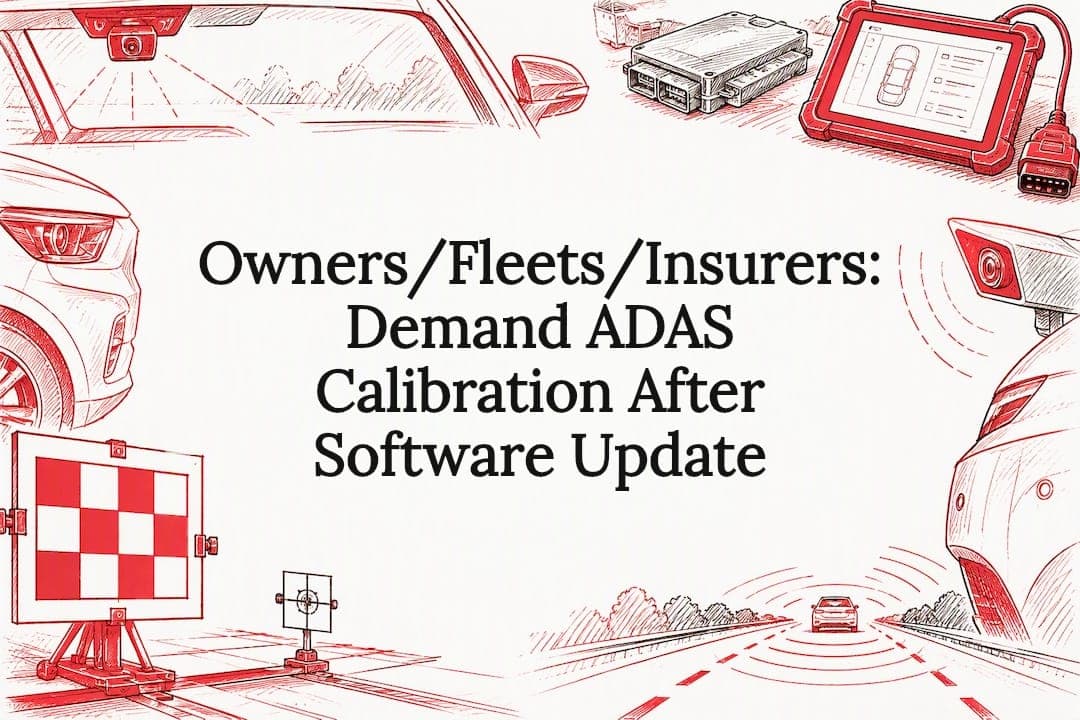
Owners/Fleets/Insurers: Demand ADAS Calibration After Software Update
After a software update or windshield repair, demand OEM ADAS calibration with pre/post-scan logs and a 15–20 minute verification drive....

October 2, 2026
Road Trip First Aid: Photograph Damage, Stop If Crack Blocks Your View
Road trip first aid for a cracked windshield: when to stop, how to document damage for insurance, arrange mobile repair, and check ADAS...