
Auto Glass Repair
Leave the retention tape on for at least 24 hours. Most installers recommend a 24 to 48 hour window, extending to as much as 72 hours in cold or very humid weather. Skip car washes and high-pressure water until the tape comes off, and when your installer gives you a specific time, follow that instruction over any general rule.
TL;DR:
- Waiting at least 24 hours is essential, but longer up to 72 hours may be necessary in cold, humid, or damp conditions, depending on the adhesive used.
- Removing the tape too early risks compromising the bond, especially if the weather delayed curing or the adhesive has not fully set, which can cause leaks or wind noise.
- Use gentle heat, slow peeling at a low angle, and careful residue removal techniques to avoid damaging the paint when taking off the tape.
- During the curing period, avoid car washes, hard door slams, long highway drives, and parking in direct heat to protect the new seal and sensors.
- Always follow the installer’s specific cure time instructions and check the seal and calibration status within the first week to ensure proper adhesion and functionality.
Table of Contents
- Why Retention Tape Matters After Windshield Replacement
- How Long Should You Leave Windshield Tape On?
- How to Remove Windshield Tape Without Damaging Your Paint
- What to Avoid During the First 24 to 72 Hours
- Inspection Checklist: When to Call Your Installer
- Collision Auto Glass & Calibration’s Practical Aftercare Viewpoint
- Get Professional Help With Your Windshield Aftercare
- Sources
- FAQ
Why Retention Tape Matters After Windshield Replacement
That strip of blue or clear tape running across your new windshield isn’t leftover packaging material. It’s doing real structural work while your urethane adhesive cures.
The urethane bond that holds your windshield in place needs time to reach full strength, and tape keeps the glass from shifting even a fraction of an inch during that window. A shift you can’t see with the naked eye can still open a gap wide enough to let water or wind noise through months later.
Retention tape, sometimes called molding tape or windshield replacement tape, handles three jobs at once:
- Positional stability: it holds the glass and trim moldings exactly where the technician set them so the adhesive cures without micro-movement.
- Contamination protection: it shields the curing urethane from rain, dust, and road grime that could weaken the bond before it sets.
- Vibration dampening: it absorbs small shocks from door slams, bumps, and engine vibration that would otherwise stress the fresh seal.
The tape also helps maintain a stable bond-line temperature around the adhesive, which matters more than most owners realize. Urethane cures through a chemical reaction, and that reaction depends on staying within a specific temperature range near the glass edge. Pull the tape too soon and you remove a layer of protection right when the adhesive is at its most vulnerable.
How Long Should You Leave Windshield Tape On?
The baseline number to remember is 24 hours. That’s the floor, not the target, and it only applies under mild, dry conditions with a fast-curing adhesive.
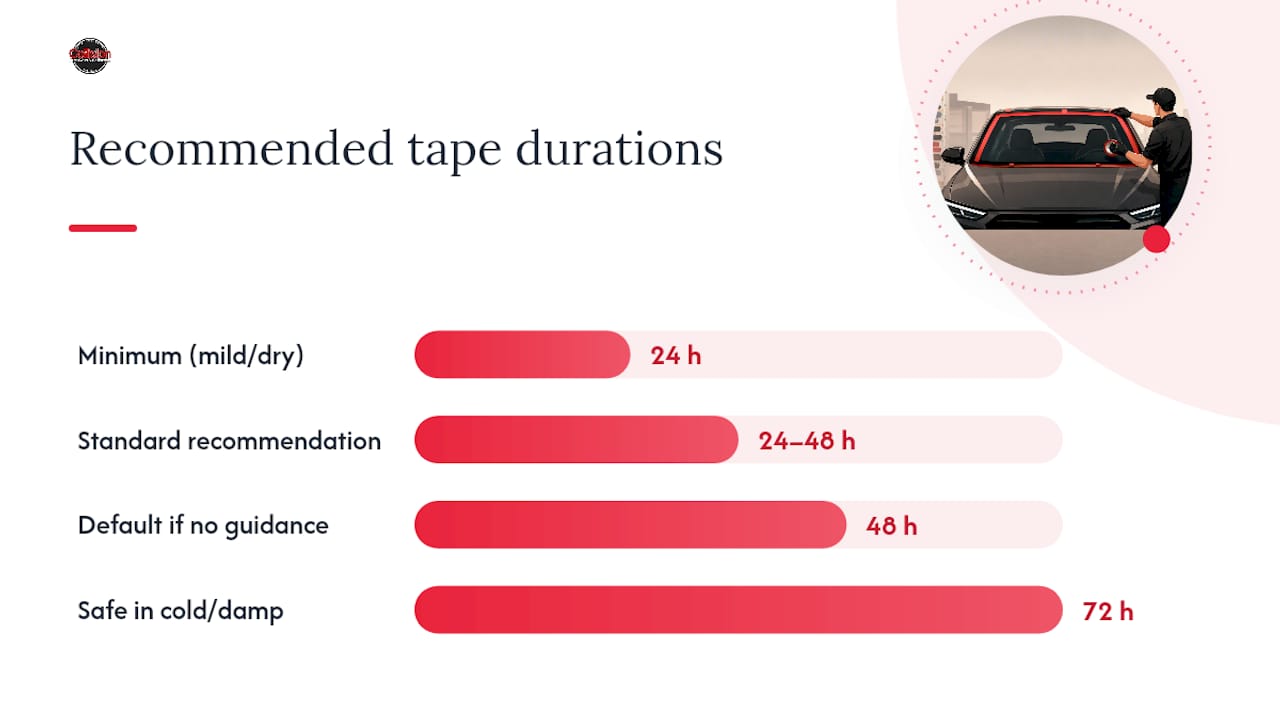
For most vehicles and most installers, 24 to 48 hours is the standard recommendation, and that range covers the vast majority of everyday replacements. Weather changes that math, though, and so does the specific adhesive your shop used.
Weather and adhesive factors that stretch the timeline:
- Cold temperatures slow the chemical curing of urethane and may require longer wait times before tape removal.
- High humidity may delay curing, particularly for some adhesives, meaning tape might need to stay on longer.
- Direct summer heat can speed curing but may cause the tape adhesive to stick more firmly to paint if left too long, complicating removal.
- Adhesive brand and formulation vary by shop, and installer-specified cure times always override a generic rule of thumb.
Fast fact: Shop guidance aligned with AGRSS industry standards generally treats 24 to 48 hours as the baseline initial cure window, adjusting upward for cold or wet conditions.
If your installer wrote a specific time on your paperwork, that number reflects the adhesive they actually used on your vehicle and the weather at the time of installation. It beats any generic chart, including this one. When no specific guidance was given, 48 hours is a reasonable default for most climates, and 72 hours is a safe call if temperatures dropped below 40°F or the air was unusually damp.
How to Remove Windshield Tape Without Damaging Your Paint
Before you touch the tape, confirm the wait time has passed and that the adhesive is fully set. If you press near the edge of the glass and feel any give or hear a faint crackle, give it more time. Once you’re confident it’s cured, removal is a five-step process.
- Warm the tape gently. Set a hair dryer on its lowest heat setting and hold it several inches from the surface. Work on a shaded panel, never one baking in direct sun, since overheated adhesive gets sticky and stubborn.
- Start at a corner or edge. Lift a small section with your fingernail or a plastic edge tool rather than digging into the paint with anything metal.
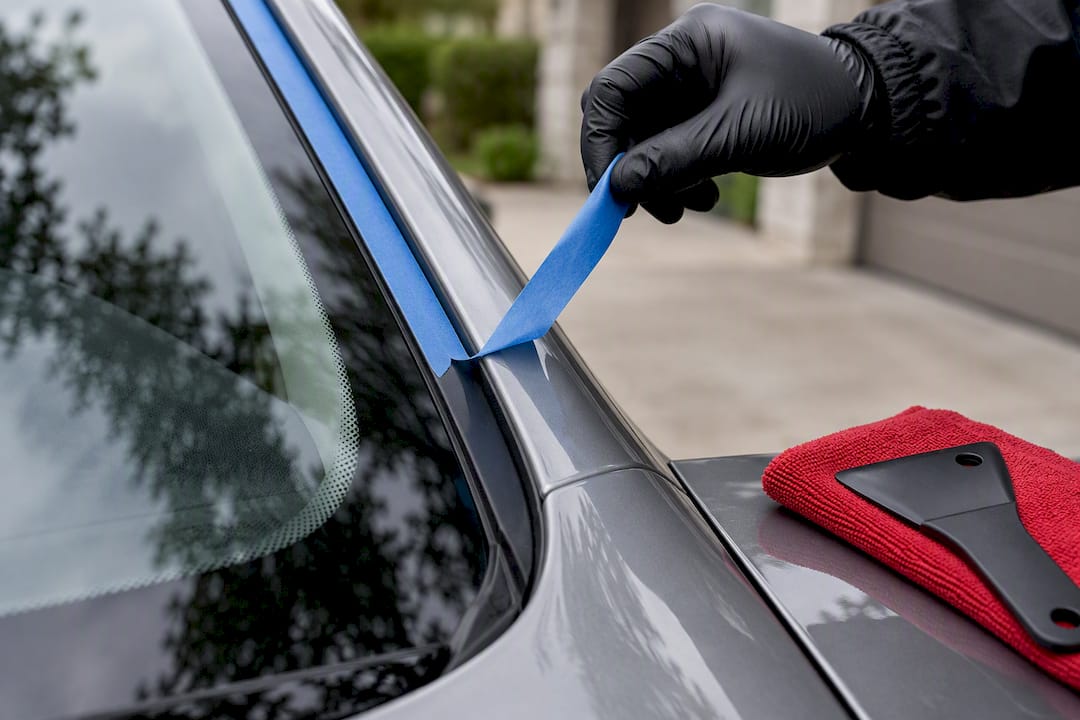
- Peel at a low angle. Pull the tape back on itself, parallel to the paint, rather than straight up and away. A shallow angle reduces the pulling force on the clear coat and lowers the odds of lifting paint.
- Work in short, controlled pulls. Long, fast yanks are what cause residue to tear and stick rather than lift cleanly. Slow and steady wins here.
- Clear any leftover residue. A plastic scraper held at a shallow angle handles most of it. For stubborn spots, a small amount of mild adhesive remover or isolated use of a razor blade at a very low angle can finish the job. This step-by-step approach to removing sticky residue without marring paint applies just as well here as it does to any other adhesive cleanup on a car’s exterior.
Pro Tip: Test your removal method on a small, inconspicuous strip of tape first. If it comes up clean and the paint underneath looks untouched, you’re clear to work your way around the rest of the glass with confidence.
Stop immediately if the tape is tearing into small pieces instead of peeling in one motion, or if you notice the paint dulling or lifting at all. That’s your signal to stop and call your installer rather than push through with more solvent or a sharper tool. A shop with the right cleaning and scraping technique can remove stuck residue without risking your finish, and most installers will handle this at no extra charge if it was their tape in the first place.
What to Avoid During the First 24 to 72 Hours
The tape is only half the aftercare story. What you do with the car while it’s cured matters just as much.
- Skip the car wash entirely, automatic or hand wash, until the tape is off and the cure window has passed. High-pressure water can force its way past a seal that hasn’t fully set.
- Don’t slam doors. Closing a door hard sends a pressure wave through the cabin that can flex a freshly installed windshield before the adhesive locks it in place.
- Avoid long highway drives and rough roads for the first day if you can help it. Constant vibration at speed puts more stress on the bond than city driving does.
- Crack a window slightly if your installer suggests it, especially right after door slams are unavoidable. This equalizes cabin pressure and takes stress off the glass.
- Don’t park in direct, intense heat for hours at a time. Baking the tape adhesive onto hot paint sets up exactly the residue problem the removal steps above are designed to avoid.
- Hold off on normal driving if ADAS calibration is still pending. A windshield replacement often requires recalibrating forward-facing cameras and sensors, and driving before that’s done means your lane-keep assist, automatic braking, or adaptive cruise control may not function as designed.
Curious about the wash timeline specifically? Waiting the right number of hours before washing protects the same seal the tape is protecting, so treat both rules as one package rather than two separate concerns.
Inspection Checklist: When to Call Your Installer
Once the tape is off, take five minutes to actually look at and listen to your new windshield. Small problems are far easier to fix in the first week than after months of freeze-thaw cycles or repeated car washes.
- Check the reveal around the glass edge. It should look even all the way around, with no wavy gaps or spots where the molding sits higher on one side.
- Run a finger lightly along the molding. You shouldn’t be able to catch a fingernail on any gap between the trim and the glass or the trim and the body.
- Listen for new wind noise on your next drive, particularly at highway speed. A whistle or hiss near the windshield that wasn’t there before points to a seal issue.
- Watch for leaks after the first real rain. Water tracking down the inside of the A-pillar or dampness on the headliner near the glass means water is getting past the seal.
- Check your dashboard for ADAS warning lights. If a forward camera or sensor light stays on after driving, calibration likely wasn’t completed or didn’t take.
If the tape doesn’t peel cleanly, if you spot a gap, or if any of the checks above turn up a problem, call your installer for a recheck rather than trying to patch it yourself. A reputable shop stands behind its installation and would rather fix a seal issue in week one than deal with a water-damaged interior down the line.
Collision Auto Glass & Calibration’s Practical Aftercare Viewpoint
Here’s what two decades of shop experience will tell you that a quick internet search often won’t: the tape timeline matters less than what you do around it. We tell every customer the same thing: 24 to 48 hours minimum, up to 72 in cold or damp Portland weather, and no exceptions on skipping the car wash in between.
What actually separates a good outcome from a callback is the installation underneath that tape. That’s why every windshield we install carries a lifetime no-leak guarantee, and why ADAS calibration happens in-house rather than getting outsourced to a shop that doesn’t have your car’s sensor specs on file. If your tape is stuck, your seal looks uneven, or you’re just not sure, we’ll take a look.
— Collision Auto Glass & Calibration
Get Professional Help With Your Windshield Aftercare
If you’re staring at a stubborn strip of tape or a seal that doesn’t look quite right, you don’t have to figure it out with a hair dryer and hope. Collision Auto Glass & Calibration handles the full picture: same-day windshield replacement with free mobile installation anywhere in the Portland area, safe residue removal if tape gets stuck to your paint, and in-house ADAS calibration so your safety systems come back online correctly the first time.
A typical service visit covers a full inspection of the seal and moldings, careful tape and residue removal if you’re still dealing with it, and an ADAS calibration check if your vehicle needs one. Installations may come backed by a lifetime no-leak guarantee, and many shops offer direct billing to insurance providers to simplify paperwork management. Current prices for windshield replacement and rock chip repairs vary; check the provider’s pricing page for the latest details. If you’re not sure which service fits your situation, request a quote and we’ll walk you through it before any work starts.
Sources
FAQ
How long should you keep tape on a windshield after replacement?
Leave it on for at least 24 hours, with 24 to 48 hours being the standard window most shops recommend. Cold or humid weather can push that to 72 hours, so always defer to your installer’s specific instructions if they gave you one.
Why do installers put tape on your windshield after replacing it?
The tape holds the glass and moldings in place while the urethane adhesive cures, and it protects the fresh adhesive from dirt, moisture, and vibration. Removing it too early risks letting the glass shift slightly before the bond fully sets.
What are the do’s and don’ts after a windshield replacement?
Do avoid automatic and high-pressure car washes, skip long highway drives, and hold off on hard door slams for the first 24 to 48 hours after service. Don’t drive normally if ADAS calibration is still pending, since your car’s safety sensors may not work correctly until that’s complete.
What is the blue tape for after a windshield replacement?
It’s retention or molding tape, and its job is stabilizing the glass position and shielding the curing adhesive rather than serving any cosmetic purpose. Most versions peel off cleanly with gentle heat and a slow, low-angle pull once the recommended wait time has passed.
Can Collision Auto Glass & Calibration help if my tape won’t come off cleanly?
Yes. A service visit includes a full seal inspection and careful residue removal if tape has stuck to your paint, alongside an ADAS calibration check if your vehicle needs one. Request a quote and a technician can assess the job before any work begins.
Recommended
Share
Recent Posts
September 21, 2026
24–48 Hours: Technician Backed Windshield Tape Rules and Safe Removal
Leave retention tape 24–48 hours (72 in cold or damp). Avoid car washes, warm the tape and peel slowly at a low angle....
September 20, 2026
When Drivers Can Drive After Windshield Urethane: 1–3 Hours, SDAT & Charts
Find exactly when you can drive after windshield urethane. Learn AGRSS SDAT rules, how to read manufacturer cure charts, and simple aftercare. Often...

September 19, 2026
Windshield Frit Explained for Drivers: How Black Dots Protect the Seal
How the screen printed, baked ceramic band and dot matrix on fixed auto glass give urethane adhesive a textured grip, block UV, prevent...