
Auto Glass Repair
A frit is a baked-on ceramic enamel band and dot matrix fused to fixed auto glass. It gives urethane adhesive a textured surface to grip and shields that bond from UV damage. The dot-matrix fade at its edge also manages heat during manufacturing, which prevents warping that could weaken the entire windshield installation.
TL;DR:
- The black frit layer provides a rough surface for the urethane adhesive to bond effectively and shields that bond from harmful UV rays, extending its lifespan.
- The frit’s fading into a dot pattern near the edge reduces thermal stress and distortion during windshield shaping, with denser dots in tighter curves or sensor zones.
- Frit is applied on fixed, bonded automotive windows, but typically not on moveable side or roll-down windows, which rely on gaskets and seals instead.
- Visible damage, such as missing dots, discoloration, or bubbling at the frit edge, indicates possible bond failure and requires professional inspection.
- Future advancements may reduce reliance on frit with new glare and sensor coatings, but current manufacturing practices still make it a standard safety feature.
Table of Contents
- What Is Windshield Frit and How Is It Made?
- What Does Windshield Frit Actually Do?
- Why Does the Frit Fade Into Dots Near the Edge?
- Which Windows Actually Have Frit?
- Signs Your Windshield’s Frit or Seal Is Failing
- Collision Auto Glass & Calibration’s Take on Frit Damage
- Will Frit Technology Ever Disappear?
- Ready to Have Your Frit and Seal Checked?
- Sources
- FAQ
What Is Windshield Frit and How Is It Made?
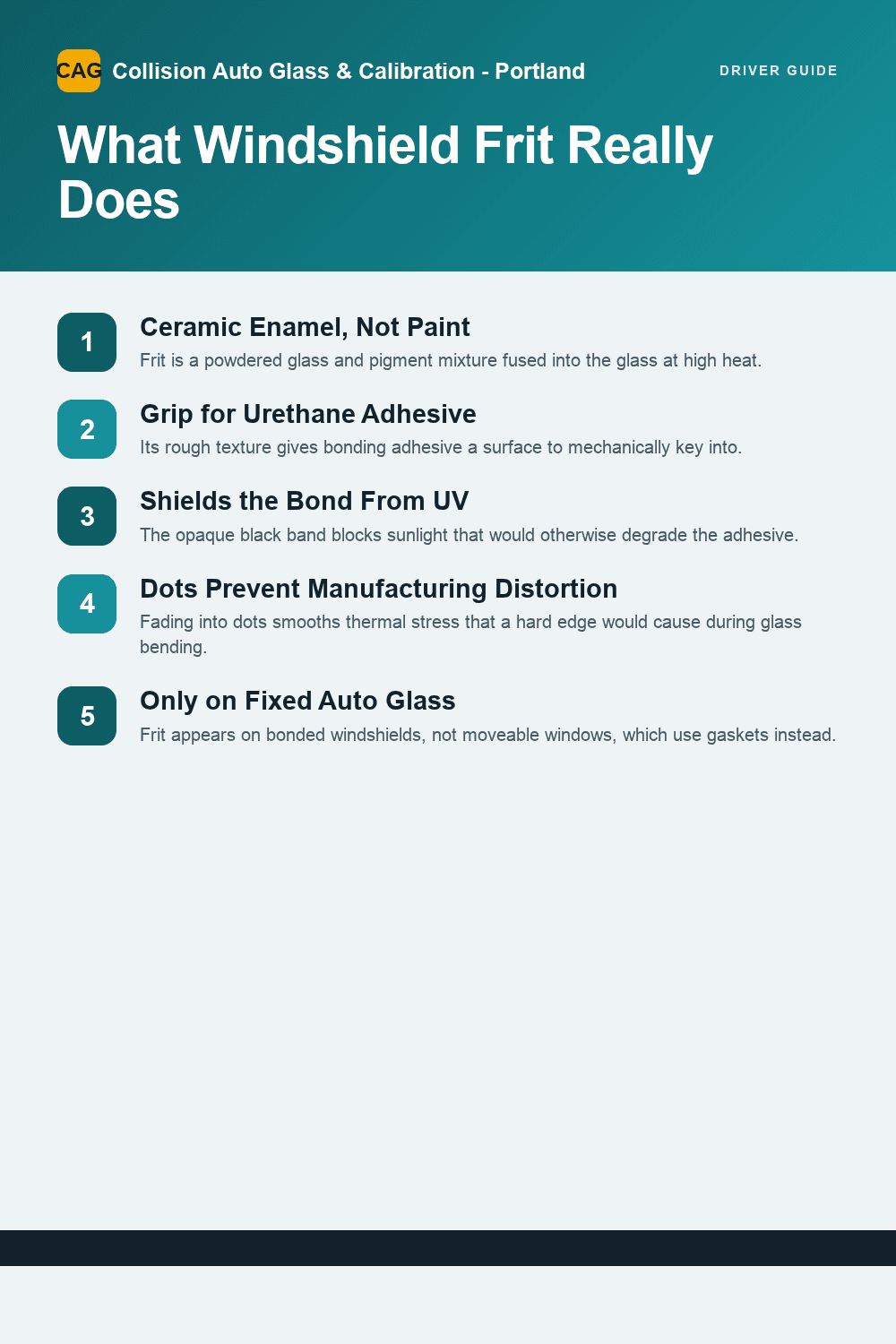
Frit is not paint. It is a ceramic enamel made of powdered glass mixed with pigment, usually black or dark gray, applied while the glass is still flat and unformed.
Manufacturers screen print the mixture directly onto the glass surface, using the same basic principle as printing a design onto a T-shirt: a mesh stencil forces the enamel through in the exact pattern the windshield design calls for. The glass then goes into a furnace, where extreme heat fuses the frit into the surface at the molecular level before the pane is tempered or laminated into its final curved shape, according to Hackaday’s teardown of the process.
That baking step is what separates frit from a coating you could scrape off with a fingernail. Once fused, it becomes part of the glass itself, which is why it survives decades of sun, car washes, and temperature swings that would peel ordinary paint within a season.
A few things define where and how frit gets applied:
- It sits on the inner surface of the glass, facing the vehicle’s frame, not the exterior weather side.
- The band typically runs the full perimeter of the windshield before fading into the dot pattern.
- Pigment ratios are tuned for opacity, dense enough to fully hide the adhesive bead beneath it.
- The screen-printing stencil is custom-cut for each windshield design and vehicle platform.
That manufacturing precision matters because everything the frit does downstream, structural bonding, UV protection, sensor concealment, depends on that enamel layer being applied consistently before the glass ever reaches a curve.
What Does Windshield Frit Actually Do?
The frit band is doing structural work, not decoration. Polyurethane adhesive needs a surface it can mechanically key into, and bare glass is too smooth for a reliable long-term bond. The ceramic enamel’s slightly rough, porous texture gives that adhesive something to grab, which is a big part of why the windshield stays sealed to the frame through years of vibration, temperature cycling, and road shock.
The frit’s second job is protecting that same adhesive from the sun. Polyurethane degrades with prolonged UV exposure, and a windshield spends its whole life facing outward into direct sunlight. The opaque black band blocks that light from reaching the adhesive bead hidden underneath it, extending the working life of the bond well beyond what the raw material would manage on its own, according to Reader’s Digest’s reporting on windshield adhesive protection.
Beyond bonding and UV defense, frit earns its place doing quieter jobs:
- Hiding the adhesive bead and any wiring or brackets from view, so the cabin-facing edge looks clean.
- Concealing mounting hardware for wipers, trim clips, and rearview mirror brackets.
- Acting as a registration point for robotic assembly lines, giving automated equipment a fixed visual reference for adhesive placement, a detail Motor1 highlights in its breakdown of frit function.
Pro Tip: If you ever wondered why the black band looks slightly rough or matte up close instead of glossy like the rest of the glass, that texture is deliberate. It’s the same texture that lets adhesive lock in rather than slide.
Why Does the Frit Fade Into Dots Near the Edge?
The dot pattern is not a design flourish. It exists because a hard, sudden line between opaque black enamel and clear glass creates a problem during the bending stage of manufacturing, when flat glass gets heated and shaped into its final curve.
Enamel and glass absorb and release heat at different rates. A sharp boundary between the two creates a thermal stress point that can distort the glass right at that line, an effect known as lensing, where the abrupt density change bends light unevenly and creates a visible ripple in your field of view. Fading the frit into a gradient of smaller, more widely spaced dots smooths that transition, giving the glass a gentler thermal gradient to work through instead of a hard edge, as The Drive explains in its look at windshield manufacturing.
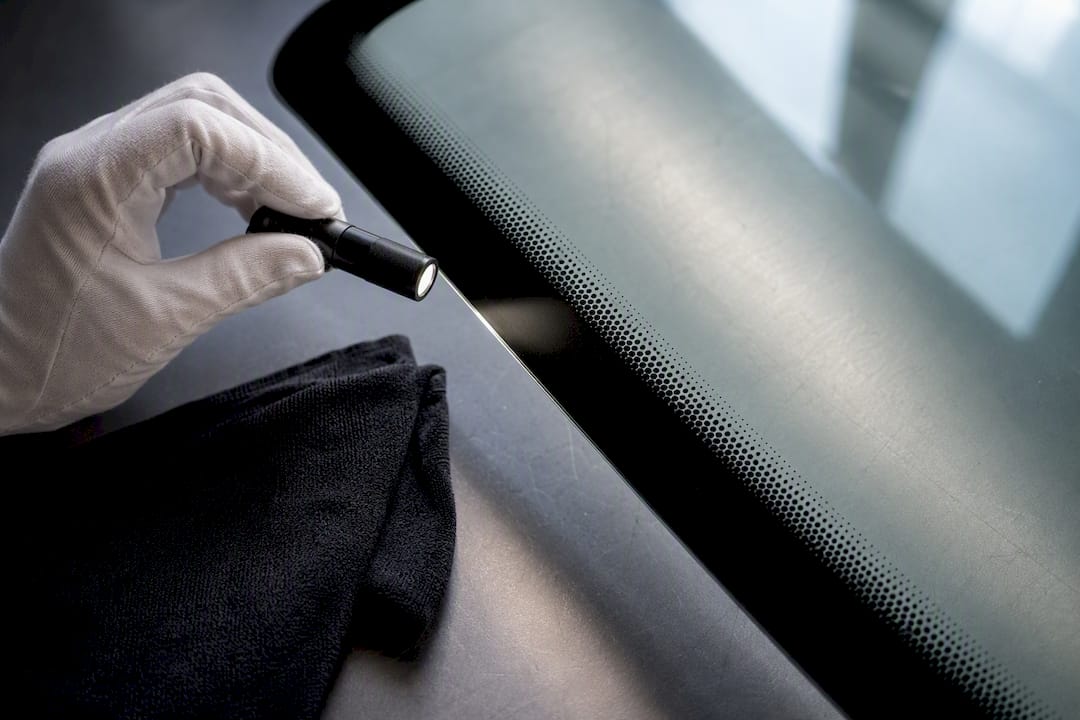
Behind the rearview mirror, many windshields carry a denser patch of dots known as the third visor frit. It fills the shading gap between the driver’s and passenger’s sun visors, cutting glare in that narrow strip of glass while also hiding the mirror mount and any rain or light sensors clustered there, per Windshield Surgeons’ explainer on the feature.
Dot spacing is not identical across every window, either:
- Large, flat windshields use a gradual, widely spaced fade because they need a longer thermal transition zone.
- Small fixed windows and tighter curves often carry denser dot patterns packed closer together.
- Third-visor zones are deliberately denser than the surrounding fade to maximize glare reduction in that small area.
Which Windows Actually Have Frit?
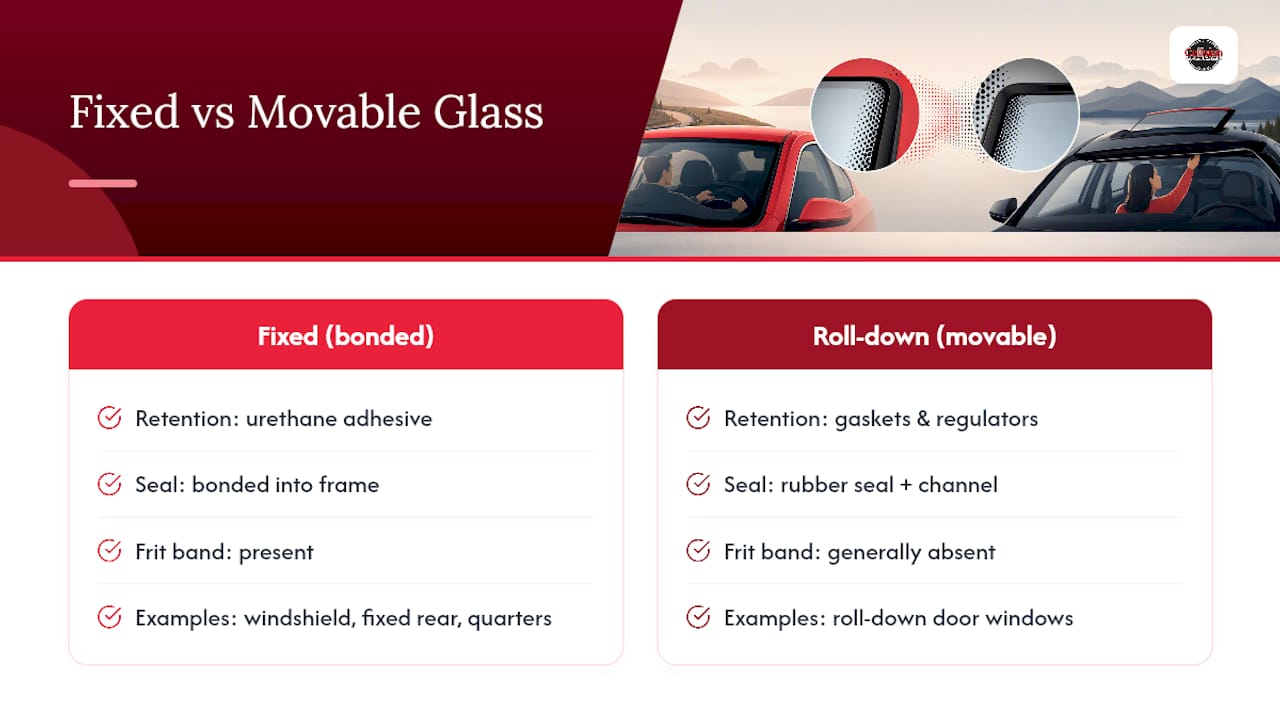
Frit shows up on any window that gets permanently bonded into the vehicle’s frame. That means windshields, most fixed rear glass, and fixed quarter panels near the back doors, since all three rely on adhesive rather than mechanical hardware to stay sealed.
Roll-down door windows almost never need it. Those panes ride in a rubber seal and channel system, held by gaskets and regulators instead of urethane adhesive, so there’s no bond line to protect from UV or texture to disguise.
Tinted glass and privacy coatings can make frit harder to spot at a glance, and some newer window designs shift the enamel pattern or density for styling reasons. But the underlying rule holds: fixed glued glass gets frit, moveable glass generally does not.
Signs Your Windshield’s Frit or Seal Is Failing
A healthy frit band looks solid and consistent in color, with no gaps, discoloration, or texture changes along its length. Trouble usually announces itself in a few specific ways.
Watch for a whitish halo forming right at the edge where the frit meets the adhesive line. That pale discoloration is often an early sign of moisture creeping into the bond or the adhesive starting to separate from the glass, a detail worth catching early according to Reader’s Digest’s inspection guidance. Missing dots, bubbling, or a flaky texture where the enamel should be smooth point toward the same underlying problem: the frit layer has been physically compromised.
Most damage traces back to a handful of causes:
- Aggressive scraping with a metal blade or improper ice scraper technique along the edge.
- Failed factory or prior-installation adhesive that’s starting to separate from age.
- Moisture ingress working its way behind the frit band over time.
- General abrasion from repeated cleaning with the wrong tools, something Diamond Brite’s glass care guide also flags when discussing safe cleaning temperatures for automotive glass.
Once the frit’s protective layer is broken, the adhesive underneath is exposed to UV again, and that bond can weaken faster than it should. If you spot any of these signs, stop attempting DIY fixes on that area and get the glass looked at professionally, since a compromised bond line is a structural issue.
Collision Auto Glass & Calibration’s Take on Frit Damage
A family-owned and operated company in Portland since 2008, Collision Auto Glass & Calibration works daily with windshield replacement, rock chip repair, and ADAS calibration. That day-to-day exposure to frit damage across thousands of jobs is where the practical read on this comes from.
Every installation backed by a lifetime no-leak guarantee starts with checking that frit band, because a weak bond line undermines everything else about the install. Free mobile installation in a local area and direct insurance billing mean that inspection is often just a phone call away. If you notice edge whitening, suspected delamination, or you’ve just had a replacement done and your vehicle has driver-assistance features, that’s the moment to call: the first two are seal problems, and the third is a calibration issue that needs addressing regardless of who did the glass work.
Will Frit Technology Ever Disappear?
Frit has stuck around for one reason: it’s a cheap, reliable answer to a real bonding and durability problem, and it lines up perfectly with how adhesives and tempered glass already get manufactured. That is not likely to change soon.
Where things could shift is on the coatings side. Electrochromic glass and advanced surface treatments are already absorbing some of what frit does today, particularly around glare control, and Shop Press notes this evolution is worth watching over the next decade. Until that technology matures and scales, protecting the frit you already have on your windshield remains the more practical safety priority.
— Collision Auto Glass & Calibration
Ready to Have Your Frit and Seal Checked?
Most shops will quote you a windshield replacement and move on without a second look at the bond line underneath the frit. Collision Auto Glass & Calibration treats that inspection as part of the job, not an upsell, because a compromised seal defeats the purpose of a new windshield before it ever leaves the driveway.
If you’ve spotted edge whitening, missing dots, or bubbling near the frit band, that’s worth a same-day look rather than a DIY patch job. The company offers free mobile installation in the local area, direct insurance billing, and a lifetime no-leak guarantee on every windshield it installs. Small chips caught early often qualify for windshield repair starting around $90 instead of a full windshield replacement, which typically runs $200 to $500 depending on your vehicle. And if your car relies on cameras or sensors mounted near that third-visor frit zone, factor in ADAS calibration after any glass work, since a misaligned sensor is its own safety risk. Get in touch through Collision Auto Glass & Calibration’s quote request page and get the frit and seal checked before it becomes a bigger repair.
Sources
- Tech In Plain Sight: Windshield Frit – Hackaday
- Here’s the Real Reason for Those Black Dots on Your Windshield – Reader’s Digest
- Here’s why your windshield has those little black dots around it – The Drive
- Why car windshields have black dots – Motor1
- What are Frits? (And Why Does Almost Every Car Have Them?) – Shop Press (Dorman)
FAQ
What Is the Purpose of a Frit on a Windshield?
Frit gives urethane adhesive a textured surface to bond to and blocks UV rays from breaking down that adhesive over time. It also hides mounting hardware and helps automated factory equipment align the glass correctly during installation, according to Motor1.
What Does Third Visor Frit Mean?
Third visor frit is the denser dot pattern behind the rearview mirror that fills the glare gap between the driver’s and passenger’s sun visors. It also conceals the mirror mount and any sensors clustered in that area, per Windshield Surgeons.
What Is the Purpose of Frit Beyond the Windshield?
On any fixed, glued piece of auto glass, frit’s job is the same: protect the adhesive bond from UV light and give it a surface to grip. Roll-down windows skip frit entirely because they seal with rubber gaskets instead of adhesive.
What Are the Different Types of Frit Patterns?
Frit typically appears as a solid border band along the glass edge, then fades into a dot-matrix gradient to avoid thermal stress during bending, as detailed by The Drive. Dot density also varies by window size, with larger windshields using a gradual fade and smaller fixed panes using tighter, denser patterns.
How Do I Know If My Windshield’s Frit Is Damaged?
Look for whitish discoloration at the frit’s edge, missing or flaking dots, or bubbling near the band, all of which can signal adhesive delamination. If you notice any of these, schedule a professional inspection rather than attempting a DIY fix, since signs of needed replacement often start exactly this way.
Recommended
- 7 Signs Your Windshield Needs Repair Before It Spreads
- Windshield Pitting Repair: When to Fix or Replace
- Types of Windshield Chips: Identify Damage and Act Fast
- How to Avoid Windshield Damage
🎧 Listen to This Article
Share
Recent Posts
October 15, 2026
Auto Glass Claims: Choose a U.S. Shop Before ADAS Billing Surprises
See how U.S. drivers can choose an auto glass shop for an insurance claim, confirm ADAS calibration, protect their rights, and prevent billing...
October 14, 2026
Fleet Windshield Maintenance: A 20 Minute Repair Can Prevent Days Down
Catch chips early, log the VIN and photos, and require part number and ADAS calibration records to keep fleet vehicles moving and avoid...
October 13, 2026
Calibration After Collision Repair: Ask for Scans Before You Drive
Learn when collision repairs require ADAS calibration, how shops verify the work, and which scan records and paperwork to request before driving....