
Auto Glass Repair
A windshield replacement warranty is a workmanship and defect guarantee from the installer, not a road-hazard policy. Insurance or a dealer protection plan handles rock strikes and storm damage. The single most important decision driver is simple math: if the cash cost of replacement plus ADAS recalibration exceeds your deductible by a meaningful margin, file the insurance claim. If it doesn’t, pay cash and rely on the installer’s warranty.
Before you call anyone, have three things ready:
- Who to call first: Your installer for workmanship issues (leaks, seal failures, adhesive defects); your insurer for road-hazard damage; your dealer or plan administrator for protection-plan claims.
- Documents to have: Original installation invoice, vehicle VIN, photos of the damage with date/time stamps, and your insurance declarations page.
- Warranty phrases that matter: “Lifetime” (typically means for as long as you own the vehicle), “limited lifetime” (same duration but with specific exclusions), and “no-leak guarantee” (covers water and air infiltration from the installation itself, not from road damage).
Key Takeaways
A windshield replacement warranty covers installation workmanship, not road-hazard damage; the right coverage source depends on damage type, deductible size, and whether ADAS recalibration is required.
| Point | Details |
|---|---|
| Match coverage to damage type | Installer warranties cover defects and leaks; insurance or protection plans cover road-hazard chips and cracks. |
| Run the deductible math | If cash cost plus calibration ($150–$400) exceeds your deductible, filing insurance is usually the better financial move. |
| Check your state rules | Florida, Kentucky, and South Carolina require insurers to waive the glass deductible under comprehensive coverage. |
| Confirm ADAS calibration in writing | Get written insurer authorization before work starts; uncovered calibration costs $150–$400 and is often denied after the fact. |
| Collision Auto Glass & Calibration | Offers a lifetime no-leak guarantee, in-house ADAS calibration, and direct insurance billing for Portland-area drivers. |
Table of Contents
- What does a windshield replacement warranty actually cover?
- What is covered vs. what gets excluded?
- How long do warranties last, and can you transfer them?
- When should you use a warranty vs. file an insurance claim?
- How do state rules change what you pay out of pocket?
- Are dealer protection plans worth the cost?
- What should you check before accepting any warranty or plan?
- What a real lifetime guarantee looks like in practice
- Warranty-backed windshield replacement at Collision Auto Glass & Calibration
- Sources
- FAQ
What does a windshield replacement warranty actually cover?
Not all auto glass warranty coverage comes from the same source, and mixing them up is the most common reason owners end up with an unexpected bill. There are four distinct coverage types, and each one handles a different set of problems.
Installer and retailer lifetime warranties
Most professional auto glass shops provide a workmanship warranty on every installation. This covers defects in the installation itself: water leaks, wind noise from a poor seal, adhesive failure, and glass that shifts or rattles after the job. The term “lifetime” here means the warranty is valid for as long as you own the vehicle, not for the life of the glass itself. Road-hazard damage, chips from gravel, and cracks from temperature changes are excluded.
- Typically covers: water infiltration, air leaks, adhesive bond failure, improper glass fit
- Typically excludes: rock chips, stress cracks, vandalism, pre-existing damage, ADAS calibration costs
Dealer and aftermarket protection plans
These are add-on products sold at the dealership or through third-party administrators. Unlike a workmanship warranty, they are designed specifically for road-hazard damage. Dealer protection plans can cover rock chip repairs and full replacements caused by road hazards without involving your insurer, which preserves your claims history and sidesteps your deductible entirely. Some programs, such as Ford Protect’s WindshieldCARE, provide set-term coverage (up to eight years) for minor chips and repairs with no deductible under certain conditions.
- Typically covers: rock chip repairs, road-hazard cracks, sometimes full replacement
- Typically excludes: vandalism, pre-existing damage, and often ADAS recalibration as a separate line item
Pro Tip: Read the claim limit carefully. Some plans cap the number of claims per year or per contract term, and a plan with a two-claim annual limit may not be worth the premium if you drive frequently on gravel roads or highways.
Manufacturer’s factory warranty
A vehicle’s factory warranty covers manufacturing defects, not road damage. Factory and extended vehicle warranties typically exclude windshield damage from road hazards; they may cover a factory defect in the glass or an improper installation from the assembly line, but a chip from a pebble on I-84 falls entirely outside that scope. Most owners discover this coverage too late.
Auto insurance: comprehensive, collision, and glass endorsements
Comprehensive coverage applies to rock strikes, hail, falling objects, and vandalism. Collision applies when the windshield is damaged in an accident. Each carries its own deductible. With comprehensive coverage, insurers typically pay for glass repair or replacement minus your deductible, though some insurers offer $0 glass-deductible options in certain states and may waive deductibles for repair-only claims. For a deeper look at how insurance interacts with glass damage, the insurance coverage breakdown on the Collision Auto Glass & Calibration site walks through the specifics.
- Comprehensive: rock strikes, hail, falling objects, vandalism
- Collision: accident-related windshield damage
- Glass endorsement: optional add-on that may reduce or eliminate the deductible for glass claims specifically
What is covered vs. what gets excluded?
Coverage items that a standard installer warranty typically includes:
- Water leaks traced to the installation seal
- Wind noise caused by improper glass seating
- Urethane adhesive failure within the warranty period
- Glass that moves or vibrates due to installation error
Common exclusions that catch owners off guard:
- Road-hazard chips and cracks (these require insurance or a protection plan)
- Pre-existing damage present before installation
- ADAS camera and sensor recalibration costs after replacement
- Cosmetic surface scratches or pitting from normal use
- Damage from improper aftermarket accessories (roof racks, suction mounts)
The word “lifetime” deserves scrutiny. In practice, it means the warranty is tied to your ownership of the vehicle. Sell the car and the warranty typically ends unless the contract explicitly states it transfers. “Limited lifetime” adds carve-outs: some plans exclude damage discovered after a set reporting window (commonly 30–90 days), or require that you return to the original installing shop for any warranty work.
Chips that spread into cracks are a separate concern. Addressing a small chip quickly is cost-effective because a $100–$150 repair can prevent a $300–$1,000+ replacement. Once a chip spreads, both warranty and insurance options narrow considerably, since some insurers treat a crack that originated from an unrepaired chip as a pre-existing condition.
Pro Tip: Take timestamped photos of any new chip or crack the same day you notice it. Many warranty and insurance claims require evidence that the damage was reported promptly, and a photo with GPS metadata can resolve disputes about when the damage occurred.
How long do warranties last, and can you transfer them?
Duration: lifetime vs. limited vs. fixed-year
Most installer warranties use one of three duration structures. A true “lifetime” warranty covers the installation for as long as the original owner keeps the vehicle. A “limited lifetime” warranty carries the same duration but with specific exclusions written into the contract. A fixed-year guarantee (one, two, or three years) is common with budget shops or with certain dealer-sold protection plans.
Transferability
Transferability varies widely. Installer workmanship warranties rarely transfer to a new owner because the shop’s liability is tied to the original customer relationship. Dealer protection plans are more likely to transfer, sometimes for a nominal administrative fee, which can add a small but real value to the vehicle at resale. Always ask for the transfer terms in writing before assuming coverage carries over.
Proof required for a warranty claim
- Original installation invoice with date, shop name, and vehicle VIN
- Photos of the defect (leak, crack, separation) with date/time stamps
- Written description of when the problem was first noticed
- Contact through the original shop’s preferred channel (phone, email, or online portal)
Immediate documentation checklist
- Photograph the damage from multiple angles within 24 hours of discovery
- Note the date, time, and location where the damage was first observed
- Save all receipts and correspondence related to the original installation
- Confirm the shop’s reporting window before assuming you have time to wait
When should you use a warranty vs. file an insurance claim?
The decision tree is straightforward once you know your deductible and whether your vehicle has ADAS.
- Identify the damage type. Workmanship defects (leaks, seal failures) go to the installer under the warranty. Road-hazard damage (chips, cracks from debris) goes to insurance or a protection plan.
- Calculate the cash cost. Get a quote for replacement. If your vehicle has a forward-facing camera, lane-keep assist, or automatic emergency braking, add ADAS recalibration, which typically runs $150–$400 per the AAA/ACE guidance.
- Compare cash cost to your deductible. If cash cost is lower than your deductible, pay out of pocket and preserve your claims history. If cash cost exceeds your deductible by a meaningful amount, filing insurance is usually the better financial move.
- Check your state rules. Florida, Kentucky, and South Carolina require insurers to waive the deductible for windshield claims under comprehensive coverage. In those states, filing is almost always the right call.
- File the warranty claim (if applicable). Contact the original installer, provide your invoice and photos, and request a written assessment. Most shops will inspect and either repair or replace at no charge if the defect falls within the warranty scope.
- File the insurance claim (if applicable). Notify your insurer, obtain a claim number, and authorize the repair shop. Before work begins, confirm in writing whether ADAS recalibration is included in the claim authorization.
Pro Tip: Ask your insurer in writing whether calibration is covered before authorizing the job. ADAS-equipped windshields usually require recalibration after replacement, and calibration costs of $150–$400 can be denied after the fact if you didn’t get prior written authorization. A quick email to your adjuster takes two minutes and prevents a surprise bill.
For a step-by-step walkthrough of the insurance claim process, the windshield insurance claims guide at Collision Auto Glass & Calibration covers the paperwork and authorization sequence in detail.
How do state rules change what you pay out of pocket?
State law and insurer product options can eliminate your deductible entirely, which changes the math on every claim decision.
| State | Rule | Practical impact |
|---|---|---|
| Florida | Insurers must waive the glass deductible under comprehensive | Filing costs $0 out of pocket; always file |
| Kentucky | Same mandatory waiver as Florida | Filing costs $0; no reason to pay cash for a covered loss |
| South Carolina | Same mandatory waiver | Filing costs $0; preserves cash and claims history equally |
| All other states | Standard deductible applies unless a glass endorsement is active | Compare cash cost to deductible before deciding |
Beyond these three states, many insurers offer an optional $0 glass-deductible endorsement as a policy add-on. The premium increase is often modest, and for drivers who frequently travel on highways or gravel roads, the endorsement can pay for itself after a single claim. Confirm availability directly with your agent before assuming it applies.
ADAS calibration coverage varies by insurer and state. Some carriers include it automatically; others treat it as a separate line item requiring pre-authorization. A few states have begun requiring insurers to cover calibration when it is a necessary part of a covered repair, but this is not yet uniform across the country. Get written confirmation from your adjuster before the shop starts work.
Additional considerations for out-of-pocket cost:
- A single glass claim rarely causes an immediate surcharge, but repeated claims or the loss of a claims-free discount can increase renewal premiums. Consult your agent before filing if you have had recent claims.
- Some insurers waive the deductible for repair-only claims (chip repair) even when the full replacement deductible applies, which is another reason to repair chips early.
- If you live in a state without a mandatory waiver, check whether your policy has a separate glass endorsement before assuming your standard deductible applies.
Are dealer protection plans worth the cost?
The honest answer depends on four variables: the plan’s price, your deductible, how often you realistically need glass work, and whether ADAS calibration is included.
A standard windshield replacement on a non-ADAS vehicle typically costs $300–$500 in cash. Add ADAS recalibration and the total often reaches $500–$900 or more. Common comprehensive deductibles run $250–$1,000. The break-even math: if your deductible is $500 and cash replacement is $400, paying cash is cheaper. If your deductible is $500 and cash replacement plus calibration is $850, filing insurance saves $350.
A dealer protection plan makes financial sense when:
- Your deductible is high ($500 or above) and you drive frequently on highways or gravel roads
- Your vehicle has ADAS and the plan explicitly includes calibration coverage
- The plan is transferable and adds resale value
- You want to avoid any impact on your insurance claims history
A protection plan is harder to justify when:
- Your deductible is low ($250 or less) and replacement costs are modest
- The plan excludes ADAS calibration as a separate cost
- Claim limits are restrictive (one claim per year, for example)
- The plan ties you to a specific shop network with limited locations
Red flags in plan contracts worth checking before you sign:
- Vague language around what constitutes a “covered road hazard”
- Long service windows (10–15 business days) before a repair appointment is guaranteed
- High administrative or transfer fees
- Refusal to provide a written copy of the full contract terms before purchase
Pro Tip: Ask the plan administrator whether ADAS recalibration is included in writing before purchasing. A plan that covers glass replacement but excludes the $200–$400 calibration cost on a modern vehicle is covering roughly half the actual expense.
What should you check before accepting any warranty or plan?
Contract terms to verify
- Exact definition of “lifetime” (owner period vs. vehicle life vs. fixed years)
- Complete exclusions list, including ADAS calibration, pre-existing damage, and cosmetic chips
- Transferability terms and any associated fees
- Reporting window for new damage (30, 60, or 90 days is common)
- Claim process: phone, email, or online portal, and typical response time
Service quality indicators
- Whether the shop uses OEM-quality or OEM glass vs. aftermarket alternatives
- Whether ADAS calibration is performed in-house or subcontracted
- Same-day or mobile service availability for your area
- Direct insurance billing capability (reduces your administrative burden)
Shop credibility checklist
- State business license and auto glass certification (AGRSS or equivalent)
- Experience with direct insurance billing and claim authorization
- In-house calibration equipment for ADAS-equipped vehicles
- Verifiable reviews on Google, Yelp, or the Better Business Bureau
Red flags that suggest a warranty is not worth the paper it’s on
- No written warranty provided at time of installation
- Vague language with no specific exclusions list
- Claim processing times exceeding five business days for a standard defect
- Administrative fees to file a warranty claim
- Shop that cannot confirm whether it carries liability insurance
What a real lifetime guarantee looks like in practice
Most warranty discussions focus on what the fine print takes away. The more useful question is what a well-structured warranty actually delivers, and why the gap between a vague “satisfaction guarantee” and a written, specific lifetime no-leak guarantee matters in practice.
A no-leak guarantee is only as good as the shop’s installation process. Urethane adhesive must cure for a minimum safe drive-away time (typically one hour, though full cure takes 24 hours), the glass must be seated against a clean, prepared frame, and the primer must be applied correctly to the pinch weld. Skip any of those steps and the seal will fail, regardless of what the warranty says. A shop that offers a written lifetime no-leak guarantee is, in effect, putting its labor quality on the line with every job.
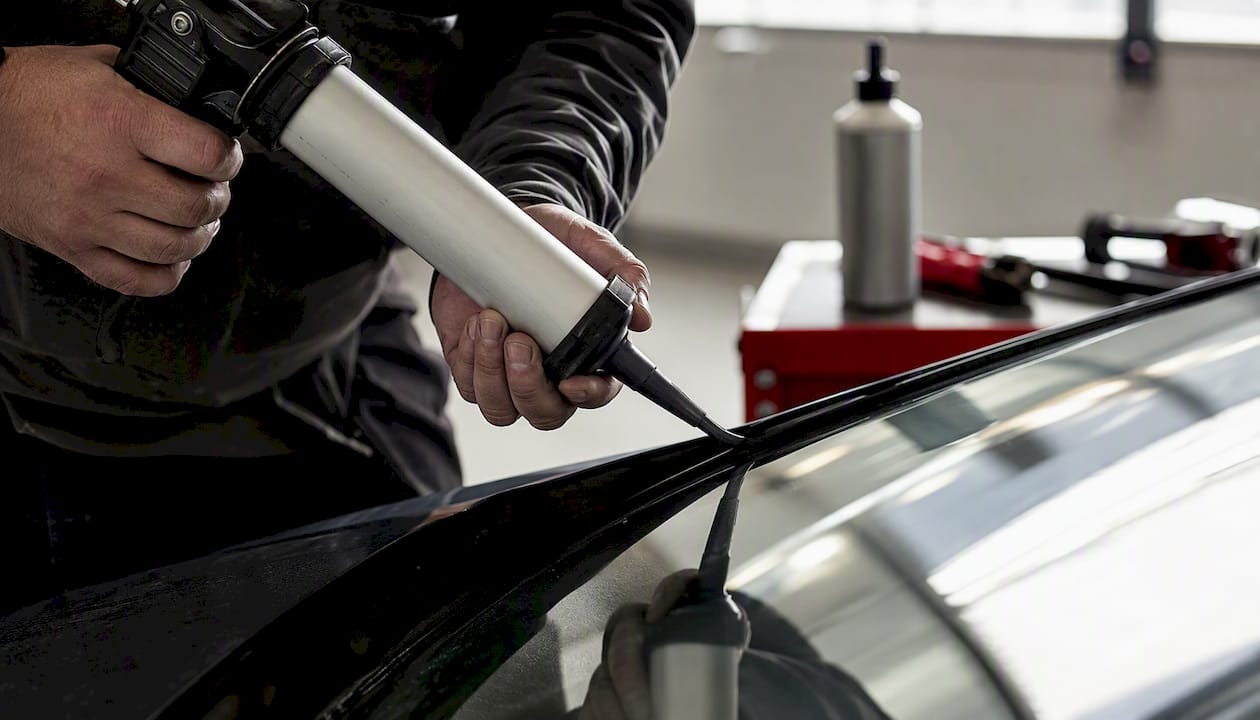
The ADAS dimension changes the stakes further. A windshield that is installed correctly but not recalibrated leaves the vehicle’s safety systems operating on pre-replacement sensor data. Lane-keep assist, automatic emergency braking, and forward-collision warning all depend on a camera mounted to the windshield. If that camera’s angle shifts by even a fraction of a degree during replacement, the system’s field of view changes. A shop that handles calibration in-house can verify the system’s output before the vehicle leaves the bay, which is a meaningful difference from one that hands you a referral slip for a dealership appointment two weeks out.
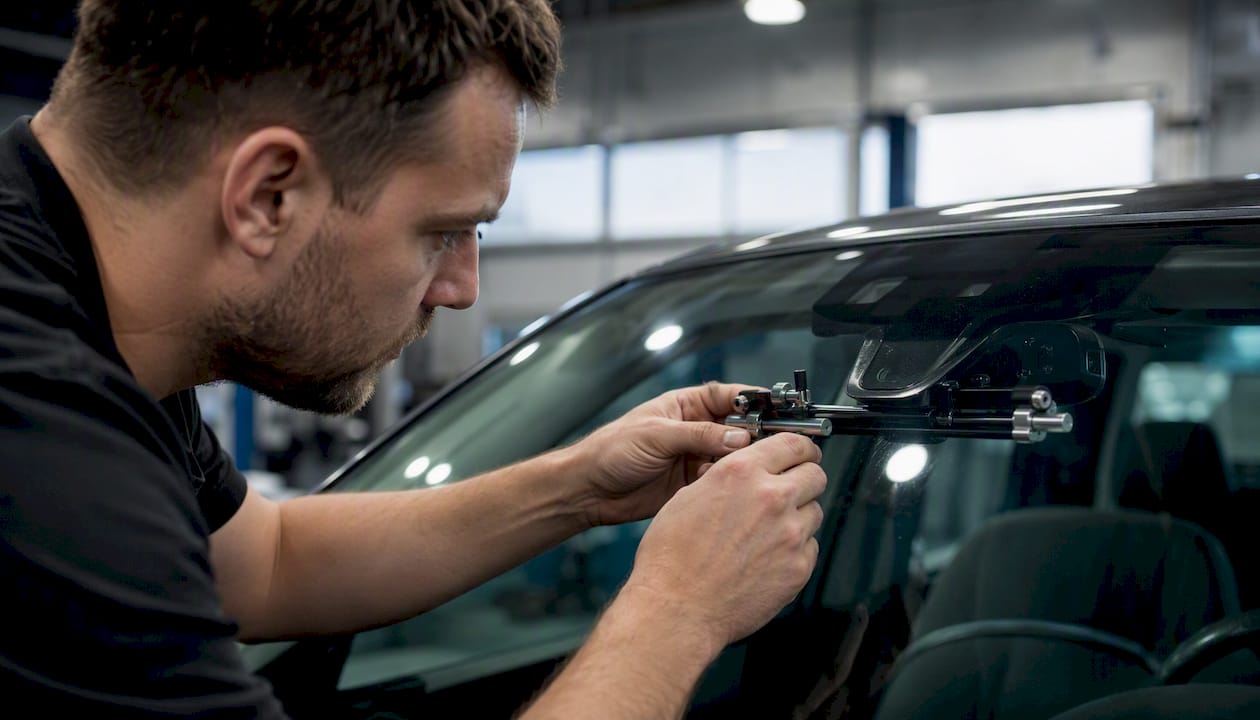
The practical advice: ask any shop for the warranty in writing before authorizing work. Ask specifically whether ADAS calibration is included, who performs it, and what equipment is used. Those two questions will tell you more about a shop’s actual capability than any marketing language on its website.
Warranty-backed windshield replacement at Collision Auto Glass & Calibration
When a cracked windshield means navigating insurance paperwork, deductible math, and calibration questions all at once, having one shop handle every step is a real advantage. Collision Auto Glass & Calibration has served Portland drivers since 2008 with same-day windshield replacement backed by a lifetime no-leak guarantee on every installation.
Every replacement includes a written warranty, direct insurance billing so you never have to chase reimbursement, and in-house ADAS calibration for vehicles that require it. There’s no subcontracting the calibration step and no surprise bill for sensor work after the fact. Free mobile installation is available within the Portland area, so the job comes to you.
To get started, request a quote at Collision Auto Glass & Calibration, confirm your insurer’s direct-billing details, and ask about ADAS calibration inclusion when you book. Same-day appointments are available for most vehicles.
Sources
The following resources support the guidance in this article and are worth bookmarking for your own verification:
How to use these sources:
FAQ
How long is a windshield under warranty?
An installer’s workmanship warranty typically lasts for as long as you own the vehicle when labeled “lifetime,” or for a fixed term (one to three years) with budget providers. Road-hazard damage is not covered by the installer warranty regardless of duration.
Who is responsible if a rock hits my windshield?
The vehicle owner is generally responsible for the repair cost. Comprehensive auto insurance covers rock strikes, subject to your deductible, and who pays depends on your coverage and whether you are in a mandatory-waiver state like Florida, Kentucky, or South Carolina.
Will my insurance go up if I claim a cracked windshield?
A single glass claim rarely causes an immediate surcharge, but repeated claims or the loss of a claims-free discount can raise renewal premiums over time. Consult your agent before filing, especially if you have had other recent claims.
Does a windshield warranty transfer to a new owner?
Installer workmanship warranties rarely transfer because they are tied to the original customer. Dealer protection plans are more likely to transfer, often for a small administrative fee. Always request the transfer terms in writing before assuming coverage carries over to a new owner.
Recommended
- Does Insurance Cover Windshields? – Collision Auto Glass & Calibration
- Does Insurance Replace A Windshield For Free? – Collision Auto Glass & Calibration
- Will My Insurance Cover a Cracked Windshield Replacement? – Collision Auto Glass & Calibration
- A Guide to Navigating Windshield Replacement Insurance Claims – Collision Auto Glass & Calibration
Share
Recent Posts
October 15, 2026
Auto Glass Claims: Choose a U.S. Shop Before ADAS Billing Surprises
See how U.S. drivers can choose an auto glass shop for an insurance claim, confirm ADAS calibration, protect their rights, and prevent billing...
October 14, 2026
Fleet Windshield Maintenance: A 20 Minute Repair Can Prevent Days Down
Catch chips early, log the VIN and photos, and require part number and ADAS calibration records to keep fleet vehicles moving and avoid...
October 13, 2026
Calibration After Collision Repair: Ask for Scans Before You Drive
Learn when collision repairs require ADAS calibration, how shops verify the work, and which scan records and paperwork to request before driving....