Auto Glass Repair
Yes, windshield repair scams are real, and they’re common enough that every driver should know the warning signs before a chip turns into a costly mistake. If someone approaches you unsolicited about windshield damage, the single most important thing to do is decline on the spot, avoid signing anything, and call your insurer before you agree to any work. The National Insurance Crime Bureau tracks this fraud at scale, and organizations like the Auto Glass Safety Council exist specifically to certify technicians who meet real safety standards. Collision Auto Glass & Calibration sees the aftermath of these schemes regularly: drivers stuck with inflated bills, denied claims, or unsafe repairs that compromise crash protection.
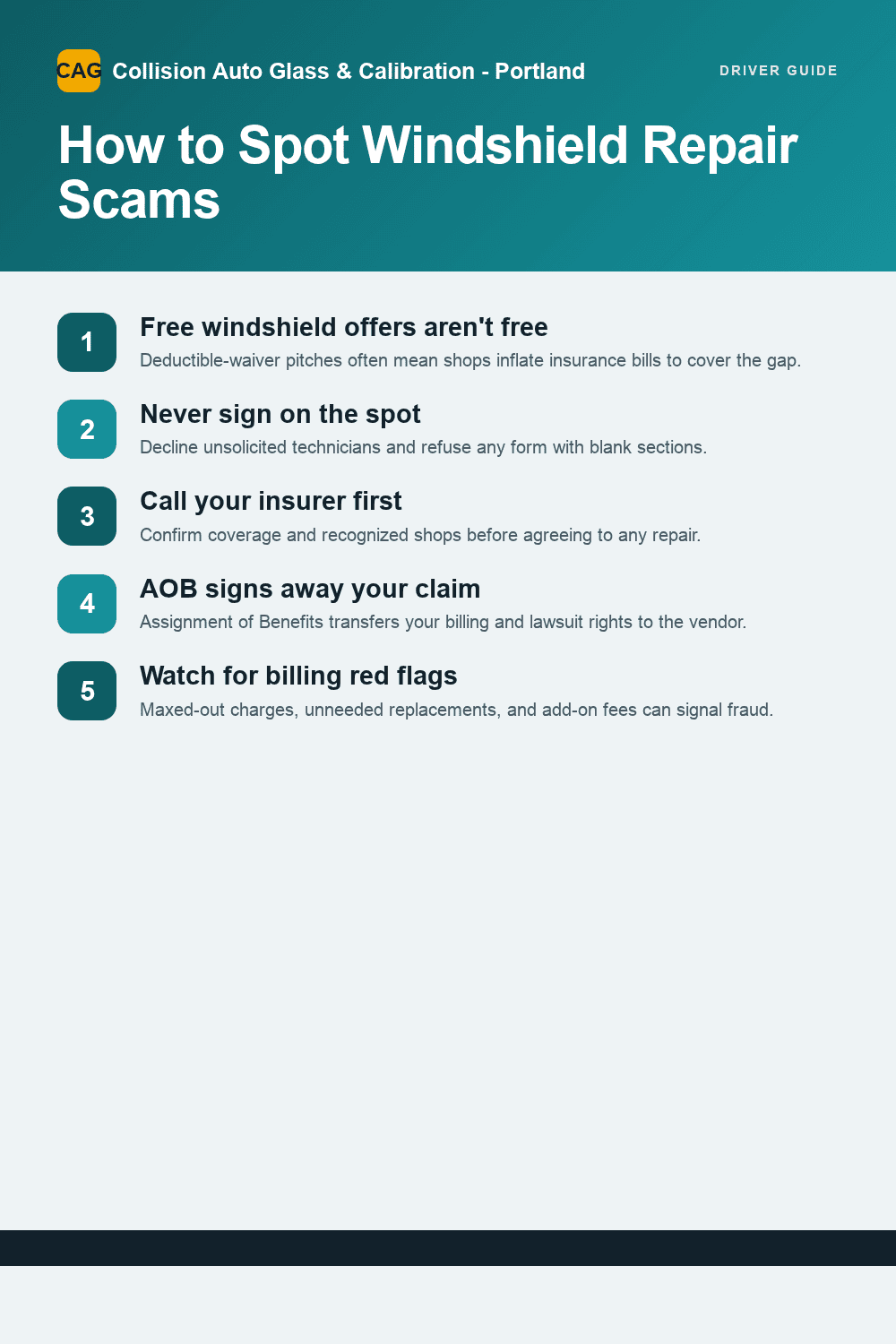
Before you agree to anything:
- Never sign a form with blank sections, especially anything resembling an insurance authorization.
- Don’t hand over your policy number or insurance card to someone who approached you first.
- Call your insurance company before any work begins, not after.
Key Takeaways
Windshield repair scams work by exploiting urgency, AOB paperwork, and deductible waivers, and the single best defense is refusing on-the-spot offers and calling your insurer first.
| Point | Details |
|---|---|
| Never sign on the spot | Decline unsolicited offers and never sign forms with blank sections, especially insurance authorizations. |
| Call your insurer first | Confirm coverage and recognized shops before agreeing to any repair or replacement. |
| Understand AOB risk | Signing an Assignment of Benefits hands your claim rights, and potential lawsuits, to the vendor. |
| Watch for billing red flags | Maxed-out charges, unnecessary replacements, and add-on fees signal possible fraud. |
| Verify safety credentials | Ask for calibration records, written warranties, and OEM glass specs before work begins. |
Table of Contents
- What Windshield Repair Scams Actually Look Like
- Why Scams Succeed: AOB, Zero-Deduct Coverage, and Billing Games
- What to Do If You’re Approached or Suspect a Scam
- How to Report a Scam and What Happens Next
- Safety Risks and How to Choose a Shop You Can Trust
- Where to Report Fraud and Find Official Guidance
- Our Take on Windshield Repair Scams
- Sources
- FAQ
What Windshield Repair Scams Actually Look Like
Most windshield repair scams share the same DNA: a stranger creates urgency, promises something too good to be true, and rushes you past the point where you’d normally ask questions.
The “free windshield” pitch is the most recognizable version. A solicitor tells you your windshield qualifies for a no-cost replacement through your insurance, no deductible required. The offer sounds like a win, but it’s usually the opening move in a deductible-absorption scheme, where the shop bills your insurer at inflated rates to cover the deductible it’s waiving, then pockets the difference. It’s not free. It’s cost-shifted and often padded with unnecessary line items.
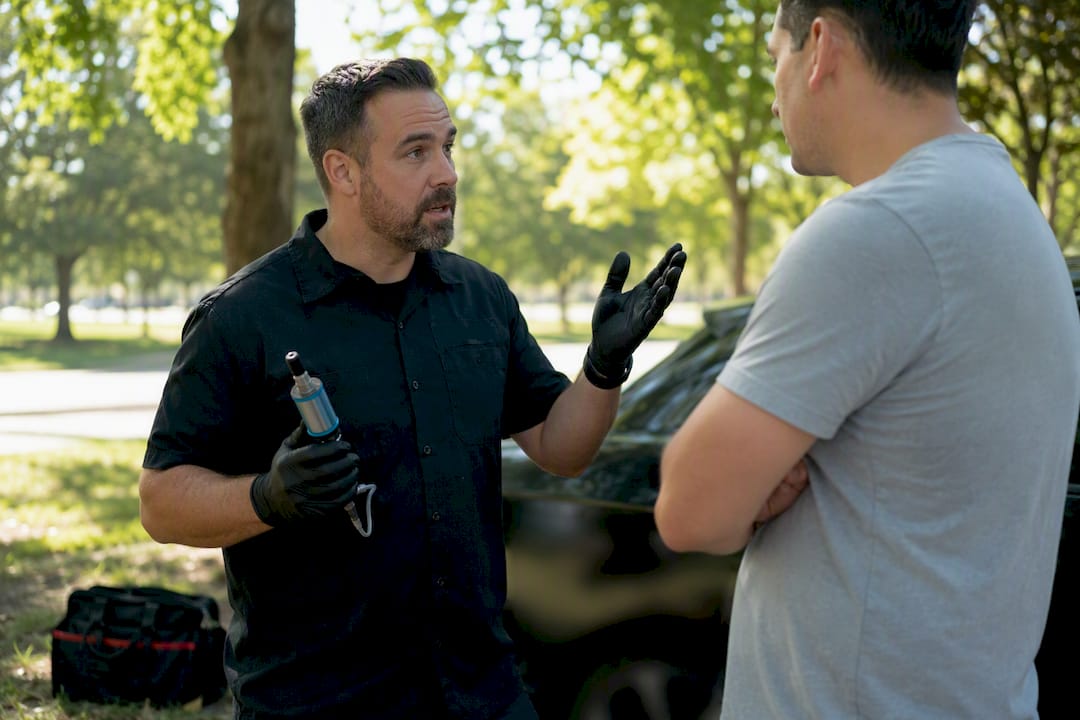
Pop-up and unlicensed mobile technicians are the second major category. These operators show up in parking lots at grocery stores, gas stations, or workplaces, often claiming they “noticed your crack” and can fix it right now. Reputable shops don’t solicit customers this way. As one industry analysis on windshield repair scams notes, legitimate technicians don’t approach vehicles uninvited — they rely on reputation and inbound calls.
A third pattern involves pushing full replacements when a simple chip repair would do, or quietly collecting your VIN and insurance details for use in claims you never authorized. Common red flags include:
- Someone approaches your parked car unsolicited about a “chip they noticed.”
- The pitch includes waiving your deductible entirely.
- You’re asked to sign paperwork before any inspection happens.
- The technician has no visible shop name, license plate, or written estimate.
- You’re pressured to decide immediately, with no time to call your insurer.
Why Scams Succeed: AOB, Zero-Deduct Coverage, and Billing Games
Assignment of Benefits, or AOB, is the legal mechanism that makes most of this fraud possible. When you sign an AOB, you transfer your insurance claim rights, including the right to bill and even sue your insurer, directly to the repair shop. Once that signature is on paper, the shop controls the claim. You may never see the invoice, and you might not learn a lawsuit was filed in your name until your insurer flags it.
The scale of this problem in one state alone is staggering: auto glass related AOB lawsuits in Florida climbed from about 400 in 2006 to nearly 35,000 in 2019, an increase of roughly 8,650 percent.
Zero-deductible glass coverage, while a real benefit in some policies, gives dishonest shops a reason to inflate the total bill since the customer isn’t paying anything out of pocket and has little incentive to question the invoice. Insurers watch for specific billing patterns that suggest fraud: charges that consistently hit the maximum allowable rate, add-on services that were never performed, and full replacements pushed instead of cheaper repairs when a repair would have worked fine.
What to Do If You’re Approached or Suspect a Scam
If you’re facing a windshield offer right now, or you already had work done and something feels off, work through this in order.
- Decline any on-the-spot offer. Say no to unsolicited technicians, even if the price sounds unbeatable.
- Never sign blank paperwork. NICB’s own consumer checklist specifically warns against contracts with unfilled sections.
- Don’t hand over insurance details to anyone who approached you first, including your policy number or card photo.
- Photograph everything, including the damage itself, the vendor’s vehicle, its license plate, and the salesperson’s ID or business card if offered.
- Call your insurer or agent before agreeing to anything. Ask what your policy actually covers and whether the shop is one they recognize.
- Get written estimates from more than one shop. Compare glass origin, warranty terms, and total cost.
- If work is already done, collect every invoice, the VIN used on the paperwork, and the glass part numbers installed, then request a formal review from your insurer.
- File a complaint with your state insurance department if the invoice doesn’t match what you agreed to.
Pro Tip: Take a photo of the technician’s vehicle and license plate before they even open a toolbox. Legitimate shops have nothing to hide from this, and it gives you something concrete to hand your insurer or the police if the deal turns sour.
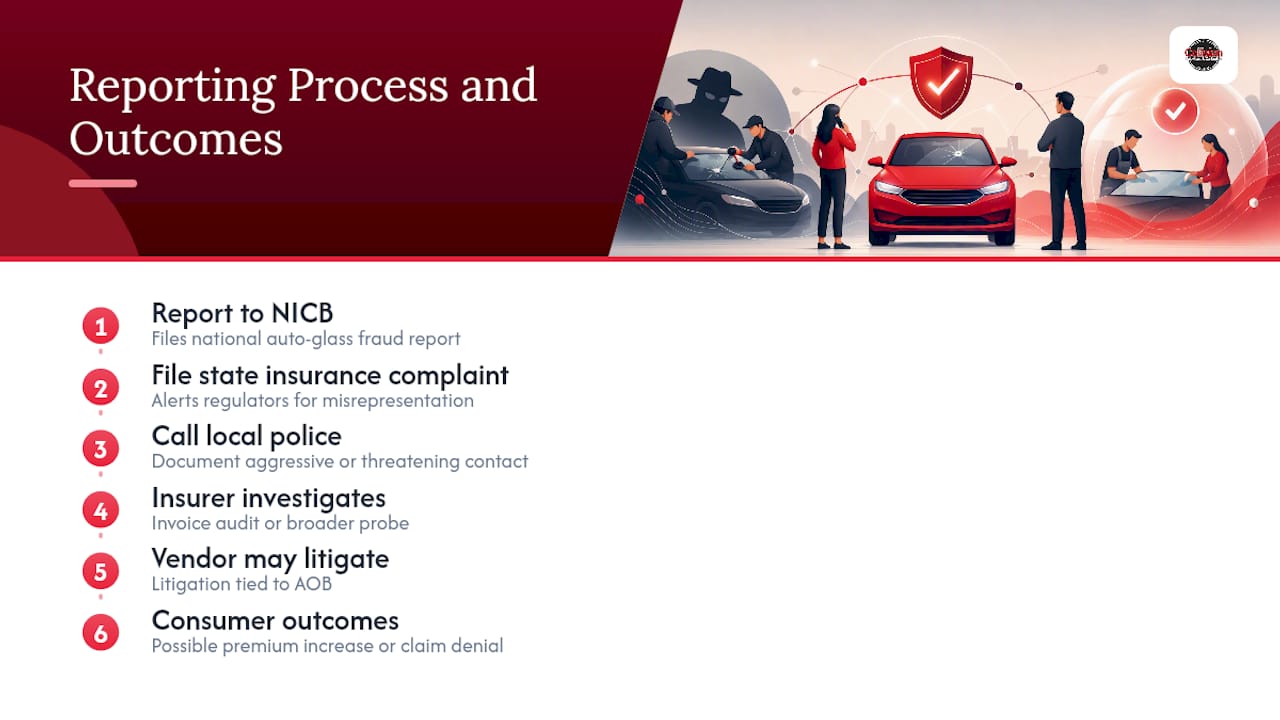
How to Report a Scam and What Happens Next
Reporting isn’t just about your own claim. It helps insurers spot the pattern before more drivers get hit.
Start with the NICB’s fraud reporting line, which tracks auto glass fraud nationally and feeds patterns to insurers and law enforcement. File a complaint with your state’s department of insurance if the shop misrepresented coverage or billing. For aggressive or threatening solicitation, a local police report documents the encounter and creates a record.
Once you report, expect your insurer to open an invoice audit or a broader investigation, and in some cases the vendor may respond with litigation tied to the AOB it holds. Consumers who unknowingly participated in a fraudulent claim can face premium increases or claim denials, even when they didn’t intend to commit fraud themselves. Keep every document. Get insurer confirmation of coverage decisions in writing, not over the phone, so you have a paper trail if the claim gets disputed later.
Safety Risks and How to Choose a Shop You Can Trust
A scam windshield doesn’t just cost you money. It can compromise the car’s actual crash safety. Modern windshields are structural: they support roof strength in a rollover and serve as the mounting point for forward-facing cameras and sensors that power features like automatic braking and lane-keep assist. A rushed, low-quality install can leave the glass improperly bonded or the ADAS system out of calibration, which means the safety features you’re relying on may not function correctly.
Before any shop touches your car, ask for:
- Written calibration records if your vehicle has ADAS features.
- A written warranty that specifies leak coverage and workmanship.
- Confirmation of OEM or OEM-equivalent glass specs, not generic aftermarket glass with no origin listed.
- Proof of technician certification, ideally tied to Auto Glass Safety Council standards.
Collision Auto Glass & Calibration handles same-day mobile installation across Portland, backs every install with a lifetime no-leak guarantee, and performs ADAS calibration in-house rather than outsourcing it, all supported by direct insurance billing so you’re not stuck negotiating with a shop’s third-party biller. Those are the kinds of concrete proof points a reputable shop should be able to hand you without hesitation.
Pro Tip: Before a mobile technician arrives, ask directly: “Do you calibrate ADAS in-house, or will I need a second appointment elsewhere?” A shop that hesitates on this question is telling you something important.
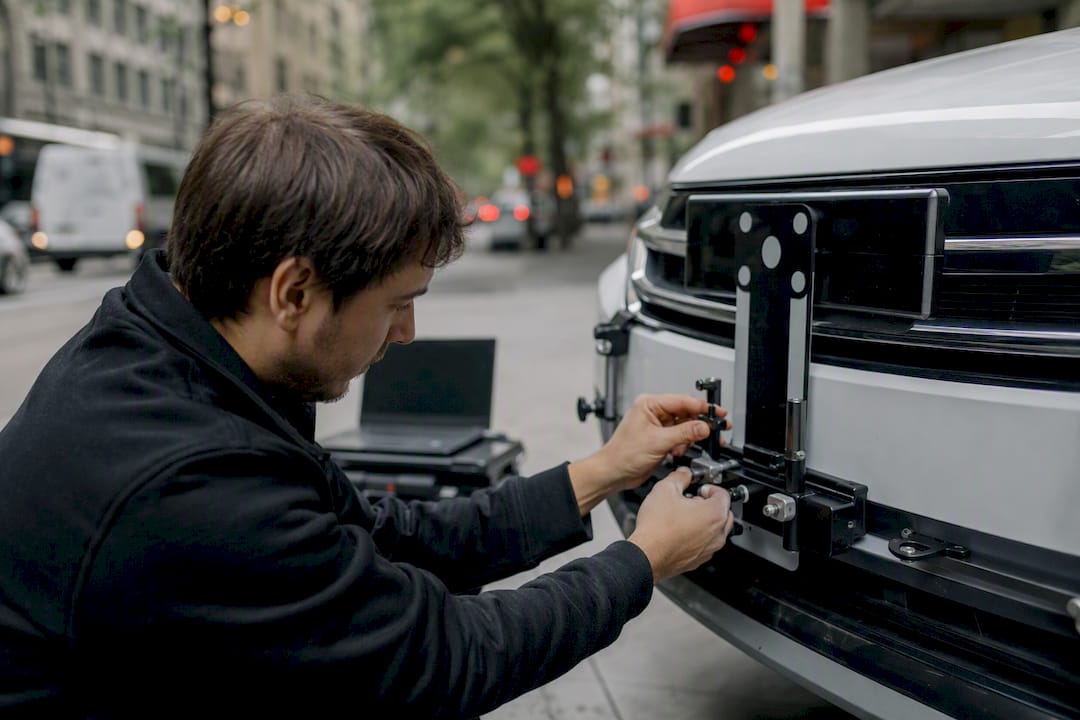
If you’re weighing a mobile service provider for any auto repair, not just glass, verifying credentials before the technician arrives is a habit worth building regardless of the job.
Windshield damage that’s spreading or already compromising your view deserves attention before it becomes a bigger safety issue. If you’re not sure whether your chip needs a simple repair or a full replacement, these seven signs can help you tell the difference. When it’s time for real work, Collision Auto Glass & Calibration offers same-day windshield replacement with free mobile installation across Portland, direct insurance billing, and the in-house ADAS calibration your safety systems depend on.
Where to Report Fraud and Find Official Guidance
- NICB auto glass fraud reporting and consumer guidance
- NICB vehicle glass fraud checklist
- NAIC state insurance department directory
Our Take on Windshield Repair Scams
The conventional advice on windshield scams stops at “watch for red flags,” and that’s not enough. Red flags assume the driver has time to notice them, but the entire scam model is built to remove that time. The real fix isn’t vigilance in the moment. It’s a standing rule: any windshield conversation that starts with someone else approaching you, rather than you seeking them out, gets an automatic no.
What gets underestimated is the safety layer. Most coverage of this topic treats the scam purely as a financial or insurance problem, and misses that a rushed, uncertified install can leave ADAS sensors misaligned on a car the owner assumes is fully protected. That’s the gap between what these scams promise and what actually matters: a shop that waives your deductible but skips calibration hasn’t saved you money. It’s transferred risk from your wallet to your windshield.
Prioritize the shop’s credentials and calibration process before you ever discuss price. The savings from a shady deal disappear the first time a safety system doesn’t fire when it should.
Sources
- Auto Glass Scams Continue to be a Problem in Florida | National Insurance Crime Bureau
- VehicleGlassFraud (consumer checklist) — NICB
- How to Spot Windshield Repair Scams (and Find Trusted Shops) – Glass.NET Blog
- Auto Glass Fraud Targets Insurance Companies – NetQuote
FAQ
Are There Scams Tied to Specific Windshield Replacement Brands?
Fraud in this space is typically carried out by independent solicitors and pop-up operators impersonating or loosely affiliating with legitimate-sounding services, not by established, certified shops. Always verify a technician’s actual employer and credentials directly rather than trusting a name on a flyer or unsolicited call.
What Are the Newest Windshield Repair Scam Tactics?
Recent tactics lean on deductible-waiver pitches and AOB paperwork disguised as routine insurance forms, often delivered through unsolicited mobile technicians in parking lots. The core pattern hasn’t changed: create urgency, skip the estimate, and get a signature fast.
How Can I Tell if an Auto Glass Company Is Legitimate?
Ask for written estimates, proof of technician certification, calibration records for ADAS-equipped vehicles, and a clear warranty before agreeing to service. Legitimate companies welcome these questions; operators running a scam will pressure you to skip them.
How Do I Know if a Mechanic or Technician Is Scamming Me?
Watch for pressure to sign immediately, requests for insurance details before any inspection, and reluctance to provide a written estimate or business identification. NICB’s consumer guidance specifically flags blank contracts and rushed signatures as the clearest warning signs.
Recommended
- How to Avoid Windshield Damage – Collision Auto Glass
- 7 Signs Your Windshield Needs Repair Before It Spreads – Collision Auto Glass & Calibration
- Why You Shouldn’t DIY Repair Your Car’s Windshield Glass – Collision Auto Glass & Calibration
- 5 Tips on Choosing the Best Auto Glass Shop to Fix Your Windshield
🎧 Listen to This Article
Share
Recent Posts
October 15, 2026
Auto Glass Claims: Choose a U.S. Shop Before ADAS Billing Surprises
See how U.S. drivers can choose an auto glass shop for an insurance claim, confirm ADAS calibration, protect their rights, and prevent billing...
October 14, 2026
Fleet Windshield Maintenance: A 20 Minute Repair Can Prevent Days Down
Catch chips early, log the VIN and photos, and require part number and ADAS calibration records to keep fleet vehicles moving and avoid...
October 13, 2026
Calibration After Collision Repair: Ask for Scans Before You Drive
Learn when collision repairs require ADAS calibration, how shops verify the work, and which scan records and paperwork to request before driving....