
Auto Glass Repair
Windshield repair in winter is often possible, and windshield replacement is safe too, provided the shop controls temperature and moisture properly. Resin repairs need warmed glass and dry cracks. Replacements require adhesive to cure sufficiently according to manufacturer specifications before you drive off. If your chip is small and away from the edge, cover it, keep the car warm, and call a certified shop promptly rather than waiting for a crack to spread.
Key Takeaways
Windshield repair in winter succeeds when glass temperature, resin warmth, and moisture control are managed correctly, while replacement safety depends entirely on respecting SDAT before driving away.
| Point | Details |
|---|---|
| Warm glass before repair | Aim for roughly 70°F to 100°F glass temperature so resin flows properly into the crack. |
| Dry every crack fully | Trapped moisture blocks resin adhesion, so vacuum or gently heat-dry before injecting. |
| Respect SDAT on replacements | Cure time roughly doubles for every 15 to 18°F drop, so never drive before the stated window ends. |
| Know your red flags | Edge damage, delamination, and sightline chips need immediate professional attention, not a wait-and-see approach. |
| Choose a winter-ready shop | Collision Auto Glass & Calibration offers same-day repair, free mobile installation in Portland, and in-house ADAS calibration built for cold-weather timelines. |
Table of Contents
- Your Winter Windshield Checklist: What to Do Right Now
- Can You Repair It or Do You Need a Replacement?
- How to Prepare Your Vehicle for a Cold-Weather Repair
- What Changes About Windshield Replacement in Winter
- When to Wait and When to Call a Pro Immediately
- What Certified Technicians Do Differently in Cold Weather
- A Note From Collision Auto Glass & Calibration
- Get Your Windshield Handled Before the Next Freeze
- Sources
- FAQ
Your Winter Windshield Checklist: What to Do Right Now
Before a technician arrives, a few smart moves protect the glass and improve your odds of a clean repair.
Do this:
- Park in a heated garage if you have one, or run the defroster on low to warm the cabin gradually.
- Keep any repair kit, resin, or tools indoors overnight rather than leaving them in a cold vehicle.
- Cover the chip with clear tape to keep out moisture, salt, and grit until a pro can treat it.
Avoid this:
- Never pour hot water over a frozen windshield to melt ice faster. The temperature swing can turn a small chip into a spidering crack instantly.
- Don’t drive before the technician’s stated drive-away time has passed, even if the glass looks set.
- Skip outdoor DIY fixes in subfreezing wind chill. Cold hands and cold resin rarely produce a lasting repair.
Have an infrared thermometer, dry cloths, your insurance information, and vehicle details ready when the tech shows up. It speeds things along and helps them confirm the glass has reached a workable temperature.
Pro Tip: Clear packing tape over a chip works better than duct tape. It seals out moisture without leaving adhesive residue that complicates the repair later.
Can You Repair It or Do You Need a Replacement?
Cold weather doesn’t change the basic rules for what qualifies as repairable. It just makes those rules stricter.
Chips smaller than a quarter and cracks under about three inches are usually good repair candidates year round. Winter adds a filter on top of size: damage sitting in the driver’s direct sightline, cracks that reach the edge of the glass, or contamination from road salt packed into the break often push a technician toward replacement instead. Salt and grit act like tiny wedges, and cold makes the glass more brittle around them.
The tradeoff breaks down like this:
- Repair is faster and cheaper, but it’s more sensitive to moisture and cold. A crack that’s been sitting wet in freezing temperatures may already have compromised resin adhesion by the time you call.
- Replacement takes longer and costs more, but it’s the only real option once damage reaches the edge or shows signs of spreading. Edge damage affects the windshield’s structural role in the vehicle, and no amount of warming fixes that.
If you’re unsure which category your damage falls into, a quick photo sent to a shop usually settles it before they even arrive.
How to Prepare Your Vehicle for a Cold-Weather Repair
Rushing a cold repair is the fastest way to waste resin and money. The process works best in sequence.
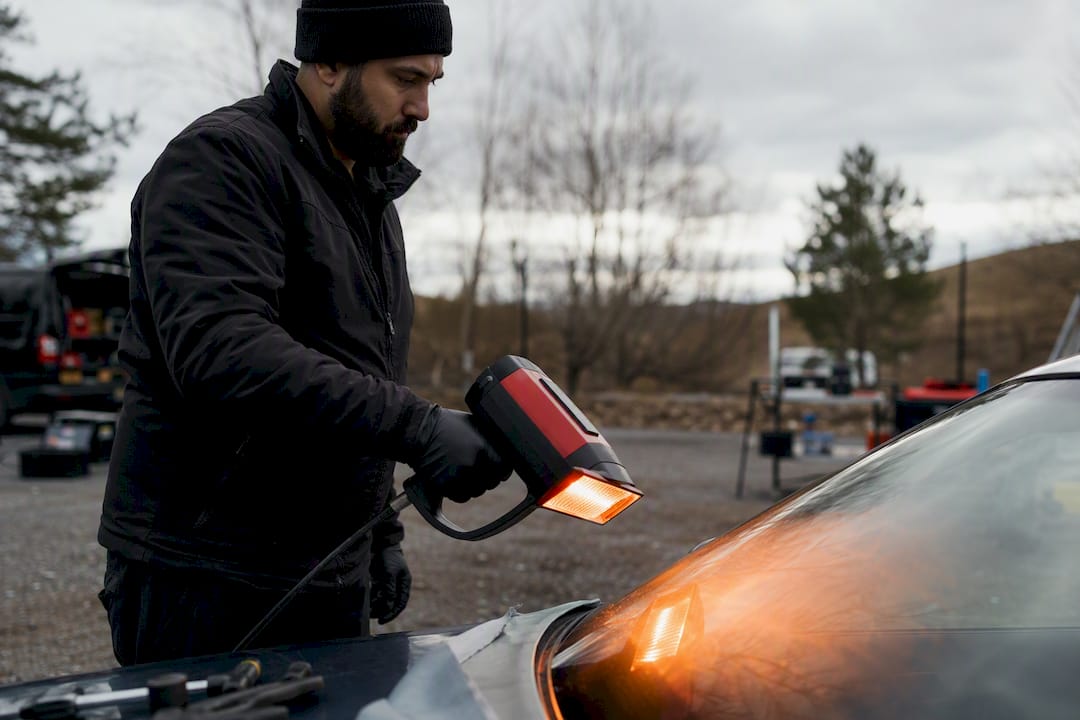
Delta Kits recommends warming the glass to somewhere between 70°F and 100°F for the best resin flow, with the resin itself kept within about 10°F of the glass temperature. Below that range, resin thickens and struggles to penetrate the fracture lines fully, which is why cold repairs simply take longer than warm ones.
Moisture is the other enemy. Any water trapped in the crack, frozen or not, blocks the resin from bonding to the glass. RapidRepair.blog recommends warming the windshield to at least 50°F before starting, then using a vacuum cycle or gentle heat to pull trapped moisture out before injecting anything.
Here’s the sequence a careful winter repair follows:
- Stabilize cabin temperature with the defroster on low, or bring the vehicle indoors.
- Clear the chip of loose glass, dirt, and salt.
- Vacuum and dry the crack to remove any trapped moisture.
- Warm the resin to match the glass temperature within about 10°F.
- Inject slowly, giving the resin extra time to flow into cold, tighter cracks.
- Cure with a dedicated UV lamp rather than relying on winter sunlight.
Winter sunlight often lacks the UV intensity needed for a full chemical cure. A dedicated lamp closes that gap, and warming needs to happen gradually. Glass fracture research shows that uneven surface heating can expand the outer layer faster than the inner one, which is exactly the thermal shock mechanism that spreads a chip into a crack.
What Changes About Windshield Replacement in Winter
Replacement adhesive behaves very differently once temperatures drop, and this is where rushing becomes genuinely dangerous.
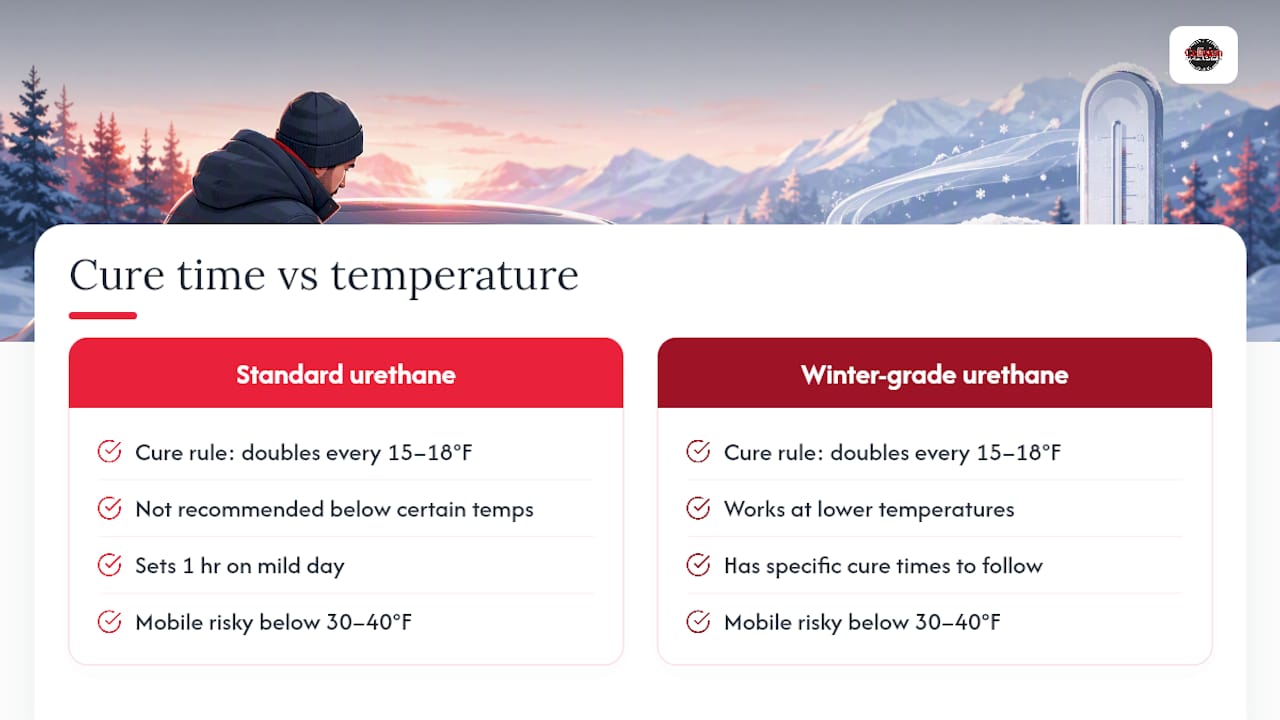
Safe Drive-Away Time exists because urethane needs a certain cure level to hold the windshield in place during a crash. Cure time roughly doubles for every 15 to 18°F drop in temperature, which means a bond that sets in an hour on a mild day might need several hours in freezing conditions. Many standard urethanes are not recommended for use at temperatures below certain thresholds. Winter-grade or fast-cure adhesives can work at lower temperatures but have specific cure times that technicians must follow.
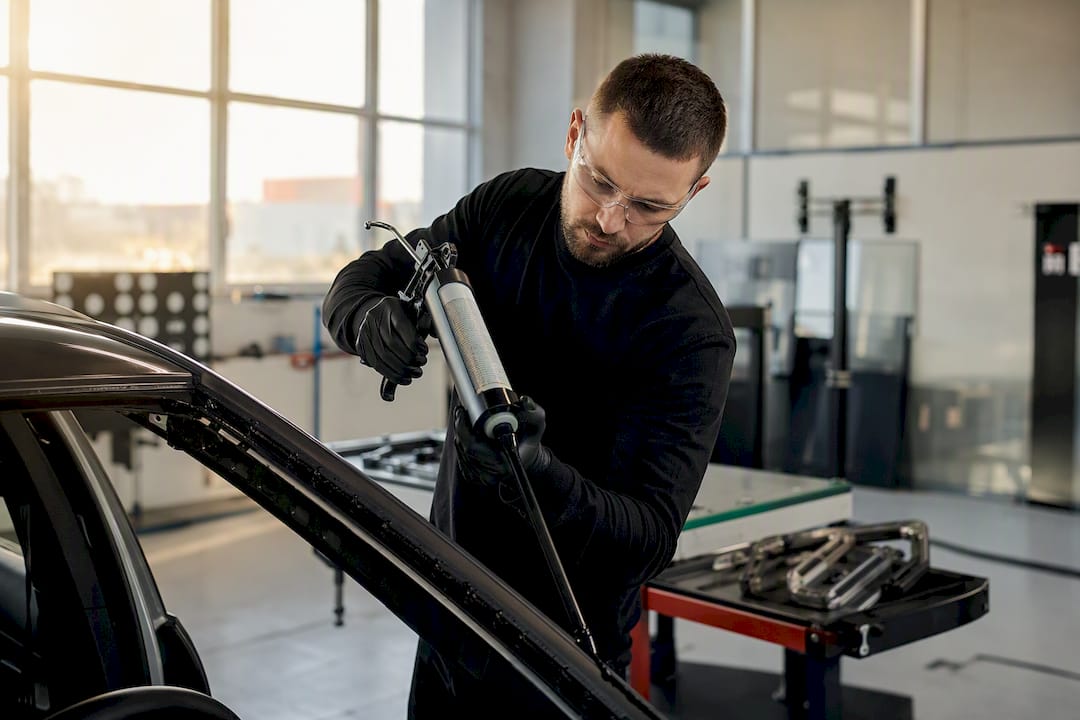
Mobile versus in-shop installation becomes a real decision point below about 30 to 40°F. Installers report that extreme cold complicates mobile work, from stiffening trim clips to slowing adhesive cure past what a van’s portable heater can compensate for. Many shops will recommend bringing the vehicle in rather than risking a mobile install in a hard freeze.
If your replacement includes ADAS recalibration, budget extra time. Camera and sensor calibration requires stable conditions, and cold weather can stretch total service time beyond a typical appointment window.
Pro Tip: Ask your shop for the exact SDAT before you book. A winter replacement that quotes the same drive-away window as a summer one is a red flag, not a convenience.
When to Wait and When to Call a Pro Immediately
Some damage simply shouldn’t wait for warmer weather, no matter how tempting it is to put off the appointment.
Call a shop right away if you see:
- A crack longer than the typical three-inch repair threshold.
- Damage that reaches the edge of the windshield.
- Delamination, cloudiness, or bubbling between glass layers.
- A chip sitting directly in the driver’s line of sight.
- Heavy salt or debris packed into the break.
Environmental conditions matter too. If ambient temperature sits below your adhesive’s manufacturer-rated limit, or the crack is frozen wet and can’t be safely dried on site, it’s reasonable to protect the area and schedule rather than force an on-the-spot fix. In regions with sharp freeze-thaw cycles, though, waiting has its own cost. Reporting on Colorado winters notes that repairable chips can spread into full cracks within days once temperature swings and high-altitude UV get involved.
Never try to speed up a fix with a hair dryer on high or a space heater aimed directly at the glass. That kind of uneven, aggressive heat is precisely what triggers thermal shock.
What Certified Technicians Do Differently in Cold Weather
A trained installer’s winter routine looks nothing like a rushed roadside job, and the difference shows up in whether the repair actually holds.
Technicians pre-warm both the vehicle and their materials before touching the glass, then fully dry the pinchweld and surrounding area so the new adhesive bonds to clean, dry metal rather than trapped moisture. They stick to manufacturer-approved urethanes and follow the SDAT listed for that specific product and temperature, not a rule of thumb from a warmer job.
Shops that can guarantee stable ambient temperature for the full SDAT window, rather than hoping a portable heater holds steady in a driveway, are the ones consistently getting cold-weather installs right. That distinction is exactly why some jobs get pulled into the shop instead of handled curbside.
Look for AGSC-trained technicians when you’re evaluating a shop for winter work. Ask whether they use dedicated UV curing lamps, stock winter-grade adhesives, and can explain your specific SDAT in plain language before you sign anything. If a shop’s replacement includes ADAS calibration, confirm they handle that in-house rather than outsourcing it, since calibration accuracy matters just as much as the glass installation itself.
A Note From Collision Auto Glass & Calibration
We’ve handled Portland’s freezing mornings and ice storms since 2008, running both in-shop and mobile repairs depending on what the weather allows that day. Our lifetime no-leak guarantee stands whether your car needed a same-day chip fix or a full replacement. When a job includes ADAS calibration, we build in the extra winter time it takes rather than cutting corners on the recalibration to hit a faster drive-away window.
Get Your Windshield Handled Before the Next Freeze
Collision Auto Glass & Calibration gives Portland drivers something most winter callouts can’t: a same-day repair or replacement backed by a lifetime no-leak guarantee, with in-house ADAS calibration so you’re not booking a second appointment somewhere else once the weather clears. Whether your car needs a quick rock chip fix or a full replacement with proper cold-weather SDAT handling, our technicians warm the materials, dry the glass, and calibrate the cameras correctly the first time.
If your insurance covers the damage, we handle direct billing so you’re not stuck chasing paperwork in freezing weather. For chips and cracks that still qualify for a repair, book your windshield repair appointment now, before a cold snap turns it into a full replacement.
Sources
A few technical resources go deeper into the chemistry and field practices behind this guide:
- Temperature and Safe Drive-Away Time: Windshield Installation Chemistry | Windshield Advisor
- Making Bad Weather Windshield Repairs – Tech Tip – Delta Kits
- Rapidrepair
- Chilly temps present challenges for auto glass installations – Glassbytes
FAQ
How cold is too cold for windshield replacement?
Most standard urethane adhesives aren’t rated for use below 40°F, though winter-grade or fast-cure products can work at lower temperatures with adjusted drive-away times. Below roughly 30 to 40°F, many shops move the job in-house rather than attempting mobile installation.
At what point can a windshield not be repaired?
Cracks longer than about three inches, damage reaching the edge of the glass, delamination, and chips directly in the driver’s sightline typically require replacement instead of repair, especially once salt or debris has packed into the break.
Do windshield cracks get worse in winter?
Yes. Freeze-thaw cycles and thermal shock from uneven heating both increase the risk that a small chip spreads into a full crack, and in climates with sharp temperature swings this can happen within days.
What temperature is best for repairing a windshield?
Warming the glass to roughly 70°F to 100°F gives resin the best chance to flow fully into the damage, with a minimum of about 50°F needed to avoid thermal shock and get a reliable cure.
Recommended
- 7 Signs Your Windshield Needs Repair Before It Spreads – Collision Auto Glass & Calibration
- How Seasonal Changes Can Affect Your Windshield Replacement Needs – Collision Auto Glass & Calibration
- How to Avoid Windshield Damage – Collision Auto Glass
- Windshield Pitting Repair: When to Fix or Replace
🎧 Listen to This Article
Share
Recent Posts

October 15, 2026
Auto Glass Claims: Choose a U.S. Shop Before ADAS Billing Surprises
See how U.S. drivers can choose an auto glass shop for an insurance claim, confirm ADAS calibration, protect their rights, and prevent billing...
October 14, 2026
Fleet Windshield Maintenance: A 20 Minute Repair Can Prevent Days Down
Catch chips early, log the VIN and photos, and require part number and ADAS calibration records to keep fleet vehicles moving and avoid...
October 13, 2026
Calibration After Collision Repair: Ask for Scans Before You Drive
Learn when collision repairs require ADAS calibration, how shops verify the work, and which scan records and paperwork to request before driving....