Auto Glass Repair
Yes, windshield primer is required for the vast majority of urethane glass installations, because it creates the chemical bond that keeps water and wind out. Skip it or apply it wrong, and even a perfectly installed windshield can leak, whistle at highway speed, or come loose in a crash. A small number of approved primerless systems exist, but they come with strict conditions, not a blanket exception.
- Manufacturer instructions, including flash times and re-prime windows, are product-specific and not interchangeable between brands.
- Minimum drive-away time (MDAT) depends on the primer and urethane pairing, temperature, and humidity, not a fixed number.
- Collision Auto Glass & Calibration documents primer lot numbers and expiration dates on every install as part of its lifetime no-leak guarantee.
Key Takeaways
Windshield primer creates the chemical bridge between glass and urethane, and skipping or mismatching it is the leading cause of post-installation leaks.
| Point | Details |
|---|---|
| Primer is usually required | Silane-based glass primer displaces surface moisture so urethane can bond properly. |
| Match primer to urethane | Mixing brands or product lines risks a bond that never fully forms. |
| MDAT is job-specific | Drive-away time depends on the adhesive system, temperature, and humidity, not a flat number. |
| Track lot numbers and expiration | Expired or contaminated primer should trigger a full re-clean and re-prime. |
| Primerless adhesives have conditions | They still often require pinchweld primer and strict glass cleanliness standards. |
Table of Contents
- What Is Windshield Primer, Chemically Speaking?
- Types of Windshield Primer and Primerless Options
- How to Apply Windshield Primer Correctly
- Compatibility Risks and Common Installation Mistakes
- When Can You Skip Windshield Primer?
- What Collision Auto Glass & Calibration Does Differently
- Ready for a Professional Windshield Installation?
- Editorial Take: What Actually Matters With Windshield Primer
- Sources
- FAQ
What Is Windshield Primer, Chemically Speaking?
Glass and painted steel are nothing alike at a molecular level, and that mismatch is exactly what windshield primer is built to solve. Auto glass carries a thin, unavoidable layer of surface moisture, and glass primer is typically silane-based, formulated to displace that moisture and generate reactive sites the urethane can actually latch onto. Without that step, urethane sits on an inert, slightly damp surface instead of bonding to it.
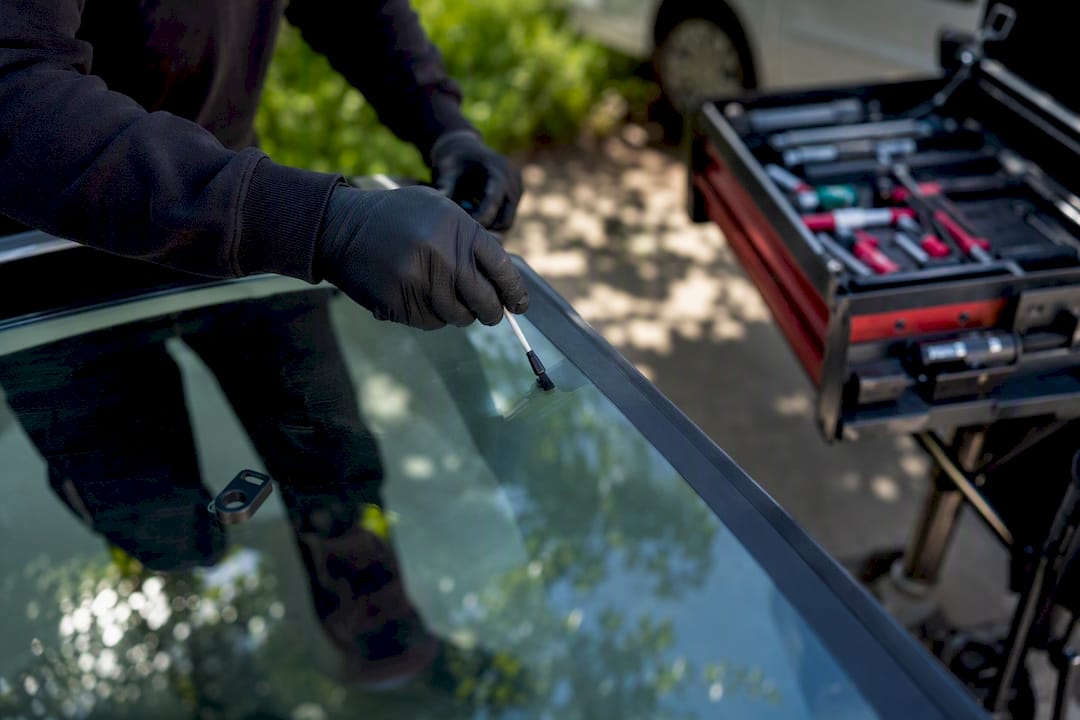
Pinchweld or metal primers solve a different problem. They condition painted or bare metal edges around the opening and help block corrosion where the old adhesive was cut away. That’s why body-shop paint primer or a generic adhesion promoter is not a substitute. Automotive glass bonding primer is engineered for silica and urethane chemistry specifically, while paint-shop products are formulated for entirely different substrates and cure mechanisms.
Types of Windshield Primer and Primerless Options
Not every job calls for the same product, and choosing wrong is one of the fastest ways to compromise a bond. The main categories installers work with:
- Glass-only primers condition the glass surface exclusively and are paired with a separate pinchweld primer for painted or bare metal.
- One-step or all-in-one primers, like BETAPRIME™ 5504G, handle glass and pinchweld in a single product, simplifying the kit an installer carries.
- Black-out primers, such as 3M™ Primer and SRP Velocity247, double as UV shields that protect the urethane bead from sun degradation over the vehicle’s life.
- Primerless-to-glass adhesives, like the BETASEAL™ U-418HV family, skip the glass-priming step entirely on approved, clean glass, though pinchweld primer is often still needed.
Decision signals worth checking before an installer picks up a bottle: whether the OEM glass came pre-primed from the factory, whether the frit band is intact or the glass is fully clear, expected MDAT, and the temperature and humidity on the job site.
How to Apply Windshield Primer Correctly
Application order matters as much as the product itself. Here’s the sequence a trained installer follows:
- Strip old urethane down to a thin, even layer and clean the pinchweld with a wet-scrub cleaner, checking for rust or paint damage as you go.
- Dip the applicator once and apply a thin, even coat rather than re-dipping repeatedly, which overloads the surface and slows flash time.
- Work in manageable sections so the primer doesn’t flash before the urethane bead goes down.
- Respect flash and open-life windows. BETAPRIME 5504G typically flashes in around 2 minutes at 20°F, with longer times in colder conditions, and allows one re-prime within a specified window if needed.
- Record the lot number and expiration date on the work order; some primers have a limited open-bottle shelf life once opened, and using an expired bottle risks a weak bond.
Statistic Callout: MDAT isn’t a single industry number. It’s calculated per adhesive system and shifts with temperature and humidity, which is why a shop’s paperwork should always show the specific figure used for your vehicle, not a generic “one hour” rule of thumb.
Pro Tip: If primer gets rained on or exposed to moisture before the urethane goes down, don’t just wipe it and continue. Re-clean the surface and reprime from scratch. A primer layer contaminated with water won’t create a reliable bond, no matter how good it looks.
Cold or wet job sites slow cure chemistry across the board, which is part of why DuPont’s fixed glass installation guide ties MDAT tables directly to ambient conditions rather than publishing one fixed number for every install.
Compatibility Risks and Common Installation Mistakes
Primer and urethane have to come from a matched system. Mixing brands or product lines can prevent the chemical bridge from forming at all, and manufacturer guidance is consistent on this point: substitution is not a safe shortcut.
The mistakes that cause most bond failures are mundane, not exotic:
- Double-dipping the applicator, which thickens the coat unevenly and extends flash time unpredictably.
- Priming over dust, oil, or old adhesive residue instead of a fully clean surface.
- Rushing past the required flash time before setting the urethane bead.
- Grabbing whatever primer is on the shelf instead of the one matched to that urethane system.
A poor prime job doesn’t always announce itself immediately. Wind noise at highway speed, a faint whistle, or a slow water leak after heavy rain are the classic early signs. If any of those show up within weeks of an install, the glass may need to come back out, the pinchweld re-cleaned, and the whole system reprimed before it’s reset.
When Can You Skip Windshield Primer?
Primerless-to-glass adhesives do exist for a reason. DuPont’s BETASEAL U-418HV documentation shows MDAT as fast as two hours under approved conditions, which is genuinely useful for high-volume shops. But the conditions are specific: the glass has to be an approved product match, cleaned to a strict standard, and the pinchweld often still needs its own primer even when the glass side skips it.
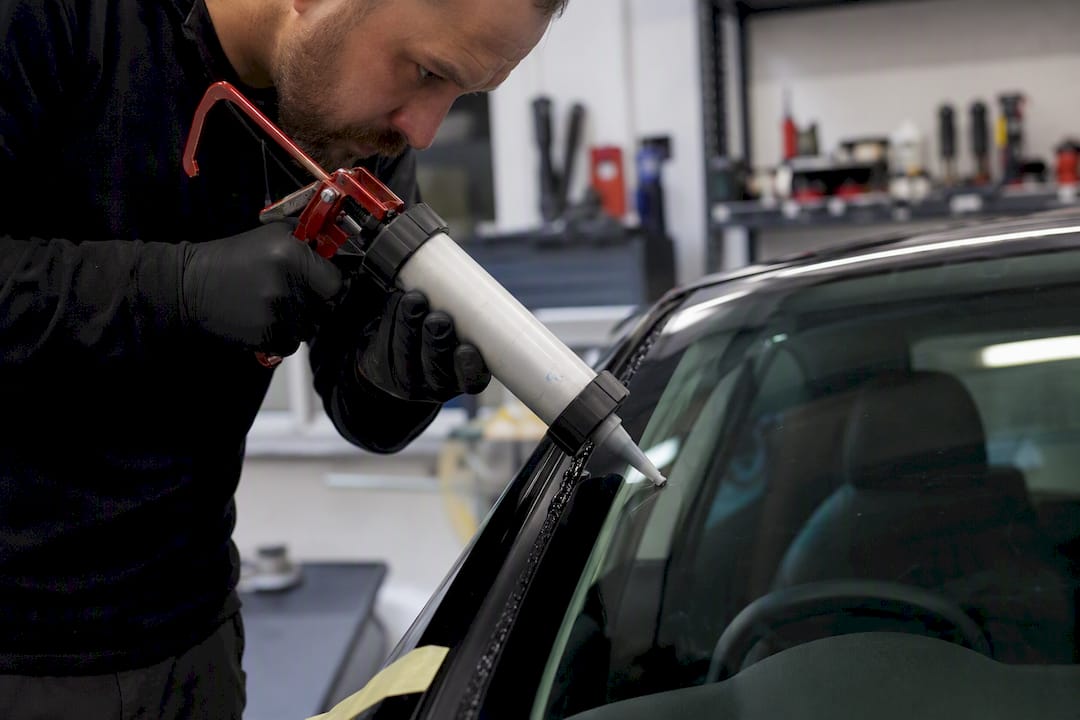
Before an installer skips glass priming, the checklist should cover product approval for that exact glass, visible cleanliness of the frit band, whether temperature and MDAT needs fit the job timeline, and whether the OEM glass arrived pre-primed. Skipping the step without checking all four is how a shortcut turns into a comeback repair.
What Collision Auto Glass & Calibration Does Differently
Every installation gets documented: product lot numbers, expiration dates, and the exact primer and urethane pairing used, kept as part of the full service record behind our lifetime no-leak guarantee. That paperwork matters if a warranty question ever comes up years later.
On mobile jobs, technicians close the primer bottle immediately after each dip, track open-life against the clock, and avoid priming altogether in active rain or strong wind that can carry contaminants onto a wet surface. If moisture or debris does land on primed glass, the fix is always the same: re-clean, re-prime, and start the flash timer over.
- Lot and expiration tracking on every job, not just spot checks.
- Weather-aware scheduling for mobile installs, since cold and wet conditions extend cure times.
- Full documentation tied to a lifetime no-leak guarantee, which is harder to back without records.
A DIY kit can’t replicate that paper trail, and that’s really the gap between a home repair and a professionally installed windshield: not the primer itself, but everything a shop tracks around it.
Ready for a Professional Windshield Installation?
Getting the primer chemistry right is only half the job. Matching it to the correct urethane, hitting the manufacturer’s flash and MDAT windows, and documenting the whole process is where DIY kits usually fall short. Collision Auto Glass & Calibration handles all of it in-house, with same-day windshield replacement and free mobile installation across the Portland area, backed by a lifetime no-leak guarantee and direct insurance billing so you’re not chasing paperwork after the fact.
Editorial Take: What Actually Matters With Windshield Primer
Most consumer content about windshield primer treats it like a single product you either use or skip. That framing misses the point. The chemistry is genuinely simple, silane-based primers displacing moisture on glass so urethane can crosslink, but the operational discipline around it is where installs actually succeed or fail.
Conventional advice fixates on “did you use primer” and mostly ignores open-life tracking, lot documentation, and matching primer to the specific urethane system in use. A shop that primes flawlessly but ignores a 14-day open-bottle limit, or grabs a compatible-looking primer from a different product line, ends up with the same leak risk as a shop that skipped priming entirely.
If you’re evaluating whether to attempt this yourself or hire a shop, prioritize the paper trail over the product name. Ask whether the installer tracks lot numbers and expiration dates, whether they can state the actual MDAT for your specific adhesive system, and whether contamination during application gets re-cleaned and re-primed rather than papered over. That’s the real signal of a bond built to last, not the brand printed on the primer bottle.
— Collision Auto Glass & Calibration
Sources
- 3M™ Primer | 3M United States
- BETASEAL primerless-to-glass brochure (DuPont)
- SRP Velocity installation manual
FAQ
Is Windshield Primer Necessary?
Yes, for nearly all urethane windshield installations, since it enables the chemical bond that prevents leaks and wind noise. A small number of approved primerless-to-glass adhesives exist, but they still carry strict cleanliness and compatibility conditions.
What Is Windshield Primer?
It’s a chemical treatment, typically silane-based for glass, that displaces surface moisture and creates reactive sites so urethane adhesive can properly bond to the glass or pinchweld. Glass primers and pinchweld primers serve different substrates and are not interchangeable.
What Can I Use as a Substitute for 3M Single-Step Primer?
There is no safe substitute outside the matched urethane system’s own approved primer line. Manufacturer guidance is clear that mismatching primer and adhesive brands can prevent the bond from forming correctly.
What Kind of Primer Should I Use on Glass?
Use the specific glass-bonding primer approved for the urethane adhesive system you’re installing, such as products in the BETAPRIME 5504G or SRP Velocity247 lines. Automotive paint primer or generic adhesion promoters are not appropriate substitutes for glass bonding.
Recommended
- Windshield Pitting Repair: When to Fix or Replace
- Why Windshield Crack Spreading Happens and How to Stop It
- Is It Worth Getting A Windshield Chip Repaired? – Collision Auto Glass & Calibration
- Will a Cracked Windshield Pass Inspection? What Drivers Need to Know
🎧 Listen to This Article
Share
Recent Posts
October 15, 2026
Auto Glass Claims: Choose a U.S. Shop Before ADAS Billing Surprises
See how U.S. drivers can choose an auto glass shop for an insurance claim, confirm ADAS calibration, protect their rights, and prevent billing...
October 14, 2026
Fleet Windshield Maintenance: A 20 Minute Repair Can Prevent Days Down
Catch chips early, log the VIN and photos, and require part number and ADAS calibration records to keep fleet vehicles moving and avoid...
October 13, 2026
Calibration After Collision Repair: Ask for Scans Before You Drive
Learn when collision repairs require ADAS calibration, how shops verify the work, and which scan records and paperwork to request before driving....