
Auto Glass Repair
Most water blamed on the windshield or sunroof actually starts at a clogged sunroof drain tube or a failed windshield bond, not a cracked pane. Before you touch a tube of sealant, dry the interior, lay towels along the suspect zones, and run a controlled water test working from the sunroof down to the cowl and windshield. Proving the source first saves you from paying for a repair that doesn’t fix anything.
TL;DR:
- Most leaks attributed to the windshield or sunroof actually originate from clogged drain tubes or failed seals, not the glass itself.
- Proper diagnosis involves gentle water tests with video documentation, ruling out common mimics like A/C drain backups or door drain clogs first.
- Clearing sunroof drains with a flexible line and low-pressure water is often an inexpensive and effective DIY fix before considering seal or glass replacement.
- Bond failure causes are usually due to aging seals or improper previous repairs, requiring professional re-bonding and possible ADAS recalibration.
- Regular maintenance, such as cleaning drains and conditioning seals, can prevent leaks, and most repairs are covered by insurance if properly diagnosed.
Table of Contents
- Windshield Leak or Sunroof Leak: What to Check Before You Test
- How Do You Test for a Windshield or Sunroof Leak?
- Why Your Sunroof Is Leaking and How to Fix It
- Windshield Leak Causes: Bond Failure vs. Something Else
- Is It Really the Sunroof or Windshield? Common Mimics to Rule Out
- What Does It Cost to Fix a Windshield or Sunroof Leak?
- How to Prevent Windshield and Sunroof Leaks Year Round
- When to Call a Professional for a Water Leak
- Does Vehicle Age Affect Leak Risk?
- Why We Test Before We Replace
- Get a Leak Diagnosed and Fixed the Same Day
- Sources
- FAQ
Windshield Leak or Sunroof Leak: What to Check Before You Test
Before you grab a hose, spend ten minutes gathering information. A leak that shows up only during a car wash points somewhere different than one that shows up after every rainstorm, and a musty smell without visible water means something else entirely.
Note where the wetness actually appears. Headliner stains near the sunroof opening usually mean a drain or seal problem at the roof. Water pooling in the front footwells often traces back to the cowl or the windshield’s lower edge. A damp rear floor, especially with no rain in the forecast, sometimes has nothing to do with either the sunroof or the windshield.
Gather a few tools before you start:
- A garden hose with a spray nozzle set to a gentle, low-pressure stream (never a pressure washer)
- A plastic cup or small pitcher for controlled drain pours
- A length of flexible line, such as weed-trimmer cord, for clearing drain tubes
- Old towels, paper towels, and a flashlight for tracking water as it moves
- Dish soap mixed with water for bubble testing seals and seams
Work with a second person if you can. One person runs the water outside while the other watches the interior and calls out exactly where and when water appears. Timing is the single most useful piece of evidence you’ll collect.
A few safety notes matter here. Never aim compressed air into a sunroof drain nipple hoping to blast it clear. The tubing is thin-walled plastic, and high-pressure air routinely pops it loose from its fitting inside the pillar, turning a simple clog into a hidden disconnection. Keep any hose flow gentle and steady rather than blasting water at wiring harnesses or the interior fuse box under the dash. If you’re testing near the cowl, know where your car’s electronics live before you start spraying.
Pro Tip: Take a phone video of every test, not just photos. A ten-second clip showing exactly when water starts dripping and from where is worth more to a technician than any verbal description you can give over the phone.
How Do You Test for a Windshield or Sunroof Leak?
Diagnosing a leak is a process of elimination, not a guess. You’re testing one zone at a time, in a specific order, so you never end up with ambiguous results from three water sources running at once.
-
Dry everything first. Pull back the carpet if you can, blot standing water, and lay dry towels along the base of the windshield, the headliner edges, and both front footwells. This lets you spot the very first wet point instead of a puddle that’s already spread.
-
Test the sunroof drains with a channel pour. Open the sunroof fully so you can see the drain channel running along each corner of the tray. Pour a cup of water slowly into one corner drain at a time and watch underneath the vehicle, near the front and rear wheel wells, for water exiting the tube. A drain that swallows the water and produces no exit stream downstairs is a clogged or disconnected tube, and this is the single most common cause of what looks like a sunroof leak.
-
Flood the cowl gently. Close the sunroof and run a soft, steady hose stream across the cowl panel at the base of the windshield, below the wipers. Watch the front footwells and the area under the dash. Water here often means a clogged cowl drain or a gap in the plenum seal, not a windshield problem at all.
-
Rinse the windshield perimeter. With the cowl dry, run water slowly along the top and sides of the windshield, letting it sheet down toward the bond line. If water tracks in at the edge of the glass rather than the cowl, you’re looking at a compromised bond or a deteriorated gasket.
-
Run the soap and bubble test. Mix dish soap with water, brush it along the windshield seal and any suspect door or trunk seams, then have someone inside apply gentle air pressure with the defrost fan or by pressing the door shut. Bubbles forming at a seam or seal confirm exactly where air, and therefore water, is getting through.
-
Check the A/C last. Turn the air conditioning on and let it run for ten to fifteen minutes with the vehicle parked. If moisture appears only now, and it’s clear rather than gray or dirty, you’re likely dealing with a condensate drain issue rather than an actual leak.
Here’s how to read what each test tells you:
| Test performed | Where water appears | Likely source |
|---|---|---|
| Sunroof channel pour | No exit stream at wheel well | Clogged or disconnected sunroof drain |
| Cowl flood | Front footwell or under dash | Cowl or plenum drain blockage |
| Windshield rinse | Tracks in at glass edge | Windshield bond or gasket failure |
| Soap/bubble test | Bubbles at seal or seam | Confirmed air/water entry point |
| A/C runtime check | Clear water, only during A/C use | Evaporator condensate drain |
Timing tells you almost as much as location. Water that appears within seconds of pouring into a drain, but exits nowhere, confirms a blockage close to the tray. Water that takes several minutes to show up inside usually means it’s traveling a longer path, such as down a pillar or along a headliner seam, before it finds a way out.
Why Your Sunroof Is Leaking and How to Fix It
A sunroof isn’t a single sealed pane sitting flush with the roof. It sits inside a tray with a drainage channel running around all four corners, and each corner connects to a thin tube that carries water down through the pillars and out near the wheel wells. That system works fine until debris, whether it’s leaves, pollen, or built-up grit, plugs one tube. Once one drain clogs, the tray simply overflows into the headliner and down into the cabin, which is why a “sunroof leak” is very often a drainage problem rather than a glass or seal failure.
Clearing a blocked drain is one of the more forgiving DIY repairs on this list. Feed a length of flexible line, weed-trimmer cord works well, gently down into the drain tube to break up the clog, then follow with a slow, low-pressure water flush to carry debris the rest of the way out. Confirm success by watching for water exiting near the wheel well. Avoid a shop vac or compressed air on the drain nipple entirely; the connection point is fragile and can separate from its fitting, which turns a $0 fix into a trim-removal job.
If clearing the drain doesn’t stop the leak, the hose itself may have come loose inside the pillar. That’s a more involved repair, since it usually means removing interior trim to reach and reattach the tubing, and it’s a reasonable point to hand the job to a shop rather than keep guessing.
Seals are the second common culprit. A few maintenance habits keep them functional for years:
- Wipe the rubber gasket clean of grit before applying any conditioner
- Use a rubber-specific conditioner rather than a petroleum-based product, which breaks down rubber over time
- Condition seals two to three times a year, more often in dry or high-UV climates where rubber hardens faster
- Replace a seal once it’s visibly cracked, flattened, or no longer springs back after compression
Pro Tip: If your sunroof seal looks fine but you still see a fine mist of water inside during highway driving, check the seal’s compression rather than its condition. A sunroof that’s slightly out of alignment can leave a gap even with a perfect gasket.
Alignment problems show up as uneven gaps around the glass, wind noise that wasn’t there before, or a sunroof that doesn’t sit flush when closed. Minor adjustments, tightening the mounting bolts or adjusting the tilt mechanism, are within reach for a confident DIYer with the owner’s manual in hand. But if the glass itself is cracked, delaminating, or the seal has torn away from its channel, you’re looking at a cassette or glass replacement. That’s a job for a shop, both because the parts are specific to your vehicle and because a poorly seated replacement creates the exact leak you’re trying to fix.
Windshield Leak Causes: Bond Failure vs. Something Else
A leaking windshield almost always comes down to one of two things: the urethane bond that holds the glass in place has failed, or the leak is coming from somewhere nearby and just looks like a windshield problem. Telling them apart matters, because the fix for one is completely wrong for the other.
Signs that point to an actual bond failure include water tracking in visibly at the glass edge during the rinse test, a windshield that shifts slightly when you press on its corners, and soap bubbles forming right at the seal line rather than at the cowl. Skipped urethane during a past installation or a gasket that’s simply aged out are the two most common root causes, and neither one gets better on its own.
A note on the numbers: shops that run methodical, zone-by-zone testing before touching any glass report that a large share of “windshield leak” service calls turn out to be drain or cowl issues instead — which is exactly why the isolation tests above come before any repair decision, not after.
Here’s the part that trips up a lot of DIYers: running a bead of clear silicone along the top of the glass where you see the leak. It might stop the drip for a few weeks. It also traps moisture against the original urethane, accelerates corrosion on the pinch weld underneath, and makes the eventual proper repair harder because the tech now has to remove your silicone patch first. A few situations do call for sealant:
- Minor gasket weatherstripping that’s separated slightly but is otherwise sound can sometimes be reseated with the correct butyl-based sealant
- A small trim gap unrelated to the structural bond may be a reasonable candidate for a proper adhesive product
- Anything involving the actual urethane bond line is not a sealant job under any circumstance
When the bond has genuinely failed, a proper re-bond or full replacement is the only permanent fix. A professional job means removing the old urethane down to the pinch weld, priming the surface, and setting the glass with a fresh urethane bead rated for your vehicle. Cure time before the car is safe to drive depends on temperature and humidity that day rather than one fixed number, so a shop should tell you your specific drive-away time, not a generic estimate. If your vehicle has a forward-facing camera or rain-sensing wipers mounted to the glass, factor in ADAS recalibration as part of the job, since removing and resetting the windshield can shift the camera’s alignment.
Is It Really the Sunroof or Windshield? Common Mimics to Rule Out
Plenty of leaks that get blamed on the sunroof or windshield have nothing to do with either one. Ruling these out first saves you from chasing a phantom leak in the wrong part of the car.
The A/C evaporator condensate drain is the most frequent impostor. Every time you run the air conditioning, the evaporator core pulls moisture from cabin air and routes it out through a small drain tube, usually underneath the vehicle near the firewall. If that tube clogs, the condensate backs up and drips onto the front passenger floor, and it can look exactly like a windshield leak after a humid drive. The tell is timing: this water is clear, and it only shows up when the A/C has been running, not necessarily when it’s raining.
Door and hatch drains are another common source. Every door has small weep holes at the bottom designed to let water that gets past the weatherstripping drain back out. When those holes clog with dirt or old undercoating, water backs up inside the door and can migrate down into the sill and floor, sometimes far from where it entered.
A heater core leak is worth ruling out too, even though it’s not water-related at all. Coolant leaking from a failed heater core produces a sweet smell, an oily film on the interior glass, and dampness on the passenger floor that has nothing to do with rain. If your “leak” shows up regardless of weather and the fluid feels slightly oily rather than clean, stop testing for water intrusion and check your coolant level instead.
A few quick checks separate these mimics from an actual sunroof or windshield issue:
- Run the A/C alone, with the vehicle dry, and see if wetness appears without any water test
- Check for a sweet smell or oily residue before assuming any water source is rain-related
- Note whether the wet spot is symmetrical (both footwells) or isolated to one door, which often points to that door’s drain
What Does It Cost to Fix a Windshield or Sunroof Leak?
Most sunroof drain clearing and basic seal conditioning are inexpensive enough to handle yourself. Clearing a clogged drain with a flexible line and a garden hose costs essentially nothing beyond your own time, and a bottle of rubber-safe seal conditioner runs a modest amount at any auto parts store. Shop labor for the same drain-clearing job, if the tubing has detached and needs trim removal, adds a diagnostic and labor charge on top.
Windshield repair costs depend heavily on whether the damage or leak can be addressed without removing the glass, versus requiring full replacement. A small chip repair sits at the low end. A full replacement costs more, and that number climbs further if your vehicle needs ADAS calibration afterward, since recalibrating a forward-facing camera or sensor array is a separate, specialized step from setting the glass itself.
Insurance can offset a meaningful chunk of this. Comprehensive coverage typically pays for windshield replacement or repair minus your deductible, and some insurers or state-specific policies offer a $0 glass deductible option, which is worth checking before you assume a claim isn’t worth filing.
- If your deductible is higher than the repair cost, paying out of pocket usually makes more sense than filing a claim
- If the damage involves ADAS sensors or a full replacement, check your policy’s glass deductible before deciding
- Direct insurance billing at a shop removes the hassle of paying upfront and waiting on reimbursement
Weigh safety against cost here, not just the dollar figure. A properly bonded windshield is a structural part of your vehicle’s crash safety system, so a bond failure isn’t the place to look for the cheapest possible fix.
How to Prevent Windshield and Sunroof Leaks Year Round
Leak prevention takes maybe twenty minutes twice a year, and it’s cheaper than any repair on this list.
-
Clear debris from the sunroof channel and cowl every spring and fall. Leaves, pollen, and grit are the number one cause of clogged drains, and a quick brush-out before they compact into a real blockage takes minutes.
-
Condition rubber seals with a rubber-safe product, never petroleum jelly or silicone spray. Petroleum products break down rubber over time and actually shorten seal life instead of extending it.
-
Run a one-cup water test through each sunroof drain once a year, ideally at the start of the rainy season, so you catch a slow clog before it becomes a headliner stain.
-
Inspect the interior after any major storm. Catching a damp headliner edge or a musty smell early means a quick drain clear. Ignoring it for weeks risks mold growth in the headliner padding and, in worse cases, corrosion or shorts in wiring harnesses that run along the roof, as detailed in diagnose the source first to stop car odour for good.
Climate shapes how often you need to do this. Dry, dusty regions tend to harden seals faster and pack drains with fine grit, while humid, leafy climates clog the same drains with organic debris. Either way, twice-yearly attention is enough for most vehicles, with an extra check after any unusually heavy storm.
When to Call a Professional for a Water Leak
DIY testing has a clear stopping point. If you’ve cleared the sunroof drains, run the full test sequence, and water is still finding its way in, or if the leak has reached electronics, the fuse box, door modules, or wiring under the dash, stop testing and get a professional inspection. A saturated headliner that doesn’t dry out within a day or two is also a signal that mold is becoming a real risk, not just a possibility.
Bring evidence, not just a description. A shop can diagnose faster and more accurately when you show up with:
- Notes on which drain tests produced an exit stream and which didn’t
- Photos or video of the soap bubble test and where bubbles appeared
- Timing details: how long after each test water showed up, and where
Shops that see this kind of documentation upfront can usually skip repeating your tests and move straight to a fix, which saves you a diagnostic fee in many cases.
A leak diagnosed with real evidence gets fixed once. A leak diagnosed by guesswork gets “fixed” two or three times before it actually stops.
A professional auto glass company approaches every leak call the same evidence-first way. Mobile service means a technician can run the same isolation tests at your home or office rather than requiring a tow or a lost workday, and the lifetime no-leak guarantee on every installation reflects that the source gets confirmed before any glass gets replaced. For insurance-covered repairs, direct billing may remove the back-and-forth of paying upfront and filing for reimbursement yourself. A proper professional inspection typically includes the same channel pour, cowl flood, and bond rinse you’ve already run, followed by ADAS recalibration if the repair involves a camera-equipped windshield.
Does Vehicle Age Affect Leak Risk?
Older vehicles face more leak risk, but not always for the reason people assume. It’s rarely the glass itself aging out. It’s the rubber and adhesive around it. Urethane bonds and drain tube seals both lose flexibility over ten to fifteen years of temperature swings, and a seal that was watertight in year three can develop hairline gaps by year twelve, especially in vehicles that spend a lot of time parked outdoors.
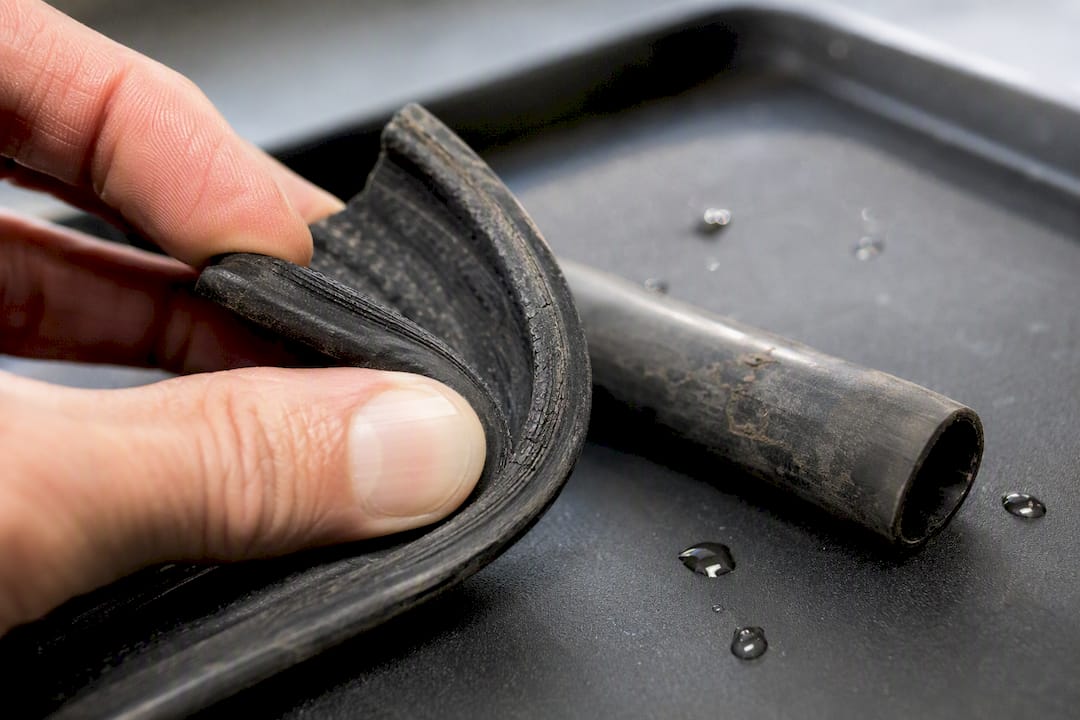
Sunroof drain tubes face a similar aging curve. The plastic gets more brittle with UV exposure over time, which means an older vehicle’s drain tube is more likely to crack or detach from its fitting than a newer one, even under the same gentle clearing methods that would be perfectly safe on a five-year-old car. That’s one more reason to use a flexible line and gentle water flush rather than anything forceful once a vehicle passes the decade mark.
Model matters too, independent of age. Panoramic sunroofs, now common across many SUV and crossover trims, have a longer drain channel and more corners to clog than a traditional single-pane sunroof, simply because there’s more glass and more perimeter to drain. Vehicles with a history of aftermarket glass replacement are also worth extra scrutiny, since bond quality varies more with the installer than with the vehicle itself. If you’re buying used and the vehicle has over 100,000 miles or a replaced windshield in its history, a quick drain and bond check before the rainy season isn’t a bad idea.
Why We Test Before We Replace
We built our diagnostic process around one core belief: replacing a windshield or a sunroof cassette should be the last step, not the first guess. Too many drivers end up paying for new glass when the actual problem was a two-dollar drain clog. That’s not a service philosophy we’re willing to compromise on, because it costs our customers money and doesn’t fix anything.
Our mobile technicians run the same zone-by-zone water tests outlined here, at your home or workplace, before recommending any repair. If the evidence points to a bond failure or damaged cassette, we handle the replacement with our lifetime no-leak guarantee and manage insurance billing directly so you’re not stuck negotiating a claim on your own.
If you’ve already run some tests yourself, hold onto that documentation. Photos, timing notes, and video of where water appeared help us confirm the source faster and get you a same-day fix instead of a second visit.
— Collision Auto Glass & Calibration
Get a Leak Diagnosed and Fixed the Same Day
If your own testing points to a drain clog you can’t clear, a windshield bond that’s clearly failed, or you’d simply rather have a technician confirm the source before you spend another weekend chasing water, Some auto glass service providers handle the full range: windshield replacement, rock chip and crack repair, side and back glass, and ADAS calibration for cars, trucks, and RVs.

What sets a proper diagnosis apart from a guess-and-patch job is the guarantee behind it. Some installations come with a lifetime no-leak guarantee, and mobile service means a technician can run the same isolation tests at your location, often the same day you call. Insurance claims may be handled through direct billing, so you may not need to pay upfront and wait on reimbursement. If a windshield replacement is on the table, our team also confirms whether your vehicle needs ADAS recalibration as part of the job, not as a surprise add-on afterward.
Request a free auto glass quote and describe what your water tests turned up. We’ll confirm the source and get you a same-day repair window.
Sources
- Sunroof glass replacement for leaks: Is it the glass or the drain?
- Why is the carpet wet in my car?
- What to Do If Your Windshield Is Leaking
- How to Fix a Leaky Sunroof
FAQ
How common is it for sunroofs to leak?
Sunroof leaks are common enough that most cases trace back to a clogged drain tube rather than a failed glass panel or seal, since the drainage channel is the part most exposed to debris over time.
Will insurance pay for a leaking windshield?
Comprehensive coverage typically pays for windshield repair or replacement caused by a leak-related failure, minus your deductible, and some insurers offer a $0 glass deductible option worth checking before you file.
How much would it cost to fix a sunroof leak?
Clearing a clogged drain yourself costs next to nothing beyond a length of flexible line and some time, while a cassette or glass replacement runs considerably more and usually requires professional service.
Will insurance cover a leaking sunroof?
Comprehensive auto insurance generally covers sunroof leak repairs the same way it covers windshield claims, subject to your deductible, though coverage details vary by policy and state.
How do I tell if a leak is coming from my sunroof or my windshield?
Run a controlled water test one zone at a time: pour water into each sunroof drain first, then flood the cowl, then rinse the windshield edge, and note exactly where and when water appears inside.
Recommended
- 7 Signs Your Windshield Needs Repair Before It Spreads
- How to Avoid Windshield Damage
- 5 Tips on Choosing the Best Auto Glass Shop to Fix Your Windshield
🎧 Listen to This Article
Share
Recent Posts

October 15, 2026
Auto Glass Claims: Choose a U.S. Shop Before ADAS Billing Surprises
See how U.S. drivers can choose an auto glass shop for an insurance claim, confirm ADAS calibration, protect their rights, and prevent billing...
October 14, 2026
Fleet Windshield Maintenance: A 20 Minute Repair Can Prevent Days Down
Catch chips early, log the VIN and photos, and require part number and ADAS calibration records to keep fleet vehicles moving and avoid...

October 13, 2026
Calibration After Collision Repair: Ask for Scans Before You Drive
Learn when collision repairs require ADAS calibration, how shops verify the work, and which scan records and paperwork to request before driving....