
Auto Glass Repair
File a claim when your repair or replacement cost, including any ADAS recalibration, exceeds your deductible, or when you carry $0 glass coverage. Pay out of pocket when the deductible is close to or higher than the total cost, or when it’s a single small chip you can fix cheaply. Comprehensive coverage almost always applies to glass damage, not collision or liability, and that distinction shapes the whole decision.
TL;DR:
- Filing a claim is generally worthwhile when the repair cost exceeds your deductible or when you carry full-glass coverage with a zero deductible, especially on ADAS-equipped vehicles.
- Comprehensive coverage covers most glass damage from non-crash events like rocks, hail, and vandalism, while collision coverage applies only during actual crashes involving the vehicle.
- Recalibration of ADAS systems is typically required after windshield replacement if the vehicle has forward-facing cameras, and it often adds hundreds of dollars to the repair bill.
- Always confirm that calibration is included in the insurer’s payout in writing before authorizing repairs to avoid unexpected charges or delays.
- Small chips costing less than your deductible are usually better fixed out-of-pocket, and drivers should consider the total repair cost, deductible, and potential rate impact when deciding whether to file a claim.
Table of Contents
- Which Coverage Actually Pays for Windshield Damage?
- Is It Worth Filing a Claim or Paying Cash?
- How Do You File a Windshield Insurance Claim?
- Does Windshield Replacement Always Need Calibration?
- What Shops See Insurers and Drivers Get Wrong
- Get Direct Billing and In-House Calibration Done Right
- Sources
- FAQ
Which Coverage Actually Pays for Windshield Damage?
Comprehensive coverage, sometimes labeled “other than collision,” is the part of your policy that pays for windshield damage in the vast majority of cases. It covers non-crash events: a rock kicked up on the highway, hail, a falling branch, vandalism, even a deer strike. If your windshield cracked because a pebble hit it at 65 mph, that’s a comprehensive claim, not a collision one.
Collision coverage steps in only when the glass damage happened during an actual crash, like backing into a pole and shattering the rear window. If someone else caused the crash, their liability coverage may pay for your damage instead. Your liability coverage never pays for your windshield. It only covers damage you cause to other people’s property.
A few states change the math entirely. Florida, Kentucky, and South Carolina require insurers to waive the deductible on glass claims for policyholders who carry comprehensive coverage. Some insurers also sell full-glass endorsements nationwide that bring your glass deductible to zero regardless of state law.
What this means for your policy:
- Comprehensive coverage: handles rocks, hail, falling debris, vandalism, and animal strikes.
- Collision coverage: applies only when the windshield breaks during an accident.
- Liability coverage: never pays for your own glass, only the other driver’s.
- Full-glass endorsements: can reduce your deductible to $0 for glass-only claims.
Check your declarations page before assuming which bucket your damage falls into. It’s the fastest way to know if filing even makes financial sense.
Is It Worth Filing a Claim or Paying Cash?
The math is simple once you have real numbers in front of you. Take the total repair or replacement cost, subtract your deductible, and whatever’s left is what your insurer pays. If that number is meaningfully above zero, filing usually makes sense, assuming you’re not worried about a rate increase.
Here’s how the costs typically break down:
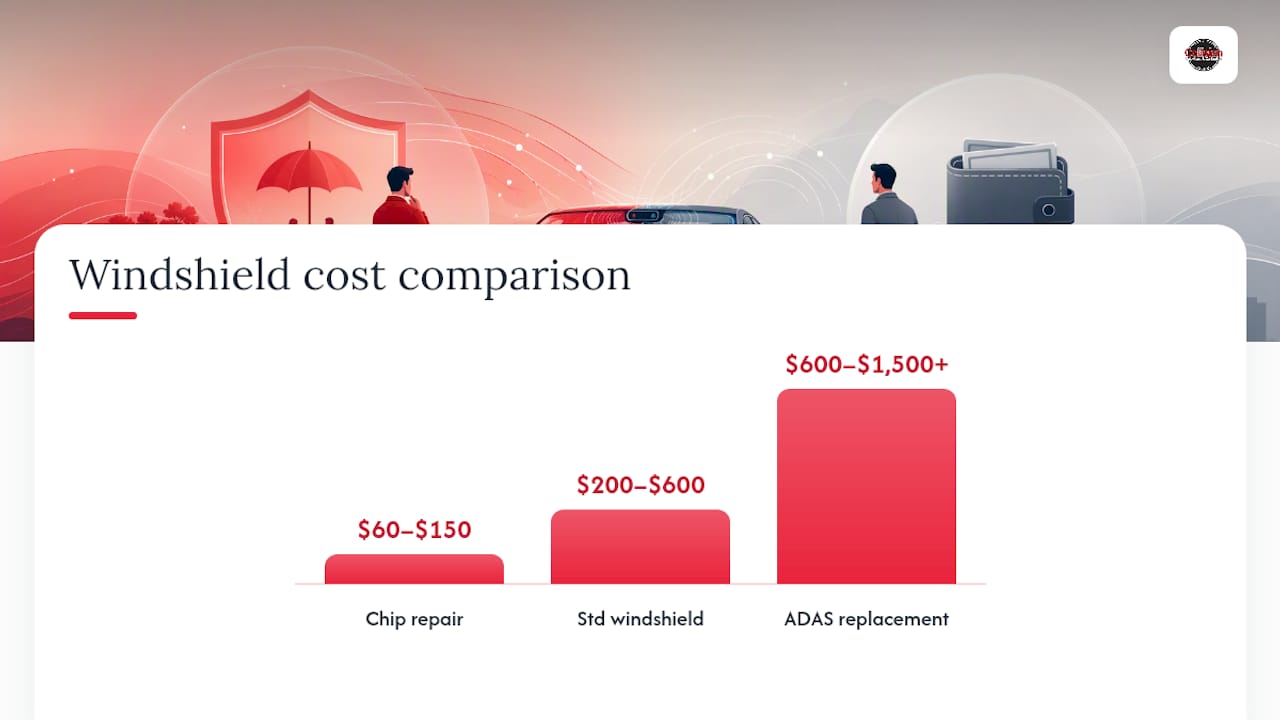
- Chip repair: roughly $60 to $150, often cheaper than most deductibles.
- ADAS-equipped replacement with recalibration: often $600 to $1,500 or more once calibration is added in.
Quick math: a $500 windshield replacement with a $500 deductible nets you nothing from the insurer. Pay cash. But that same windshield on an ADAS-equipped vehicle jumps to $900 with calibration included. Your insurer covers $400 of it. That’s worth filing.
Pay out of pocket when your deductible is higher than the total repair cost, when it’s a single small chip you’d rather fix today than schedule a claim for, or when you’re trying to keep your claims history clean ahead of a renewal. Lean on insurance when you have a $0 glass deductible, when ADAS calibration pushes the bill well past what you’d pay in a deductible, or when you want OEM glass and your policy will cover the difference. If you’re unsure which side of that line you’re on, this breakdown on filing a cracked windshield claim walks through more real-world scenarios.
How Do You File a Windshield Insurance Claim?
Filing a glass claim isn’t complicated, but skipping a step can slow down approval or leave you arguing about calibration charges later. Here’s the order that keeps things moving.
- Confirm it’s safe to drive. A small chip outside your line of sight is fine short term. A crack spreading across the driver’s field of view is not.
- Photograph the damage from multiple angles, and note the date, location, and how it happened.
- Call your insurer or use their app to start the claim. Have your policy number and photos ready; a repair estimate helps but isn’t always required upfront.
- Choose a shop. You can use an insurer-recommended vendor or pick your own, most policies allow it. Ask directly whether the shop does in-house ADAS calibration or subcontracts it out.
- Get written authorization before work starts, especially if your vehicle has ADAS cameras or sensors near the windshield.
- Confirm the payment flow. Many shops, including Collision Auto Glass & Calibration, bill your insurer directly, so you only pay your deductible at the time of service.
- Keep your paperwork. Save the invoice and any calibration report in case a warranty issue or DOT inspection comes up later.
Pro Tip: Ask the shop to email you written confirmation that calibration is included in the insurer’s approved estimate before you sign off on the repair. A verbal “yes, it’s covered” from a scheduler isn’t the same thing, and it won’t help you if a bill shows up later.
For a closer look at the exact conversation to have with your insurer, this step-by-step filing guide covers the details.
Does Windshield Replacement Always Need Calibration?
If your vehicle has a forward-facing camera behind the windshield for lane departure warning, automatic braking, or adaptive cruise control, it almost certainly needs recalibration after replacement. The camera’s position relative to the road shifts by fractions of an inch during installation, and that’s enough to throw off how the system reads lane markings or detects the car ahead.
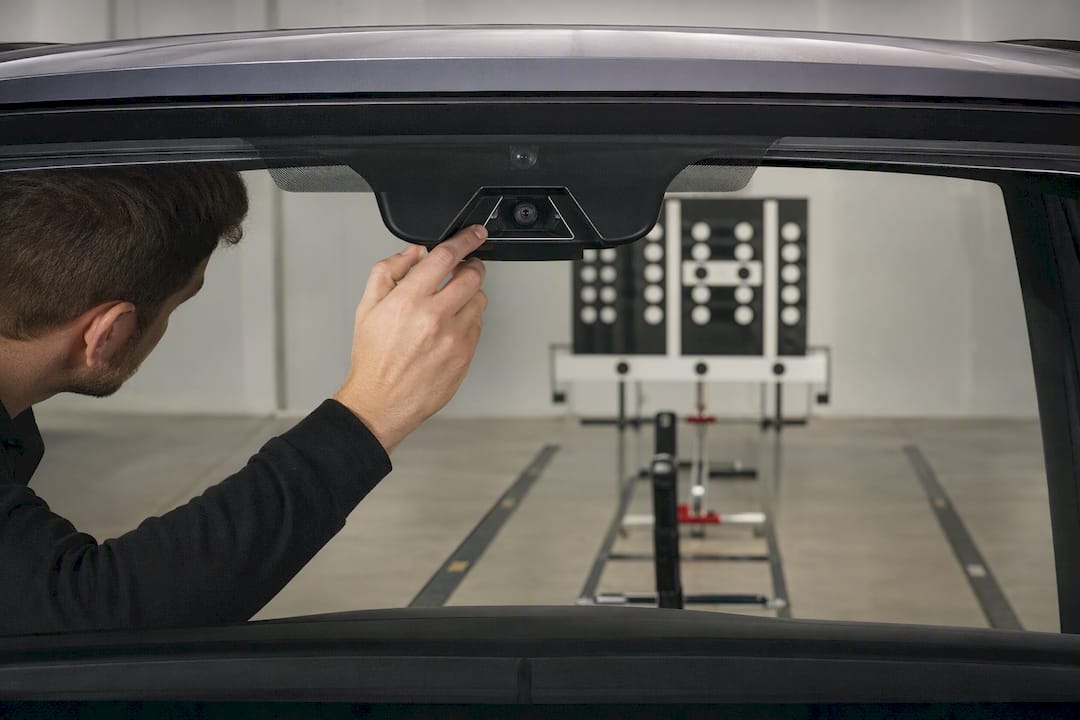
Recalibration typically runs $150 to $400 when billed separately from the glass work itself. Some insurers fold calibration into the comprehensive glass claim automatically; others treat it as a separate line item, which is exactly where surprise bills come from.
Before you approve any replacement on an ADAS-equipped vehicle:
- Get written confirmation that calibration is included in the insurer’s payout, not billed after the fact.
- Ask if the shop calibrates in-house or sends your car elsewhere, which adds time and risk of miscommunication.
- Ask whether OEM or aftermarket glass is being used. NHTSA’s recall and safety guidance exists precisely because sensor placement and glass specifications matter for how these systems perform.
A shop with in-house calibration equipment cuts out the guesswork and the extra trip.
What Shops See Insurers and Drivers Get Wrong
Most disputes we see trace back to one thing: nobody put calibration in writing before the work started. A driver assumes it’s covered because the shop mentioned it once on the phone, then gets a separate invoice weeks later. Insurers sometimes push a preferred vendor that doesn’t have calibration equipment on site, which means a second appointment and a second delay.
The fix is simple. Ask for an itemized estimate that names calibration explicitly, confirm your shop bills the insurer directly, and don’t sign off on OEM-versus-aftermarket glass without knowing which one your ADAS system was calibrated against originally. Collision Auto Glass & Calibration has handled this exact conversation with Portland drivers and insurers since 2008, which is why direct billing and in-house calibration are standard, not upsells.
— Collision Auto Glass & Calibration
Get Direct Billing and In-House Calibration Done Right
Some local shops offer windshield replacement with in-house ADAS calibration, direct billing to insurers so customers are only responsible for their deductible, and lifetime no-leak guarantees on installations.
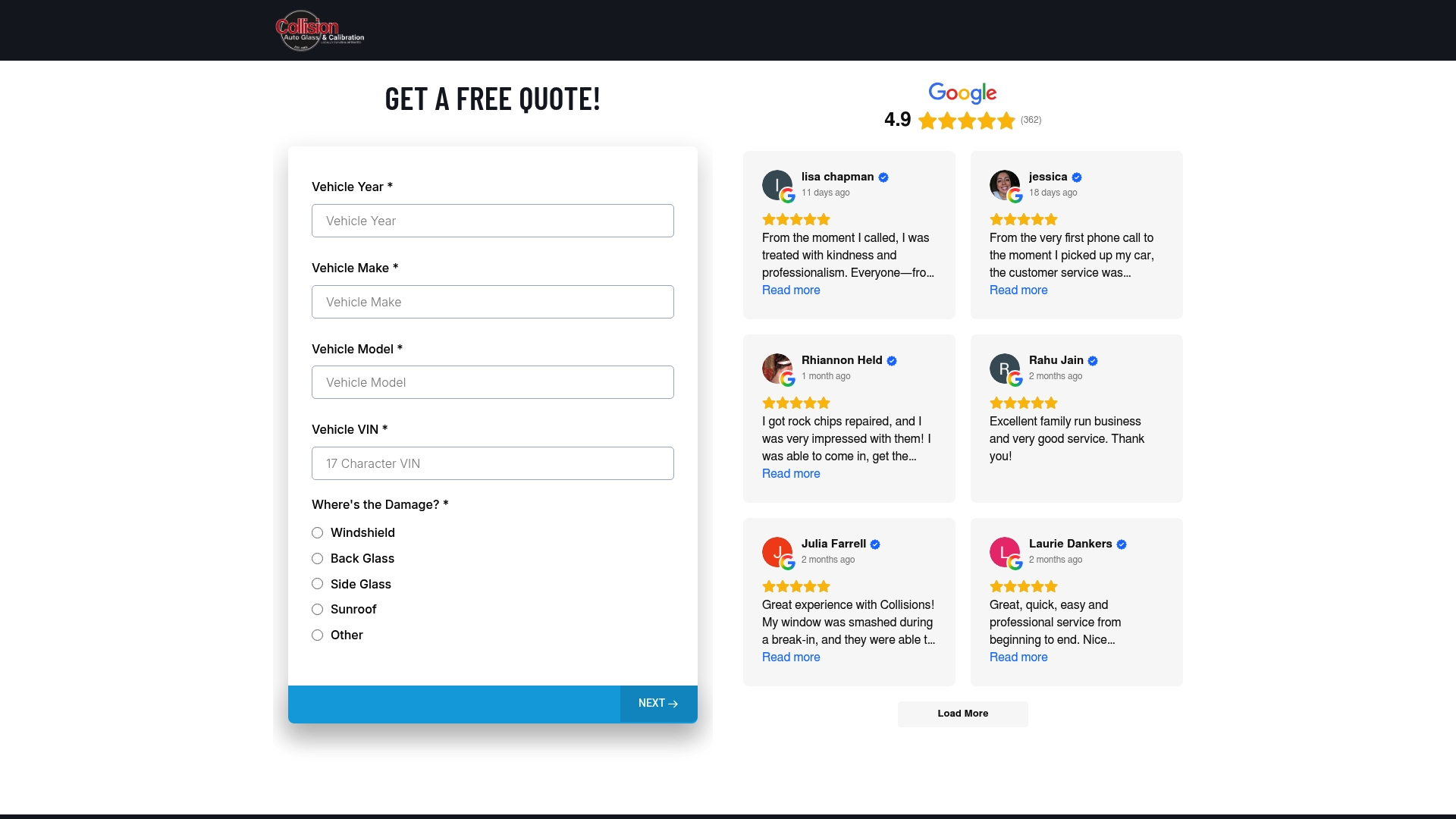
Free mobile installation is sometimes available in certain service areas, allowing a technician to come to your location instead of you waiting in a shop. When booking, it’s helpful to ask whether your insurer’s payout covers calibration, whether mobile service is included, and how billing is handled. If you already know you’re filing a claim, start with a windshield replacement quote and mention your insurance details when you book, the team handles the paperwork from there. Small chip instead? A windshield repair starting at $90 might solve it same-day without touching your deductible at all.
Sources
For deeper reading on coverage rules, state deductible laws, and claim impact on premiums, see Progressive’s windshield damage guide, MoneyGeek’s windshield replacement breakdown, GEICO’s glass claims guide, and State Farm’s explainer on claims and premiums. While you wait on an appointment, safe glass-cleaning steps can help keep visibility clear around existing damage.
This article is general information, not a substitute for advice from a qualified financial advisor. Consult a qualified financial professional about your own circumstances before acting on anything here.
FAQ
Is It Worth Using Insurance for a Windshield?
It’s worth it when your payout after the deductible is meaningfully positive, especially with ADAS recalibration added in, or when you have $0 glass coverage. It’s often not worth it for a small chip that costs less to repair than your deductible.
Will My Insurance Go Up If I Use It to Replace a Windshield?
It depends on your insurer and state, but comprehensive glass claims are generally less likely to trigger a surcharge than an at-fault collision claim. Ask your agent directly, since practices vary by carrier.
What Does a $500 Deductible With Full Glass Mean?
It means your regular $500 deductible applies to most claims, but glass-only claims, like a windshield chip or crack, are covered with no deductible under a full-glass endorsement. Check your policy declarations to confirm you actually carry this add-on.
Will My Car Insurance Pay for a Cracked Windshield?
Yes, in most cases, comprehensive coverage pays for a cracked windshield caused by road debris, weather, or vandalism. It won’t pay if you only carry liability coverage, since that portion of your policy covers damage to other people, not your own vehicle.
Recommended
Share
Recent Posts
September 17, 2026
$600–$1,500 ADAS Costs: When to Use Windshield Insurance vs Pay Cash
Decide whether to file a claim or pay cash by comparing repair cost, your deductible, and ADAS recalibration fees. Learn how shops and...
September 16, 2026
Cut A/C Use 4% With a Solar Coated Windshield
Learn how solar coated windshields cut cabin heat and reduce A/C load, and what to demand at replacement: monogram proof, demetalized patch, and...
September 15, 2026
60–90 Minute Rule: Windshield Replacement in Rain for Drivers
Windshield replacement in rain: usually safe to drive after 60–90 minutes. Avoid car washes 24–72 hours. Confirm ADAS calibration....