
Auto Glass Repair
TL;DR:
- A stress crack appears spontaneously in a windshield without impact and usually needs professional evaluation within 24 hours. It results from thermal shock, poor installation, or frame flex, and poses safety risks by weakening structure and affecting ADAS sensors. Replacement is generally necessary, especially if the crack is at the edge or obstructs the driver’s view, with timely action preventing further damage.
A stress crack is a spontaneous fracture that appears without any rock strike or road debris — and it almost always requires professional evaluation within 24 hours. Unlike an impact crack, a stress fracture in glass spreads from internal or thermal forces rather than a collision point, which means standard resin repair typically won’t hold. If you’re looking at a long, smooth crack that starts near the edge of your windshield and appeared after a temperature swing or a recent installation, you’re likely dealing with a stress crack.
TL;DR: A stress-cracked windshield is a structural and safety issue, not just a cosmetic one. It can weaken roof support, compromise airbag deployment, and interfere with ADAS sensors. Act on it today.
Here’s what to check right now:
- Origin point: Look at where the crack begins. A stress crack typically starts at the edge of the windshield, with no visible pit, chip, or star pattern at the start.
- Is it safe to drive? If the crack crosses the driver’s line of sight, originates at the edge, or has begun to spider, limit driving until a certified technician evaluates it.
- Immediate next step: Photograph the crack from multiple angles in good lighting, note the date and any recent temperature events, and contact a certified auto glass shop to schedule an inspection or windshield replacement.
Table of Contents
- What causes a stress crack in your windshield?
- Why a stress crack is a real safety risk
- When can a stress crack be repaired, and when do you need replacement?
- What will this cost, and will insurance cover it?
- How to reduce the chance of stress cracks
- When should you call a technician, and what should you ask?
- Why a certified shop and ADAS calibration matter
- Key Takeaways
- The case for acting sooner than feels necessary
- Same-day windshield service in Portland from Collision Auto Glass & Calibration
- Useful sources and further reading
- FAQ
What causes a stress crack in your windshield?
The short answer: thermal shock, poor installation, frame flex, and manufacturing defects are the four primary culprits, and they often work together. Industry guidance consistently identifies thermal shock and uneven force distribution from a poorly aligned frame as the leading causes of cracks that appear without any impact.
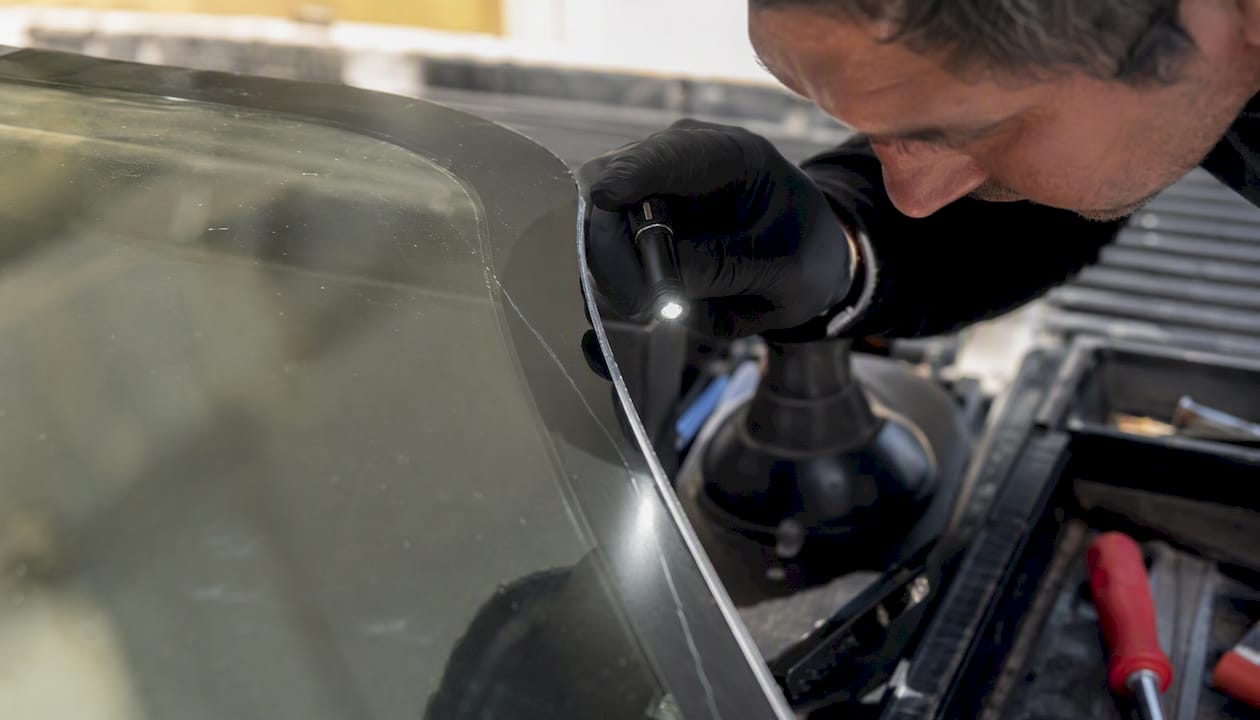
Thermal shock happens when glass expands and contracts unevenly. On a hot summer afternoon, blasting your air conditioning on a sun-baked windshield creates a sharp temperature differential across the glass surface. In winter, running a hot defroster on a frozen windshield does the same thing in reverse. Glass can only flex so much before the stress concentrates at the weakest point, which is almost always the edge.
Installation problems are a less obvious but equally serious cause. If the urethane adhesive wasn’t applied evenly, or if the pinch-weld (the metal channel the glass sits in) wasn’t properly cleaned and primed, the glass sits under uneven mechanical stress from day one. Manufacturing defects, improper installation, and vehicle frame flex can all create conditions that cause stress cracks to appear, sometimes within days of a new installation.
Frame or body stress is worth flagging if your vehicle has been in a collision or if you’ve noticed unusual flex in the body panels. A frame that’s even slightly out of alignment transfers that stress directly to the glass.
Pro Tip: If a crack appears within a week of a new windshield installation, don’t assume it was caused by a rock. Contact the shop immediately and ask them to inspect the pinch-weld, adhesive application, and frame alignment before the warranty window closes.
Why a stress crack is a real safety risk
A stress-cracked windshield is more than a visibility annoyance. A damaged windshield can reduce structural integrity, affecting roof strength in a rollover and impairing airbag performance. The windshield accounts for a significant portion of your vehicle’s cabin rigidity — it’s a structural panel, not just a window.
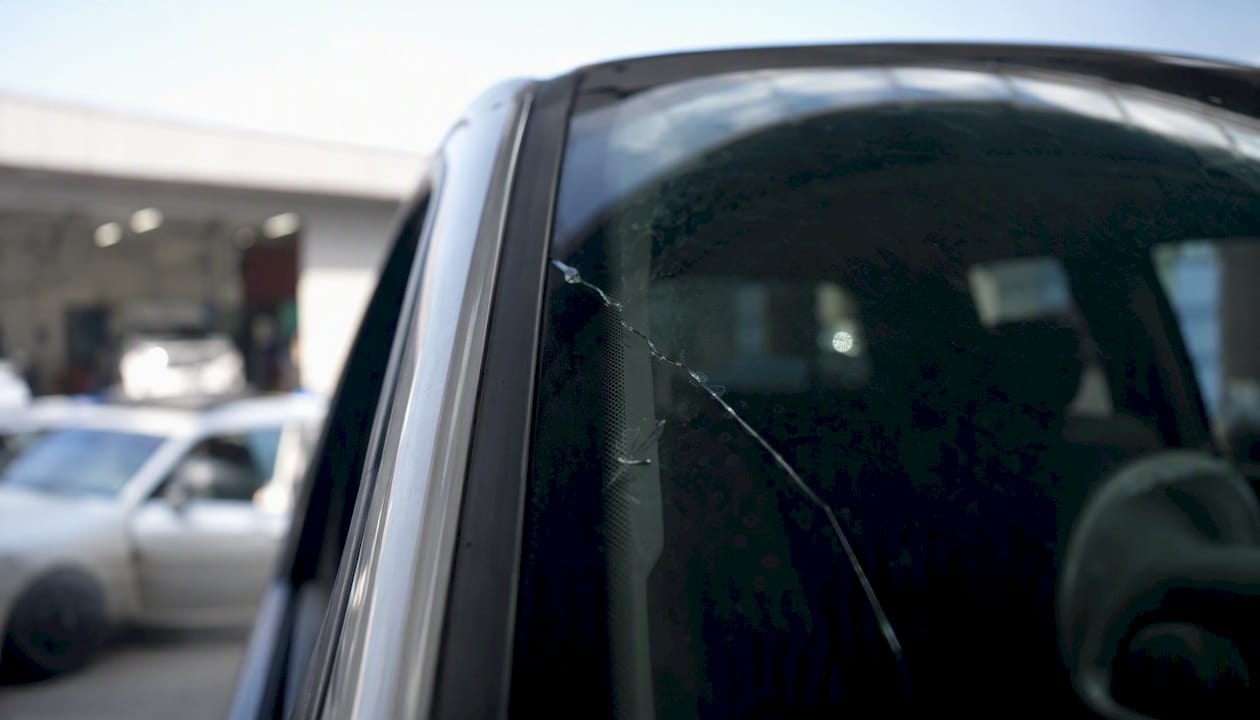
Cracks spread. Temperature swings, road vibration, and moisture intrusion all accelerate propagation. A crack that’s 4 inches long on Monday can reach the opposite edge by Friday if the vehicle sits through a cold night and a hot afternoon. Once a crack crosses the driver’s sightline, it creates glare distortion in rain and at night that can be dangerous, not just inconvenient.
ADAS systems add another layer of urgency. Forward-facing cameras for lane-keep assist, automatic emergency braking, and adaptive cruise control are typically mounted directly behind the windshield. A crack in or near that camera zone can distort the sensor’s field of view. More critically, after any windshield replacement, ADAS calibration is required to realign those sensors to the new glass. Skipping calibration after replacement is one of the most common — and most dangerous — oversights in auto glass service.
Stop driving and arrange immediate service if any of these apply:
- The crack originates at the edge and is longer than 6 inches
- The crack passes through the driver’s primary sightline
- Multiple cracks are present, or the crack has begun to branch
When can a stress crack be repaired, and when do you need replacement?
Stress cracks are often replacement candidates rather than repair candidates. The reason is mechanical: standard resin injection repair works by filling the void left by an impact chip. Stress cracks have no such void — the glass surfaces are in contact along the crack line, so resin has nowhere to bond effectively. Attempted repair may slow spreading temporarily, but it rarely restores structural integrity.
| Criterion | Repair possible | Replacement required |
|---|---|---|
| Origin location | Center of glass, away from edge | At the edge of the glass |
| Length | Under 6 inches (varies by shop) | Longer than 6 inches |
| Driver’s sightline | Outside sightline | Crosses driver’s sightline |
| Depth / layer penetration | Outer layer only | Through inner layer or PVB interlayer |
| Number of cracks | Single crack | Multiple cracks or branching |
| Time since initiation | Recent, stable | Spreading or long-standing |
Replacement is the standard recommendation when a crack is long, originates at the edge, or affects the driver’s sightline. Technicians also factor in whether the crack has reached the inner laminate layer. A windshield is laminated glass — two layers of glass bonded by a polyvinyl butyral (PVB) interlayer. Once a crack penetrates that interlayer, the glass has lost its ability to hold together on impact.
Pro Tip: Ask your technician to check whether the crack has reached the PVB layer before agreeing to a repair attempt. If it has, repair is a temporary measure at best. A certified shop will document this during the assessment and explain the structural implications clearly.
You can also explore the repair vs. replacement decision in detail to understand what factors a technician weighs during a professional assessment.
What will this cost, and will insurance cover it?
Comprehensive auto insurance commonly covers glass damage, including stress cracks, subject to your deductible and policy terms. Whether filing a claim makes financial sense depends on your deductible relative to the repair or replacement cost. Understanding how insurance handles glass claims before you call the shop saves time and prevents surprises.
Windshield repair for a small chip or short crack typically runs $50–$150 out of pocket. Full windshield replacement costs vary more widely. A standard passenger vehicle without ADAS runs roughly $200–$400 for aftermarket glass; OEM-quality glass and vehicles with ADAS camera systems can push that figure to $400–$800 or higher, depending on the make, model, and whether in-house ADAS calibration is included. Mobile service, which eliminates the need to drive a compromised vehicle to a shop, is often available at no additional charge from certified providers.
A few practical notes on claims:
- Glass-only claims under comprehensive coverage typically don’t raise your premium, though this varies by insurer and state.
- Many shops offer direct billing, meaning they handle the paperwork with your insurer directly and you pay only your deductible (or nothing, if your policy includes zero-deductible glass coverage).
- Document everything: photos, dates, the temperature event that preceded the crack, and any recent installation or repair work. This documentation speeds up claim approval.
How to reduce the chance of stress cracks
Control temperature extremes and use certified installers. Those two habits address the vast majority of stress crack causes.
Do:
- Defrost gradually. Use your climate system on low heat first, then increase slowly. Give the glass 5–10 minutes to equalize before blasting the defroster.
- Use a sunshade in summer. Reducing the interior temperature before you start the car lowers the thermal differential when you turn on the AC.
- Park in shade or a garage when temperatures are extreme.
- Repair small chips immediately. A chip is a stress concentration point. Left unrepaired, it becomes the starting point for a crack under the next temperature swing.
- Ask about installer credentials before any glass work. ASE-certified technicians follow established standards for adhesive application and curing times that reduce post-installation stress.
Don’t:
- Pour hot water on a frozen windshield. The thermal shock is severe and the risk of immediate cracking is high.
- Blast cold AC directly at a sun-heated windshield the moment you get in the car.
- Ignore a small chip near the edge. Edge chips are the most common precursor to stress cracks.
- Use a pressure washer directly on the glass, especially in cold weather.
Pro Tip: When scheduling a windshield replacement, ask the shop what urethane adhesive they use and what the minimum drive-away time is. A quality shop uses a fast-cure urethane with a safe drive-away time of 1 hour or less and will tell you exactly when the adhesive has reached full cure strength.
When should you call a technician, and what should you ask?
Call a certified technician immediately if the crack originates at the edge, crosses the driver’s line of sight, involves multiple cracks, or appeared within days of a recent installation. Rapid temperature changes are a leading cause of cracks that seem to appear for no reason, and a technician can confirm whether the cause was thermal, installation-related, or structural.
At the appointment, the shop should inspect:
- The crack’s origin point and whether it reaches the PVB interlayer
- The pinch-weld and frame for corrosion or misalignment
- Any previous repairs that may have weakened the glass
- Whether ADAS calibration is required after replacement
Questions to ask when booking:
- Does the replacement include in-house ADAS calibration, or is it extra?
- Is mobile service available, and is there an additional charge?
- Do you offer direct billing to my insurance company?
- What warranty covers the installation, and does it include a no-leak guarantee?
On the warranty point: a reputable shop will provide written documentation of a lifetime no-leak guarantee on the installation. This covers adhesive failure and water intrusion, not just the glass itself. If a shop can’t produce that in writing, ask why.
Why a certified shop and ADAS calibration matter
Using a certified shop reduces the chance of repeat failures and ensures your ADAS systems remain accurate after replacement. That’s not a marketing claim — it’s a direct consequence of how modern windshields are engineered.
At Collision Auto Glass & Calibration, every replacement begins with a pinch-weld and frame inspection before the new glass goes in. If the frame channel shows corrosion or the previous adhesive wasn’t fully removed, the new installation will sit under stress from the first day. The shop documents adhesive application and curing, and performs in-house ADAS calibration using dedicated calibration equipment rather than sending the vehicle to a dealer or third party.
Collision Auto Glass & Calibration has operated in the Portland area since 2008, offering same-day mobile installation with a lifetime no-leak guarantee on every job. Direct insurance billing means most customers handle the paperwork through the shop rather than navigating the claim process alone. For vehicles with ADAS, the in-house calibration capability is what separates a complete replacement from one that leaves a safety system operating on outdated parameters. Learn more about what happens when ADAS isn’t calibrated after glass work.
Key Takeaways
A stress crack windshield almost always requires replacement rather than repair, and delaying evaluation increases both the safety risk and the likelihood that insurance complications will follow.
| Point | Details |
|---|---|
| Identify the crack type | No impact pit, edge origin, and a long straight line are the three clearest signs of a stress crack. |
| Replacement over repair | Resin injection fails on stress cracks; replacement is the standard recommendation for cracks that originate at the edge or cross the driver’s sightline. |
| ADAS calibration required | Any windshield replacement on a vehicle with driver-assistance systems requires recalibration of forward-facing sensors. |
| Act within 24 hours | Temperature swings and road vibration spread stress cracks quickly; photograph, limit driving, and book an inspection promptly. |
| Collision Auto Glass & Calibration | Offers same-day mobile replacement, in-house ADAS calibration, direct insurance billing, and a lifetime no-leak guarantee in Portland. |
The case for acting sooner than feels necessary
Most drivers who delay windshield replacement do so because the crack looks stable. It rarely stays that way. The physics of laminated glass under repeated thermal cycling and road vibration are unforgiving: a crack that appears to hold for a week can propagate across the full width of the glass in a single cold morning.
What’s often underestimated is the ADAS dimension. Drivers replace their windshield and assume the job is done. But a forward-facing camera that hasn’t been recalibrated to the new glass is operating on assumptions that no longer match the vehicle’s geometry. Lane-keep assist, automatic emergency braking, and adaptive cruise control all depend on that calibration being current. The windshield replacement is the visible part of the job. The calibration is what makes it safe.
The other common misdiagnosis is treating a stress crack as an impact crack and attempting a resin repair. The repair looks fine for a few days, then the crack continues because the underlying stress hasn’t been addressed. A certified technician can distinguish the two in minutes and give you a clear answer on whether repair is even worth attempting.
Same-day windshield service in Portland from Collision Auto Glass & Calibration
When a stress crack means your vehicle needs immediate attention, Collision Auto Glass & Calibration provides same-day mobile windshield replacement with free installation anywhere in the Portland area. No need to drive a compromised vehicle to a shop.
The service includes in-house ADAS calibration, direct billing to your insurance company, and a lifetime no-leak guarantee on every installation. Before your appointment, have your photos, insurance information, and vehicle make, model, and year ready. If the vehicle has had previous glass work, note the shop and approximate date — that history helps the technician assess the pinch-weld and frame condition before the new glass goes in.
Get a quote or book same-day service at Collision Auto Glass & Calibration’s windshield replacement page. For cost estimates on repair versus replacement, the glass replacement cost guide breaks down pricing by vehicle type and service options.
Useful sources and further reading
The sources below informed this guide and are worth reviewing if you want to go deeper on any specific topic.
A note on these references: each one covers a distinct aspect of stress crack identification, causes, or repair criteria. Together they represent the current industry consensus on how to diagnose and handle non-impact windshield fractures.
- What Causes Windshields to Crack Without Impact? – Ceramic Pro
- Can a cracked windshield be repaired? – Nationwide
- Stress Cracks vs. Impact Damage: Windshield Identification Guide – AutoGlassOnWheels
- Windshield stress cracks explained | Glass Inc
- What Is a Stress Crack in Auto Glass? – SLP Auto Glass
- Stress Crack Windshield Issues? Here’s When You Need Repair or Replacement – Kryger Glass
- 7 types of windshield cracks – Parts Infiniti USA blog
FAQ
Can you repair a stress crack in a windshield?
In most cases, no. Standard resin injection repair requires an impact void to bond into; stress cracks have no such void, so repair attempts typically fail or only slow spreading temporarily. Replacement is the standard recommendation for edge-origin or long stress cracks.
How do you tell if a windshield crack is a stress crack?
Look for three things: the crack starts near the edge of the glass, there’s no pit or chip at the origin point, and the line is long and relatively straight. If the crack appeared after a temperature extreme or shortly after installation, that timing strongly supports a stress crack diagnosis.
What is the difference between an impact crack and a stress crack?
An impact crack originates from a specific point where debris struck the glass, usually showing a pit, chip, or star pattern at the center. A stress crack has no impact point, typically starts at the edge, and results from thermal, mechanical, or installation-related forces rather than external debris.
Why does a windshield suddenly crack for no reason?
The most common cause is thermal shock: a rapid temperature change forces the glass to expand or contract unevenly, and the stress concentrates at the weakest point, usually the edge. Poor installation, frame flex, or a preexisting micro-chip near the edge can all trigger the same result without any visible external cause.
Does insurance cover a stress crack windshield?
Comprehensive auto insurance typically covers stress cracks the same way it covers other glass damage, subject to your deductible and policy terms. Many certified shops, including Collision Auto Glass & Calibration, offer direct insurance billing so you don’t have to manage the claim paperwork yourself.
Recommended
- 7 Signs Your Windshield Needs Repair Before It Spreads – Collision Auto Glass & Calibration
- How to Avoid Windshield Damage – Collision Auto Glass
- Why Windshield Crack Spreading Happens and How to Stop It
- How Urgent Is A Cracked Windshield? – Collision Auto Glass & Calibration
🎧 Listen to This Article
Share
Recent Posts

October 15, 2026
Auto Glass Claims: Choose a U.S. Shop Before ADAS Billing Surprises
See how U.S. drivers can choose an auto glass shop for an insurance claim, confirm ADAS calibration, protect their rights, and prevent billing...
October 14, 2026
Fleet Windshield Maintenance: A 20 Minute Repair Can Prevent Days Down
Catch chips early, log the VIN and photos, and require part number and ADAS calibration records to keep fleet vehicles moving and avoid...
October 13, 2026
Calibration After Collision Repair: Ask for Scans Before You Drive
Learn when collision repairs require ADAS calibration, how shops verify the work, and which scan records and paperwork to request before driving....