Auto Glass Repair
Light rain is usually fine once your new windshield reaches its initial set, typically after the adhesive reaches its initial set (approximately 60 to 90 minutes or more, depending on product and conditions), but heavy or driving rain during that early window can wash out the adhesive bead before it grips. The single most important thing to do is follow the minimum drive-away time your installer gave you in writing, and if a downpour hits before that window closes, get the vehicle under cover. When in doubt, call Collision Auto Glass & Calibration or reference AGSC and I-CAR guidance rather than guessing.
TL;DR:
- The adhesive reaches its initial set between 60 to 90 minutes, but heavy rain during this period can displace the uncured bead and cause leaks.
- Light rain after the initial set is generally safe, but heavy rain, car washes, or high-pressure water should be avoided for at least 24 to 72 hours, depending on the adhesive used.
- Properly following manufacturer drive-away times and protecting the windshield with covered parking or a cracked window significantly reduces the risk of leaks and seal failure.
- Mechanical stresses such as slamming doors or running wipers on dry glass can disrupt the curing process, especially within the first 24 hours.
- Conducting a low-pressure hose test after 48 hours helps identify potential leaks early, with prompt re-sealing covered under warranty if needed.
Table of Contents
- Rain After Windshield Replacement: Your Minute-by-Minute Timeline
- How Rain Can Break the Seal on a New Windshield
- What to Do Right Now If It Starts Raining
- Car Wash and Wiper Timing After a New Windshield
- How to Check for Leaks After Your Windshield Is Replaced
- Why Cure Time Also Affects Your ADAS Recalibration
- Collision Auto Glass & Calibration’s Approach to Rain-Day Installs
- Shop Perspective: Rules Worth Memorizing
- Get a Rain-Safe Windshield Install That’s Backed for Life
- Standards and Guides Worth Bookmarking
- Sources
- FAQ
Rain After Windshield Replacement: Your Minute-by-Minute Timeline
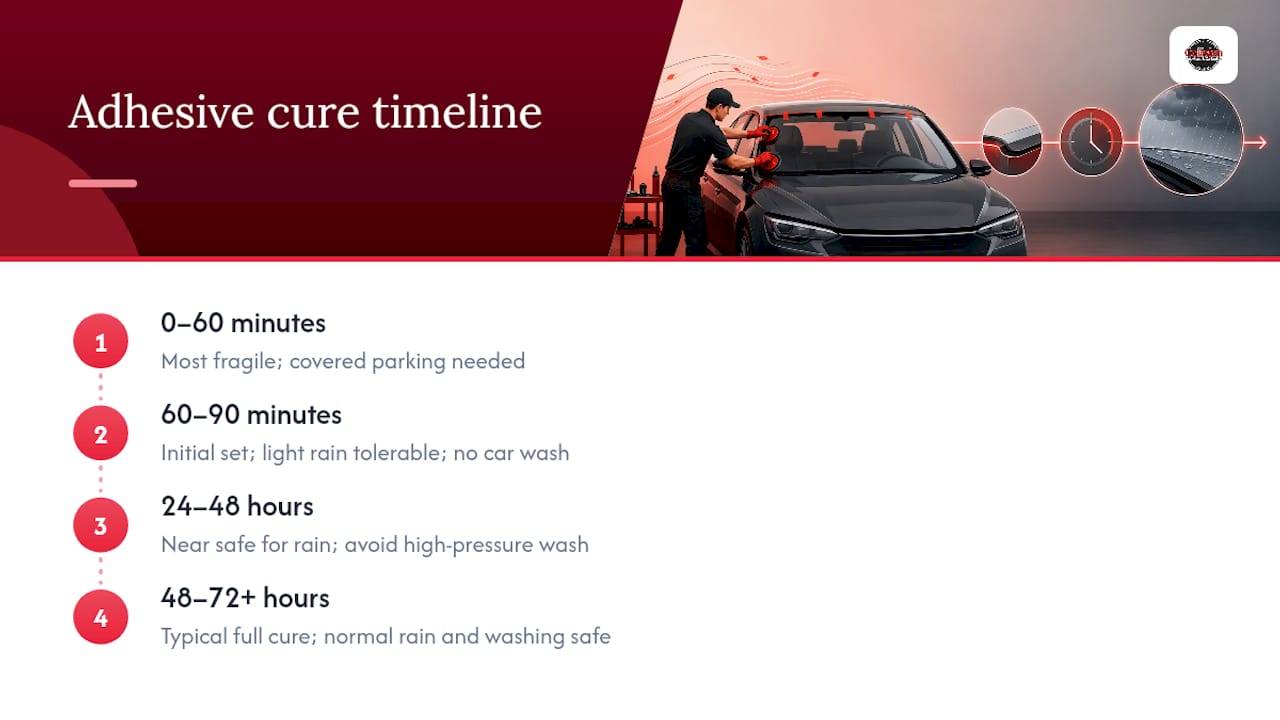
The risk of rain damaging a fresh windshield installation drops sharply the longer the urethane adhesive has to work, but it doesn’t disappear all at once. Think of it in stages, each with its own rules.
The first 60 minutes are the most fragile. The adhesive bead hasn’t built enough strength to resist water pressure, and a hard rain hitting the glass edge can push moisture into a seam that hasn’t closed yet. If you’re still at the shop or just picked up the car, this is when covered parking matters most.
60 to 90 minutes in, most fast-cure urethanes reach what installers call initial set. According to I-CAR’s guidance on minimum driveaway time, fast-cure products may allow safe drive-away in as little as 30 to 60 minutes, while moisture-cured adhesives can require 2 to 8 hours or more. Light rain at this stage is usually tolerable. A car wash or a hard downpour still is not.
The first 24 hours call for a lighter touch generally. Avoid automatic car washes, skip the wipers if the glass is dry, and drive gently, since potholes and hard braking flex the glass against a bond that’s still curing.
24 to 48 hours brings most vehicles close to a safe zone for normal rain exposure, though high-pressure washing is still off the table for many adhesive systems.
48 to 72 hours and beyond is when full cure is typically reached, generally between 24 and 72 hours depending on the product and conditions per I-CAR. At that point, normal rain, regular washing, and everyday driving are safe.
Temperature and humidity shift every one of these windows. Cold, dry weather slows urethane curing considerably; warm, humid air speeds it up. That’s exactly why AGSC standards require installers to reference manufacturer drive-away charts that account for both variables rather than quoting a single blanket number. For a closer look at how installers manage rainy-day jobs specifically, see Collision Auto Glass & Calibration’s guide to the 60 to 90 minute rule.
How Rain Can Break the Seal on a New Windshield
Urethane adhesive doesn’t cure by drying out. It cures by reacting with moisture in the air, which is part of why humidity actually speeds up the process rather than threatening it. The distinction that matters is between initial set, the point where the bead has enough strength to hold the glass in place under normal handling, and full cure, where the adhesive reaches its maximum bond strength.
Rain becomes a problem not because water touches the glass, but because of pressure and disruption. A garden hose trickle is harmless. A driving rainstorm, or worse, a high-pressure wash, can physically disturb an uncured bead, pushing it out of position or forcing water into a seam before the urethane has sealed it shut.
A quick reality check on failure rates: shops that follow AGSC/ANSI AGRSS application standards and honor manufacturer drive-away charts see far fewer callback leaks than shops that skip the paperwork. The standard exists because so many leak complaints trace back to a driver leaving too early, not a bad adhesive batch.
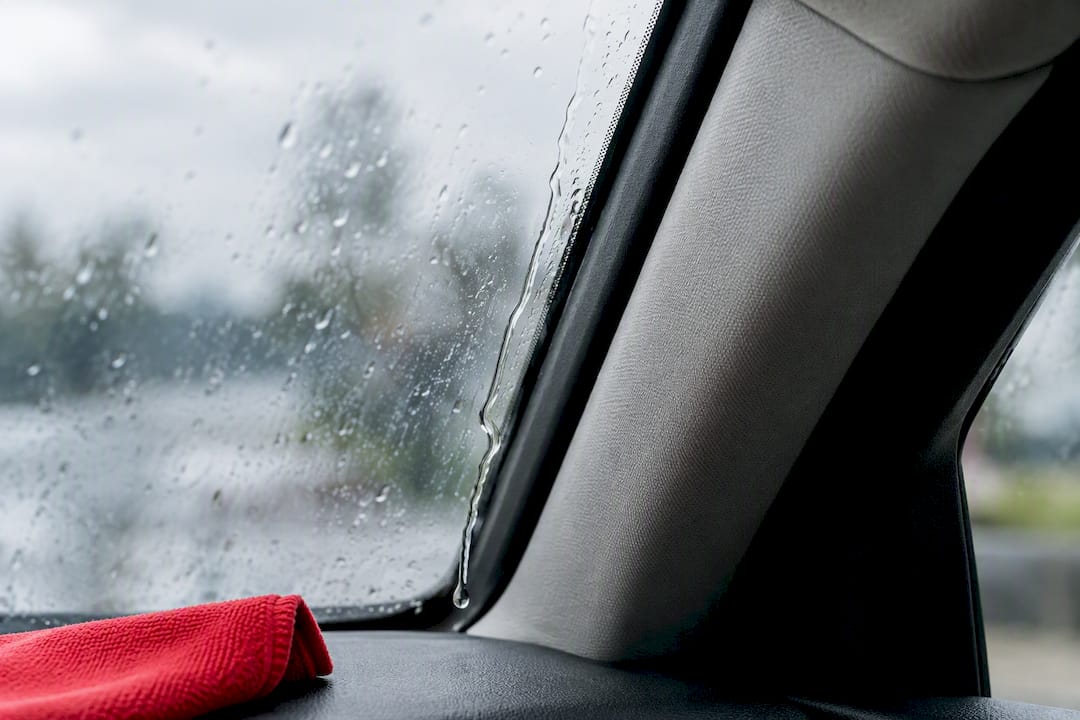
Mechanical stress compounds the risk. Running dry wipers across glass that hasn’t fully bonded, or slamming a door hard enough to pressurize the cabin, can shift a bead that’s still soft. Watch for these warning signs in the days after installation: water tracking down the A-pillar, a damp or discolored headliner, a whistling sound at highway speed near the glass edge, or fogging on the inside of the windshield that keeps coming back. Any one of these points to a seal that needs attention, not just a annoyance to ignore.
What to Do Right Now If It Starts Raining
If rain catches you off guard within hours of your installation, act in this order:
- If you’re still at the shop, ask for covered parking or a short delay before driving off, and get the minimum drive-away time in writing if you haven’t already.
- If you’re on the road or already home, get to covered parking, a garage, carport, or even a gas station canopy, and leave the vehicle still until the initial set window has passed.
- Skip the wipers if the glass is dry or only lightly misted. Running them across a fresh install can drag debris across the bead area or catch on trim that hasn’t fully seated.
- If driving is unavoidable, slow down, avoid deep puddles and potholes, and crack the windows slightly to equalize cabin pressure instead of slamming doors.
- Call your installer if you’re worried, and have three details ready: the exact install time, current weather, and photos of any moisture you’re seeing.
Pro Tip: Cracking a window an inch or two before closing car doors sounds counterintuitive, but it stops the pressure spike that a slammed door sends straight into a curing bead. Mobile installers rely on this trick constantly.
Practical field guidance from mobile technicians backs this up directly. SoCal Mobile Tinting’s installer advice specifically recommends covered parking and cracked windows as the two easiest ways to protect a new install when weather turns unexpectedly.
Car Wash and Wiper Timing After a New Windshield
Washing too soon is one of the fastest ways to undo a good installation, and the safe timeline depends on the method more than the calendar day.
- Hand washing: gentle hand washing is generally fine after 24 hours, but keep the hose or spray nozzle away from the perimeter trim and molding.
- Automatic or high-pressure car washes: wait 48 to 72 hours for most adhesive systems. High-pressure jets are exactly the kind of force that can push water past an uncured bead.
- Wipers: avoid running them on dry or barely damp glass for the first 24 hours. If you need visibility in light rain, a low, gentle speed setting is safer than a fast sweep.
- If you need to clean the glass sooner, use plain water and a soft cloth rather than pressurized spray, and stay off the edges entirely.
For step-by-step wash timing broken out by adhesive type, Collision Auto Glass & Calibration’s guide on waiting 24 to 72 hours before washing covers the specifics. If you want a broader refresher on streak-free glass care once you’re past the cure window, Diamondbrite’s guide to cleaning car glass is a solid reference for technique.
How to Check for Leaks After Your Windshield Is Replaced
Once you’ve cleared the 48-hour mark, it’s worth running a deliberate check rather than waiting to find out the hard way during the next real storm.
- Run a gentle hose test. Use a low-pressure, steady sweep along the entire perimeter of the glass, not a jet setting, and take your time on each side.
- Watch and document. Note any drip location, then check the headliner and A-pillar trim inside the car for dampness or discoloration. Photograph everything with a timestamp.
- Contact your installer immediately if you find moisture. A reputable shop will reseal or redo a defective installation under warranty at no charge to you.
- While you wait for an inspection, place a towel under the affected area to catch drips and avoid parking under trees or sprinklers that could make tracking the source harder.
Industry guidance consistently points to visible leaks occurring soon after installation generally indicate workmanship issues rather than product failure, which is exactly the kind of problem a full windshield replacement warranty should cover.
Why Cure Time Also Affects Your ADAS Recalibration
If your vehicle has a forward-facing camera, lane-keeping assist, or automatic braking, replacing the windshield almost always triggers a need for ADAS recalibration. What surprises a lot of drivers is that this recalibration is tied directly to adhesive cure time, not just to when the glass looks like it’s sitting in place correctly.
Sika’s installer guidance specifically instructs technicians to hold off on recalibration until the adhesive meets its timing requirements. Static calibration, done in a controlled bay with targets, can sometimes proceed once initial set is reached. Dynamic calibration, which requires an actual test drive, should wait until the vehicle has reached full drive-away strength, since road vibration on a soft bond risks reintroducing the exact problem the cure time is meant to prevent.
Ask your installer directly whether they handle calibration in-house or refer you elsewhere, and keep the calibration report with your other paperwork. For more on why this step gets skipped so often and what that risks, see Collision Auto Glass & Calibration’s explainer on ADAS recalibration after windshield replacement.
Collision Auto Glass & Calibration’s Approach to Rain-Day Installs
A local auto glass company has been family-owned and operated since 2008, handling windshield replacement, rock chip repair, and in-house ADAS calibration for various vehicle types. Same-day mobile installation is offered within the Portland area, including covered setups when weather turns unpredictable mid-job.
Installations carry a lifetime no-leak guarantee, with records and adhesive lot traceability to support warranty claims. Direct insurance billing options are available to simplify the claims process. For deeper reading on related timing questions, the ADAS calibration explainer and the guide to windshield replacement duration are both worth a look before your appointment.
Shop Perspective: Rules Worth Memorizing
The rules that actually protect a new windshield are simple enough to remember without writing them down: give it 60 to 90 minutes before treating the glass normally, keep wipers off for a full day, and hold off on any car wash for 48 hours. Hang onto the cure sheet your installer hands you, since it’s specific to your vehicle’s adhesive, not a generic number pulled off the internet. If something looks off, a drip, a stain, a whistle at speed, call for an inspection instead of waiting to see if it gets worse.
— Collision Auto Glass & Calibration
Get a Rain-Safe Windshield Install That’s Backed for Life
A cheap installation that leaks the first time it rains costs you more in comebacks, water damage, and lost time than doing it right the first time. The company provides a lifetime no-leak guarantee, mobile installation within Portland with covered setups when weather turns, and offers in-house ADAS calibration to avoid needing a second shop for calibration after glass installation.
If a recent install is already showing signs of trouble, an A-pillar drip, a musty headliner, a whistle near the trim, don’t wait for the next storm to find out how bad it is. Direct insurance billing is available to make the process straightforward, and job documentation includes adhesive lot numbers for traceability. Get a fast quote or schedule a windshield replacement today, and ask about same-day mobile service built to handle Portland’s unpredictable weather.
Standards and Guides Worth Bookmarking
- ANSI/AGSC AGRSS 005-2022: the installer standard behind drive-away time requirements.
- I-CAR minimum driveaway time guidance: cure ranges by adhesive type.
- Sika auto glass replacement guideline: installer procedures for weather and ADAS timing.
- NuVision’s rain-after-replacement guide: practical troubleshooting signs.
Sources
- ANSI/AGSC AGRSS 005-2022 (AGSC standard)
- I-CAR guidance on minimum driveaway time
- Sika auto glass replacement guideline (2026)
- What Happens If It Rains After Windshield Replacement | NuVision
FAQ
How Long After a Windshield Replacement Can It Get Wet?
Light rain is usually fine once the adhesive reaches initial set, typically after the adhesive reaches its initial set (approximately 60 to 90 minutes or more, depending on product and conditions) for fast-cure urethanes according to I-CAR. Heavy rain or a car wash should wait 24 to 72 hours depending on the adhesive your installer used.
Will an Installer Still Come If It’s Raining?
Most mobile installers can complete jobs in light rain using covered pop-up canopies or by moving the work into a garage bay. Heavy or wind-driven rain sometimes means rescheduling, since a clean, dry bonding surface matters more than convenience.
Will My Insurance Go Up If I Claim for a Windshield?
A single glass claim rarely triggers a rate increase on its own, since most insurers treat windshield damage as a low-risk, comprehensive claim rather than an at-fault incident. Direct billing arrangements simplify the claims process without affecting how the claim is classified.
What Should You Not Do After Getting Your Windshield Replaced?
Avoid automatic car washes and high-pressure spraying for at least 48 hours, skip the wipers on dry glass for the first 24 hours, and don’t slam the doors, since the pressure spike can disturb a curing bead. Also avoid removing any retention tape early or driving on rough roads until you’ve passed the minimum drive-away time your installer specified.
Recommended
- 60–90 Minute Rule: Windshield Replacement in Rain for Drivers
- How Long Does a Windshield Replacement Take?
- How to Properly Care for a New Windshield
- Frequently Asked Questions About Auto Glass Replacement & Repair
🎧 Listen to This Article
Share
Recent Posts

October 15, 2026
Auto Glass Claims: Choose a U.S. Shop Before ADAS Billing Surprises
See how U.S. drivers can choose an auto glass shop for an insurance claim, confirm ADAS calibration, protect their rights, and prevent billing...
October 14, 2026
Fleet Windshield Maintenance: A 20 Minute Repair Can Prevent Days Down
Catch chips early, log the VIN and photos, and require part number and ADAS calibration records to keep fleet vehicles moving and avoid...
October 13, 2026
Calibration After Collision Repair: Ask for Scans Before You Drive
Learn when collision repairs require ADAS calibration, how shops verify the work, and which scan records and paperwork to request before driving....