Auto Glass Repair
TL;DR:
- OEM glass is manufactured to vehicle-specific specifications, while aftermarket glass is produced by third-party suppliers using reverse-engineered standards. For vehicles with advanced driver-assistance systems, OEM and high-quality OEE glass ensure better calibration and safety; aftermarket options may cause optical distortions and calibration failures. Portland providers offering certified installation and ADAS calibration give drivers reliable options, especially for newer or leased vehicles.
What’s the real difference between OEM and aftermarket auto glass?
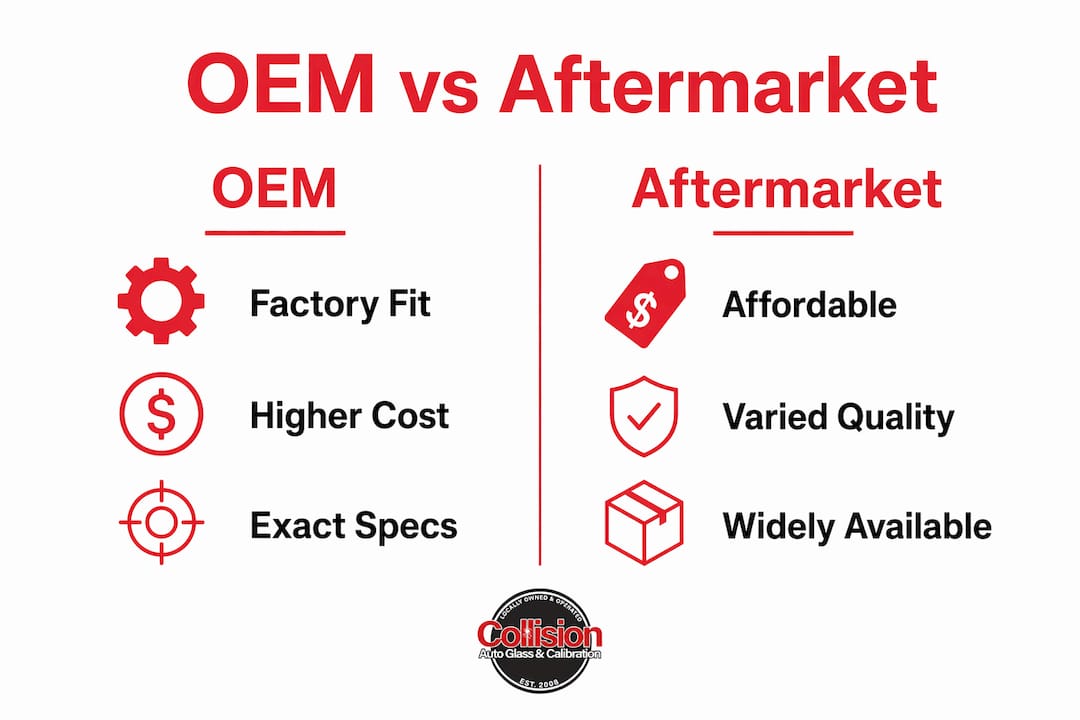
For Portland drivers, the short answer is this: OEM glass is manufactured to your vehicle’s original factory specifications, while aftermarket glass is produced by third-party suppliers who must reverse-engineer those specs. Both must meet federal FMVSS 205 safety standards, but that federal floor is not a ceiling. OEM glass is built to tolerances within ±0.1mm thickness and 0.5mm curvature variance. Aftermarket glass may allow twice that deviation, which matters far more on a 2023 Subaru with EyeSight cameras than on a 2009 Civic.
| Feature | OEM Glass | OEE Glass | Aftermarket (ARG) |
|---|---|---|---|
| Manufactured by | Original factory supplier | Tier 1 supplier (e.g., Pilkington) | Third-party, reverse-engineered |
| Tolerances | ±0.1mm thickness | Near-OEM | ±0.2mm or wider |
| ADAS compatibility | Guaranteed | Usually acceptable | Variable, often problematic |
| Automaker logo | Yes | No | No |
| Typical price range | Higher price range | Moderate price range | Lower price range |
| Best for | New vehicles, ADAS, leases | Standard ADAS vehicles | Older vehicles, side/rear glass |
Portland providers offering mobile service and ADAS calibration:
- Collision Auto Glass & Calibration — SIKA/DOW/AGRSS-certified, lifetime no-leak guarantee, free mobile service, in-house ADAS calibration
- VisionGuard Auto Glass & Mobile Calibration — Free mobile service throughout Portland, ADAS calibration
- MS Glass Outlet — Pricing from $98, lowest price guarantee, ADAS calibration
- Dr Glassman Repair — 24-hour availability, $0 out-of-pocket in many cases
- Glass America of Portland — OEM-quality glass, free nationwide lifetime warranty
Table of Contents
- How OEM, OEE, and aftermarket glass are actually made
- What does OEM vs aftermarket glass actually cost in Portland?
- How Portland’s weather and roads affect your glass choice
- What happens during a windshield replacement and ADAS calibration?
- Post-installation care that protects your investment
- Top Portland auto glass providers: OEM and aftermarket options compared
- How to decide between OEM and aftermarket glass for your vehicle
- Why Collision Auto Glass & Calibration earns Portland drivers’ trust
- Same-day windshield service with a lifetime guarantee in Portland
- Key Takeaways
- FAQ
How OEM, OEE, and aftermarket glass are actually made
The distinction between glass types comes down to manufacturing access. OEM glass is produced using the automaker’s proprietary molds and engineering drawings, often on the same production lines as factory glass. Suppliers like Pilkington, Saint-Gobain, AGC, and Carlex build to exact specifications, including specialized PVB interlayers for acoustic performance and high-transmission low-iron formulations for sensor accuracy.
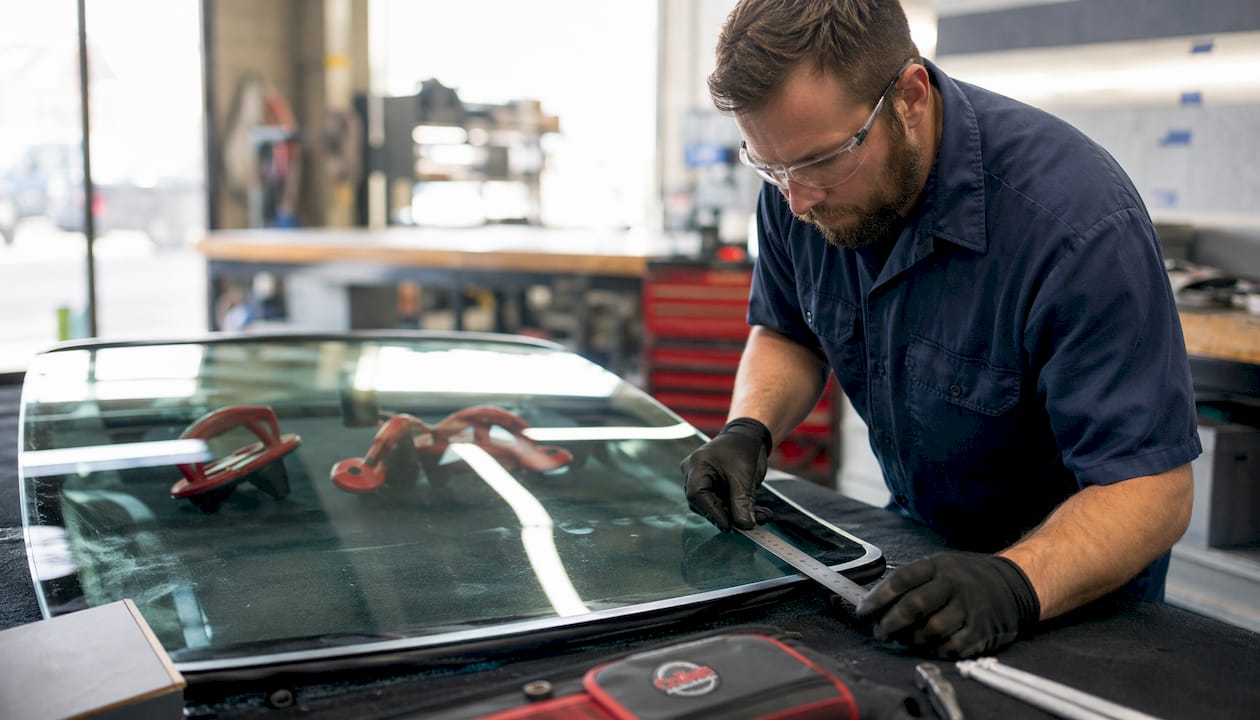
OEE (Original Equipment Equivalent) glass occupies a middle tier. It’s made by the same Tier 1 suppliers but sold to the aftermarket rather than directly to automakers. Because OEE manufacturers may use different tooling to avoid contractual issues, the glass lacks the automaker’s logo and may not include pre-installed camera brackets. For most vehicles with a single forward-facing ADAS camera, quality OEE glass is acceptable when calibration succeeds.
Aftermarket Replacement Glass (ARG) is where quality diverges sharply. Without access to original CAD files, ARG manufacturers measure an existing windshield to create their molds, introducing margin-of-error at every step. Lower-tier ARG may use thinner glass or standard PVB instead of acoustic PVB. The practical result: optical distortion in peripheral zones, inconsistent wiper contact, and ADAS calibration failures that force shops to remove the glass and start over.
- All replacement glass must carry DOT certification per FMVSS 205
- OEM glass exceeds federal minimums for vehicle-specific structural and optical demands
- ARG tolerances of ±0.2mm can cause wind noise, poor adhesive bonds, and sensor misreads
- GM, Ford, Hyundai, and Subaru have each issued position statements against non-OEM glass for ADAS vehicles
- Subaru EyeSight stereo cameras are particularly sensitive: aftermarket optical distortion destroys depth perception calibration
What does OEM vs aftermarket glass actually cost in Portland?
OEM glass typically costs more than quality aftermarket alternatives, and that gap widens on luxury or ADAS-heavy vehicles. A standard sedan windshield might cost noticeably more for OEM compared to aftermarket glass. Add ADAS calibration costs and the total picture changes significantly.
| Cost Factor | OEM | Quality Aftermarket (OEE) | Budget ARG |
|---|---|---|---|
| Glass cost | $300–$700+ | $200–$500 | $100–$350 |
| ADAS calibration | $150–$400 | $150–$400 | May require repeat calibration, which can increase costs |
| Warranty risk | None | Low | Possible manufacturer denial |
| Insurance coverage | Often covered | Usually covered | Usually covered |
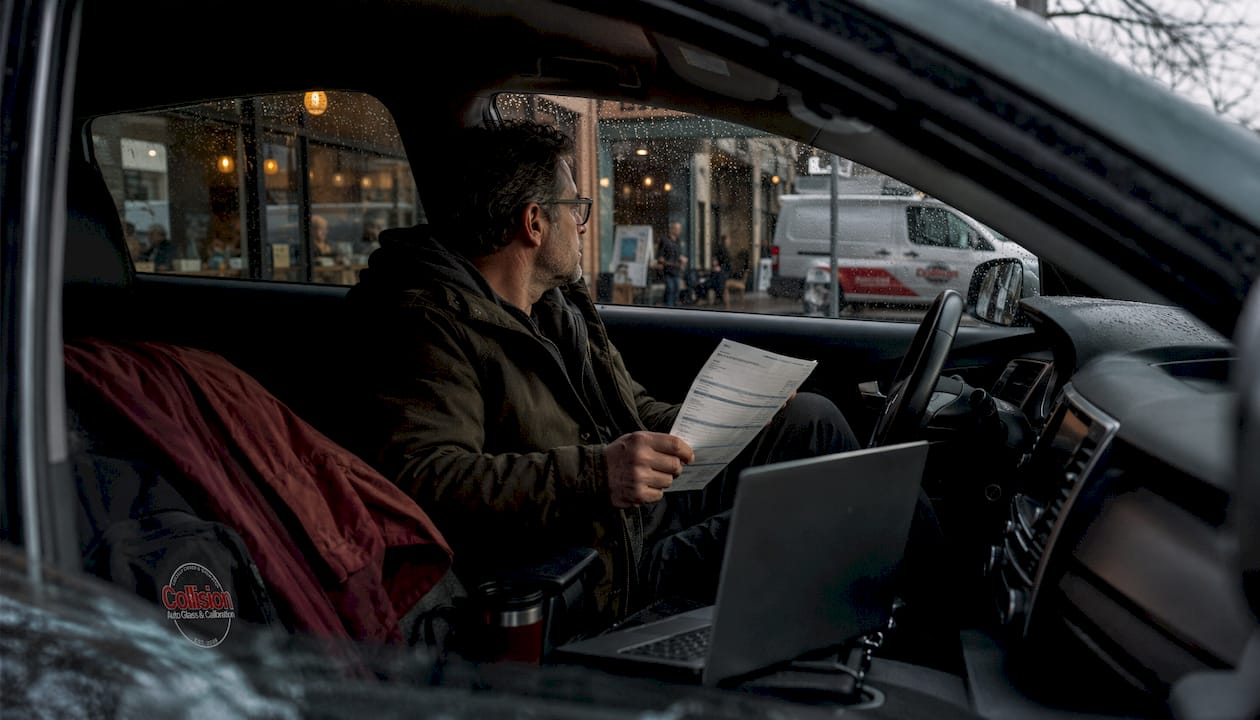
Most insurance policies cover OEM or equivalent glass, but warranties and leases frequently require OEM to avoid denial of electronic system claims. If your vehicle is under three years old or leased, using non-OEM glass can trigger warranty disputes, particularly for ADAS-related repairs. Always request an itemized quote that separates glass brand, moldings, adhesive type, and calibration method.
- Ask whether calibration is static or dynamic, and confirm it’s included in the quoted price
- MS Glass Outlet starts at $98 for some services and offers insurance claims support
- Collision Auto Glass & Calibration provides direct insurance billing, removing the reimbursement hassle
- Windshield replacement costs in Portland vary by vehicle make, glass type, and calibration requirements
How Portland’s weather and roads affect your glass choice
Portland’s climate creates specific demands that drivers in drier markets don’t face. The city averages over 140 rainy days per year, and that persistent moisture affects both sealant performance and the urgency of chip repairs. A small rock chip that might stay stable in Phoenix can spread quickly in Portland’s wet, temperature-variable conditions.
Urban driving on I-205, I-84, and surface streets adds consistent chip risk from gravel and road debris. Temperature swings between cold wet winters and warm dry summers stress glass adhesion at the edges, particularly when installation timing or adhesive cure wasn’t managed correctly.
- Wet conditions accelerate crack propagation from untreated chips
- Urethane adhesive requires proper cure time before the vehicle is driven in rain
- OEM glass’s tighter dimensional tolerances produce a more reliable seal against Portland’s persistent moisture
- Quality aftermarket glass from reputable suppliers performs adequately in most conditions when installed correctly
What happens during a windshield replacement and ADAS calibration?
A proper replacement involves more steps than most drivers expect. The technician removes the damaged glass, cleans and preps the pinchweld, applies OEM-grade urethane adhesive, and seats the new glass with correct moldings. That sequence matters as much as the glass itself.
reduce repeat failures more reliably than glass brand alone.
ADAS calibration comes after the adhesive cures. Static calibration uses a fixed target board in a controlled environment; dynamic calibration requires driving the vehicle at specific speeds while onboard software recalibrates the camera. Some vehicles require both. The ADAS calibration process must be completed before the vehicle is returned to normal use.
- Removal: old glass cut out, pinchweld inspected and cleaned
- Adhesive: OEM-grade urethane applied to correct depth and profile
- Installation: glass seated with proper moldings and clips
- Cure: minimum safe drive-away time observed before calibration
- Calibration: static, dynamic, or both depending on vehicle system
- Verification: camera function confirmed before vehicle handoff
Post-installation care that protects your investment
The first 24 hours after installation are the most critical. Urethane adhesive needs time to cure fully, and stressing the seal too early, whether by slamming doors, running through a car wash, or driving on rough roads, can compromise the bond.
- Avoid car washes for at least 24–48 hours after installation
- Leave one window slightly open for the first day to equalize cabin pressure
- Use a clean microfiber cloth and automotive glass cleaner; avoid ammonia-based products near tinted glass
- Inspect the edges monthly for lifting, bubbling, or moisture intrusion
- Address rock chips promptly. A chip smaller than a quarter can usually be repaired without full replacement, saving both cost and calibration time
- Keep the warranty documentation from your installer; a lifetime no-leak guarantee is only useful if you know how to claim it
Top Portland auto glass providers: OEM and aftermarket options compared
| Provider | Service Offerings | Pricing & Guarantees | Mobile Service | ADAS Calibration | Rating |
|---|---|---|---|---|---|
| Collision Auto Glass & Calibration | Windshield, rock chip, side/rear, RV, fleet | Lifetime no-leak guarantee, direct insurance billing | Free, Portland area | In-house, static & dynamic | 4.9★ (362) |
| VisionGuard Auto Glass & Mobile Calibration | Windshield replacement, ADAS calibration | No hidden mobile charges | Free, Portland area | Yes | 4.8★ (2060) |
| MS Glass Outlet | Auto & commercial glass, ADAS calibration | From $98, lowest price guarantee | Yes, same-day | Yes | 4.7★ (1293) |
| Mobile Auto Glass | Windshield repair & replacement | Not publicly listed | Yes, Portland metro | Not listed | 4.6★ (698) |
| Dr Glassman Repair | Windshield, ADAS recalibration | $0 out-of-pocket in many cases | Free, 24-hour | Yes | 4.7★ (350) |
| Five Stars Auto Glass Llc | Windshield repair & replacement | Free quotes | Yes, same-day | Not listed | 4.7★ (310) |
| Glass America of Portland | Windshield, ADAS calibration | Free nationwide lifetime warranty | Free, Portland & Albany | Yes | 4.8★ (277) |
| Action Auto Glass | Full glass, sunroof, mirrors, RV, farm equipment | Free estimates | Yes | Yes (recalibration) | 4.6★ (252) |
| Auto Glass USA | Windshield replacement, mobile service | Not publicly listed | Yes | Not listed | 5★ (68) |
Collision Auto Glass & Calibration is the strongest choice for Portland drivers whose vehicles carry ADAS systems or are under manufacturer warranty. SIKA and DOW Automotive certification, AGRSS compliance, and in-house static and dynamic calibration mean the entire job, glass and sensor verification, is handled under one roof with a lifetime no-leak guarantee.
VisionGuard Auto Glass & Mobile Calibration covers the Portland area with free mobile service and ADAS calibration, making it a practical option for drivers who need convenience without hidden fees.
MS Glass Outlet suits budget-conscious drivers. Its lowest price guarantee and pricing starting at $98 make it competitive, particularly for older vehicles or side glass where ADAS compatibility is not a factor.
Glass America of Portland stands out for its free nationwide lifetime warranty and explicit use of OEM-quality glass, a meaningful differentiator for drivers who move frequently or want long-term coverage.
Action Auto Glass, operating since 1988, handles a broader range of vehicle types including RVs, farm equipment, and commercial trucks, making it the practical choice for non-standard vehicles.
Dr Glassman Repair offers 24-hour availability and handles insurance directly, with $0 out-of-pocket in many cases. Five Stars Auto Glass Llc and Mobile Auto Glass are solid mobile options for straightforward repairs. Auto Glass USA serves diverse vehicle types with mobile flexibility.
How to decide between OEM and aftermarket glass for your vehicle
The decision comes down to three factors: your vehicle’s age, whether it has active ADAS systems, and your warranty or lease status.
- Vehicle under 3 years old or leased: OEM glass is the right call. Manufacturers including GM, Ford, and Hyundai explicitly warn that non-OEM glass may void ADAS-related warranty coverage.
- ADAS-equipped vehicle (any age): OEM or verified OEE from a Tier 1 supplier. Budget ARG risks calibration failure, which doubles labor costs.
- Older vehicle without active safety systems: Quality aftermarket glass from a reputable supplier is a reasonable, cost-effective choice.
- Side and rear tempered glass: Aftermarket is generally acceptable here; optical demands are lower than for windshields.
- Verify installer certifications: Look for AGRSS membership, SIKA or DOW Automotive certification, and ask specifically whether calibration is included and what type.
Pro Tip: Always request an itemized quote that lists the glass brand by name, molding type, adhesive grade, and calibration method separately. A quote that bundles everything into one line makes it impossible to verify what you’re actually getting.
For more guidance on choosing the right auto glass shop, look beyond price to certifications and warranty terms.
Why Collision Auto Glass & Calibration earns Portland drivers’ trust
Collision Auto Glass & Calibration has operated as a family-owned Portland business since 2008, and the certifications behind that track record are specific: SIKA and DOW Automotive certified installation, full AGRSS compliance, and in-house ADAS calibration using both static and dynamic methods. That combination means the shop doesn’t outsource the most technically demanding part of the job.
The lifetime no-leak guarantee covers every installation, not just windshields on newer vehicles. Direct insurance billing removes the reimbursement paperwork that frustrates many drivers. Same-day service with free mobile installation within Portland means the repair fits your schedule, not the other way around.
For Portland drivers weighing glass type, the installer’s certification often determines the outcome more than the glass brand alone. A properly calibrated OEE windshield installed by a certified technician outperforms an OEM windshield installed without post-replacement sensor verification.
Same-day windshield service with a lifetime guarantee in Portland
Portland drivers dealing with a cracked windshield or a chip that’s spreading have a direct path to a complete, certified repair. Collision Auto Glass & Calibration offers same-day service, free mobile installation throughout Portland, and direct insurance billing that removes the paperwork from your plate entirely.
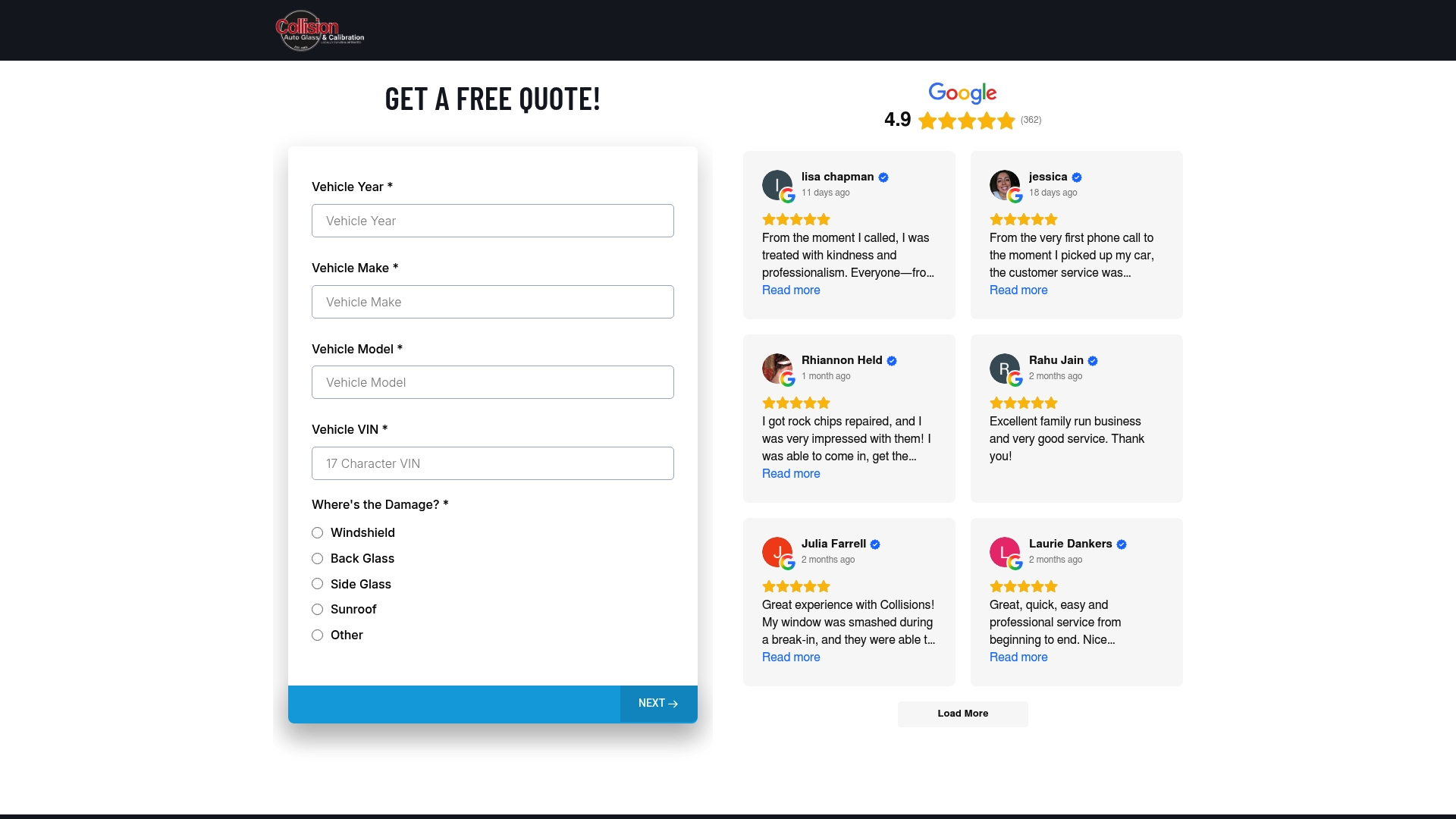
What sets Collision Auto Glass & Calibration apart from the providers compared above is the combination of SIKA/DOW/AGRSS certification, in-house ADAS calibration, and a lifetime no-leak guarantee on every job. You’re not choosing between cost and quality. You’re getting a certified install backed by 17 years of Portland service. Check your auto glass replacement and repair questions or get a quote directly at collisionautoglass.com.
Key Takeaways
For ADAS-equipped vehicles, OEM or verified OEE glass installed by a certified technician is the only reliable path to full safety system function and warranty protection; learn more about why wiper blade quality matters for safer, clearer driving at GWC Wipers.
| Point | Details |
|---|---|
| OEM tolerances matter for ADAS | OEM glass is built to ±0.1mm thickness; aftermarket may allow ±0.2mm, causing calibration failures. |
| FMVSS 205 is a floor, not a standard | All glass meets federal minimums, but OEM exceeds them for vehicle-specific optical and structural demands. |
| Warranty and lease implications | Using non-OEM glass on leased or newer vehicles can trigger manufacturer warranty denials for ADAS systems. |
| Installer certification is decisive | Certified installation and calibration reduce repeat failures more reliably than glass brand alone. |
| Collision Auto Glass & Calibration | SIKA/DOW/AGRSS-certified Portland provider with lifetime no-leak guarantee, in-house ADAS calibration, and free mobile service. |
FAQ
Are aftermarket windshields just as good as OEM?
Quality OEE glass from Tier 1 suppliers is acceptable for most standard ADAS vehicles when calibration succeeds, but budget aftermarket glass with wider tolerances frequently causes optical distortion and calibration failures on modern vehicles.
Does Safelite use OEM or aftermarket glass?
Safelite typically installs aftermarket glass by default; customers can request OEM glass, though they may pay the cost difference out of pocket depending on their insurance policy.
What is the price difference between OEM and aftermarket windshields?
OEM glass generally costs more than quality aftermarket alternatives. In Portland, that typically means $300–$700+ for OEM versus $200–$500 for OEE, before calibration is included.
Is Safelite OEE glass as good as OEM?
OEE glass from reputable Tier 1 suppliers closely matches OEM quality standards, but it may use different tooling and lacks the automaker’s logo and pre-installed brackets, which can affect ADAS calibration on sensitive systems like Subaru EyeSight.
When should I insist on OEM glass?
OEM glass is advisable for vehicles under three years old, leased vehicles, any car with stereo ADAS cameras (particularly Subaru EyeSight), and HUD-equipped models where optical precision directly affects display accuracy.
Recommended
- Why Is Glass Repair So Expensive in Lake Oswego, OR? – Collision Auto Glass & Calibration
- How Much Does Car Glass Repair Cost? – Collision Auto Glass & Calibration
- How much does it cost to replace a windshield? – Collision Auto Glass & Calibration
- Can Broken Car Glass Be Repaired? – Collision Auto Glass & Calibration
Share
Recent Posts
October 15, 2026
Auto Glass Claims: Choose a U.S. Shop Before ADAS Billing Surprises
See how U.S. drivers can choose an auto glass shop for an insurance claim, confirm ADAS calibration, protect their rights, and prevent billing...
October 14, 2026
Fleet Windshield Maintenance: A 20 Minute Repair Can Prevent Days Down
Catch chips early, log the VIN and photos, and require part number and ADAS calibration records to keep fleet vehicles moving and avoid...
October 13, 2026
Calibration After Collision Repair: Ask for Scans Before You Drive
Learn when collision repairs require ADAS calibration, how shops verify the work, and which scan records and paperwork to request before driving....