
Auto Glass Repair
A crack in your line of sight is the one kind of windshield damage that is judged by stricter rules than any other. The repair standard used across the glass industry limits what can be repaired in front of the driver, and the safety case for replacing is stronger there. Damage larger than about one inch, or sitting close to another repair, usually means a new windshield. A small, clean chip may still be fixable. Below we explain how the line of sight is defined, what the size limits are, what the law and your insurer say, and how to decide.
TL;DR
- The industry standard calls your line of sight the Driver’s Primary Viewing Area (DPVA): a 12-inch-wide strip centered on the driver, running the height of the wiper sweep.
- Repair in the DPVA is not recommended for damage over 1 inch, a finished pit over 3/16 inch, or a repair within 4 inches of another repair.
- Cracks that reach both glass layers, or that come from three or more long cracks off one impact, point to replacement wherever they sit.
- Cameras behind the windshield add another rule: many vehicle makers ban repair near them, and a new windshield then needs ADAS calibration.
- Many comprehensive policies cover glass, and some states waive the deductible. Check your policy before you book.
Table of Contents
- What counts as your line of sight
- Is it safe to drive with a crack in your line of sight?
- Repair or replace: the ROLAGS limits
- Cameras and ADAS: the extra rule most drivers miss
- What the law says about cracked windshields
- Does insurance cover a line-of-sight crack?
- What to do the day you notice the crack
- Our perspective
- Get it looked at today
- FAQ
- Sources
What counts as your line of sight
People use “line of sight” loosely, but the glass industry has a precise term. The Repair of Laminated Auto Glass Standard, known as ROLAGS 002-2022, defines the Driver’s Primary Viewing Area as a 12-inch-wide area, centered on the driver’s position, that extends from the top to the bottom of the wiper sweep.

Picture a vertical band directly in front of the steering wheel. Whatever sits inside that band is the damage you look through or around every second you drive. On a left-hand-drive car, that band is on the left half of the glass, not at the center where the mirror hangs.
This matters for two reasons. First, your eyes are constantly scanning that band for brake lights, pedestrians and lane lines. Second, a repair, however good, is not optically perfect. Resin fills the damage and stops it from spreading, but a faint mark can remain. ROLAGS notes that repair done by a trained professional can usually improve optical clarity, stop damage from spreading and keep the original factory bond. Improving clarity is not the same as restoring it entirely, which is why the standard is stricter in the band you stare through.
The standard also gives a reason for caution about close repairs. Two repairs near each other in this area may create a blind spot, because your vision cannot compensate when both eyes are obstructed in the same place.
Is it safe to drive with a crack in your line of sight?
Short answer: it is not advisable, and in many places it is likely illegal if the crack impairs your vision. Insurance industry guidance describes a damaged windshield as a serious safety hazard that can compromise the vehicle’s structural stability.
There are two separate problems.
Visibility. A crack in front of you can bend and scatter light. At night, oncoming headlights hit the crack and flare. At sunrise or sunset, low sun lights up every line in the glass. If you find yourself leaning to look around the damage, that is the sign it is already interfering.

Structure. The windshield is not just a window. The same source explains that it helps support the roof in a rollover or other collision, and that a crack can worsen over time. A crack that begins at a small point can run across the glass after a bump, a pressure wash or a cold morning with the defroster on high. Our own guide explains why windshield cracks spread and how to slow them.
If the crack is long and you have a trip ahead, treat it as a repair appointment, not a gamble. A four-hour highway drive gives vibration and temperature swings plenty of time to extend the damage.
Glare makes line-of-sight damage worse
Damage in the DPVA is hardest to live with in strong light. Some drivers reduce sun glare at the top of the glass with a windshield tint strip, which is worth considering once your glass is sound. It does not make a cracked windshield safe, and it does not change whether the crack needs repair or replacement.
Repair or replace: the ROLAGS limits
The decision comes down to size, depth, position and what else is nearby. For damage in the DPVA, ROLAGS does not recommend repair when any one of these is true:
| Condition in the DPVA | Why it matters | Result |
|---|---|---|
| Damage diameter larger than 1 inch (25 mm) | Too large to restore clarity reliably | Replace |
| Finished pit larger than 3/16 inch (5 mm) | A visible mark remains in your view | Replace |
| Repair within 4 inches (100 mm) of another repair | Combined marks can form a blind spot | Replace |
The same standard also recommends replacement, anywhere on the glass, for damage that goes through both layers of the laminated glass and for three or more long cracks coming from one impact.
These are the thresholds a careful technician works from. Outside the DPVA, the allowed repair sizes are more generous. Our article on how ROLAGS and technicians decide repairs by crack length walks through those cases.
A quick self-check
Before you call, check these four things:
- Where is it? Sit in the driver’s seat and note whether the damage falls inside the band in front of the wheel.
- How big is it? A coin about an inch across is a handy reference. A dollar coin is a little over that, so anything larger than a quarter-sized area deserves a professional look.
- Is it alone? Look for earlier repairs within 4 inches.
- Has it grown? Mark the end of the crack with a small piece of tape on the outside, and check it the next day.
If any answer is worrying, do not wait to see how it develops.
Repair is still the right call for the right chip
A small chip in the DPVA that is under an inch, clean and recent can sometimes be fixed. The sooner it is filled, the less dirt and moisture get in, and the better the result. Our windshield repair service is listed at $90, and our rock chip repair page explains what we can fix. Whether a particular chip qualifies is the technician’s call after seeing it, and if it falls outside the limits above, we will say so and quote a replacement.
Trying a store-bought resin kit on a line-of-sight chip is a poor bet, as the repair is permanent and the resin can leave a visible mark that makes a later professional repair harder. We cover that in can a DIY repair prevent further cracking.
Cameras and ADAS: the extra rule most drivers miss
Many newer vehicles carry a camera behind the windshield, usually near the mirror, for lane keeping, automatic braking and adaptive cruise. That changes the repair question, because vehicle makers can set their own rules.
As one example, a Subaru service bulletin for EyeSight prohibits glass repair within defined areas if the damage could interfere with the stereo cameras, and calls for replacement with original equipment glass. Other makers have their own zones. If your damage is near the camera, a repair may be off the table at any size. Read more in chip near an ADAS camera: OEM rules can ban repair.
The second half of that rule applies after replacement. A new windshield changes the camera’s view of the road by a small amount, and the system needs to be recalibrated so it reads distances correctly. Our in-house ADAS calibration is done by our team on site, so the glass and the calibration happen in one place. If you want to understand the risk of skipping it, see what happens if ADAS is not calibrated.
What the law says about cracked windshields
There is no single national rule for private cars. State laws vary: most prohibit damage that impairs the driver’s vision, and some set size or location criteria. Oregon drivers should check current Oregon rules and the inspection requirements that apply to their situation, and a police officer can ticket obstructed vision wherever it is judged to be a hazard.
Two examples show how specific the rules can get.
- Commercial vehicles. Federal regulation 49 CFR 393.60 requires the windshield to be free of damage in a defined area above the steering wheel, excluding a 2-inch border at the top and a 1-inch border at each side. The rule allows any crack that is not intersected by another crack, and damage covered by a 3/4-inch disc if it is at least 3 inches from other similar damage. Fleet managers should treat this as the minimum their drivers are held to.
- State inspection rules. A Missouri inspection rule amendment, for instance, defined the driver’s vision area as the area within the normal wiper sweep above a line four inches from the bottom of the windshield, and proposed rejecting vehicles with cracks over 3 inches there. That is one state’s approach, not a national standard.
As for who sets repair methods, NHTSA has said in an interpretation letter that it does not specify when or how repairs are conducted, and focuses on performance standards for equipment. In practice, the industry relies on ROLAGS and the vehicle maker’s own instructions. If you drive a motorhome, our guide on federal rules and ADAS for RV windshield cracks covers the extra considerations. For inspections, see will a cracked windshield pass inspection.
Does insurance cover a line-of-sight crack?
Often, yes. Comprehensive coverage, collision coverage or a separate full glass option can likely reimburse windshield repair or replacement, and your deductible depends on the coverage and policy. Florida, Kentucky and South Carolina waive the deductible for covered windshield replacement, and Massachusetts requires insurers to offer replacement coverage with either a zero deductible or a $100 deductible option.
The type of coverage matters. According to the National Association of Insurance Commissioners, comprehensive covers windshield damage, while collision generally covers damage from an accident with another vehicle or object. A rock thrown up by a truck is typically a comprehensive question.
What to do in practice:
- Read your declarations page for comprehensive or glass coverage and the deductible.
- Ask whether your policy lets you choose the shop. Some insured drivers have claims routed entirely through the insurer, and others can pick.
- If you choose us, we bill your insurer directly for covered work, so you are not left to file paperwork.
For the details, see will my insurance cover a cracked windshield replacement and does insurance cover windshields.
What to do the day you notice the crack
A few small habits protect the glass and your options.
- Photograph it. Take pictures from inside and outside, with a ruler or coin for scale. This helps with an insurance claim and with an accurate phone quote.
- Cover a chip. Clear packing tape over the outside keeps dirt and moisture out until it is filled. Do not use a sticky film over your view.
- Go easy on temperature. Avoid blasting the defroster at full heat on a cold windshield, or spraying cold water on hot glass.
- Avoid slamming doors and rough roads. Pressure changes and flex can extend a crack.
- Book the same week. A crack that is shorter today may not be shorter on Friday. Our 7 signs your windshield needs repair before it spreads shows what to look for.
Our perspective
When a customer calls about a crack right in front of the driver, we start from the driver’s view, not the price of the job. That is the area where we are most careful, because a repair that leaves a mark in your line of sight is a repair you will notice every day.
We follow the ROLAGS limits and the vehicle maker’s rules, and we tell customers plainly when a chip can be saved and when it cannot. Where replacement is the safer answer, we install OEM-quality glass with urethane adhesive that is designed to hold the windshield in place as part of the vehicle’s structure, and we back every installation with a lifetime no-leak guarantee.
Because so many vehicles now have a forward camera, we calibrate in-house. The glass goes in and the system is set up correctly without sending you across town to a second shop. Our family-owned team has served Portland since 2008, and we come to you for free within the Portland area.
Collision Auto Glass & Calibration
Get it looked at today
If your crack is in front of the driver, we can usually tell you from a photo whether it is a repair or a replacement. Our published prices start with windshield repair at $90 and windshield replacement at $200 to $500, and the final figure depends on your vehicle and glass. We offer same-day service, free mobile installation within the Portland area, direct insurance billing and in-house ADAS calibration.
See our windshield replacement page or book through our home page, and read how long a windshield replacement takes to plan your day. Fleet managers and RV owners are welcome too: we handle cars, trucks, RVs and commercial vehicles.
FAQ
Can a crack in my line of sight be repaired?
Sometimes, if it is small. ROLAGS does not recommend repair in the driver’s primary viewing area when the damage is larger than 1 inch, the finished pit would exceed 3/16 inch, or it is within 4 inches of another repair. A technician has to see the damage to make the final call.
Is it illegal to drive with a crack in front of me?
It depends on the state, but most laws target damage that impairs the driver’s vision, and some set size and location limits. Commercial drivers face the specific federal limits in 49 CFR 393.60. Even where no ticket follows, a crack in your view is a safety problem.
How fast will a line-of-sight crack spread?
There is no reliable timetable. Bumps, rough roads and temperature swings can extend a crack within days or overnight. That is why we suggest marking the crack’s end with tape and booking quickly instead of watching it.
Will I need ADAS calibration after replacement?
If your vehicle has a windshield-mounted camera for lane keeping or emergency braking, it will typically need calibrating after a new windshield goes in. We do this in-house, so ask when you book and we will confirm what your vehicle needs.
Will insurance pay for it?
Many comprehensive and glass coverage policies do, subject to your deductible. A few states waive the deductible for covered windshield replacement. We bill insurers directly for covered work, so call with your policy details and we will help you sort it out.
Sources
- Repair of Laminated Auto Glass Standard (ROLAGS 002-2022)
- Is it illegal to drive with a cracked windshield? (CarInsurance.com)
- Subaru EyeSight service bulletin (NHTSA)
- 49 CFR 393.60 Glazing in specified openings (eCFR)
- Missouri Department of Public Safety, 11 CSR 50-2.270
- NHTSA interpretation Cyr.1
- Does Car Insurance Cover Windshield Damage? (AutoInsurance.com)
- NAIC consumer auto insurance guide
- Windshield tint strip benefits
Recommended
- Why Windshield Crack Spreading Happens and How to Stop It
- How Urgent Is It To Fix A Cracked Windshield?
- Long Crack Windshield Repair: What You Need to Know
🎧 Listen to This Article
Share
Recent Posts
November 1, 2026
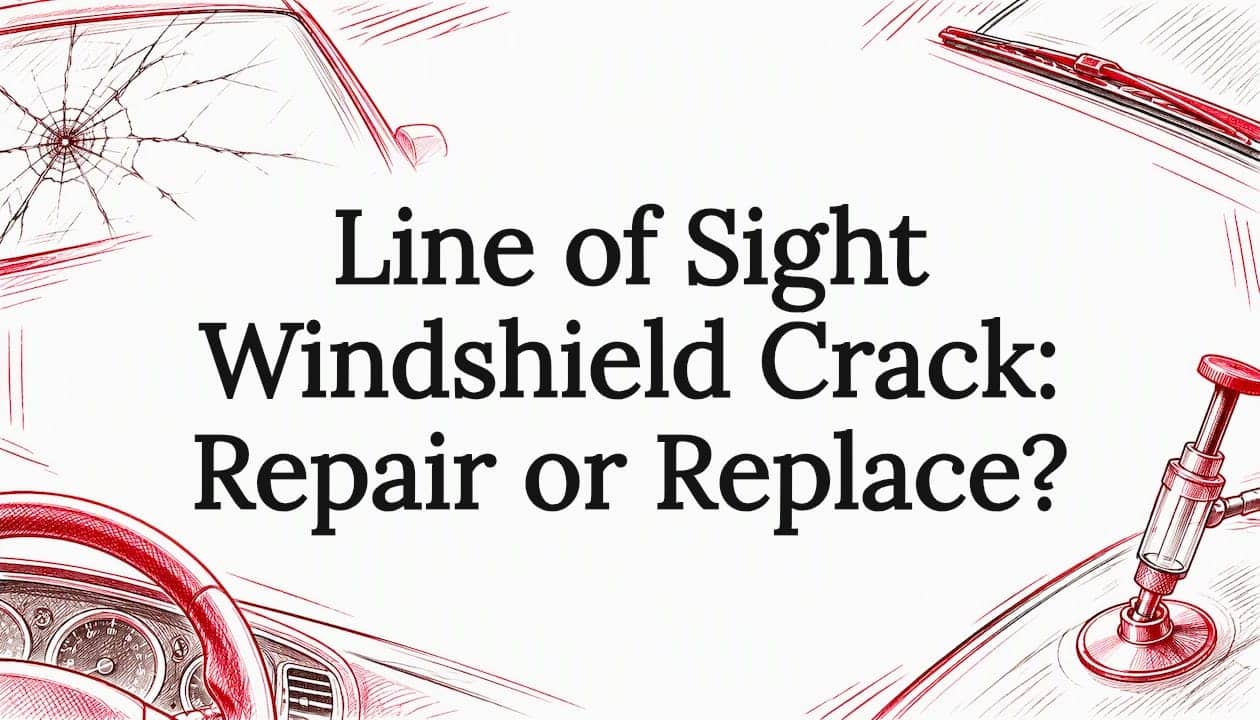
Line of Sight Windshield Crack: Repair or Replace?
A crack in the driver’s line of sight is judged more strictly than damage elsewhere. See the ROLAGS size limits, legal basics, insurance...
October 31, 2026
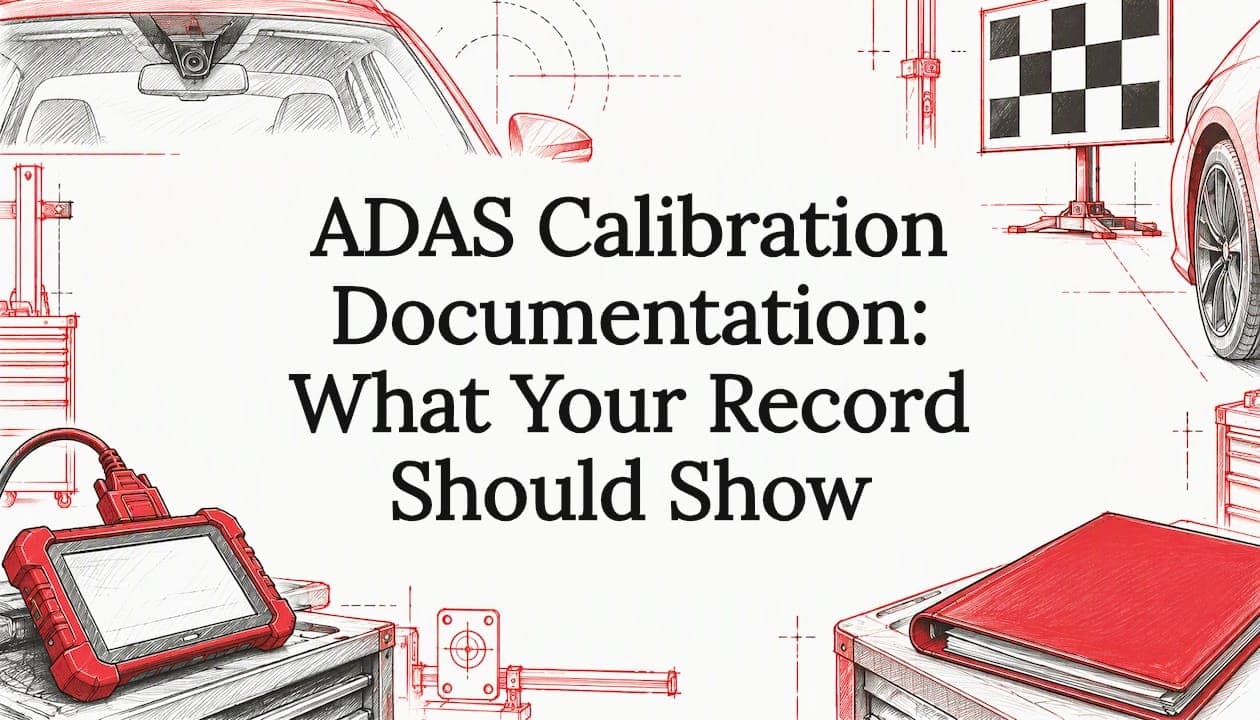
ADAS Calibration Documentation: What Your Record Should Show
What ADAS calibration documentation should contain after a windshield or collision repair, who keeps it, and what to ask your shop for before...
October 30, 2026
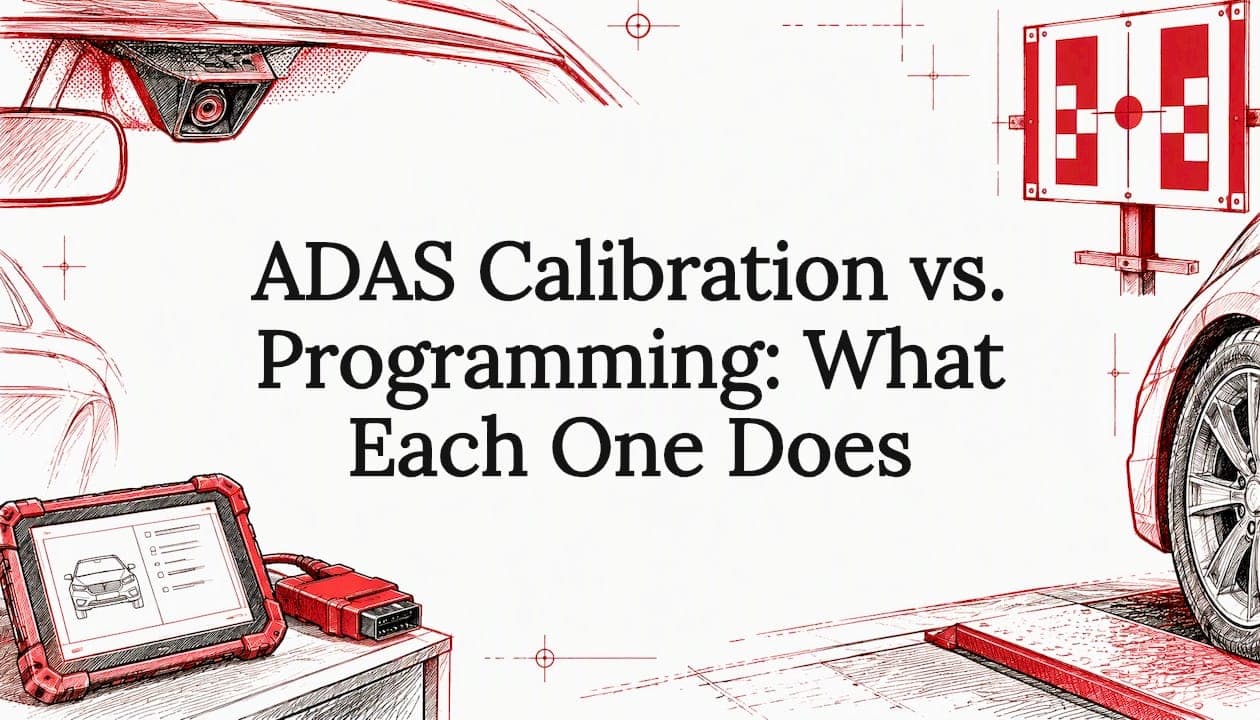
ADAS Calibration vs. Programming: What Each One Does
ADAS calibration and programming are not the same job. Learn what each one does, when a vehicle needs one or both, and what...