
Auto Glass Repair
Laminated side glass is a multi-ply window built from two or more glass layers bonded with a PVB (polyvinyl butyral) interlayer. That construction keeps the pane intact after impact rather than shattering into fragments. For most owners, the answer is yes: laminated sidelights are worth understanding because they affect your safety in a crash, your cabin noise level, your vulnerability to smash-and-grab theft, and your emergency-exit options.
The core facts at a glance:
- NVH testing shows standard PVB laminated side glass cuts interior noise by roughly 1–4 dB, with acoustic PVB adding another 1–5 dB in the 1–6 kHz band.
- Crash-data analysis links laminated sidelights to reduced occupant ejection and fewer serious injuries.
- Standard spring-loaded escape hammers often fail on laminated glass. Check your window type now, not during an emergency.
Start by finding the small etched stamp in the corner of each window. If it reads “laminated,” this guide covers everything you need to know next.
Key Takeaways
Laminated side glass reduces ejection risk, cuts cabin noise by 1–4 dB with standard PVB (up to 9 dB more with acoustic PVB), and resists smash-and-grab theft, but standard rescue hammers will not break it in an emergency.
| Point | Details |
|---|---|
| Check the glass stamp first | The “bug” in the corner is the fastest way to confirm laminated vs. tempered on each window. |
| Noise reduction is real | Standard PVB cuts interior noise 1–4 dB; acoustic PVB adds 1–5 dB more in the 1–6 kHz band. |
| Plan your emergency exit | Spring-loaded rescue hammers fail on laminated glass; keep a laminated-rated tool within reach. |
| Mixed configurations are common | Front doors may be laminated while rear windows are tempered; check each pane individually. |
| Professional service matters | Collision Auto Glass & Calibration offers same-day laminated side-window replacement with in-house ADAS calibration and a lifetime no-leak guarantee in Portland. |
Table of Contents
- How laminated side glass is actually built
- What owners actually gain from laminated sidelights
- Trade-offs you need to plan for
- How to tell whether your side windows are laminated or tempered
- Repair, replacement, and ADAS considerations
- Care, maintenance, and emergency prep
- When to choose professional auto-glass service
- Why laminated sidelights deserve more attention than they get
- Glass service that matches your vehicle’s specs
- Sources
- FAQ
How laminated side glass is actually built
Automotive laminated glass, formally called a laminated sidelight, consists of two glass plies with a PVB interlayer fused between them under heat and pressure. PVB, polyvinyl butyral, is the same polymer used in windshields for decades. When the glass breaks, the interlayer holds the fragments in place rather than letting them scatter.
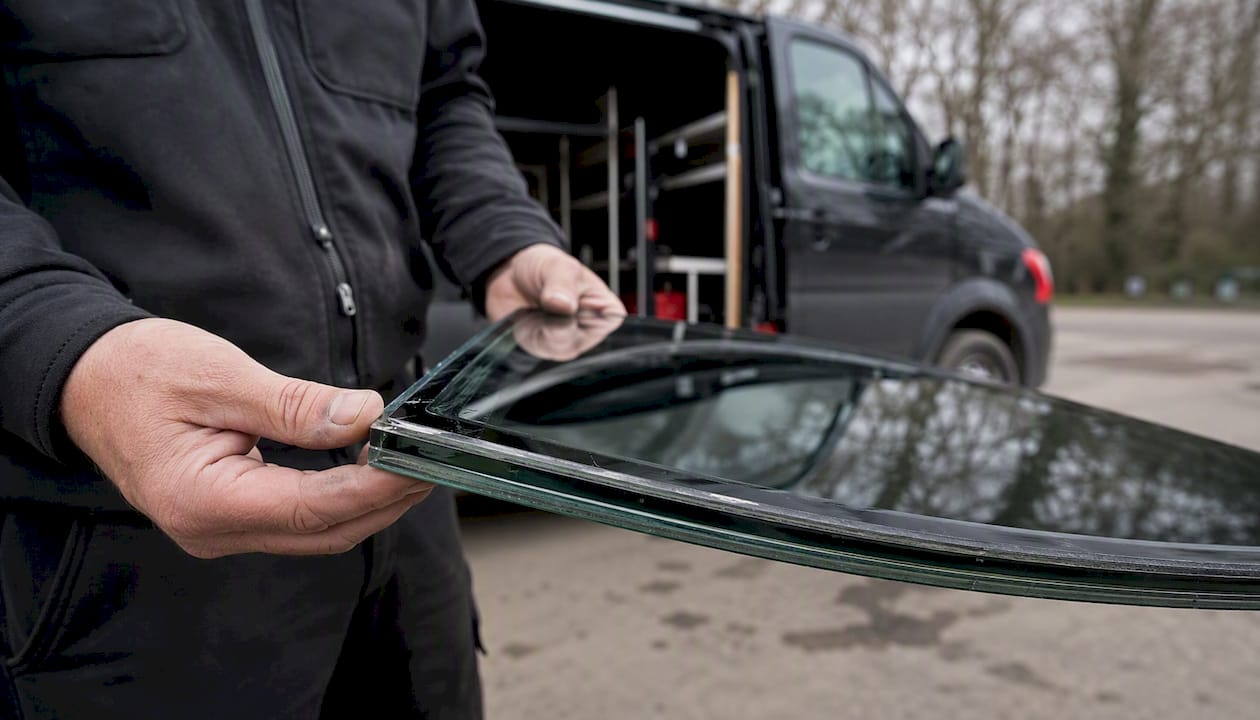
Typical OEM constructions run something like 2.1 mm glass / 0.76 mm PVB / 2.1 mm glass for a standard sidelight, or a lighter 1.6 / 0.76 / 1.8 mm assembly where weight reduction is a priority. Pilkington’s technical research shows OEMs have been experimenting with thinner plies to save mass while preserving NVH performance. The TRID study on a Volvo S80 noted an approximately 11% weight reduction for the laminated side-glass assembly tested versus the tempered baseline.
Two main variants exist:
- Standard PVB interlayer: Provides the structural and safety benefits with modest noise attenuation.
- Acoustic PVB interlayer: A softer, multi-layer PVB formulation engineered specifically to dampen sound vibration. Audi and other OEMs have adopted acoustic interlayers in premium trims to target road and wind noise in the 1–6 kHz range where speech intelligibility is most affected.
Pro Tip: When an OEM advertises “acoustic glass” or “noise-comfort glass” for side windows, ask for the interlayer spec. True acoustic PVB has a viscoelastic core layer. A marketing label alone does not confirm the engineering.
What owners actually gain from laminated sidelights
Safety in crashes
IRCobi’s multi-country crash-data analysis concludes that laminated side glazing is likely to reduce occupant ejection and the serious injuries associated with it. The interlayer resists penetration and keeps the window largely intact during a side impact, which matters most in rollovers where ejection risk is highest.
Security and theft deterrence
Laminated glass resists the quick smash-and-grab strike that defeats tempered glass in seconds. Pilkington’s supplier documentation notes consumer willingness to pay a premium for laminated sidelights specifically because of this security benefit, alongside noise and UV advantages.
Noise reduction
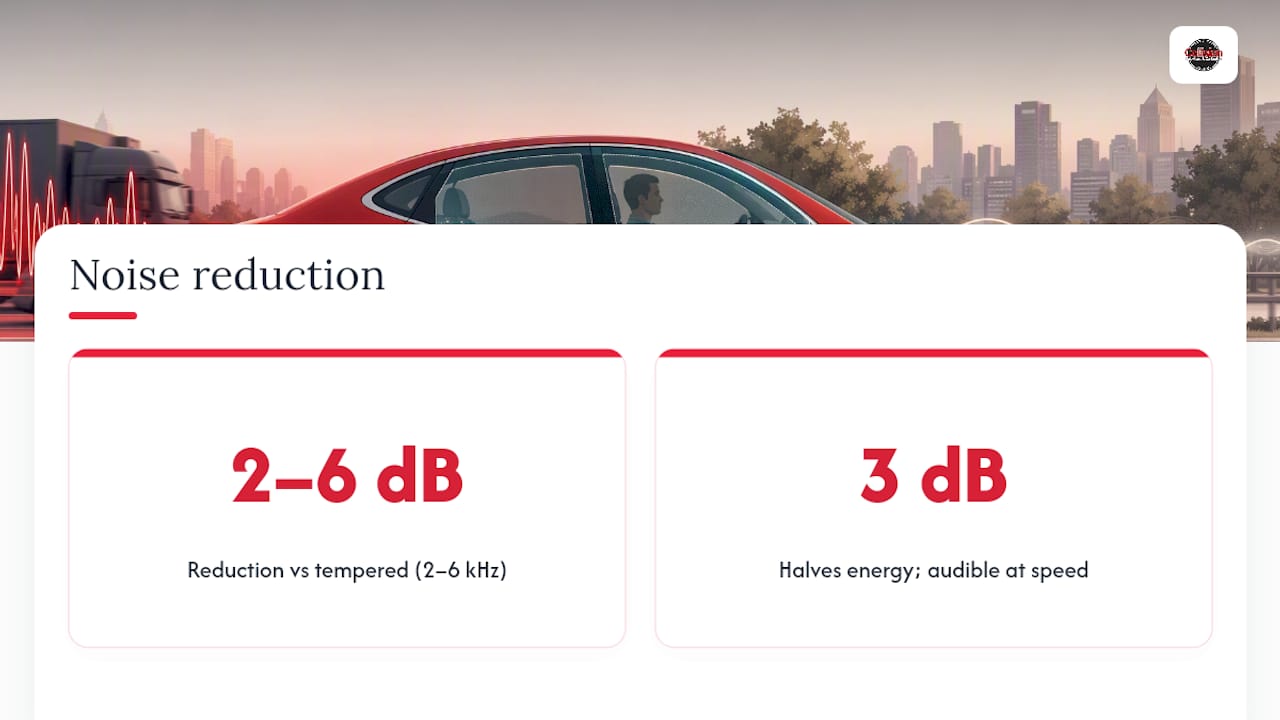
The Volvo S80 TRID study recorded reductions of roughly 2–6 dB in the 2–6 kHz band compared with tempered glass. Those numbers may look modest, but a 3 dB drop represents a halving of acoustic energy, and the perceptual improvement at highway speed is noticeable.
UV and interior protection
Trade-offs you need to plan for
Laminated sidelights are not a pure upgrade. The same interlayer that prevents ejection also makes emergency exit harder.
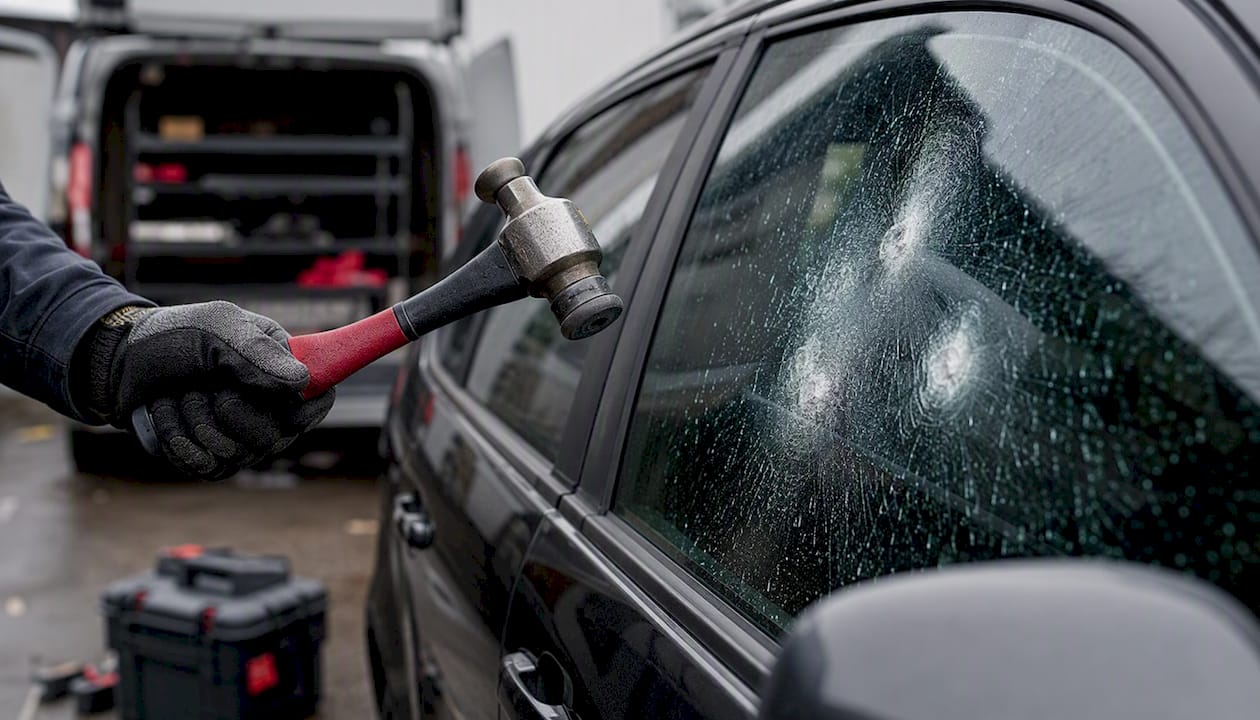
Good Morning America’s on-camera demonstrations showed spring-loaded rescue hammers and center-punch tools failing repeatedly on laminated side windows. These tools work by creating a stress fracture in tempered glass. Against a laminated pane, the interlayer absorbs the impact and the glass stays in one piece.
The IRCobi analysis did find that laminated glazing may increase entrapment instances, but concluded this trade-off does not outweigh the ejection-reduction benefit across the crash population studied.
Practical emergency guidance:
- Prioritize door exits first. A door handle works even when glass does not.
- Locate the nearest tempered window in your vehicle before you need it. Rear quarter windows are often still tempered even when front doors are laminated.
- Standard rescue hammers are not reliable on laminated glass. A glass-cutting rescue tool or a serrated rescue knife is a better option to keep in the vehicle.
- Practice your exit plan with passengers, especially children.
Pro Tip: Keep a rescue tool rated for laminated glass in an accessible spot, not buried in the trunk. Several manufacturers now label their tools explicitly for laminated or tempered glass. Check the label before you buy.
How to tell whether your side windows are laminated or tempered
The most reliable check is the etched stamp in the corner of the glass, called the “bug.” Look for the word “laminated” or “lam” in the certification text. “Tempered” or “T” indicates the other type. This stamp is required by federal glazing standards and is present on virtually every piece of automotive glass sold in the United States.
If the stamp is worn or hard to read, try these secondary checks:
- Edge inspection: Laminated glass shows a visible interlayer at the top edge when the window is lowered slightly. Tempered glass has a clean, uniform edge.
- Tap test: Laminated glass produces a duller, flatter sound when tapped with a knuckle. Tempered glass rings slightly.
- VIN or dealer lookup: Your dealer’s parts department can confirm glass type by VIN for each window position.
- Ask an auto-glass professional: A technician can identify the type in seconds.
AAA’s guidance emphasizes that mixed configurations are common. Front door glass may be laminated while rear doors remain tempered. Check each window individually. Do not assume all four match. For a deeper comparison of how the two types perform, the tempered vs. laminated glass safety guide covers the differences in detail.
Pro Tip: Photograph the stamp on each window and save the images in your phone’s notes app with the window position labeled. This saves time at the shop and helps with insurance documentation.
Repair, replacement, and ADAS considerations
Laminated side glass behaves differently from tempered glass when damaged, and that difference has direct cost and service implications. As Glass.com’s industry guidance explains, laminated glass sometimes allows small-chip resin repairs because the interlayer holds fragments in place. Tempered side glass cannot be repaired at all after surface compromise; it must be replaced entirely.
That said, laminated sidelight replacement is typically more expensive than tempered replacement. The part itself costs more, and the bonding process is more involved. For a realistic picture of what side window replacement costs in the current market, pricing varies by vehicle make, glass type, and whether ADAS recalibration is required.
Before authorizing any side-window work, ask the shop:
- Is this window laminated or tempered, and does your team have experience with both?
- Does my vehicle have cameras or sensors mounted to this door or window frame that require ADAS recalibration after replacement?
- What adhesive and bonding process do you use, and what is the cure time before the vehicle is safe to drive?
- Do you offer a no-leak guarantee on the installation?
- Is mobile service available, and does it cover my location?
When ADAS sensors or cameras are mounted near the replaced glass, recalibration is not optional. An uncalibrated system can misread lane markings or fail to trigger automatic braking. Understanding what ADAS calibration involves before you book helps you ask the right questions and avoid surprises.
Care, maintenance, and emergency prep
Laminated sidelights are durable, but a few habits protect them and extend their service life.
- Clean edges carefully. The PVB interlayer is exposed at the top edge of the glass. Avoid spraying harsh solvents directly at the seal line, and use a microfiber cloth rather than abrasive pads. For streak-free results on coated glass, proper glass-cleaning technique matters more than product choice alone.
- Watch for seal failure. A failing door seal lets moisture reach the interlayer edge. Early signs include fogging at the glass perimeter or a slight amber discoloration at the edge. Catch it early and the seal can be replaced without touching the glass.
- Avoid slamming doors. Repeated hard slams stress the glass-to-frame bond over time, particularly in cold weather when the PVB is less flexible.
- Update your emergency kit. If your vehicle has laminated sidelights, swap any standard rescue hammer for a tool rated for laminated glass. Store it within reach of the driver’s seat.
Pro Tip: Add a glass-type check to your annual vehicle inspection. Note the stamp on each window in your maintenance log. If you buy a used vehicle, do this check before your first long trip.
When to choose professional auto-glass service
Choose a professional shop when glass is cracked, delaminating, affecting door seals, or when any ADAS sensor or camera is mounted near the damaged window. Attempting to drive with a compromised laminated sidelight is a safety risk covered in detail at is it safe to drive with a broken window.
What to expect from professional service:
- In-shop replacement: The technician removes the door panel, extracts the damaged glass, installs the new laminated unit with the correct adhesive, and allows a full cure cycle before returning the vehicle. ADAS recalibration happens in-house if sensors are affected.
- Mobile replacement: A technician comes to your location, performs the same process, and the vehicle is ready to drive after the adhesive cure window. Confirm that mobile service covers your address before booking.
Questions to confirm before authorizing work:
- Does the shop carry laminated OEM or OEM-equivalent glass for your specific window position?
- Is ADAS calibration performed in-house or subcontracted?
- Is there a written no-leak guarantee?
- Does the shop handle direct insurance billing?
Collision Auto Glass & Calibration handles side window replacement for cars, trucks, and RVs, with in-house ADAS calibration and a lifetime no-leak guarantee on every installation.
Why laminated sidelights deserve more attention than they get
Most owners never think about their side-window glass type until something goes wrong. That is the gap worth closing. The safety case for laminated sidelights is supported by real crash data, not just marketing. The noise benefit is measurable and perceptible on any highway commute. The security advantage is straightforward: a pane that stays intact after a strike is a meaningful deterrent.
The trade-off on emergency exit is real and should not be minimized. Knowing your glass type and keeping the right rescue tool accessible is a five-minute task that could matter enormously in the wrong situation.
At Collision Auto Glass & Calibration, the recommendation is consistent: understand what glass is in your vehicle, replace damaged laminated sidelights with the correct material, and confirm ADAS calibration whenever sensors are involved. If you are unsure what type of glass your side windows are, or if a window is cracked or delaminating, get a professional assessment before the next long drive.
Glass service that matches your vehicle’s specs
When a laminated side window needs replacement, the material and installation process both have to be right. Collision Auto Glass & Calibration has been serving Portland drivers since 2008 with same-day service, free mobile installation across the Portland area, and in-house ADAS calibration so your safety systems are recalibrated on the same visit. Every installation carries a lifetime no-leak guarantee, and direct insurance billing means less paperwork for you.
If your side glass is cracked, fogging at the edges, or you simply want to confirm what type of glass your vehicle has, request a repair or replacement quote and get a clear answer from a technician who works with laminated glass every day.
Sources
- NVH testing: PVB laminated side glass reduces interior noise
- Use of PVB in Laminated Side Glass for Passenger Vehicle Interior Noise Reduction – TRID
- IRCobi analysis on laminated side glazing, occupant ejection and entrapment
- Why knowing the type of car windows you have could save your life – Good Morning America
- Car Escape Tool 101: Why You Should Know Your Vehicle’s Glass Type (AAA)
FAQ
What is laminated side glass in a car?
Laminated side glass is a window made from two glass plies bonded with a PVB interlayer. Unlike tempered glass, it holds together when broken rather than shattering into fragments.
Which cars have laminated side windows?
Many newer vehicles include laminated glass in at least some window positions. AAA research indicates roughly one in three car models has included laminated side glass in at least some positions since around 2018, with brands like Volvo and Audi among the early OEM adopters. Check the etched stamp in each window’s corner to confirm your specific vehicle.
Can laminated side glass be repaired instead of replaced?
Small chips in laminated side glass can sometimes be repaired with resin because the interlayer holds the fragments in place. Tempered side glass cannot be repaired and requires full replacement after any surface compromise.
Will my rescue hammer work on a laminated side window?
Standard spring-loaded rescue hammers and center-punch tools generally fail on laminated side windows. The PVB interlayer absorbs the strike. Use a rescue tool specifically rated for laminated glass, and always prioritize door exits first.
Does Collision Auto Glass & Calibration replace laminated side windows?
Yes. Collision Auto Glass & Calibration handles laminated side-window replacement for cars, trucks, and RVs in the Portland area, with same-day mobile service, in-house ADAS calibration, and a lifetime no-leak guarantee on every installation.
Recommended
- Tempered vs Laminated Glass: Safety Guide for 2026
- Common Causes of Car Door Glass Damage and How to Prevent Them – Collision Auto Glass & Calibration
- Tips On Caring For and Maintaining Your Car’s Glass – Collision Auto Glass & Calibration
- OEM vs Aftermarket Windshield: Safety & Cost Guide
🎧 Listen to This Article
Share
Recent Posts

October 15, 2026
Auto Glass Claims: Choose a U.S. Shop Before ADAS Billing Surprises
See how U.S. drivers can choose an auto glass shop for an insurance claim, confirm ADAS calibration, protect their rights, and prevent billing...
October 14, 2026
Fleet Windshield Maintenance: A 20 Minute Repair Can Prevent Days Down
Catch chips early, log the VIN and photos, and require part number and ADAS calibration records to keep fleet vehicles moving and avoid...
October 13, 2026
Calibration After Collision Repair: Ask for Scans Before You Drive
Learn when collision repairs require ADAS calibration, how shops verify the work, and which scan records and paperwork to request before driving....