
Auto Glass Repair
In most cases, yes. When your car has advanced safety features, recalibrating the camera is part of a proper windshield replacement, and insurers generally pay for it as part of a covered glass claim. What you owe depends on your comprehensive coverage, your deductible, your state’s glass laws and how your insurer handles calibration charges. This guide explains each piece so you know what to expect before you book.
TL;DR
- Windshield replacement is normally handled under comprehensive coverage, and recalibration of the driver-assistance camera is usually part of the same claim.
- Insurers often reimburse calibration, but they may ask for documentation, pre-authorization or cap the amount, so a complete calibration record matters.
- Your deductible decides your out-of-pocket cost. A few states, including Minnesota and Kentucky, require zero-deductible glass coverage under certain conditions.
- A single glass claim rarely changes rates much, though outcomes vary by insurer and state.
- Ask your shop to bill the insurer directly and to give you a printed calibration report at pickup.
Table of Contents
- Does insurance cover recalibration after a windshield replacement?
- Which part of your policy pays
- What recalibration costs and what insurers reimburse
- Why insurers ask for calibration records
- How to check your coverage and file a claim
- Will a glass claim affect your rates?
- Our perspective on recalibration and insurance
- Windshield and calibration service in Portland
- FAQ
- Sources
Does insurance cover recalibration after a windshield replacement?
Usually it does, because recalibration is treated as part of the repair, not an optional extra. USAA says a technician will repair or replace the glass, including recalibration of the sensors, and that most replacements on cars with features like collision detection or lane assist need calibration, typically done in the same visit.
The practical picture from the shop side is encouraging but not uniform. A survey cited by Windshield Advisor found that 87% of shops say they are always or almost always reimbursed for ADAS calibration charges. The same report notes that shops also deal with documentation demands, pre-authorization, caps on calibration payments, partial approvals and occasional denials. That is why the paperwork around your calibration matters as much as the calibration itself.
There is also a legal argument behind coverage. In California, Insurance Code §758.5 requires insurers to restore a vehicle to its condition before the loss, which supports covering recalibration. No California statute specifically addresses ADAS recalibration, so the argument rests on that general rule.

Why recalibration is part of the job
The forward-facing camera sits behind your windshield. When the glass changes, the camera’s view changes too. Windshield Advisor reports that 89% of model-year 2023 and newer vehicles require calibration after a windshield replacement, up from 25% for model-year 2016 vehicles. The Auto Glass Safety Council warns, as quoted in the same report, that a camera aimed one degree off puts the collision avoidance system off by 8 feet at 100 feet. That margin is the reason insurers and manufacturers treat calibration as a safety step.

If you want the technical background first, our guide to calibration after windshield replacement walks through what happens to the camera and why.
Which part of your policy pays
Glass damage normally falls under comprehensive coverage, sometimes called other-than-collision coverage. The NAIC Consumer’s Guide to Auto Insurance states that comprehensive reimburses you if your windshield is pitted, cracked or damaged, and notes that some companies do not charge a deductible for windshield repairs. The Independent Glass Association likewise says most insurers cover windshield repair or replacement through comprehensive coverage.
Three things then decide what you pay:
- Whether you carry comprehensive. Liability-only policies do not pay for your own glass.
- Your deductible. A $500 deductible means you pay the first $500 of a covered bill. If the total is under the deductible, a claim pays nothing.
- Whether you added full glass coverage. Some policies include a glass deductible waiver, which covers repair or replacement without an out-of-pocket cost. Check your declarations page for the wording.
State laws that change the answer
A handful of states set their own rules. Examples from the statutes themselves:
- Minnesota: Statute 65B.134 requires that, at the insured’s option, a comprehensive policy provide complete coverage for repair or replacement of damaged safety glass without a deductible or minimum amount.
- Kentucky: KRS 304.20-060 defines repair or replacement to include ADAS calibration when glass replacement is required, and requires policies with comprehensive coverage to fully cover glass-only claims without a deductible. It took effect April 2, 2024.
- Iowa: Senate File 573 requires the glass shop to tell the insured whether calibration is needed after repair or replacement, following the manufacturer’s recommendations, and whether the calibration was successful.
According to Windshield Advisor, at least 17 states had enacted some form of ADAS calibration regulation by early 2026, and a federal bill, H.R. 6688, would direct NHTSA to publish calibration guidelines but has not passed. Rules differ by state, so confirm yours with your insurer or your state insurance department.
In Oregon, where we work, ask your insurer how your own policy treats glass and calibration. Your declarations page and a short call to your agent will answer it faster than any general rule.
A model rule worth knowing
The NCOIL Motor Vehicle Glass Model Act, adopted in April 2025, is a template for states. It asks shops to tell you whether your vehicle has ADAS, whether calibration is needed per the manufacturer, and whether the shop intends to perform it to manufacturer specifications. It also says shops should not charge more than reasonable and customary fees for the glass work and associated calibration. States may adopt it in different forms, so treat it as a direction of travel and not as law everywhere.
What recalibration costs and what insurers reimburse
Cost depends on the vehicle, the type of calibration and the number of sensors involved. Published ranges vary by source:
| Source | What it reports | Year |
|---|---|---|
| AAA research via Windshield Advisor | Calibration adds an average of $300 to $600 to a replacement; a modern SUV with ADAS often totals over $1,200 | 2023 |
| Windshield Advisor | Typical calibration $250 to $600, over $1,000 for complex or luxury systems | 2026 |
| Auto Glass Estimator | Static $150 to $300, dynamic $200 to $400, combination or multi-sensor $400 to $600+ | 2025 |
| Independent Glass Association | Replacement runs $200 to $2,000, more if ADAS recalibration is required | 2025 |
Static calibration uses targets in a controlled space, dynamic calibration uses a road drive, and some vehicles need both. Your owner’s manual or the manufacturer’s service information specifies which applies.
How insurers have set calibration payments
Some insurers publish reimbursement schedules to glass shops. These older examples show how the line item is treated, and current figures may differ:
- Progressive (2020 memo): $500 for static plus dynamic, $275 for dynamic alone and $300 for static alone, as reported by Repairer Driven News.
- GEICO (2020 notice): maximums of $325 static, $275 dynamic and $440 dual, with labor at $40 per hour, as reported by glassBYTEs.
- Florida (2023 proposal): a Senate amendment proposed $550 static, $450 dynamic and $700 dual, unless other amounts were contracted.
The lesson is that insurers pay for calibration but may pay against a schedule. If your vehicle needs more than the schedule allows, a shop that works with insurers regularly can submit the manufacturer’s procedure and documentation to support the full amount. Our own breakdown is in the ADAS calibration cost guide, and the windshield replacement page lists our published replacement range of $200-$500.
Why insurers ask for calibration records
Because calibration is invisible once finished, insurers want proof that it happened. Progressive’s 2020 memo said valid documentation must show the ADAS features recalibrated, a system-generated date stamp, start and stop timestamps and confirmation that the calibration succeeded. GEICO’s notice required a certified trained technician working to manufacturer guidelines, pre- and post-scans with function results, and records kept for three years.
The NCOIL model rule points the same way. It asks the shop to hand you, on completion, an itemized invoice and receipt and a notice saying whether the ADAS was successfully calibrated. If it was not, the notice should advise you not to rely on the system until the manufacturer’s certified dealership or a qualified specialist has calibrated it.
In practice, ask for these items before you leave:
- The itemized invoice listing glass and calibration separately
- The pre-scan and post-scan reports
- The calibration report showing which features were calibrated and that it succeeded
- The calibration type (static, dynamic or both)
Having them on hand settles most disputes quickly. Our page on ADAS calibration documentation explains what a complete record shows.
If your insurer questions whether calibration is needed
Stay calm and keep it factual. Ask the shop for the vehicle manufacturer’s published procedure for your model and for the scan report showing the camera’s status. Then send both to your adjuster with a request that the reviewer cite the policy language behind any denial. Our article on whether you need to recalibrate ADAS after replacing a windshield covers the manufacturer side of that conversation.
How to check your coverage and file a claim
There is no single official checklist for this, but the steps below follow how glass claims typically move, including the process described by USAA for sending a technician who handles calibration in the same visit.
- Read your declarations page. Look for comprehensive or other-than-collision coverage, the deductible amount and any glass endorsement.
- Call your insurer or agent. Ask three questions: Is my windshield covered? What is my glass deductible? Is ADAS calibration included in a glass claim?
- Choose your shop. Many insurers let you pick your own shop. If your insurer steers you to a network, ask whether you may use a shop of your choice, since that varies by policy and state.
- Get the vehicle checked for ADAS. Tell the shop your year, make, model and trim so they can determine which calibration the manufacturer calls for.
- Have the shop bill the insurer. Direct billing means you pay only your deductible, if any, at the time of service.
- Collect your records. Keep the invoice and calibration report with your vehicle files.
If you are weighing whether to file at all, particularly when the total is near your deductible, see our comparison of using insurance versus paying cash for windshield work.
Will a glass claim affect your rates?
Usually very little, but it depends on your insurer and your state. The Zebra says a single glass claim is unlikely to cause much impact and that several glass claims within three years are more likely to draw attention. Indiana Farm Bureau Insurance says a single windshield claim generally will not raise rates because insurers treat comprehensive claims differently from at-fault accidents.
State Farm adds that glass losses may be less likely to bring a surcharge than at-fault accidents, but outcomes vary, and a claim could still affect a claims-free discount. Insurance Panda notes that claims can appear in CLUE reports, which generally hold up to seven years of auto claims. Your agent can tell you how your own insurer classifies glass claims.
Our perspective on recalibration and insurance
We see the same worry again and again: a driver gets a replacement quote, hears that calibration is extra and wonders whether insurance will pay. Our view is simple. Calibration is part of the repair, so it should be planned, documented and billed alongside the glass.
That is why we perform ADAS calibration in-house instead of sending your car elsewhere. Keeping glass and calibration under one roof means one appointment, one set of records and one invoice for your insurer to review. We bill insurers directly, so you are not left carrying a large bill while a claim is processed.
Our work is backed by a lifetime no-leak guarantee on installations, and we have been family-owned and operated since 2008. We believe a safety system that sits behind your windshield deserves the same care as the glass itself, and a clear calibration record is how you and your insurer can both see that care was taken.
Collision Auto Glass & Calibration
Windshield and calibration service in Portland
If you drive in the Portland area, we handle the whole job: windshield replacement or repair, in-house ADAS calibration and direct insurance billing. Windshield repair is $90 and replacement is $200-$500, as published on our site, and mobile installation within the Portland area is free. We offer same-day service.
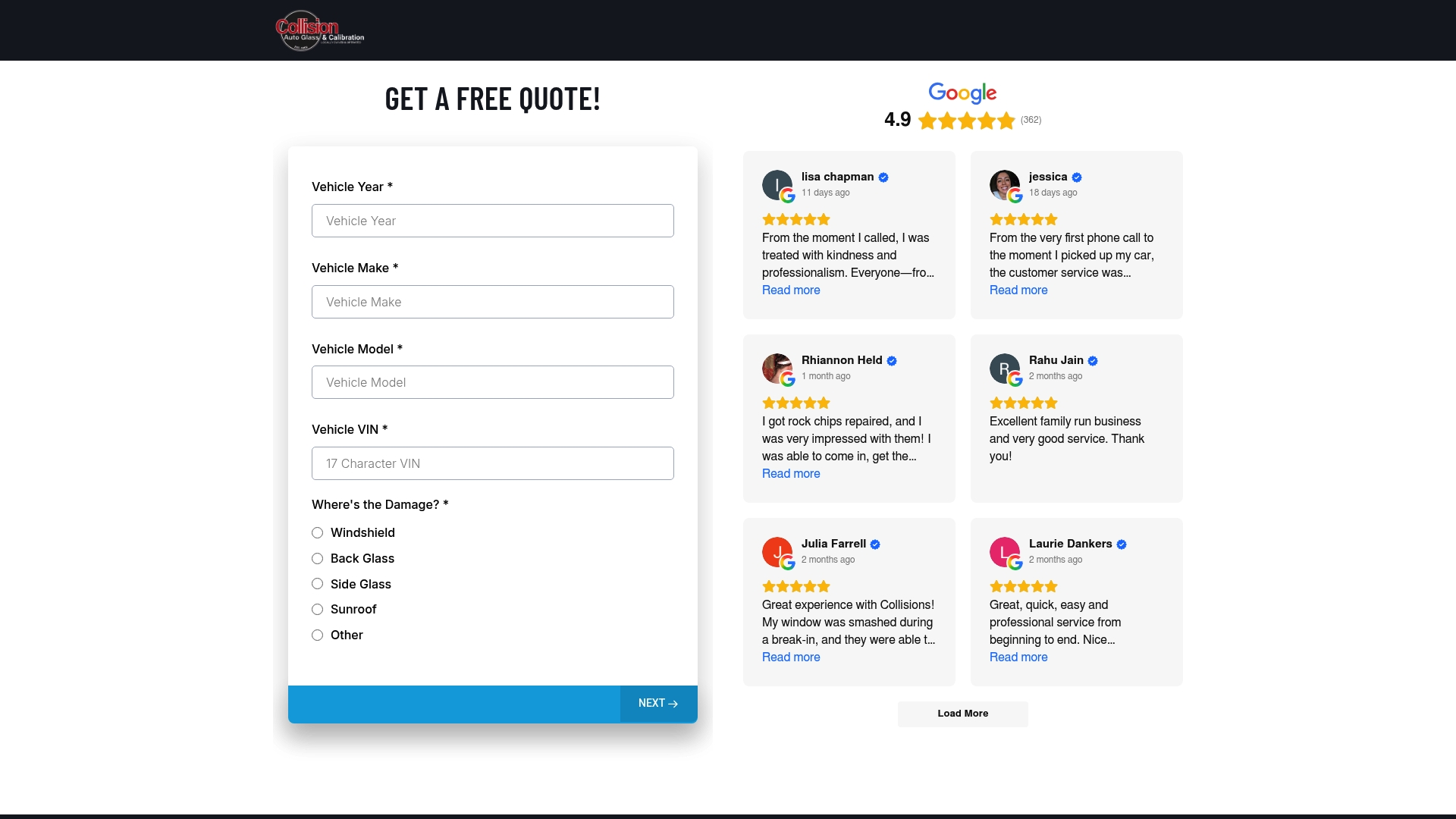
Tell us your vehicle and your insurer when you call, and we will explain what your car needs and what documentation we will provide. You can learn more about ADAS calibration at Collision Auto Glass or visit our homepage to get started.
FAQ
Does insurance cover windshield recalibration if I only have a chip repaired?
Usually a chip repair does not involve removing the glass, so recalibration is typically not needed. Calibration generally follows a replacement or work that moves or disturbs the camera. Ask your shop whether your vehicle’s manufacturer calls for it after any glass work.
Do I pay a deductible for calibration?
If the replacement is a covered comprehensive claim, calibration normally falls under the same claim and the same deductible. Some policies waive the glass deductible, and states such as Minnesota and Kentucky require zero-deductible glass coverage under their statutes. Check your declarations page or call your agent to confirm.
Can I choose my own shop for a claim?
In many cases you can, though rules vary by insurer and state. Ask your insurer directly whether you may use the shop of your choice, and confirm that the shop bills insurers directly and provides a full calibration report.
Is recalibration required, or can I skip it?
If your vehicle has a forward-facing camera, the manufacturer’s procedures call for calibration after windshield replacement, and an uncalibrated camera can misjudge distances. The NCOIL model rule advises not relying on the system until it has been successfully calibrated. Our page on what happens if ADAS is not calibrated explains the risks.
What if my insurer will only pay part of the calibration?
Ask the shop for the manufacturer procedure, the scan reports and an itemized invoice, then send them to your adjuster and ask for the policy language behind the limit. Insurers often pay against a schedule, so documentation that shows your vehicle’s requirements is your strongest support.
Sources
- USAA: Windshield and Glass Claims
- Windshield Advisor: Colorado auto glass insurance laws
- Windshield Advisor: California windshield insurance laws
- Windshield Advisor: ADAS calibration, static vs dynamic
- NAIC Consumer’s Guide to Auto Insurance
- Independent Glass Association
- Minnesota Statute 65B.134
- Kentucky Revised Statutes § 304.20-060
- Iowa Senate File 573
- NCOIL Motor Vehicle Glass Model Act
- Auto Glass Estimator: windshield replacement cost
- Repairer Driven News: Progressive calibration payments
- glassBYTEs: GEICO market pricing notice
- Florida Senate amendment 764142
- The Zebra: glass claims and premiums
- Indiana Farm Bureau Insurance: windshield claims and rates
- State Farm: Will my insurance increase after a claim?
- Insurance Panda: windshield claims and rates
Recommended
- Does Insurance Cover Windshields?
- Calibration After Windshield Replacement: What You Must Know
- $600–$1,500 ADAS Costs: When to Use Windshield Insurance vs Pay Cash
- Does Auto Insurance Cover Glass Replacement?
🎧 Listen to This Article
Share
Recent Posts
November 10, 2026
Does Insurance Cover Windshield Recalibration?
Find out when insurance pays for ADAS recalibration after a windshield replacement, what it costs, how deductibles work and how to file the...
November 9, 2026
Broken Windshield While Driving: What to Do Right Now
Windshield cracked or broke while you were driving? Learn how to pull over safely, when to tow, how to file a claim and...
November 8, 2026
Dash Cam After Windshield Replacement: Reinstall It Right
How to handle a dash cam after windshield replacement: remove the mount, wait for the adhesive, place the camera, and protect your ADAS...