
Auto Glass Repair
A backlite is the industry term for a vehicle’s rear window, the pane that gives you rearward visibility and often carries a defroster grid or antenna printing. You’ll also hear it called the rear windshield, back glass, or simply rear window, all referring to the same part. The spelling varies too: backlite and backlight both show up in manufacturer parts catalogs and shop paperwork.
TL;DR:
- Most rear windows use tempered glass, which shatters into small pieces, while windshields are usually laminated to stay intact during a crash.
- Replacing a backlite costs more if the vehicle has complex features like integrated antennas, defroster wiring, or ADAS sensors that need recalibration.
- Chips in tempered backlites should be addressed quickly, as the whole pane is likely to shatter if cracked, unlike laminated windshields which are often repairable.
- Identifying whether your vehicle’s glass is laminated or tempered can be done by checking corner etchings and the presence of interior defroster lines.
- In SUVs and hatchbacks, the rear window is often called the “hatch glass” or “rear window,” while traditional sedans refer to it as the “rear windshield.”
Table of Contents
- Why Do Auto Glass Shops Call It a Backlite?
- What’s the Difference Between Laminated and Tempered Glass?
- What Features Are Built Into a Backlite?
- Why Can’t You Repair a Chip in a Backlite Like You Can a Windshield?
- How Do You Know What Kind of Glass Your Car Has?
- What Drives the Cost of Backlite Replacement?
- What We’ve Learned Fixing Backlites Every Week
- Ready for Backlite Replacement or ADAS Calibration?
- Sources
- FAQ
Why Do Auto Glass Shops Call It a Backlite?
The word “backlite” comes straight from parts catalogs, not casual conversation. Manufacturers and technicians settled on it decades ago as a shorthand for the rear glazing panel, likely a portmanteau of “back” and “lite,” an old glazing-trade word for a single pane of glass. You’ll find it printed on OEM part numbers, dealer invoices, and repair estimates, even though almost no driver uses the term at the counter.
Consumer language splits by vehicle type, and that split matters when you’re trying to order the right part or describe a problem over the phone.
- Sedans and coupes: most owners say “rear windshield” or “back glass.”
- SUVs and hatchbacks: the rear pane is often part of the liftgate, so people call it the “rear window” or “hatch glass.”
- Pickup trucks: the term “back glass” is standard, especially when discussing slider or fixed versions.
- Parts catalogs and manuals: “backlite” or “backlight” appears almost universally, according to Dictionary.
Knowing both sets of terms helps you talk to a shop and read an insurance estimate without confusion, according to an automotive glossary breakdown of rear window naming.
What’s the Difference Between Laminated and Tempered Glass?
Windshields and backlites use two different technologies for a reason, and the difference shows up the moment either one breaks. Laminated glass sandwiches two panes around a plastic interlayer, usually polyvinyl butyral, that keeps the glass bonded together on impact instead of scattering, according to Roadrunner Auto Glass. Tempered glass gets heat treated during manufacturing, which strengthens it but makes it shatter into small, blunt pieces when it breaks, per Wikipedia’s overview of tempered glass.
That shatter pattern isn’t an accident. Tempered glass breaking into small pieces reduces the risk of deep lacerations, which is part of why side and rear windows still use it decades after laminated windshields became standard.
- Windshields: laminated, because it stays intact and supports the vehicle’s structure during a crash.
- Backlites: typically tempered, prioritizing quick, safe breakage for emergency egress.
- Emerging exception: some SUVs and luxury models now use laminated glass on rear and side windows to cut cabin noise and deter smash-and-grab theft.
Fact worth remembering: the same emergency tools rescue workers use to break a rear window rely on tempered glass’s vulnerability to a sharp point impact. That’s an intentional design trade-off, not a flaw. If you want a deeper technical breakdown, our guide to tempered versus laminated glass walks through the engineering behind both.
What Features Are Built Into a Backlite?
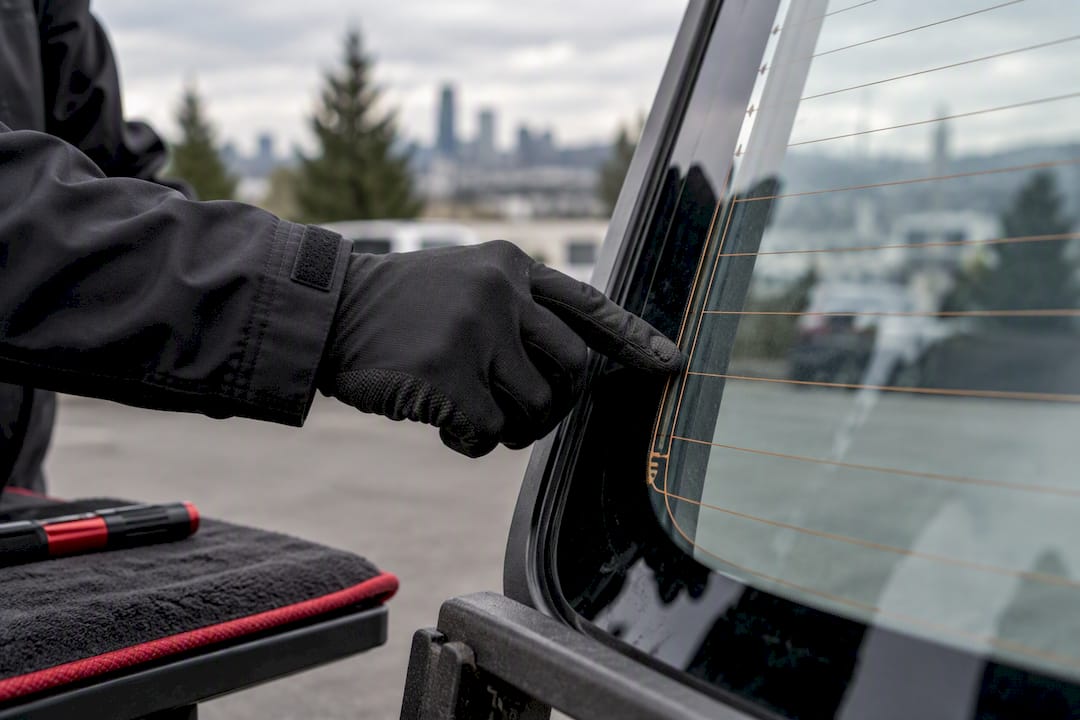
Most backlites aren’t just a flat pane of tempered glass; following a clean car glass: streak-free method for UK owners can help maintain visibility and defroster effectiveness. They’re loaded with functional elements that make replacement more involved than a simple swap.
Defroster wires run horizontally across the inside surface, heating the glass when you switch on the rear defog function, and they’re powered through a connector that clips or bonds directly to the glass. Many backlites also carry printed antenna elements embedded in the ceramic frit, along with brackets for wiper motors, spoilers, or rear camera housings on newer vehicles, a detail confirmed by AIS Glass’s product documentation on defogger-equipped backlites.
- Defogger grids need continuity testing after installation to confirm they still heat properly.
- Antenna printing must align with the factory connector location or reception suffers.
- Camera or sensor brackets on liftgates require careful reinstallation to avoid misalignment.
Pro Tip: Ask your shop to test the defroster and antenna function before you drive off. A backlite that looks perfect can still have a disconnected wire hiding under the trim.
Why Can’t You Repair a Chip in a Backlite Like You Can a Windshield?
Laminated and tempered glass behave completely differently under stress, and that difference decides whether a shop repairs or replaces the pane. A small chip in a laminated windshield often stays contained because the plastic interlayer holds the crack from spreading, which is exactly why resin injection repairs work so well on that glass type.
Tempered glass doesn’t offer that option. Once it’s compromised, internal stress causes the entire pane to shatter rather than crack, which is why installers generally recommend replacing a damaged backlite quickly instead of waiting, according to Glass.NET’s technical comparison of the two glass types.
- Laminated windshields: small chips often repairable if caught early and kept out of the driver’s direct line of sight.
- Tempered backlites: essentially all-or-nothing, since there’s no interlayer holding a crack together.
- Structural role: windshields help support the roof and airbag deployment, which is part of why manufacturers reserve laminated glass for that position, per Autopartex’s engineering breakdown.
How Do You Know What Kind of Glass Your Car Has?
You don’t need a lab to figure this out. Every automotive pane carries a small etched marking in one corner, commonly called the “bug,” that spells out the manufacturer, applicable safety standards, and whether the glass is tempered or laminated, according to Oregon PCA’s explainer on reading automotive glass markings.
- Find the corner stamp, usually etched in small text near one edge of the pane.
- Look for defroster lines running across the interior surface. Their presence almost always confirms tempered rear glass.
- Check whether the pane is bonded directly to the body or built into a hatch or liftgate assembly.
- If you spot chips, cracks, or you’re unsure what you’re looking at, especially on a vehicle with rear sensors or a backup camera, have a shop inspect it before you guess.
What Drives the Cost of Backlite Replacement?
Several variables push the price up or down, and most drivers are surprised by how much complexity a simple-looking rear window can carry. Vehicle make and model matter first, since a basic sedan pane costs far less than a curved SUV liftgate with integrated brackets. Defroster and antenna wiring add labor time, and OEM glass typically costs more than quality aftermarket equivalents, though both should meet the same safety standards.
- Vehicle type and glass curvature affect part cost and labor time.
- OEM versus aftermarket glass changes price and sometimes fit precision.
- Mobile service convenience can add a small premium but saves a shop visit.
- ADAS-equipped liftgates with rear cameras or sensors may require recalibration after replacement.
If your vehicle has a rear camera tied into a backup or lane-assist system, ask whether ADAS calibration is part of the job, since a misaligned sensor after glass work can affect how those systems read the road. When comparing quotes, check whether the shop bills insurance directly and what guarantee backs the installation. Our rear window replacement cost guide breaks down typical price ranges by vehicle type.
What We’ve Learned Fixing Backlites Every Week
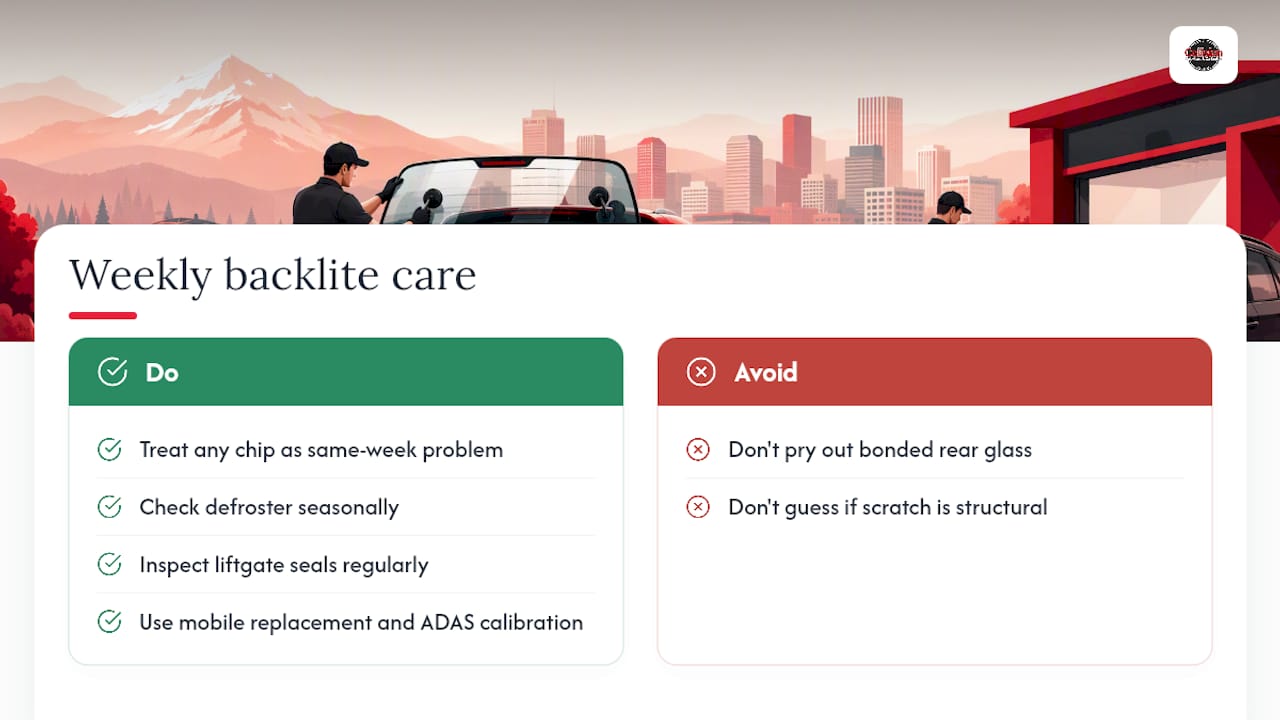
A cracked backlite rarely waits for a convenient time to fail completely, which is why we tell customers to treat any chip in tempered rear glass as a same-week problem, not a someday problem. Three habits serve owners well: check your defroster function seasonally, keep an eye on liftgate seals for early leak signs, and never attempt to pry out bonded rear glass yourself, since proper adhesive removal and re-bonding require shop-grade tools to keep the seal watertight.
When you’re not sure what kind of glass you’re looking at, or whether a scratch is cosmetic or structural, get it looked at rather than guessing. Mobile back-window replacement and in-house ADAS calibration services are available across the Portland area, backed by a lifetime no-leak guarantee.
— Collision Auto Glass & Calibration
Ready for Backlite Replacement or ADAS Calibration?
Backlites are replaced with defroster continuity tested, antenna printing verified, and camera-equipped liftgates recalibrated in-house instead of farmed out to a third party.
That in-house ADAS calibration matters more each year as more SUVs and hatchbacks put rear cameras directly into the liftgate glass. Every installation comes with a lifetime no-leak guarantee, with direct insurance billing available. Same-day, free mobile installation is often offered within the Portland area, allowing a technician to come to your location instead of requiring a shop visit.
If you’ve spotted a crack, a dead defroster line, or a rear camera that’s acting up since a fender bender, start with a back window replacement quote and get a technician scheduled around your day, not the other way around.
Sources
- Dictionary
- Wikipedia — Tempered glass
- Roadrunner Auto Glass — Laminated vs. tempered glass
- Oregon PCA — Clearing of the bugs: details of automotive glass
FAQ
What Type of Glass Does an Auto Glass Shop Typically Use?
Most shops use tempered glass for backlites and side windows, and laminated glass for windshields, matching the safety design manufacturers intended. Reputable shops offer both OEM and quality aftermarket options that meet the same federal safety standards.
What Is the Back Glass on an SUV Called?
It’s commonly called the backlite in the trade, but SUV owners usually say “rear window” or “hatch glass” since the pane is often built into the liftgate. Both terms describe the same part, according to industry naming conventions for rear vehicle glass.
How Much Does a Back Windshield Replacement Cost?
Cost depends heavily on vehicle type, defroster and antenna complexity, and whether you choose OEM or aftermarket glass. Collision Auto Glass & Calibration doesn’t publish a flat rate for back window replacement, so getting a quote based on your specific vehicle is the most accurate way to know your price.
How Do I Know if My Car Has Tempered or Laminated Glass?
Check the corner “bug” stamp etched into the glass, which spells out whether the pane is tempered or laminated along with the applicable safety standard. Defroster lines on the interior surface are also a strong sign you’re looking at tempered glass, per Oregon PCA’s guide to reading these markings.
Recommended
- ADAS Calibration Cost in Portland, OR: 2026 Guide
- Do I Need To Recalibrate My ADAS If I Replace My Windshield?
- What Is The ADAS Calibration?
- Windshield Replacement Costs Drivers Should Expect in 2026
🎧 Listen to This Article
Share
Recent Posts
September 22, 2026
Backlite Meaning for Portland Drivers: Same Day Replacement and ADAS
U.S. focused explainer defining backlite, how to spot tempered vs laminated rear glass, when chips require replacement, and what ADAS calibration may need....
September 21, 2026
24–48 Hours: Technician Backed Windshield Tape Rules and Safe Removal
Leave retention tape 24–48 hours (72 in cold or damp). Avoid car washes, warm the tape and peel slowly at a low angle....
September 20, 2026
When Drivers Can Drive After Windshield Urethane: 1–3 Hours, SDAT & Charts
Find exactly when you can drive after windshield urethane. Learn AGRSS SDAT rules, how to read manufacturer cure charts, and simple aftercare. Often...