
Auto Glass Repair
A heated windshield is automotive glass with built-in heating elements, either fine wires or a conductive coating, that warms the glass to melt ice and clear condensation faster than air-based defrosters. The main benefit is speed: you get clear visibility in minutes instead of scraping frost by hand or waiting on your cabin heater. Newer 48-volt systems push that advantage even further, cutting clearing times well below what older 13.5-volt setups can manage.
TL;DR:
- The main advantage of heated windshields is rapid frost and ice melting, especially with 48-volt systems that clear frost in about five minutes at -18°C.
- Most factory heated glass uses either embedded wires visible near the wiper base or a transparent metal coating that reduces solar heat gain for higher-end vehicles and EVs.
- Retrofitting heated glass is generally impractical because heating elements are integrated during manufacturing, and supporting electrical systems and calibration often require professional installation.
- Proper maintenance includes avoiding thermal shocks from hot water and inspecting for damage, as cracks near the heating elements can disable the feature.
- Using heated windshields significantly reduces engine idling time in cold weather, leading to better energy efficiency and lower emissions for fleet and electric vehicle owners.
Table of Contents
- What Is a Heated Windshield: Wires vs. Metal Coating
- How Heated Windshields Work: Voltage, Heat, and Clearing Speed
- Benefits and Limits of Heated Windshield Technology
- How to Tell if Your Car Has a Heated Windshield
- Retrofit, Repair, and Replacement: What Owners Need to Know
- Keeping Your Heated Windshield in Good Shape
- Do Heated Windshields Help or Hurt Energy Efficiency?
- A Shop’s Take on Heated Glass and ADAS Calibration
- Need Your Heated Windshield Repaired or Replaced?
- Sources
- FAQ
What Is a Heated Windshield: Wires vs. Metal Coating
Manufacturers build heated glass two different ways, and knowing which one sits in your vehicle explains a lot about how it looks and performs. Both designs rely on placing a heating layer inside the laminated glass itself, sandwiched between the outer and inner panes.
- Wire-based systems embed extremely fine tungsten or silver-coated wires inside the PVB interlayer, the plastic layer that bonds the two glass sheets together. Look closely near the base of your wipers on a cold morning and you might spot faint horizontal lines. That’s the giveaway.
- Conductive coating systems use a transparent, multi-layer metal film spread across the glass instead of individual wires. There’s nothing to see, and the coating carries a side benefit: it can reduce solar heat gain, which matters for cabin comfort in summer.
Wire-based heating shows up most often on commercial trucks, older heavy-duty vehicles, and mid-range trims where cost matters more than a seamless look. Metal-coating designs tend to appear on higher-trim passenger vehicles and increasingly on EVs, where efficient, invisible heating fits the overall engineering priorities.
How Heated Windshields Work: Voltage, Heat, and Clearing Speed
The physics is simple resistance heating. Electrical current runs through the wire filaments or the conductive coating, meets resistance, and generates heat directly at the glass surface. That heat transfers into the ice or frost sitting on top, melting it from the inside out rather than relying on warm cabin air to do the job from a distance.
Voltage is what separates a merely useful system from a genuinely fast one. Most factory heated windshields run on a vehicle’s standard 13.5-volt electrical system. Newer 48-volt metal-coating designs change the math considerably.
Hyundai’s testing found that a 48V metal-coating heated windshield cleared frost in roughly five minutes at −18°C, compared to more than 15 minutes for a traditional 13.5V wire system.
That’s not a marginal improvement. It’s the difference between scraping your commute short by a few minutes and standing in your driveway waiting for the glass to cooperate. Real-world performance still depends on ice thickness, outdoor temperature, how charged your battery is, and whether the engine has had time to warm the alternator’s output. A thin layer of overnight frost clears fast under almost any system. A half-inch of bonded ice from freezing rain tests the limits of even a well-designed 48V setup. Heated glass also tends to concentrate more of its heating capacity over the driver’s direct sightline, prioritizing the view that matters most for safe driving rather than heating the entire pane evenly.
Benefits and Limits of Heated Windshield Technology
The upside is straightforward, but it’s worth being specific about who actually feels it. Faster visibility means less time scraping in freezing wind, fewer wiper blades frozen to the glass overnight, and in many cases, less need to idle the engine just to run the defroster while the cabin heats up. Industry guidance points to this as primarily a safety and convenience feature for drivers who park outdoors in freezing conditions.
The limitations deserve equal attention:
- Heated glass isn’t a substitute for a good ice scraper on genuinely thick glazing; it speeds up melting, it doesn’t eliminate the need for backup effort in severe conditions.
- These systems can draw meaningful current, so a weak battery or an aging alternator may struggle to support one on top of everything else running in a cold start.
- Some wire-based designs leave faintly visible lines in direct sunlight, a tradeoff some owners notice and others never do.
Pro Tip: If you park outdoors overnight in a climate that regularly drops below freezing, a heated windshield pays for itself in convenience within the first hard frost of the season. Drivers in milder climates or garage-parked vehicles get far less daily value from the feature.
Fleet operators and EV owners tend to benefit most. Fleets save labor hours across dozens of vehicles each cold morning, and EV owners appreciate that faster clearing means less battery drain spent idling for cabin heat to do the job the old way.
How to Tell if Your Car Has a Heated Windshield
You don’t need a technician to answer this question. A few minutes of checking will usually settle it.
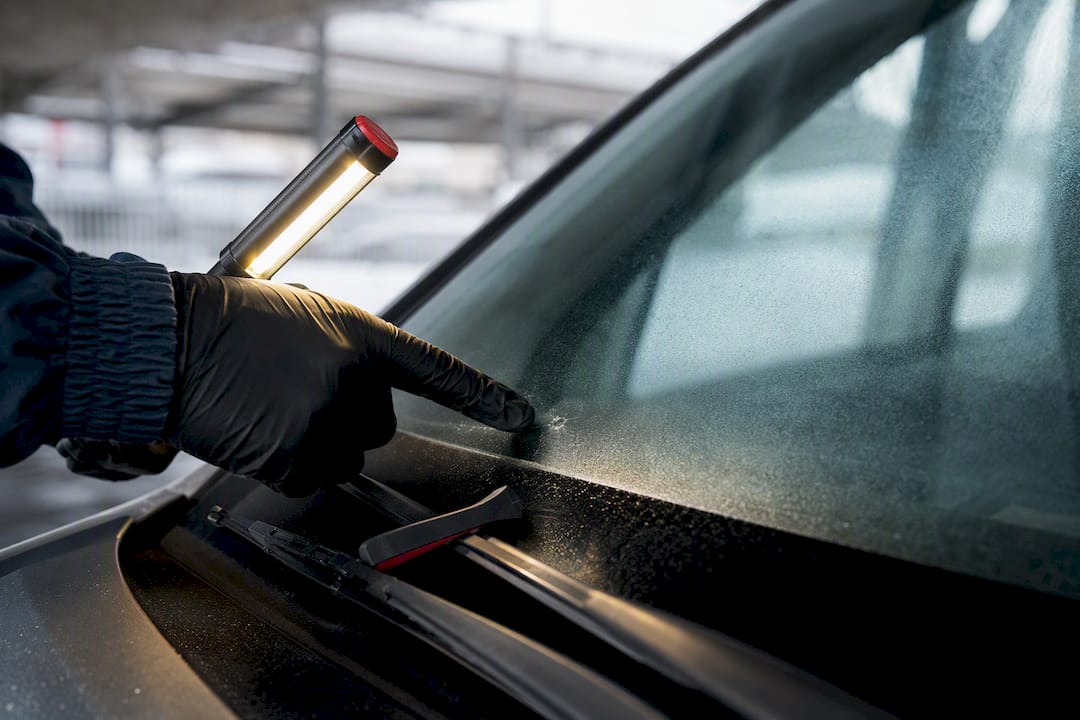
- Look for faint lines or a subtle grid pattern near the base of the windshield, close to the wiper arms. Wire-based systems often show this under direct light, especially early morning sun.
- Check your dashboard for a dedicated glass icon, usually distinct from the rear defroster symbol and separate from any heated wiper park button. It typically shows wavy lines rising from a windshield outline.
- Pull up your owner’s manual or build sheet. Heated windshields are almost always a factory option, so the documentation tied to your VIN will confirm it definitively.
- Run a short, safe test on a cold day. Activate the feature for under a minute and gently check for warmth with the back of your hand, never press your palm flat against hot glass or hold contact too long.
Retrofit, Repair, and Replacement: What Owners Need to Know
Retrofitting a heated windshield onto a car that wasn’t built with one sounds simple in theory and rarely is in practice. The heating elements are baked into the glass during the lamination process itself, not added afterward. You can’t glue a heated pane’s function onto standard glass.
- Power delivery is the bigger obstacle. Heated glass needs dedicated circuitry and enough alternator capacity to support the draw, something most vehicles without the factory option simply weren’t wired for.
- Dashboard integration for the control switch and warning icon isn’t a standard feature on non-equipped trims either, which means retrofits often require touching systems well beyond the glass itself.
This is why most experts recommend choosing the feature at purchase time rather than chasing it as an aftermarket addition. If your heated windshield develops a chip or crack that interrupts the heating elements, repair usually isn’t an option. A damaged heating grid or coating typically means full replacement with correctly specified glass, not a resin injection. Installing standard glass in place of factory heated glass removes the feature entirely, so confirming the replacement part matches your original spec matters. On top of that, many vehicles built in the last several years carry forward-facing cameras or sensors that require ADAS recalibration after any windshield swap, heated or not. Build that into your scheduling and cost expectations from the start.
Keeping Your Heated Windshield in Good Shape
A few habits keep the system working reliably for years. Run the heater only until visibility returns, there’s no benefit to leaving it on longer, and doing so just draws unnecessary current. Never pour hot water over the glass to speed things along; the thermal shock risk is real regardless of whether the glass is heated, and it can crack cold glass instantly. Avoid aggressive scraping directly over the areas where wires or coating sit, since repeated abrasion can eventually damage the heating path underneath.
Inspect chips and cracks promptly. Even small damage near the wiper base can interrupt a heating circuit long before it becomes a visible windshield problem.
Pro Tip: If your heated windshield suddenly stops warming or you notice flickering dashboard lights when it’s activated, don’t assume it’s just the glass. Have a technician check your alternator and battery health first, since a heated windshield under strain will often reveal an electrical weak point elsewhere in the vehicle.
Do Heated Windshields Help or Hurt Energy Efficiency?
The environmental math on heated windshields is more favorable than it first appears. The core tradeoff is trading a short burst of electrical draw for a longer stretch of wasted idling, and the second one loses on almost every measure that matters.
A driver without heated glass often runs the engine for five to ten minutes on cold mornings just to get enough cabin heat flowing to clear the windshield conventionally. That’s fuel burned and emissions released while the car sits stationary in a driveway. Heated glass shortens or eliminates that idle window because it clears the glass directly rather than waiting for warm air to circulate and slowly transfer heat to the windshield’s interior surface.
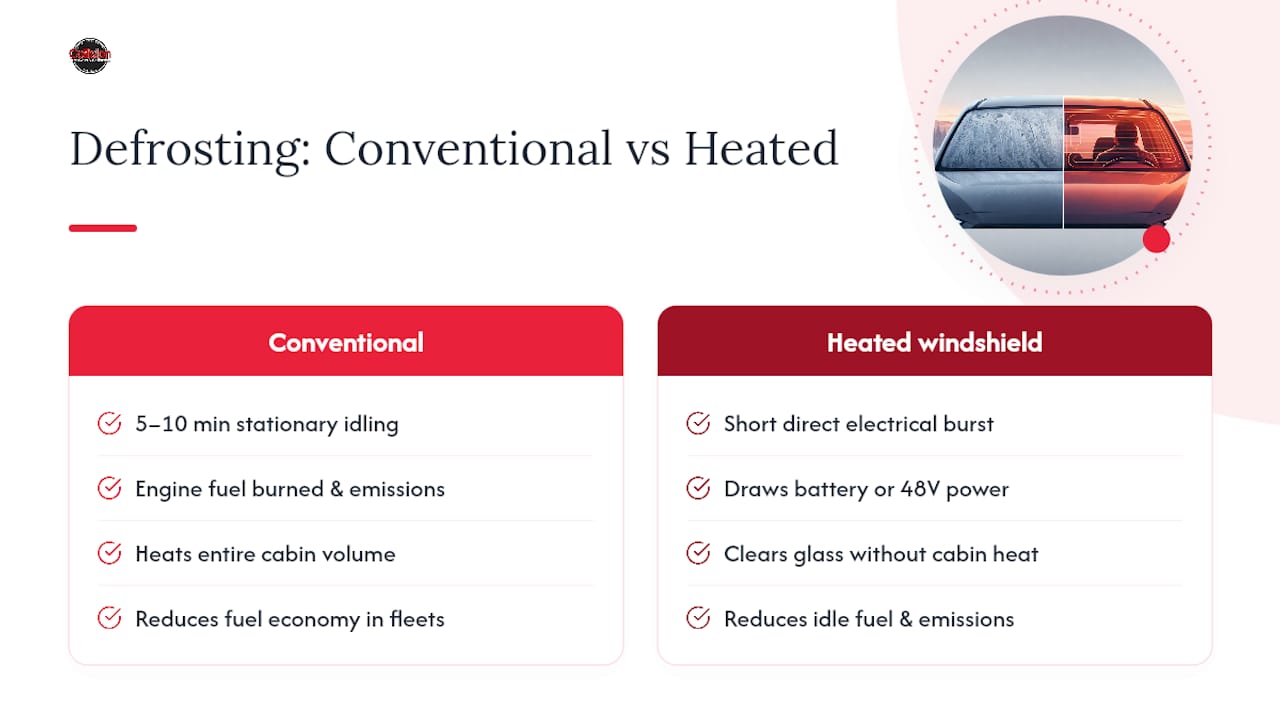
For EV owners, the calculation shifts but doesn’t reverse. Idling isn’t burning gasoline, but running a cabin heater at full blast to defrost glass pulls meaningfully from the battery, cutting into range on exactly the cold days when range is already reduced by low temperatures. A heated windshield draws power directly and briefly rather than heating an entire cabin volume just to warm one pane of glass. That’s a more targeted use of stored energy, and it’s part of why 48-volt metal-coating systems are gaining traction on electric platforms specifically.
Fleet operators see this multiply across dozens of vehicles. Fewer idle-minutes per vehicle per cold morning adds up to real fuel savings and lower collective emissions over a winter season, particularly for delivery and service fleets that start engines before sunrise.
A Shop’s Take on Heated Glass and ADAS Calibration
We see the same scenario repeatedly: an owner replaces a cracked heated windshield with the wrong-spec glass, loses the heating function entirely, and doesn’t realize it until the next cold snap. Correct-spec glass paired with proper ADAS recalibration prevents that loss and avoids a second trip back to the shop.
Before any replacement, ask your installer three things: the OEM part number for your specific heated glass, whether your ADAS sensors will be recalibrated as part of the job, and what warranty or mobile-service options come with the work. Those three answers tell you whether you’re getting your feature back or losing it quietly.
— Collision Auto Glass & Calibration
Need Your Heated Windshield Repaired or Replaced?
Some shops handle the two things a heated windshield job actually depends on: getting the glass spec right and getting the ADAS calibration right, both under one roof. That combination matters because a shop that outsources calibration adds days to your timeline and another point of failure to your paperwork.

If a rock chip is threatening your heating elements, windshield repair starting around $90 can stop a crack before it spreads into the wiring. If replacement is already necessary, windshield replacement runs between $200 and $500 depending on your vehicle and glass spec, and includes in-house ADAS calibration so your safety systems come back online correctly the first time. Same-day service and free mobile installation within the Portland area mean you’re not stuck without a car for days, and every installation carries a lifetime no-leak guarantee. Insurance claims get billed directly, so there’s no chasing reimbursement paperwork on top of a cold-weather inconvenience. Request a quote and get your heated glass back in working order before the next hard freeze.
Sources
Hyundai Motor Group’s metal-coating heated glass testing documents the 48V performance advantage cited above. Finn Lamex offers a clear technical explainer on wire and coating placement inside laminated glass. AutoZone’s consumer guidance covers who genuinely benefits from the feature. Gatekeeper Offroad breaks down why retrofitting rarely works as a simple aftermarket addition.
- MetalCoating Heated Glass: Exceptional Defrosting and Demisting Performance with BuiltIn Heating | Hyundai Motor Group
- How does heated windscreen technology work? | Finn Lamex
- Should I get heated windshield wipers? | AutoZone
- Heated wiper blades: embracing winter driving comfort and safety | Gatekeeper Offroad
FAQ
Is a Heated Windshield Worth It?
For drivers who park outdoors in freezing conditions, yes. It cuts scraping time, prevents frozen wipers, and clears frost far faster than waiting on cabin air alone. Drivers in mild climates or with garage access will notice less day-to-day value from it.
How Do I Tell if I Have a Heated Windshield?
Check for faint horizontal lines near the wiper base, look for a dedicated glass-heating icon on your dashboard, or confirm the option through your owner’s manual or VIN build sheet. A brief activation test, checked carefully for warmth, also confirms it.
Which Cars Have a Heated Windshield?
The feature appears most often on higher trims of mainstream passenger vehicles, many EVs, and commercial trucks that need reliable cold-weather visibility. Availability varies by model year and trim, so your owner’s manual or build sheet is the most reliable source.
Can You Add a Heated Windshield to Any Car?
Not easily. The heating elements are built into the glass during lamination, and the vehicle needs dedicated wiring and enough alternator capacity to support the draw. Most experts recommend choosing the feature at purchase rather than retrofitting it later.
Does Replacing a Heated Windshield Require ADAS Calibration?
Often, yes. Many modern vehicles mount cameras or sensors near the windshield that require recalibration after replacement to function correctly. Collision Auto Glass & Calibration includes in-house calibration with replacement service to handle this in one visit.
Recommended
- Don’t Skip ADAS Calibration: Heated Windshield Replacement in Portland
- Need a New Windshield? Don’t Forget Calibration
- Do I Need To Recalibrate My ADAS If I Replace My Windshield?
- How to Quickly Defog Your Car Windows
🎧 Listen to This Article
Share
Recent Posts

September 19, 2026
Windshield Frit Explained for Drivers: How Black Dots Protect the Seal
How the screen printed, baked ceramic band and dot matrix on fixed auto glass give urethane adhesive a textured grip, block UV, prevent...
September 18, 2026
Drivers: Heated Windshield Cuts Frost to 5 Minutes with 48V, ADAS Tips
Why heated windshields matter: 48V metal coating can clear frost in five minutes. Learn repair, replacement, and ADAS calibration steps owners should request....
September 17, 2026
$600–$1,500 ADAS Costs: When to Use Windshield Insurance vs Pay Cash
Decide whether to file a claim or pay cash by comparing repair cost, your deductible, and ADAS recalibration fees. Learn how shops and...