
Auto Glass Repair
Most single rock chip repairs take about 20 to 40 minutes of actual technician work, and your car is usually drive-ready within an hour. Multiple chips or a small crack push that closer to 30 to 45 minutes. A full windshield replacement runs 1 to 2 hours of active labor, plus adhesive cure time that can stretch your total downtime. Either way, plan for a full 24-hour window before a high-pressure car wash, no matter which repair you get.
TL;DR:
- Repair active work times typically range from 20 to 45 minutes, with drive-ready windows varying from 30 minutes to several hours depending on weather and damage specifics.
- Damage pattern, location on the windshield, temperature, and sunlight directly influence repair duration and curing speed, affecting when the car can be safely driven.
- Larger chips over a quarter or cracks exceeding six inches usually require replacement, which involves longer work and calibration for driver-assist features.
- DIY repairs depend heavily on weather conditions and are usually quicker initially but may be less effective for complex or spreading damage.
- Scheduling early in the day and providing detailed vehicle information can help ensure quicker curing and avoid delays caused by weather or unexpected calibration needs.
Table of Contents
- Rock Chip Repair Time by Damage Type
- What Actually Changes Your Repair Time
- How Long Before You Can Drive or Wash Your Car
- DIY Kits vs. Professional Repair: The Real Time Cost
- When a Chip Becomes a Replacement Job
- How to Book an Appointment That Fits Your Schedule
- Why These Time Estimates Hold Up in Real Shops
- A Scheduling Habit Worth Building
- Get Your Rock Chip Fixed Today, Not Next Week
- Sources
- FAQ
Rock Chip Repair Time by Damage Type
The rock chip repair time you’re quoted depends almost entirely on what kind of damage you’re dealing with and how much of it there is. A technician working on one clean chip moves through the same basic steps as one facing three chips and a hairline crack, just more of them.
According to HowLongFor’s automotive repair data, here’s how active work time and total drive-ready windows typically break down:
A few things worth flagging about that table:
- “Active work time” is hands-on-glass time, not how long you’ll be sitting in the waiting room.
- Drive-ready doesn’t mean fully cured. Glass Doctor’s guidance notes that simple repairs generally wrap in 30 to 60 minutes, and it’s smart to act quickly once you spot damage rather than let a small chip sit.
- Replacement adds a variable most people don’t expect: the adhesive itself, not the glass work, often decides when you can drive away.
What Actually Changes Your Repair Time
Two chips of the same size can take wildly different amounts of time to fix, depending on where they sit and what the weather’s doing outside.
- Damage pattern matters more than size alone. A simple bullseye chip is faster to fill than a star break or a spidering crack, which need more careful resin work to stop the spread.
- Every additional chip adds time, but not proportionally. A shop repairing three chips in one visit rarely takes three times as long as one chip.
- Location on the glass can force a different outcome entirely. Damage sitting right in the driver’s direct sightline, or near the windshield’s edge, often needs replacement instead of a quick fix, which changes your whole timeline.
- Temperature and sunlight speed up or slow down resin cure. Warmer, sunnier conditions cure resin faster than cold, overcast days.
- Mobile appointments add a travel and setup window. If a technician is coming to you, confirm the arrival window so you’re not guessing when to expect them.
How Long Before You Can Drive or Wash Your Car
You can typically drive away 30 to 60 minutes after a professional rock chip repair, though the exact window depends on temperature and how much UV exposure the resin gets. EngineerSkill’s cure time breakdown shows just how much weather matters here.
Cure Time Reality Check: Resin cures fastest above 75°F, often in 15 to 30 minutes. Between 50 and 70°F, expect 30 to 60 minutes. Below 50°F, cure time can stretch past two hours. That’s why shops schedule around the weather, not just the calendar.
Drive-ready is not the same as fully cured. The resin needs roughly 24 hours to reach its full molecular bond, and AutoZone’s repair guidance recommends avoiding high-pressure car washes and sudden temperature swings during that window. If you do need to clean your windshield in the meantime, a gentle hand wash beats an automated bay. This streak-free glass cleaning method works well for keeping glass clear without stressing a fresh repair.
DIY Kits vs. Professional Repair: The Real Time Cost
A DIY kit and a professional repair can both “fix” a chip, but they rarely take the same amount of time once you count everything involved.
- DIY kits depend on the sun. After prepping and injecting resin, O’Reilly Auto Parts’ repair guide recommends following the kit’s UV exposure instructions, often 15 to 30 minutes in direct sunlight, but up to an hour if it’s cloudy.
- Professionals control the cure with equipment, not weather. Shop-grade UV lamps and vacuum resin rigs cure faster and more evenly than sunlight, which cuts down on rework.
- DIY makes sense for small, fresh chips you catch immediately. For anything bigger, multiple chips, or damage that’s already started spreading, a professional visit usually saves time overall because you skip the redo.
Pro Tip: If you’re on the fence, a quarter-sized chip you noticed this morning is a reasonable DIY candidate. Anything you’ve been driving around with for a week, or that’s already grown a crack line, is worth a professional look before it worsens. For a closer comparison of outcomes, see whether a DIY repair can actually prevent further cracking or if it’s better to go DIY or professional.
When a Chip Becomes a Replacement Job
Some damage simply can’t be repaired, and knowing the cutoffs ahead of time keeps you from scheduling the wrong appointment.
- Chips larger than a quarter usually can’t be filled reliably.
- Deep damage that’s broken through the inner layer of laminated glass needs replacement.
- Damage sitting directly in the driver’s line of sight is often replaced rather than repaired, even if small, for visibility and safety.
- Several chips clustered close together can compromise the glass enough that replacement is safer than repair.
Replacement itself runs 1 to 2 hours of active work, but the adhesive needs its own cure window before certain activities are safe, sometimes several hours. If your vehicle has driver-assist features like lane departure warning or automatic braking, replacement can also trigger ADAS calibration, which typically adds separate appointment time. Tell the shop what your car has before you book, not after you arrive.
How to Book an Appointment That Fits Your Schedule
A little information up front turns a vague appointment window into a predictable one.
- Ask directly for the estimated active work time and drive-away window when you call to schedule, not just “how long will it take.”
- Give your vehicle’s year, make, and model, plus any ADAS features, so the shop can plan for calibration instead of discovering it on-site.
- Watch the weather. A sunny afternoon cures resin faster than a gray morning, so if your schedule is flexible, pick the clearer day.
- Confirm parking and shelter for mobile appointments. A technician working in direct sun or rain may need a shaded spot or a slight adjustment to timing.
Pro Tip: Booking the first appointment of the day, especially on a sunny morning, tends to shorten cure time and gives the shop buffer room if anything runs long. Afternoon slots on cold or overcast days are more likely to slip.
Why These Time Estimates Hold Up in Real Shops
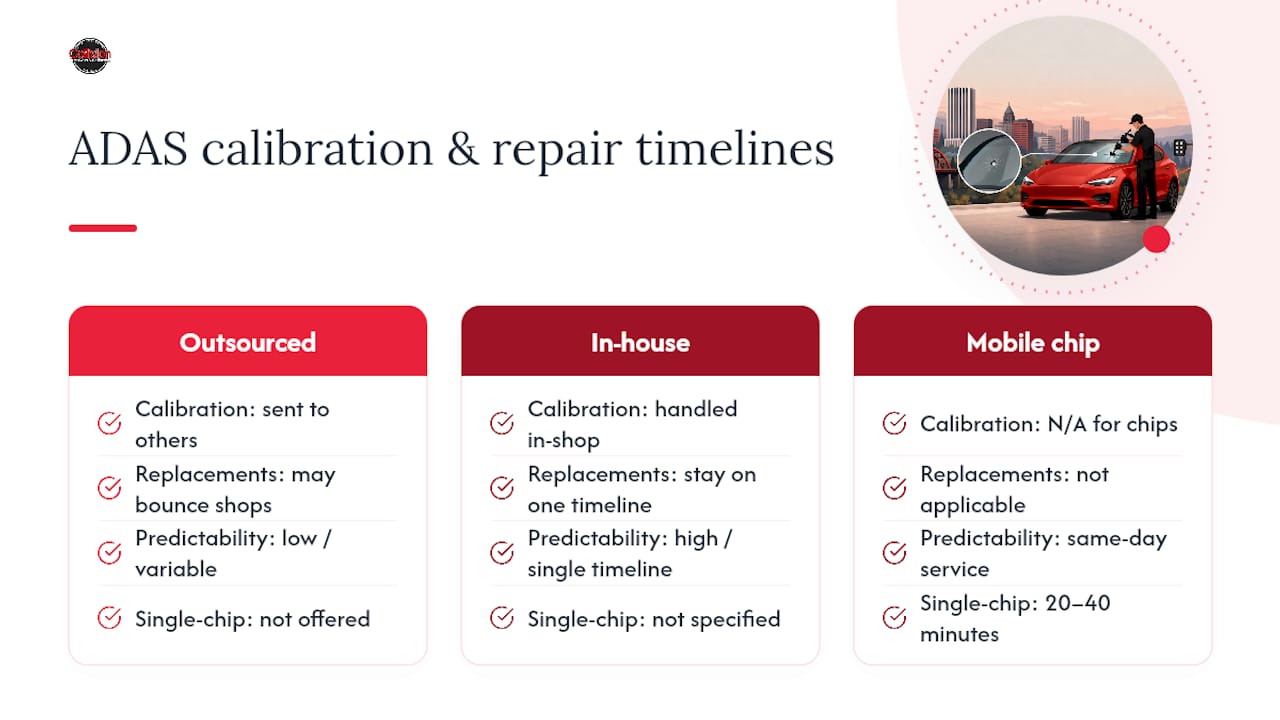
Some auto glass shops have run same-day mobile rock chip repairs across Portland since 2008, and the 20 to 40 minute single-chip window matches what typically plays out in driveways and parking lots, not just lab conditions. Every job carries a lifetime no-leak guarantee, and because ADAS calibration is handled in-house rather than outsourced, replacements that need recalibration stay on a single, predictable timeline instead of bouncing between shops.
A Scheduling Habit Worth Building
Book earlier in the day when you can. Morning appointments give resin more sunlight hours to cure and leave room to absorb any weather surprises before your day ends. The other habit that pays off: have your VIN and a quick note on your car’s driver-assist features ready before the technician arrives, so nobody’s diagnosing that on-site while the clock runs.
— Collision Auto Glass & Calibration
Get Your Rock Chip Fixed Today, Not Next Week
Some auto glass shops solve the scheduling problem this article just walked through: offering same-day appointments and free mobile installation across Portland can help avoid losing a half day at a shop waiting room.

Some repairs and replacements carry a lifetime no-leak guarantee, and because ADAS calibration can happen in-house, a replacement that needs recalibration may not require a second appointment somewhere else. Direct insurance billing may be offered, which can reduce the need to submit paperwork yourself. If your chip is small enough to repair, book a rock chip repair appointment today. If it’s already spread past what repair can fix, get a windshield replacement quote and ask about same-day scheduling when you call.
Sources
- Howlongfor
- Engineerskill
- How To Fix A Car Windshield Chip | O’Reilly Auto Parts
- How to Fix Small Windshield Cracks – AutoZone
FAQ
How long do rock chip repairs take?
A single chip typically takes 20 to 40 minutes of active repair work, with your car drive-ready within 30 to 60 minutes. Multiple chips or small cracks run closer to 30 to 45 minutes of active work.
How long after a rock chip repair can you wash your car?
Wait at least 24 hours before a high-pressure car wash, since that’s roughly how long the resin needs to reach full molecular strength. A gentle hand wash is a safer option if you need to clean the glass sooner.
How bad of a rock chip can be fixed?
Chips smaller than a quarter, without deep damage through the inner layer of laminated glass, are usually repairable. Once a chip cracks the inner laminate or spreads past that size, replacement is the safer route.
How big is too big to fix a rock chip?
Damage larger than a quarter-sized coin, or any crack longer than about 6 inches, generally falls outside what a standard repair can reliably fix. Damage in the driver’s direct sightline is often replaced instead, even when it’s small, for safety reasons.
Recommended
- Should I Repair A Rock Chip?
- How Much Do Rock Chips Cost To Fix?
- How Much Is It To Fix A Rock Chip?
- How Long Does A Rock Chip Repair Last?
🎧 Listen to This Article
Share
Recent Posts

September 8, 2026
Portland Drivers: Book Rock Chip Repair to Drive Away in 30–60 Minutes
Portland drivers: rock chip repairs often take 20–40 minutes of tech time and are drive-ready in 30–60 minutes. Booking tips, what to tell...

September 7, 2026
Car Owners: $30–$80 DIY to Fix Windshield Frame Rust or Hire a Pro
Quick owner workflow to spot and stop windshield frame rust: run a soapy-water probe, judge surface vs rot-through, then DIY ($30–$80) or get...

September 6, 2026
U.S. Drivers: Wait 24–72 Hours Before Washing a New Windshield
Installer approved stages for washing a new windshield: hand wash after 24 hours, touchless at 48, high pressure at 72. Inspect seals if...