Auto Glass Repair
Hand wash your car no sooner than 24 hours after windshield replacement (as a general guideline), hold off on touchless or soft-touch washes until 48 hours, and give high-pressure or automatic washes a full 72 hours. These windows protect the urethane adhesive bonding your glass to the frame while it cures. Cold or humid conditions push those numbers higher, so when in doubt, call your installer before you grab the hose.
TL;DR:
- Wait at least 24 hours before hand washing, 48 hours for touchless washes, and 72 hours or longer for high-pressure cleaning, especially in cold weather.
- Full adhesive cure, which provides maximum strength, typically takes 24 hours or more, depending on the product and environmental conditions.
- Early exposure to water pressure, mechanical brushes, or chemical treatments before full cure can cause seal failures and callbacks.
- Use gentle, water-only cleaning methods during the first week and avoid high-pressure jets or chemical solvents near the bond line.
- Confirm the adhesive type and cure times with your installer to properly plan washing and avoid damaging the seal.
Table of Contents
- What Are the Recommended Wash Times by Wash Type?
- Why Does Adhesive Cure Time Matter So Much?
- How Should You Wash Your Car at Each Stage After Installation?
- What Changes How Long the Adhesive Needs to Cure?
- How Do You Check the Seal After Washing?
- What Should Your Installer Tell You Before You Leave?
- What Actually Causes Windshield Rework Callbacks?
- Same-Day Windshield Replacement with a Lifetime No-Leak Guarantee is offered, along with mobile service that comes to you rather than the other way around.
- Sources
- FAQ
What Are the Recommended Wash Times by Wash Type?
The safe window depends entirely on how much force and water pressure a wash method throws at the bond line around your windshield. Gentle methods can happen sooner; anything with force or heat needs more patience.
- Hand wash: Wait at least 24 hours, then use a hose (not a pressure nozzle) and keep water and soap away from the perimeter seal.
- Touchless or soft-touch automatic wash: Wait 48 hours minimum. These skip the mechanical brushes but still blast water at meaningful pressure.
- High-pressure or brush-style automatic wash: Wait 72 hours or longer, especially in cold weather. The brushes and water jets put direct mechanical stress on a seal that hasn’t finished bonding.
- Waxing, detailing, or chemical treatments near the glass: Hold off for at least a week. Solvents and waxes can interfere with the final cure stage of the urethane adhesive if they seep near the bond line.
Trade guidance from installers converges tightly around this 24 to 72 hour staged timeline, which makes it the most practical rule of thumb for most vehicles under normal weather.
Why Does Adhesive Cure Time Matter So Much?
Your installer tells you it’s safe to drive away almost immediately, but “safe to drive” and “safe to blast with a hose” are two different milestones. I-CAR’s technical guidance notes that minimum driveaway time for urethane adhesives can be as short as 30 to 60 minutes for fast-cure products, while conventional moisture-cure urethanes may need 2 to 8 hours or longer just to reach that minimum threshold. Full structural cure, the point where the bond reaches its designed strength, typically takes around 24 hours or more depending on conditions.
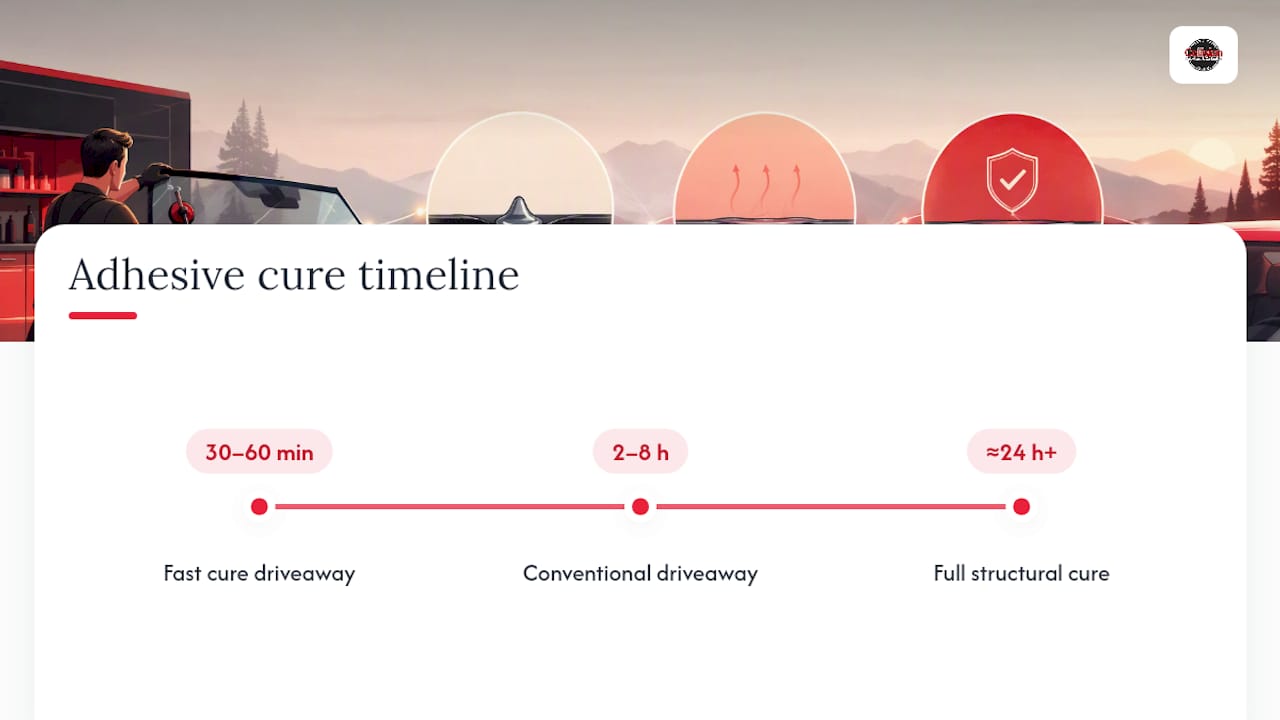
That gap matters because water pressure, mechanical brushes, and even the cabin pressure spike from slamming a door can stress a seal that’s technically “drivable” but far from finished curing. A tacky or stick-resistant feel on the urethane doesn’t mean it has reached full strength. 3M’s technical documentation on auto glass adhesives confirms that cure timing varies by product formulation and ambient conditions, not by how the surface feels to the touch.
How Should You Wash Your Car at Each Stage After Installation?
Treat the first week like a series of checkpoints rather than one long waiting period. Each stage has its own rules.
- 0 to 24 hours: Skip the car wash entirely. If something needs cleaning urgently, use a soft cloth and plain water away from the edges. Leave any retention tape exactly where your installer placed it. That tape holds the glass steady while the adhesive sets, and removing it early can let vibration or gravity shift the glass before the bond fully develops.
- 24 to 48 hours: Hand wash is generally fine now. Use a hose on a gentle setting, never a pressure nozzle, and keep soap and water off the bond line around the perimeter. Dry with a soft towel rather than letting water sit and wick toward the edges.
- 48 to 72 hours: Touchless automatic washes are usually acceptable, but still avoid parking directly under high-pressure jets aimed at the windshield’s edge.
- One week and beyond: Normal washing resumes, though it’s worth inspecting the edges before your first full detail or wax treatment.
Small habits help across all four stages: crack a window slightly to equalize cabin pressure, avoid slamming doors, and keep chemical cleaners away from the seal until it’s fully cured.
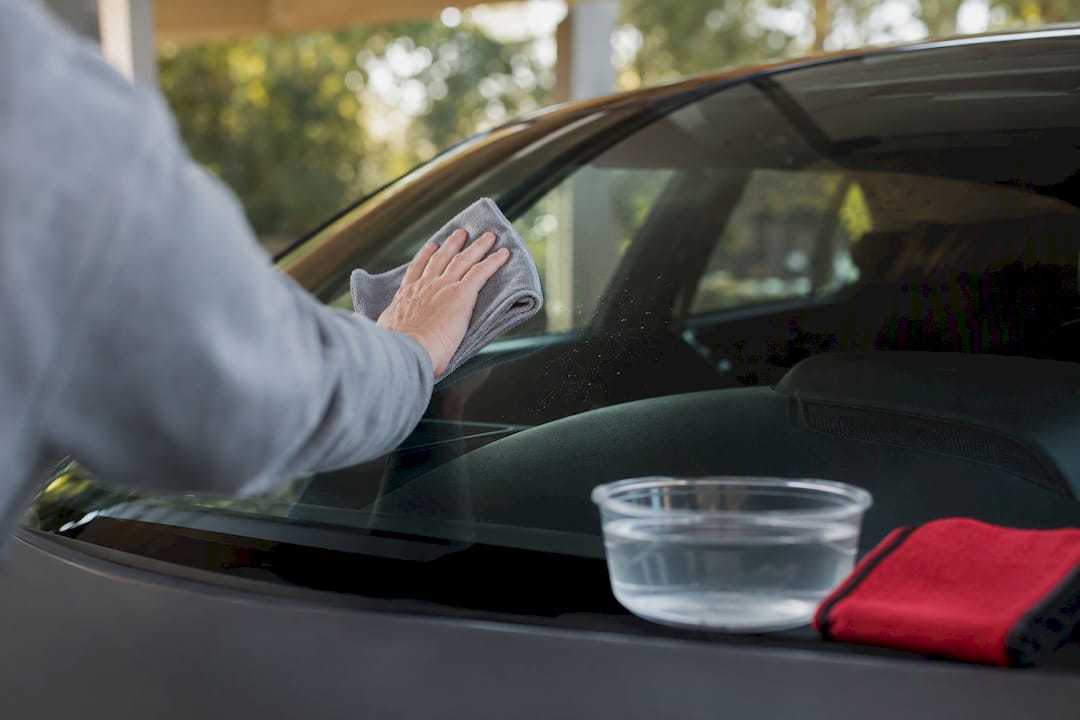
Pro Tip: If you’re removing water spots or light residue during that first week, stick to plain water and a microfiber cloth rather than reaching for glass cleaner. Safe spot-removal techniques built for sensitive finishes work just as well around a curing bond line.
What Changes How Long the Adhesive Needs to Cure?
Temperature and humidity drive cure speed more than almost anything else. Manufacturer driveaway times are typically calculated around 75°F and roughly 50% relative humidity, according to I-CAR’s cure time guidance. Drop the temperature into the 40s or below, or wash your car in a dry climate, and the urethane cures noticeably slower.
Adhesive product matters too. Fast-cure urethanes reach minimum strength in under an hour under ideal conditions, while conventional moisture-cure formulas can take several hours just to hit that same drivable threshold. If your installer used a conventional product, or if you’re dealing with cold or rainy weather, it is advisable to add extra time beyond the standard windows before washing.
How Do You Check the Seal After Washing?
Run through a short inspection any time after your first allowed wash, especially the first one.
- Check all four corners of the windshield for gaps or uneven glass-to-frame contact.
- Run a finger along the bottom edge, feeling for looseness or fresh moisture.
- Look at interior trim near the A-pillars and dashboard for water stains or dampness.
- Do a quick water test: run a hose over the top and sides for a minute, then check the interior for drips or moisture along the headliner.
If premature exposure to rain or a high-pressure wash let water reach the uncured adhesive, you might notice wind noise at highway speed, a musty smell, or a damp patch on the carpet days later. Any of these means it’s time to call your installer, not wait it out. Our guide on caring for a new windshield covers more on spotting early trouble.
What Should Your Installer Tell You Before You Leave?
A reputable shop walks you through three things before handing back your keys: the drive-away time for the specific adhesive used, how long to leave retention tape in place, and the recommended wash delay for your vehicle and weather conditions. If you drove off without hearing any of this, ask directly: what adhesive product was used, what’s the minimum cure window for it, and how long should the tape stay on?
Shops that back their work with guarantees and handle insurance billing directly tend to walk customers through important aftercare checklists. That level of follow-through is worth checking for when you’re choosing an auto glass shop, since aftercare instructions are as much a part of the job as the installation itself.
What Actually Causes Windshield Rework Callbacks?
Most callbacks trace back to the same two habits: an early high-pressure wash and yanked retention tape. Both are avoidable with zero cost, unlike the reinstall that follows a broken seal. A little light rain once you’re past the recommended window won’t hurt anything. Patience here costs you nothing; skipping it can cost you a second installation.
— Collision Auto Glass & Calibration
Same-Day Windshield Replacement with a Lifetime No-Leak Guarantee is offered, along with mobile service that comes to you rather than the other way around.
If you’re reading this because you already had glass replaced elsewhere and you’re seeing warning signs after washing, an inspection is worth scheduling before the issue worsens. Direct insurance billing can simplify paperwork by handling claims forms. Same-day mobile installation and in-house ADAS calibration services ensure safety systems stay accurate. Get a same-day windshield replacement quote and ask about mobile scheduling for your address.
Sources
- Minimum driveaway time for urethane adhesives (I‑CAR)
- 3M auto glass urethane adhesive technical guidance (3M TDS)
- BETASEAL advanced cure & glass prep (DuPont / product brochure)
- Driving in rain after windshield replacement? (GlassInc blog)
FAQ
How Soon Can You Wash a Car After a New Windshield?
Wait at least 24 hours for a hand wash, around 48 hours for a touchless automatic wash, and about 72 hours for high-pressure or brush washes; longer waits may be prudent in cold weather.
What Not to Do After Windshield Replacement?
Don’t remove retention tape early, don’t slam doors, don’t use high-pressure water near the bond line within 72 hours, and don’t apply wax or chemical treatments near the glass for about a week.
How Long Does It Take for a Windshield Replacement to Settle?
Minimum driveaway strength can be reached in under an hour with fast-cure adhesives, but full structural cure generally takes around 24 hours or more depending on the product and weather.
How Long Does Windshield Adhesive Take to Cure?
Cure time depends on the adhesive product and conditions. Fast-cure urethanes can hit minimum strength in 30 to 60 minutes, while conventional moisture-cure formulas may take several hours to reach that same point, with full cure extending well beyond that. If your installer didn’t specify the product used, ask them directly rather than guessing at a wash schedule.
Recommended
- How to Properly Care for a New Windshield
- Tips On Caring For and Maintaining Your Car’s Glass
- Why You Shouldn’t Delay Getting Windshield Repair or Replacement
- How to Avoid Windshield Damage
🎧 Listen to This Article
Share
Recent Posts
October 23, 2026
How ADAS Calibration Works, Step by Step
See how ADAS calibration works: static and dynamic methods, what happens in the shop, how long it takes, and when your car needs...

October 22, 2026
Do Tires Affect ADAS? What Changes and What Doesn’t
Do tires affect ADAS? Learn how tire size, pressure, wear and alignment can change sensor accuracy, and when a calibration check is worth...

October 21, 2026
Signs Your ADAS Calibration Is Off After Glass or Collision Work
Lane assist drifting, false braking, a camera warning light: learn the signs your ADAS calibration is off and what to do about it,...