
Auto Glass Repair
Most windshields with multiple chips can still be repaired, provided each chip is generally small, sits outside the driver’s direct sightline, and the impact points are sufficiently spaced apart from each other and the glass edge. That last part matters most: spacing, not just size, is what separates a legitimate repair from a windshield that needs replacing. Get a professional two-sided inspection before you decide anything, since the ROLAGS/ANSI screening standard technicians use accounts for factors you can’t judge from the driver’s seat.
TL;DR:
- Multiple chips spaced at least four inches apart are often repairable, while closely clustered impacts typically require windshield replacement.
- Chips within two inches of the windshield edge are generally unrepairable due to structural concerns, and damage near sensors or cameras usually needs full replacement.
- The repair process involves cleaning contamination, evacuating trapped air, injecting resin, and inspecting from inside and outside to ensure quality.
- DIY kits are only advisable for tiny, isolated chips outside the driver’s line of sight, as they lack professional tools and can damage the glass further.
- Insurers often waive the deductible for professional repairs, which generally cost between $65 and $150 per chip, compared to hundreds for full replacement.
Table of Contents
- Multiple Windshield Chips Repair: What Technicians Check First
- How Does a Professional Windshield Chip Repair Work?
- DIY Windshield Chip Repair: When It’s Worth the Risk
- Windshield Chip Repair Cost, Timing, and Insurance Coverage
- Signs Your Windshield Needs Replacement, Not Repair
- How Collision Auto Glass & Calibration Handles Multi-Chip Jobs
- Long-Term Care After a Multi-Chip Repair
- Why Chips and Cracks Often Show Up Together
- Our Take: Stop Treating Multiple Chips Like One Big Chip
- Get a Multi-Chip Windshield Inspection Scheduled Today
- Sources
- FAQ
Multiple Windshield Chips Repair: What Technicians Check First
A technician evaluating multiple chips isn’t just eyeballing size. They’re running through a checklist that determines whether resin can actually restore structural integrity or whether you’re better off replacing the glass outright.
The ROLAGS standard sets specific thresholds technicians use during that inspection:
- Bullseye chips: repairable up to sizes defined by industry standards
- Combination breaks: repairable up to sizes defined by industry standards
- Star breaks: repairable up to sizes defined by industry standards
- Cracks: repairable up to lengths defined by industry standards depending on depth and location
Location matters as much as size. The driver’s primary viewing area, known as the DPVA, gets stricter treatment because even a well-executed repair can leave faint distortion that’s distracting at highway speed. Chips within two inches of the windshield edge are typically ruled out entirely, since edge damage compromises the structural bond between the glass and the frame.
Multiplicity is where things get specific to your situation. Industry practice calls for at least four inches of separation between repairable chips. Three or more separate damage points usually pushes a shop toward recommending replacement instead of repair, because closely clustered impacts compromise the glass “bridge” between them in ways resin injection can’t fully restore.
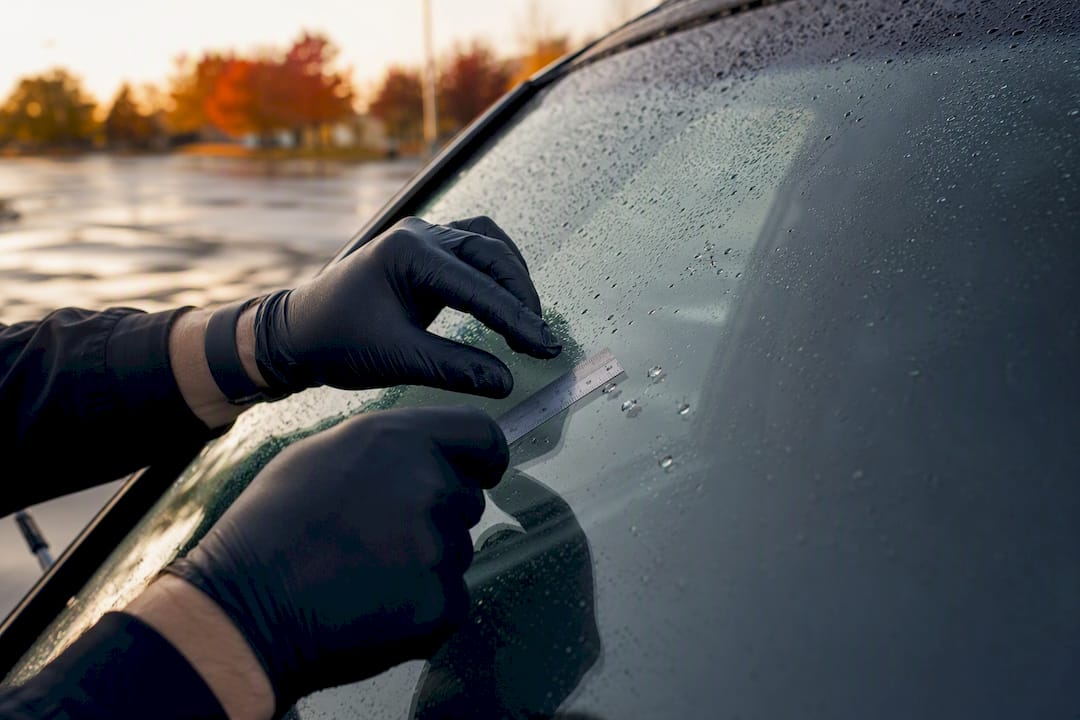
Pro Tip: Before you call a shop, take a photo of each chip next to a coin for scale, and note roughly how far apart they are. That single step speeds up phone triage and often lets a technician give you a preliminary answer before they even arrive.
Technicians also check for penetration through the inner layer (PVB) and contamination from dirt or moisture, both of which can disqualify a chip from repair regardless of size.
How Does a Professional Windshield Chip Repair Work?
Once a chip passes screening, the repair itself follows a fairly consistent sequence, though multiple chips can complicate each step.
- Two-sided inspection. The technician examines the damage from inside and outside the vehicle, measuring size and checking for penetration before touching any equipment.
- Contamination removal. Dirt, moisture, and loose glass fragments get cleared from the impact point, since anything trapped inside will show up as a permanent flaw.
- Air evacuation. A vacuum or displacement tool pulls trapped air out of the break. This step is critical, and it’s the one most DIY kits can’t replicate properly.
- Resin injection. A certified resin matched to the glass’s refractive index fills the void, then cures under a UV lamp specified for that resin.
- Finish and inspection. The technician scrapes the surface flush and inspects the repair from the driver’s seated position, checking for distortion in the direct line of sight.
When you’re dealing with three or four chips instead of one, that sequence often needs staged access, since some chips may be easier to reach with the glass in a certain position, and total cure time adds up fast. A shop working through a cluster of chips may also pause mid-job and recommend replacement if one impact point reveals penetration the initial inspection missed.
DIY Windshield Chip Repair: When It’s Worth the Risk
A DIY kit can handle one very specific scenario: a single, tiny bullseye chip, smaller than a quarter, sitting outside the DPVA, that’s still clean and fresh. Outside that narrow window, the trade-offs stack up fast.
- Store-bought kits lack the vacuum or pressure equipment professional tools use, so trapped air often remains in the break even after injection.
- Low-grade resin can partially cure or fail to bond properly, leaving a visible flaw that never fully disappears.
- A botched DIY attempt frequently contaminates the break permanently, meaning a professional can no longer repair it later. What started as a $100 fix becomes a full windshield replacement.
- Many insurance policies may waive the deductible for professional chip repair, reducing out-of-pocket costs and potentially making professional repair more cost-effective than DIY attempts.
If you’re staring at more than one chip, the math tips even further toward professional service. A failed DIY attempt on chip number one doesn’t just cost you that repair. It can force replacement of the entire windshield if the damage was in a load-bearing zone.
Windshield Chip Repair Cost, Timing, and Insurance Coverage
Budgeting for multiple chips means accounting for both time and money differently than you would for a single repair.
- Cost: Single chip repairs commonly run $65 to $150, while a full replacement often costs several hundred dollars once you factor in glass, labor, and any required sensor recalibration.
- Time: A single repair typically takes 30 to 60 minutes. A cluster of three or four chips extends that window, and a replacement job runs considerably longer once calibration is involved.
- Insurance: Many insurers waive the deductible for chip repair specifically because it’s cheaper than paying out a full replacement claim later. Shops that offer direct billing make this a paperwork-free process for you.
- ADAS calibration: If replacement becomes necessary and your vehicle has a forward-facing camera mounted near the windshield, calibration adds both cost and time to the job.
Signs Your Windshield Needs Replacement, Not Repair
Some damage patterns override the standard size-based rules entirely. If you’re seeing any of the following, plan for replacement rather than repair.
- Edge cracks or stress cracks. Damage that touches or originates within two inches of the windshield’s edge compromises structural bonding and rarely qualifies for repair.
- DPVA damage beyond threshold. Even a technically repairable chip directly in the driver’s sightline may get flagged for replacement if repair would leave any optical distortion.
- Penetration through the PVB layer. Once damage reaches the inner plastic layer that holds laminated glass together, resin repair can’t restore the seal.
- Three or more damage points, or chips within four inches of each other. Clustered impacts compromise the glass between them in ways individual repairs can’t fix.
- Damage near sensors, cameras, or coatings. If a chip sits close to an ADAS camera housing or a heads-up display projection zone, replacement plus recalibration is often the safer call regardless of chip size.
A technician’s judgment can override size-based thresholds in any of these cases, particularly when OEM guidance for your specific vehicle calls for more caution than the general standard.
How Collision Auto Glass & Calibration Handles Multi-Chip Jobs
Since 2008, Collision Auto Glass & Calibration has built its process around the same screening logic outlined above, applied by technicians who’ve made this exact repair-versus-replace call thousands of times across Portland driveways and parking lots.
- Same-day mobile inspections mean a technician can assess all your chips in one visit, no shop trip required.
- Every completed job carries a lifetime no-leak guarantee, and direct insurance billing removes the reimbursement hassle.
- When damage sits near a camera or sensor, in-house ADAS calibration happens without a separate appointment.
Pro Tip: When you call to schedule, mention the number of chips and roughly where each one sits on the windshield. That detail helps the scheduler send the right technician and equipment on the first visit.
Long-Term Care After a Multi-Chip Repair
A completed repair isn’t the end of the story, especially when you’ve had several chips filled at once. Resin-filled chips are stronger than untreated damage, but they’re not identical to undamaged glass, and a few habits keep them from becoming tomorrow’s replacement job.
Avoid extreme temperature swings in the days right after a repair. Blasting the defroster on high or parking in direct sun immediately after a cold morning can stress the resin bond before it’s fully settled. Skip the automatic car wash for at least 24 hours, since high-pressure water and brushes can work into a freshly filled chip before the resin has cured completely.
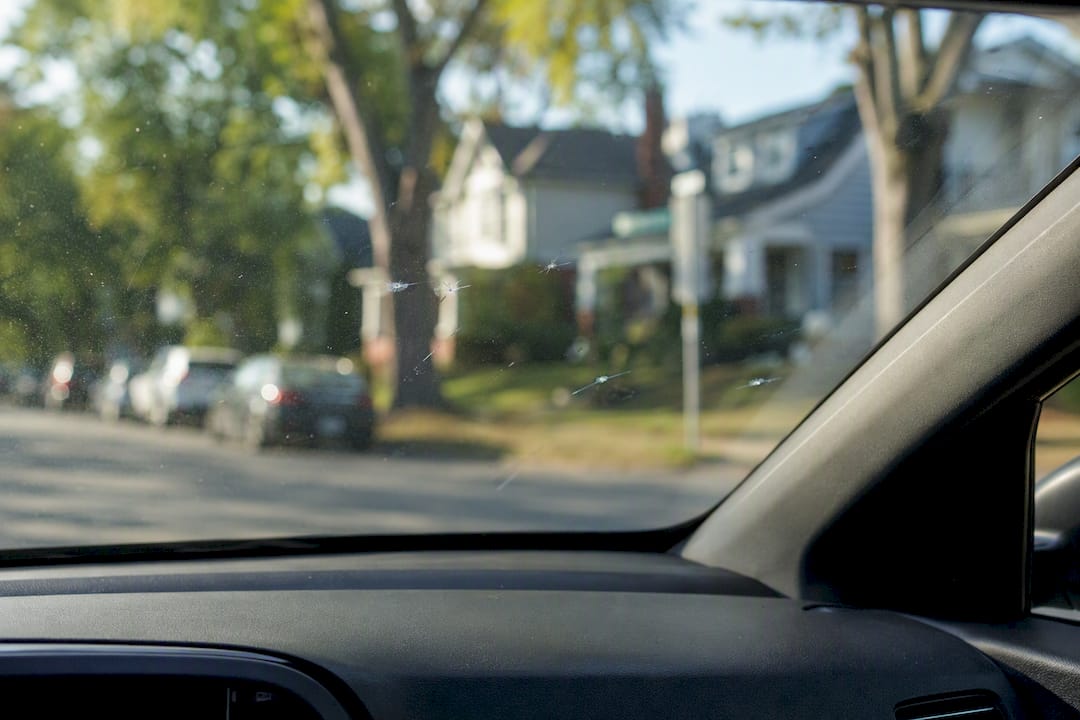
Check repaired spots periodically, particularly after temperature swings between seasons. A repair that looked clean in June can occasionally develop a faint crack line by winter if the glass experienced repeated thermal stress. This isn’t common, but it’s worth a quick visual check every few months.
If you had three or four chips repaired in one visit, keep an eye on the areas between them even if each individual repair looks fine. That’s the zone under the most stress, and it’s the first place a new crack tends to appear if the glass was going to have problems. Catching a hairline crack early, before it spreads across the windshield, is usually the difference between a small follow-up repair and a full replacement six months later.
Why Chips and Cracks Often Show Up Together
Rock chips rarely arrive one at a time. A gravel truck or a stretch of construction-zone highway can pepper a windshield with several impacts in the same drive, and each type of damage brings its own repair complexity when they show up in combination.
Bullseye chips, the classic cone-shaped impact with a dark circle at the center, are usually the most straightforward to repair even when several appear together, as long as they’re spaced apart. Star breaks are trickier: their radiating legs can extend toward each other or toward an existing bullseye, effectively merging two repairable chips into one larger, harder-to-treat break. Combination breaks, which mix a bullseye with star-like legs, are common after a single sharp impact and often push right up against the size threshold on their own, before you even factor in a second point of damage nearby.
The real challenge shows up when a fresh chip appears near an existing crack that’s already started to creep. A crack that was stable at six inches can extend rapidly once temperature changes or road vibration stress the glass further, and a new chip nearby accelerates that process. This is the scenario where waiting costs you the most: what could have been two separate $100 repairs becomes one windshield replacement if you let both sit for a few weeks. Speed matters more with multiple damage points than with a single isolated chip, simply because you’re managing more variables that can each get worse independently. Learning to identify chip types early makes that judgment call a lot easier.
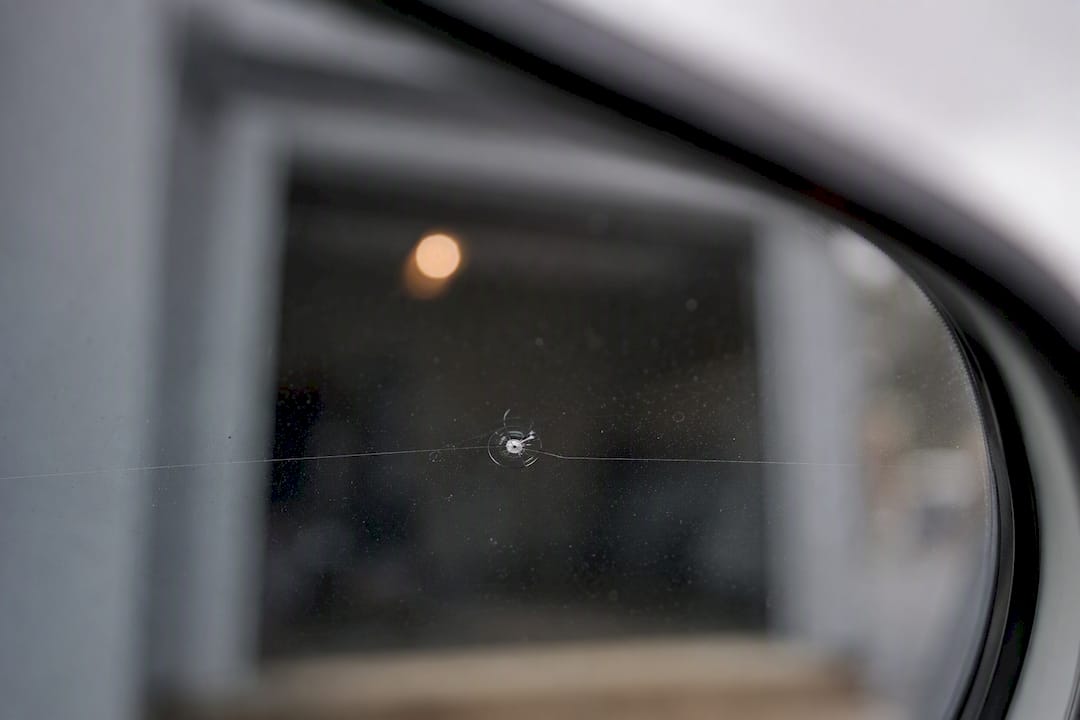
Our Take: Stop Treating Multiple Chips Like One Big Chip
The conventional advice on windshield damage treats every chip the same way, checking size against a chart and calling it done. That’s not wrong for a single chip, but it misses what actually matters once you’ve got two or more: the space between them.
We think spacing deserves more attention than it gets in most consumer guides. A windshield with four small, well-separated chips is often in better shape than one with two larger chips sitting three inches apart, because the glass between close impacts is under stress that no resin can fully resolve. If you remember one thing from this guide, make it that distinction.
We’d also push back gently on the DIY-first instinct that’s common with single chips. That instinct gets riskier with multiple chips, because one contaminated attempt doesn’t just cost you a repair. It can tip an otherwise salvageable windshield toward full replacement. When you’re looking at more than one chip, the smarter move is a professional inspection before you touch any of them, not after the first one goes wrong.
— Collision Auto Glass & Calibration
Get a Multi-Chip Windshield Inspection Scheduled Today
Comparing shops or weighing a DIY kit against a professional visit? For multiple chips specifically, the calculation favors getting eyes on the glass fast, since spacing and clustering issues aren’t things you can judge accurately from the driver’s seat — learn more in our roadside repair vs shop comparison. Collision Auto Glass & Calibration sends a technician to your driveway or office the same day you call, at no charge for the mobile visit within Portland, so you get a real answer without carving out a shop trip.

Every inspection includes a two-sided check against ROLAGS screening criteria, direct billing to your insurer if the repair or deductible waiver applies, and in-house ADAS calibration on the spot if any chip turns out to need full replacement instead. Photograph each chip with a coin for scale before you call, and mention how many you’re dealing with when you schedule. That’s the fastest path to a same-day fix backed by a lifetime no-leak guarantee. Book your inspection or request a quote and get a definitive answer on all your chips in one visit.
Sources
- Repair of Laminated Auto Glass Standard (ROLAGS / ANSI AGSC NWRD 002-2022)
- Windshield Damage Assessment: The Repair vs. Replace Decision Matrix | Windshield Advisor
- Glass
- DIY Windshield Chip Repair: A Complete Guide — Avision Auto Glass
FAQ
Can a Windshield Chip Be Repaired More Than Once?
No. Once a chip has been filled with resin, that specific damage point isn’t repaired again. If a new chip appears elsewhere on the windshield, it’s evaluated independently against the same size and spacing criteria as any first-time damage.
How Much Does It Usually Cost to Repair a Windshield Chip?
A single chip repair typically runs $65 to $150, though multiple chips on one visit often cost more per chip due to added labor time. Many insurance policies waive the deductible entirely for chip repair, making it free to the vehicle owner.
How Many Chips Can a Windshield Have Before It Needs Replacement?
Three or more separate damage points, or any two chips within four inches of each other, generally point toward replacement rather than repair. A technician’s two-sided inspection gives you a definitive answer based on your specific chips.
How Long Can I Wait to Repair a Windshield Chip?
Not long. Chips can spread into full cracks within days, especially with temperature swings or rough roads, and a spreading chip often becomes unrepairable. Schedule an inspection as soon as you notice damage, particularly if you have more than one chip to manage at once.
Recommended
- Types of Windshield Chips: Identify Damage and Act Fast
- Rock Chip FAQ: Answers to Frequently Asked Questions About Rock Chips
- 7 Signs Your Windshield Needs Repair Before It Spreads
- Can A Rock Chip Be Repaired?
🎧 Listen to This Article
Share
Recent Posts

August 31, 2026
Prove Your Windshield Calibration Is Correct With a Technician Checklist
Technician checklist to diagnose and fix failed windshield calibration. What to inspect, expected cost $150–$500, and why in house recalibration matters....
August 30, 2026
Three or More Windshield Chips: When Repair Meets ROLAGS Criteria
Decide whether multiple windshield chips qualify for repair under ROLAGS screening. Read technician pass or fail checks, mobile inspection tips, insurance…...
August 29, 2026
Rain Sensing Windshield: 4 Questions to Ask Before Replacement
Learn how rain-sensing windshields work and which four questions to ask before replacement—sensor-compatible glass, gel pad handling, ADAS calibration,…...