
Auto Glass Repair
TL;DR:
- Quarter glass replacement in the U.S. generally costs several hundred dollars, depending on vehicle type and part source. Getting a written quote before contacting your insurance company helps you determine if claiming makes financial sense. Collision Auto Glass & Calibration offers same-day mobile service, direct insurance billing, and a lifetime no-leak guarantee in Portland.
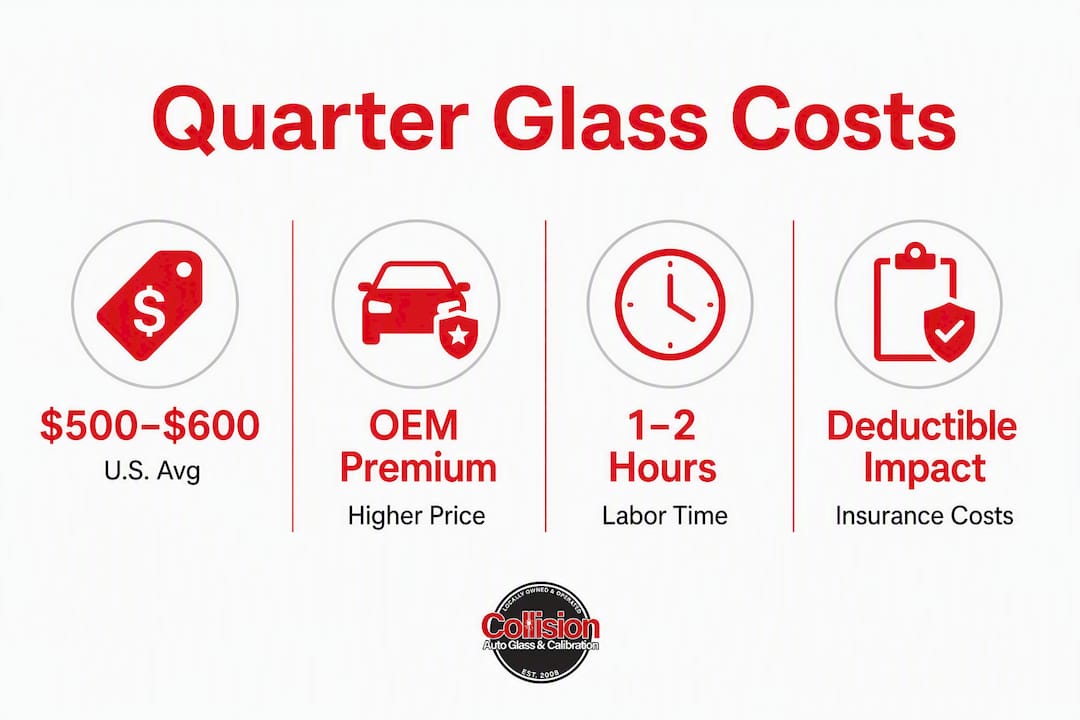
Quarter glass replacement in the U.S. typically costs several hundred dollars, with most rear quarter window jobs costing several hundred dollars once parts and labor are combined. Your immediate next step is simple: get a written quote before you do anything else, including calling your insurance company.
Here is why that order matters. If your comprehensive deductible is $500 and the replacement costs $480, filing a claim nets you nothing and may still affect your premium. Knowing the actual cost first puts you in control of that decision.
- Typical U.S. cost range is generally moderate for most vehicles
- Common median for rear quarter windows is on the higher end of typical ranges
- OEM parts can significantly increase the total cost, while salvage glass may be much less expensive
- If the replacement cost is less than your deductible, pay out of pocket
- Same-day mobile service is widely available from certified shops
For Portland-area drivers, Collision Auto Glass & Calibration offers same-day mobile installation, direct insurance billing, and a lifetime no-leak guarantee. Request a written estimate before deciding how to pay.
Table of Contents
- How much does quarter glass replacement cost by vehicle type?
- What factors drive the final price of quarter glass?
- Parts vs. labor: what does each scenario actually look like?
- Should you file an insurance claim for quarter glass?
- Can quarter glass be repaired, or does it always need replacement?
- How long does quarter glass replacement take?
- How to choose a quarter glass installer you can trust
- Key Takeaways
- What experienced technicians see that most guides miss
- Get a same-day quote from Collision Auto Glass & Calibration
- Useful sources
- FAQ
How much does quarter glass replacement cost by vehicle type?
Quarter glass, also called a quarter window or vent glass depending on its position and whether it opens, is the fixed or pivoting pane located behind the rear door or in the rear pillar of a vehicle. Because it is produced in lower volumes and must fit a specific body shape, its unit cost often exceeds that of a mass-produced windshield despite being physically smaller.
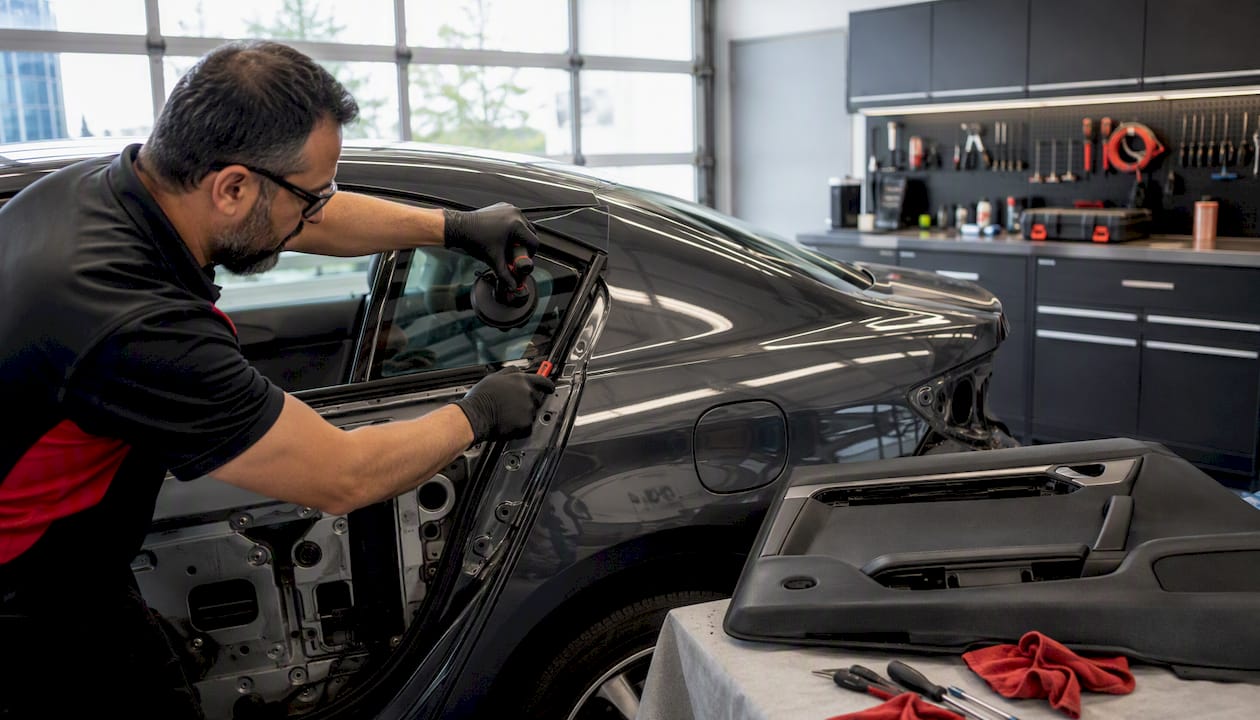
National averages for side window replacement run $200–$450, but quarter glass frequently sits above that band due to part scarcity and installation complexity. The table below reflects realistic installed price ranges (parts + labor) by vehicle class and glass type.
| Glass Type / Vehicle Class | Typical Installed Range | Notes |
|---|---|---|
| Fixed tempered, economy sedan | Moderate price range | Most common; straightforward removal |
| Fixed tempered, midsize SUV | Higher moderate price range | More trim removal; larger panel |
| Vent/pivoting quarter glass | Moderate price range | Hinge hardware adds parts cost |
| Rear quarter with defroster or antenna | Higher moderate price range | Embedded features raise part cost and labor |
| Luxury or exotic vehicle | Higher price range | OEM-only sourcing; limited aftermarket supply |
| Vintage or rare model | Moderate to high price range | Salvage may be the only option |
A rear quarter window replacement generally costs several hundred dollars for most mainstream vehicles, though final price depends heavily on make, model, part source, and labor complexity. Luxury vehicles with model-specific glass profiles can be more expensive when only OEM parts are available.
On the part-source question: OEM glass carries a manufacturer-matched fit guarantee and typically commands a premium, sometimes costing several hundred dollars for the part alone on certain vehicles. Aftermarket glass costs less and fits most common models acceptably. Salvage yard glass can be sourced very cheaply, but condition and fit are not guaranteed, and cosmetic imperfections are common.
What factors drive the final price of quarter glass?
Several variables can move your quote significantly in either direction, and understanding them helps you evaluate whether a bid is fair.
- Make and model rarity. A 2019 Honda Civic has abundant aftermarket supply; a 2016 Cadillac CT6 does not. Low-volume vehicles push part costs up simply because fewer units were manufactured.
- OEM vs. aftermarket vs. salvage. OEM glass matches factory specifications exactly. Aftermarket glass is manufactured to fit but may differ slightly in tint shade or thickness. Salvage glass is the cheapest option but requires careful inspection for chips, stress cracks, and seal integrity.
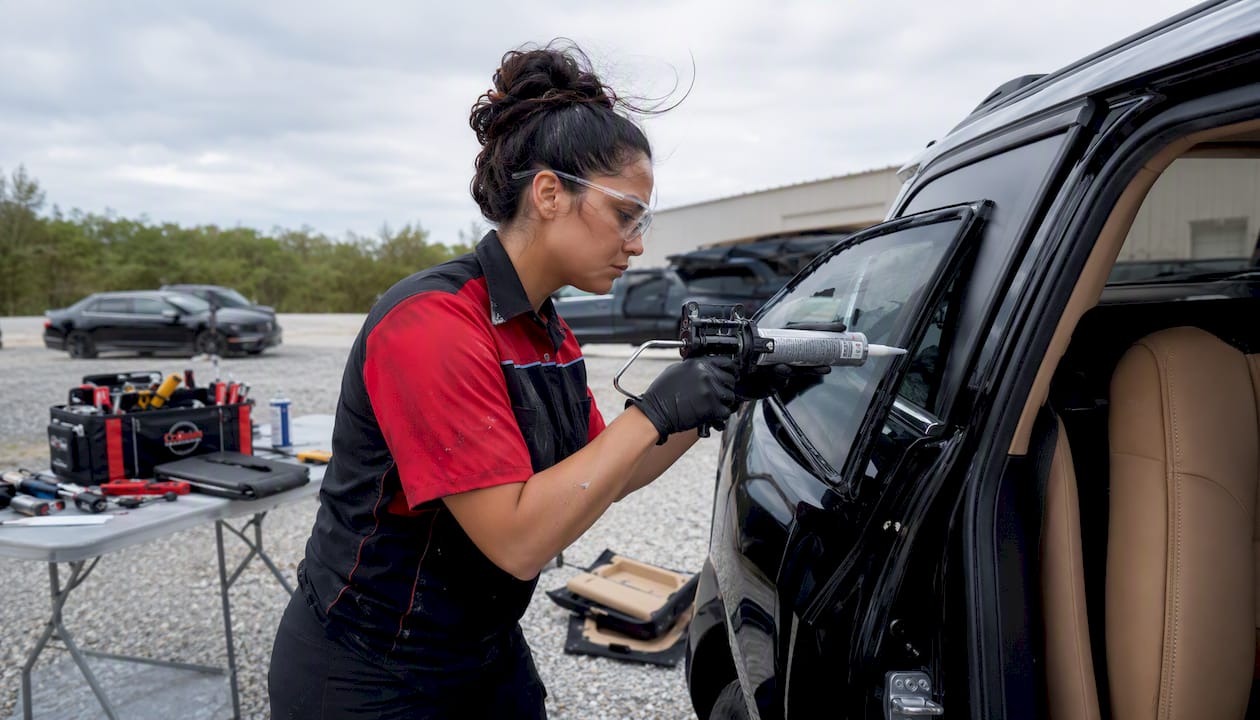
- Embedded features. Quarter glass with an integrated antenna, rear defroster grid, or acoustic lamination costs more to source and more to install. The installer must properly bond the glass and, in some cases, test electrical connections before the job is complete.
- Tint and special treatments. Factory privacy tint or acoustic glass is part-specific; aftermarket tint film can be added post-installation but adds cost and a separate appointment.
- Labor complexity. Some quarter windows sit behind a single rubber gasket and swap out in under an hour. Others require removing interior door panels, C-pillar trim, and rear seat components, which adds an hour or more of labor time.
- Mobile vs. shop service. Mobile installation adds convenience but occasionally carries a small service fee; shop installations may offer more controlled conditions for adhesive curing.
- Regional labor rates. Labor in Portland, Seattle, or San Francisco runs higher than in rural markets. A $150 labor charge in one city may be $90 in another for the same job.
Pro Tip: Ask every shop to specify the part source (OEM, aftermarket, or salvage) in the written quote. Two quotes at the same total price may reflect very different glass quality.
Because quarter glass is produced in lower volumes and is model-specific, its per-unit cost can exceed that of a mass-produced windshield even when the pane is physically smaller. That supply-side reality is why vent glass replacement cost and quarter window replacement cost often surprise car owners who expected a small window to be cheap.
Parts vs. labor: what does each scenario actually look like?
The split between parts and labor varies more for quarter glass than for most other auto glass jobs. Here are four realistic scenarios that show how the bill breaks down.
| Vehicle Scenario | Parts Cost | Labor Cost | Estimated Total | Notes |
|---|---|---|---|---|
| Economy sedan (aftermarket glass) | $80–$150 | $100–$150 | $200–$300 | Minimal trim removal; fast job |
| Midsize SUV (OEM glass) | $200–$450 | $120–$180 | $320–$500 | C-pillar trim removal required |
| Luxury coupe (OEM, defroster grid) | $350–$550 | $150–$200 | $500–$700 | Electrical test adds time |
| Vintage/rare model (salvage glass) | $20–$100 | $150–$250 | $200–$450 | Labor dominates; fit verification needed |
When parts dominate the bill, it is almost always because of OEM pricing or embedded technology. A quarter window with a factory antenna or defroster grid requires the installer to bond the glass precisely and verify that the electrical connection is live before closing out the job. That extra step adds cost and labor time.
When labor dominates, the vehicle typically requires extensive interior disassembly. Removing rear seat panels, C-pillar trim, and moldings to access the glass mounting channel can add an hour to the job even when the glass itself is inexpensive. Improper reinstallation of those trim pieces is also a common source of wind noise and water leaks, which is why technician experience matters as much as part quality.
Salvage glass keeps the parts cost low but shifts risk to the buyer. Fit and cosmetic condition are not guaranteed, and a piece that looks fine at the salvage yard may have micro-cracks that fail under road vibration. For broader auto glass cost context, the glass type and vehicle category are the two biggest predictors of total price.
Should you file an insurance claim for quarter glass?
Comprehensive auto insurance typically covers quarter glass damage caused by vandalism, road debris, weather, or theft. Collision damage follows different rules. The key question is whether your replacement cost exceeds your deductible.
- Cost < deductible: Pay out of pocket. Filing a claim still counts as a claim event and may affect your premium at renewal, even though the insurer pays nothing.
- Cost > deductible: Filing usually makes financial sense in the short term, but factor in your insurer’s surcharge policy. Some carriers raise rates after a glass claim; others do not.
- Cost close to deductible: Get a written quote first. A $520 job against a $500 deductible saves you $20 on the repair but may cost more in premium increases over two or three years.
Pro Tip: Get a written, itemized quote before calling your insurer. Shops that offer direct insurance billing can often submit the claim on your behalf, which simplifies the process considerably. Always confirm the shop also provides a warranty or lifetime no-leak guarantee on the installation.
Technicians routinely advise customers to get a written quote before filing because deductibles often make small repairs not worth claiming. A $250 quarter glass job against a $500 deductible is a straightforward out-of-pocket decision. A $650 job against the same deductible is worth filing, assuming your carrier does not penalize glass claims.
Direct insurance billing is a legitimate convenience, not a gimmick. When a shop handles the paperwork directly with your insurer, you avoid the back-and-forth of reimbursement claims and can often schedule the repair the same day.
Can quarter glass be repaired, or does it always need replacement?
The short answer: most quarter glass requires full replacement rather than repair.
Most side and quarter windows are made from tempered glass, which is heat-treated to shatter into small, relatively harmless fragments on impact. Unlike laminated windshield glass, tempered glass cannot be resin-injected to fill a chip or crack. Once it is structurally compromised, the entire pane must come out.
Laminated quarter glass exists on some luxury and European vehicles, where it can sometimes be repaired if the damage is a small chip away from the edge. That is the exception, not the rule. If you are unsure which type your vehicle has, a technician can confirm it in seconds.
Tint and embedded features complicate the picture further. Factory privacy tint is part of the glass itself and cannot be preserved if the pane is replaced with aftermarket glass that lacks the same treatment. Aftermarket tint film can be reapplied, but that is an additional cost. Defroster grids and antenna elements are bonded into the glass and are not transferable; replacement glass must include those features or the functionality is lost.
For minor surface scratches on intact glass, polishing compounds can sometimes reduce visibility of the damage without requiring replacement. That is a cosmetic fix, not a structural one, and it applies only when the glass is otherwise sound.
How long does quarter glass replacement take?
A standard quarter glass replacement takes about a few hours from start to finish, though complex installs can run longer.
- Inspection and part verification: 10–15 minutes to confirm the correct glass, check for trim damage, and document existing condition.
- Interior trim removal: 15–45 minutes depending on how much panel work is required to access the mounting channel.
- Glass removal and channel prep: 15–20 minutes to extract the old pane and clean the frame or gasket seat.
- Installation and sealing: 20–30 minutes for the new glass, adhesive or gasket seating, and initial seal check.
- Trim reinstallation and final inspection: 15–30 minutes to reassemble interior components and verify fit, seal integrity, and any electrical connections.
Labor time commonly runs 1–2 hours for most vehicles, with complex installs adding time when interior panels or trim require careful removal and reinstallation.
Mobile service follows the same sequence but takes place at your home, office, or wherever the vehicle is parked. The main practical difference is that mobile technicians carry a curated parts inventory, so confirming part availability before the appointment is important. Drive-in service at a shop is preferable when the job involves extensive trim work or when adhesive curing benefits from a controlled environment.
After installation, avoid automatic car washes and high-pressure water for at least 24 hours to allow any adhesive or sealant to fully cure. Avoid slamming doors repeatedly during that window as well, since vibration can stress a fresh seal before it sets.
How to choose a quarter glass installer you can trust
Choosing the right shop matters as much as choosing the right glass. These are the questions worth asking before you commit.
- What is the part source? Ask whether the quote is based on OEM, aftermarket, or salvage glass, and get that answer in writing.
- Is there a warranty? A lifetime no-leak guarantee covers you if the seal fails and water intrusion occurs. Workmanship warranties vary widely; confirm the terms before the job starts.
- Are technicians certified? Industry training through organizations like the Auto Glass Safety Council (AGSC) signals that technicians follow established installation standards.
- Do you offer mobile service? If your schedule does not allow a shop visit, confirm mobile availability and whether a service fee applies.
- Can you bill my insurance directly? Direct billing saves time and paperwork. Confirm the shop is set up to handle your specific insurer.
- Will you provide a written, itemized estimate? A quote that separates parts cost from labor cost lets you compare bids accurately and spot inflated line items.
Pro Tip: When the job is complete, inspect the seal line around the new glass before you drive away. Run your finger along the perimeter and look for gaps, uneven adhesive, or trim pieces that do not sit flush. A reputable shop will address any fit issue on the spot.
For guidance on choosing the best auto glass shop, the same principles that apply to windshield replacement apply here: verify certifications, confirm the warranty in writing, and never accept a verbal-only quote.
Key Takeaways
Quarter glass replacement typically costs between $500 and $600 in the U.S. for rear quarter windows; always get a written quote before filing an insurance claim.
| Point | Details |
|---|---|
| Typical cost range | Most rear quarter glass replacements in the U.S. cost $500–$600 installed. |
| Deductible decision rule | If the replacement cost is less than your deductible, pay out of pocket rather than filing a claim. |
| OEM vs. salvage spread | OEM parts can approach $500 alone; salvage glass runs $20 but carries fit and condition risk. |
| Why quarter glass costs more | Lower production volumes and model-specific fit push per-unit costs above many larger glass panels. |
| Collision Auto Glass & Calibration | Offers same-day mobile service, direct insurance billing, and a lifetime no-leak guarantee in the Portland area. |
What experienced technicians see that most guides miss
Most cost guides treat quarter glass as a simple line item. In practice, the hidden costs are what catch car owners off guard.
The two most common surprises technicians encounter are damaged trim clips and failed original seals. When a quarter window breaks, the force often cracks the plastic retaining clips that hold interior panels in place. Those clips are inexpensive individually but add up, and not every shop includes them in the initial quote. A shop that itemizes parts thoroughly will list them; one that does not may add them as a surprise charge at pickup.
The second surprise is the original seal condition. On vehicles with more than 80,000 miles, the factory gasket or adhesive channel around the quarter glass is often degraded. Replacing the glass without addressing the channel means the new pane is sitting on a compromised foundation, which leads to wind noise or water intrusion within months. A technician who inspects the channel before quoting and includes channel prep in the price is doing the job correctly, not padding the bill.
The deductible math point deserves more emphasis than most guides give it. A $500–$600 repair against a $500 deductible is essentially a wash financially, but the claim still appears on your insurance record. For that reason, many experienced technicians recommend paying out of pocket for anything under $700 unless you have a zero-deductible glass endorsement on your policy.
Family-owned shops that have been operating since 2008, like Collision Auto Glass & Calibration, tend to be transparent about these details because repeat business depends on it. Same-day mobile service and direct insurance billing are not just conveniences; they reflect a shop’s confidence in its own process.
Get a same-day quote from Collision Auto Glass & Calibration
Collision Auto Glass & Calibration gives Portland-area drivers a faster, more transparent path to quarter glass replacement than the typical shop experience. Same-day service means you are not waiting a week for a part to arrive. Free mobile installation within the Portland area means the technician comes to you. And a lifetime no-leak guarantee means the job is backed long after you drive away.
Every job includes direct insurance billing, so if your comprehensive coverage applies, the shop handles the paperwork with your insurer directly. Technicians are trained to current industry standards, and the shop’s in-house ADAS calibration capability means that if your vehicle’s driver assistance systems are affected by the glass work, that service is available on-site rather than requiring a separate appointment.
Get a written, itemized quote today and know your exact cost before making any insurance decision. For a broader look at auto glass replacement pricing across vehicle types, the Collision Auto Glass & Calibration website covers the full range of glass services.
Useful sources
The following sources informed the cost figures and guidance in this article.
- Quarter Glass Replacement — myWindshield
- How Much Does It Cost to Replace a Car Window? — AutoZone
- How Much Does a Car Window Replacement Cost? — CarBuzz
- Does Auto Insurance Cover Glass Replacement? — Collision Auto Glass & Calibration
- How Much Does It Cost to Replace Glass in a Car? — Collision Auto Glass & Calibration
- 5 Tips on Choosing the Best Auto Glass Shop — Collision Auto Glass & Calibration
FAQ
How much does it cost to replace a quarter glass window?
A rear quarter window replacement typically costs between $500 and $600 for most mainstream vehicles, with the final price depending on make, model, part source, and labor complexity.
Is quarter glass more expensive than other car windows?
It often is, because quarter glass is produced in lower volumes and must fit a specific body profile, which limits aftermarket supply and keeps part costs higher relative to the pane’s physical size.
How long does quarter glass replacement take?
Most jobs take 1–2 hours, though vehicles requiring extensive interior trim removal can run longer. Mobile service follows the same timeline at your location.
Does Collision Auto Glass & Calibration replace quarter glass?
Yes. Collision Auto Glass & Calibration handles side and quarter window replacement with same-day mobile service in the Portland area, direct insurance billing, and a lifetime no-leak guarantee on all installations.
Should I file an insurance claim for quarter glass replacement?
Get a written quote first. If the replacement cost is less than your comprehensive deductible, paying out of pocket is the better financial choice since filing a claim still counts against your record even when the insurer pays nothing.
Recommended
- How Much Does It Cost To Replace Glass In A Car? – Collision Auto Glass & Calibration
- Rear Window Replacement Cost: Portland Driver’s Guide
- How Much Is It To Fix Glass On A Car? – Collision Auto Glass & Calibration
- Side Window Replacement Cost: 2026 U.S. Price Guide
🎧 Listen to This Article
Share
Recent Posts

October 15, 2026
Auto Glass Claims: Choose a U.S. Shop Before ADAS Billing Surprises
See how U.S. drivers can choose an auto glass shop for an insurance claim, confirm ADAS calibration, protect their rights, and prevent billing...
October 14, 2026
Fleet Windshield Maintenance: A 20 Minute Repair Can Prevent Days Down
Catch chips early, log the VIN and photos, and require part number and ADAS calibration records to keep fleet vehicles moving and avoid...

October 13, 2026
Calibration After Collision Repair: Ask for Scans Before You Drive
Learn when collision repairs require ADAS calibration, how shops verify the work, and which scan records and paperwork to request before driving....