Auto Glass Repair
TL;DR:
- A “forward collision unavailable” alert indicates the vehicle’s assistance system has been disabled due to sensor misalignment or obstruction. Without proper calibration after windshield work or impacts, emergency braking and collision alerts may not respond correctly, increasing safety risks. Certified shops in Portland, Oregon, perform in-house ADAS calibration using approved standards, ensuring the system functions properly with a warranty and direct insurance billing.
A “forward collision unavailable” alert means your vehicle’s Advanced Driver Assistance System (ADAS) has detected a problem and disabled the forward collision warning function. This is not a minor nuisance. Without this system active, automatic emergency braking and collision alerts will not respond in a real hazard. The most common triggers are:
- A recent windshield replacement or crack that shifted the forward-facing camera position
- Dirt, snow, or debris blocking the radar sensor or front camera
- A camera mounting bracket disturbed during glass service
- Sensor misalignment from a minor front-end impact
- Skipped or incomplete ADAS calibration after glass work
The Auto Glass Safety Council confirms that no current vehicle system can recalibrate itself once a sensor is disrupted. If the camera aim is off by just one degree, the collision avoidance system will be off by 8 feet at 100 feet of distance. A vehicle traveling at 30 mph needs 89 feet to stop on dry pavement. Skip calibration, and that margin disappears. Before calling a shop, check for visible windshield damage, clean the sensor area behind the front grille and near the rearview mirror, and review any dashboard messages for specifics like “Front Camera Unavailable” or “Sensor Blocked.”
Table of Contents
- What causes “forward collision unavailable” and who fixes it in Portland, OR?
- How to choose the right auto glass and ADAS calibration service
- How windshield damage affects your ADAS performance
- Step-by-step troubleshooting before you call a shop
- How long does windshield repair and ADAS calibration take?
- Signs you need calibration beyond a windshield replacement
- Portland’s trusted choice for forward collision system repair
- Key Takeaways
- FAQ
What causes “forward collision unavailable” and who fixes it in Portland, OR?
Portland drivers have several certified options for windshield repair and ADAS calibration. The providers below cover the core services, certifications, and terms you need to compare before booking.
| Feature | Collision Auto Glass & Calibration | Classic Collision | West Side Collision Center |
|---|---|---|---|
| Services offered | Windshield repair/replacement, rock chip repair, ADAS calibration, side/back glass | Collision repair, windshield service, ADAS support | Collision repair, glass replacement, ADAS diagnostics |
| Certifications | SIKA, DOW Automotive, AGRSS-compliant | Not publicly listed | Not publicly listed |
| Customer review ratings | High volume of positive reviews across major platforms | Positive local reputation | Positive local reputation |
| Insurance acceptance | Direct billing to 300+ insurance companies | Accepted | Accepted |
| Mobile service | Free mobile installation, Portland metro | Not publicly listed | Not publicly listed |
| Pricing | Varies by vehicle; many insurers cover calibration | Varies | Varies |
| Warranty | Lifetime no-leak guarantee on all installs | Not publicly listed | Not publicly listed |
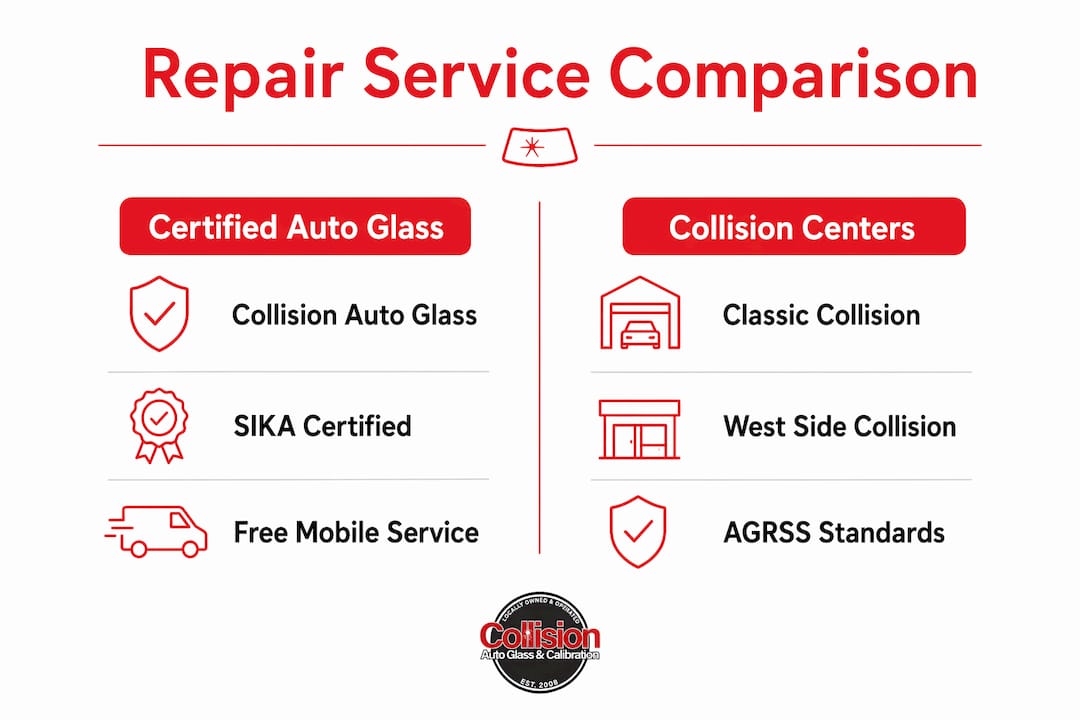
Collision Auto Glass & Calibration holds certifications from SIKA and DOW Automotive and follows AGRSS installation standards, which are the recognized benchmarks for safe auto glass work. Their direct billing to over 300 insurance companies removes the reimbursement burden from vehicle owners and fleet managers. Classic Collision and West Side Collision Center serve Portland with collision repair expertise and include glass and ADAS services, though specific certification details are not publicly listed for either.
How to choose the right auto glass and ADAS calibration service
Picking the wrong shop after a windshield replacement can leave your collision prevention system operating incorrectly with no warning light to tell you. Use these criteria before committing:
- Certifications matter. Look for AGRSS-compliant shops with SIKA or DOW Automotive credentials. These standards govern adhesive use, cure times, and installation procedures that directly affect camera alignment.
- In-house calibration is preferable. A shop that performs ADAS calibration on-site controls the process from glass removal to final system verification. Shops that outsource calibration add time and introduce handoff risk.
- Ask about pre- and post-calibration diagnostics. A qualified provider documents scan tool results before and after the procedure. A “calibration complete” message alone does not confirm accuracy; the camera must recognize the target within OEM tolerance.
- Verify insurance billing capability. Many insurers cover ADAS calibration when documented as part of a glass replacement. A shop with direct billing handles this automatically.
- Confirm mobile service availability. For fleet managers or drivers without a second vehicle, free mobile installation within the Portland metro saves significant time.
- Check warranty terms. A lifetime no-leak guarantee signals confidence in the installation quality and protects your investment if issues arise later.
Pro Tip: Ask the shop specifically whether your year, make, and model requires static calibration, dynamic calibration, or both. Some manufacturers require a post-installation test drive at specific speeds for the camera to complete its self-learning process.
How windshield damage affects your ADAS performance
The windshield is not just a barrier against wind. It functions as an optical surface for the forward-facing camera that runs collision warning, automatic emergency braking, lane departure warning, and adaptive cruise control. A camera position shift of just 1–2 mm can cause the system to misread lane markings and distance calculations.
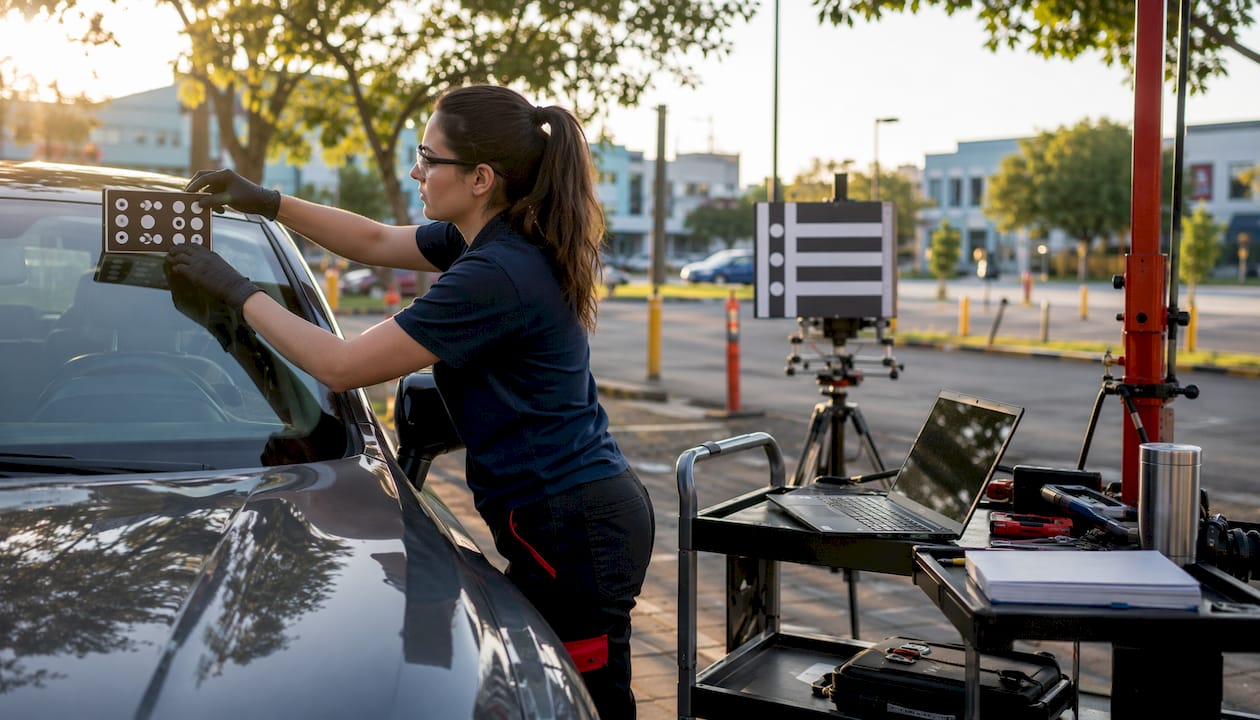
What makes this particularly dangerous is that a miscalibrated system often shows no fault codes and no warning lights. The forward collision icon still illuminates on the dash. Adaptive cruise still engages. The system appears functional while operating outside OEM specification. Drivers only discover the problem when the automatic emergency braking reacts too late, too early, or not at all.
Step-by-step troubleshooting before you call a shop
Work through these steps in order before scheduling professional service.
- Clean the sensors. Locate the radar sensor behind the front grille emblem and the camera near the rearview mirror. Wipe both with a soft cloth and glass cleaner. Road salt, mud, and bug debris are common obstructions that trigger temporary system shutdowns.
- Clean the windshield thoroughly. Wax residue, interior condensation, and cleaning product film can block the camera’s view. Clean both the inside and outside of the glass in the camera’s viewing area.
- Restart the vehicle. Turn the vehicle fully off, wait 30–60 seconds, then restart. If the underlying issue is resolved, the warning should clear after a short drive.
- Check dashboard messages. Look for specific text such as “Sensor Blocked,” “Front Camera Unavailable,” or “Calibration Required.” These messages point directly to the cause.
- Review recent service history. If your windshield was replaced or any front-end work was done, calibration is likely needed regardless of whether a warning light appeared.
- Use an OBD2 scanner. Basic code readers may not access ADAS-specific faults. If the light persists after cleaning, a professional scan tool is required to read forward collision system codes.
If the warning stays on for more than 48 hours after cleaning, or if the vehicle brakes unexpectedly, book professional diagnosis without delay.
How long does windshield repair and ADAS calibration take?
Most windshield replacements take 1–2 hours for the glass work itself. ADAS calibration adds time depending on the method your vehicle requires. Static calibration, performed in a controlled shop environment with precise target placement and lighting, typically adds 1–2 hours. Dynamic calibration, which requires driving at specific speeds so the camera can complete its self-learning sequence, adds a road test on top of the static process for vehicles that need both.
Same-day service is available at Collision Auto Glass & Calibration for most vehicles, including their free mobile installation within the Portland metro area. Pricing varies by vehicle make and model, and many insurance policies cover calibration costs when documented as part of a glass replacement claim.
Signs you need calibration beyond a windshield replacement
Windshield replacement is the most common trigger, but not the only one. Watch for these signs that your forward collision system needs professional attention:
- Lane assist activates inconsistently or triggers in the wrong lane
- Automatic emergency braking fires too early, too late, or not at all
- Adaptive cruise control drops out unexpectedly or follows too closely
- Dashboard messages disable ADAS features until the system is inspected
- The vehicle had any front-end impact, even a minor parking lot bump
- Suspension work or wheel alignment was recently performed
Recognizing these signs early gives you the chance to address calibration before an incident occurs on the road.
Portland’s trusted choice for forward collision system repair
Collision Auto Glass & Calibration has served Portland drivers and fleet managers since 2008, building a reputation on one straightforward promise: your safety systems work correctly when you leave.
What separates Collision Auto Glass & Calibration from general repair shops is in-house ADAS calibration performed to SIKA, DOW Automotive, and AGRSS standards, combined with a lifetime no-leak guarantee on every installation. Direct billing to over 300 insurance companies means most customers pay nothing out of pocket for covered repairs. Free mobile service across the Portland metro makes same-day repairs practical for fleet managers running multiple vehicles. For drivers who need to confirm their forward collision system is fully restored, Collision Auto Glass & Calibration documents pre- and post-calibration diagnostics so you have written proof the system passed. Get a quote or book your service today and drive away with confidence.
Key Takeaways
A “forward collision unavailable” warning requires professional ADAS calibration after windshield service because no vehicle system can recalibrate itself once a sensor is disrupted.
| Point | Details |
|---|---|
| Camera sensitivity | A 1–2 mm shift in camera position causes ADAS to misread lane markings and distance. |
| No warning light fallacy | Miscalibrated systems often show no fault codes, making professional verification the only reliable check. |
| Calibration triggers | Windshield replacement, front-end impacts, and suspension work all require ADAS recalibration. |
| Service timeline | Most windshield replacements with ADAS calibration complete same-day at certified Portland shops. |
| Collision Auto Glass & Calibration | Offers SIKA/DOW/AGRSS-certified installs, lifetime no-leak guarantee, and direct billing to 300+ insurers. |
FAQ
Why does my forward collision warning say “unavailable”?
The warning appears when the system’s camera or radar sensor is blocked, misaligned, or uncalibrated. The most common cause after windshield service is a camera position shift that requires professional ADAS recalibration.
Does windshield replacement always require ADAS calibration?
Not always, but manufacturer specifications require it whenever the forward-facing camera or its mounting bracket is removed or disturbed, which happens in most windshield replacements.
Can I drive with the forward collision system unavailable?
You can, but the automatic emergency braking and collision alerts will not function. Driving without these active safety features increases your stopping risk, particularly at highway speeds.
How much does ADAS calibration cost in Portland, OR?
Pricing varies by vehicle make and model. Many insurance policies cover calibration costs when documented as part of a glass replacement claim. Collision Auto Glass & Calibration handles direct billing to over 300 insurance companies.
How do I know if my ADAS calibration was done correctly?
A passing scan tool result alone is not sufficient confirmation. A certified shop should perform a test drive and provide documented pre- and post-calibration diagnostic results showing the system operates within OEM tolerance.
Recommended
- Auto Glass Repair Portland & Tualatin OR | Collision Auto Glass
- How to Temporarily Fix a Crack in Portland, OR – Collision Auto Glass & Calibration
- Is It Illegal to Drive with a Cracked Windshield in Portland, Oregon? – Collision Auto Glass & Calibration
- Is It Illegal to Drive with a Cracked Windshield in Wilsonville, Oregon? – Collision Auto Glass & Calibration
Share
Recent Posts
September 22, 2026
Backlite Meaning for Portland Drivers: Same Day Replacement and ADAS
U.S. focused explainer defining backlite, how to spot tempered vs laminated rear glass, when chips require replacement, and what ADAS calibration may need....
September 21, 2026
24–48 Hours: Technician Backed Windshield Tape Rules and Safe Removal
Leave retention tape 24–48 hours (72 in cold or damp). Avoid car washes, warm the tape and peel slowly at a low angle....
September 20, 2026
When Drivers Can Drive After Windshield Urethane: 1–3 Hours, SDAT & Charts
Find exactly when you can drive after windshield urethane. Learn AGRSS SDAT rules, how to read manufacturer cure charts, and simple aftercare. Often...